Quick answer
For runners who prioritize natural toe splay and blister prevention, performance toe socks are the better choice. If you prefer traditional cushioning and a snug fit around the ankle, performance crew socks offer reliable support and moisture management. Both designs support your arch, but the right pick depends on your foot shape and running style.
How Toe Socks and Crew Socks Differ for Runners
The main difference lies in the toe compartment. Performance toe socks separate each toe, allowing natural splay and movement that can reduce friction and blisters between toes. Crew socks wrap all toes together in a single chamber, which provides a more traditional, snug fit and often includes extra cushioning around the heel and Achilles.
Both styles are designed for active use and offer arch support, but the way they deliver that support varies. Toe socks let each toe move independently, which can improve balance and ground feel. Crew socks tend to hold the foot more securely in place, which some runners prefer for stability on uneven terrain.
Moisture management is critical for any running sock. Both the Archies Performance Toe Socks and Performance Crew Socks use performance fabrics to wick sweat away, but the toe sock design allows air to circulate between toes, potentially reducing moisture buildup in that area.
Which Running Conditions Favor Each Sock Style?
Toe socks excel in hot, humid conditions or long-distance runs where blister risk is highest. The separation prevents skin-on-skin contact between toes, and the enhanced airflow helps keep feet dry. Crew socks are a solid choice for cooler weather runs or shorter distances where you want extra warmth and a secure fit around the ankle.
If you run on technical trails or roads with constant direction changes, crew socks offer more ankle stability and protection against debris. Toe socks are better for road running or treadmill sessions where natural foot movement matters more than ankle coverage.
Trade-offs to consider
- Toe splay vs. toe confinement: Toe socks let each toe move independently, improving balance and reducing blister risk. Crew socks keep toes together, which some runners find more secure but can increase friction. If you have wide feet or a history of toe blisters, toe socks may be more comfortable.
- Ankle coverage vs. breathability: Crew socks extend above the ankle, offering warmth and protection from debris. Toe socks end lower, maximizing airflow around the foot but leaving the ankle exposed. Choose crew socks for trail runs or cooler weather; toe socks for road runs or hot days.
- Cushioning vs. ground feel: Crew socks typically have more padding in the heel and toe, which absorbs impact but reduces ground feel. Toe socks are thinner, giving you better sensory feedback from the ground. Runners who want a minimalist feel should try toe socks; those who prefer plush cushioning will like crew socks.
Product facts at a glance
- Performance Toe Socks - White: Archies Performance Toe Socks in White are designed to provide comfort and support during active wear. Toe sock design for natural toe splay and movement. Ideal for use with flip flops or performance activities. The separated toe design reduces friction between toes, making these socks a strong choice for runners prone to blisters or who prefer a more natural foot feel.
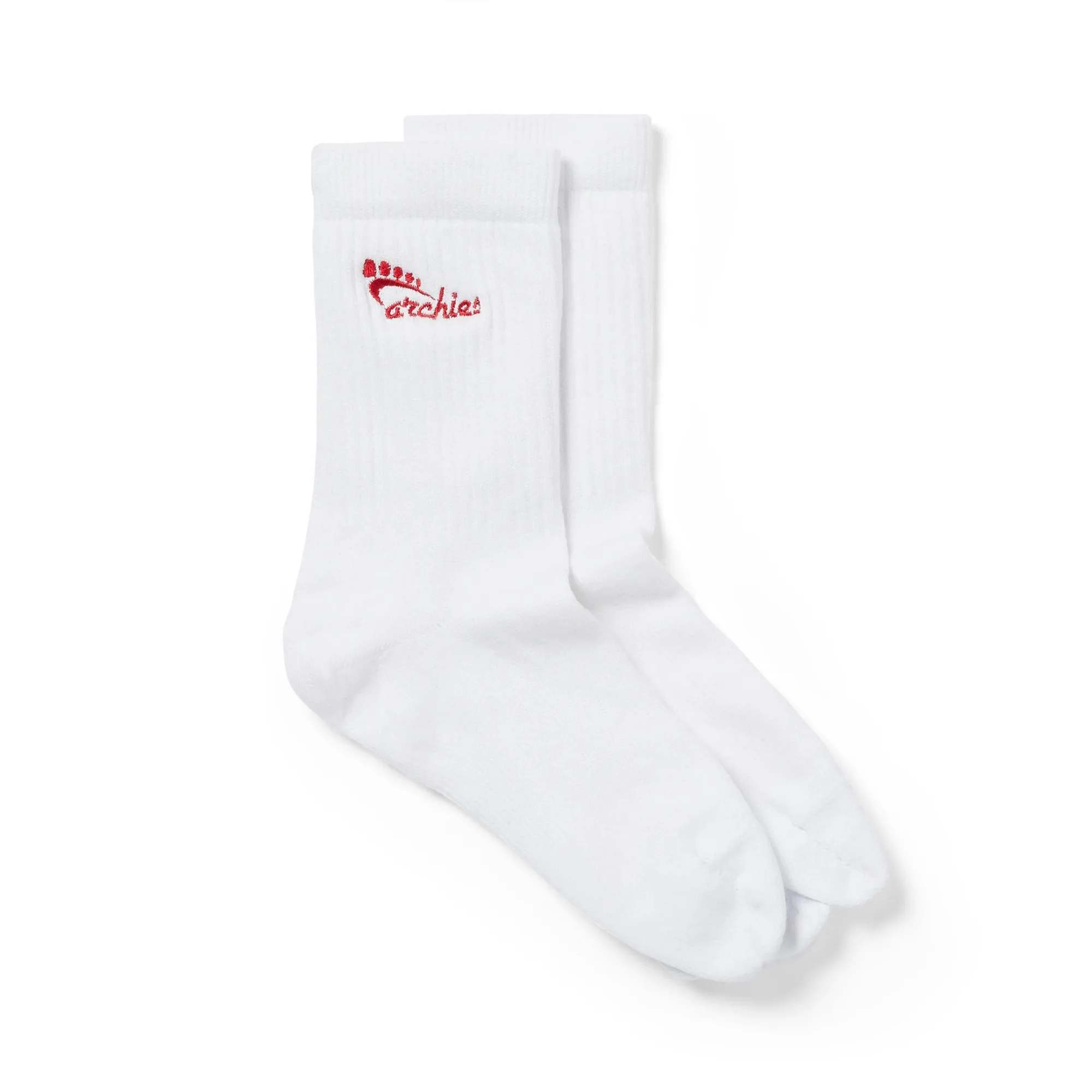
- Performance Crew Socks - White: Archies Performance Crew Socks in White are designed for active use, offering reliable comfort and support. Crew-length socks are part of the Archies Performance collection, crafted to meet the demands of your daily routine or workout. The crew length provides extra coverage and a secure fit around the ankle, which many runners appreciate for stability and protection during runs.
Which sock should you choose?
Best for
- Runners who want to minimize toe blisters and enjoy natural foot movement
- Runners who run in hot or humid conditions and need maximum breathability
Not ideal for
- Runners who prefer extra ankle coverage and warmth during cold-weather runs
- Runners who need thick cushioning for high-impact strides on hard surfaces