Quick answer
For most carry-on travelers, a soft-sided pouch around 8–10 inches long with a fold-up or compressible shape is the sweet spot: big enough for full-size bottles on checked trips, small enough to squash into a personal item. If you fly strictly carry-on and pack liquids in 3-1-2 rules, a medium pouch plus a separate clear quart bag works better than one giant dopp kit.
A toiletry pouch is one of those purchases you make once and then live with for years. Get the size wrong and you're either cramming a half-empty bag or leaving essentials at home. This guide walks through the decisions that actually matter: capacity, material, closure style, and how airline liquid rules shape what you can carry.
You will not find a single 'best' pouch here, because the right choice depends on how you travel. Instead, use the decision rules below to match a pouch to your trip length, your packing style, and whether you check a bag or not.
Start with trip length, not with the bag
The fastest way to narrow down a toiletry pouch is to count nights, not products. For one to three nights, a compact pouch that holds travel-size bottles and a toothbrush is plenty. For four to seven nights, step up to a medium pouch with a flat base so bottles stand up and you can see everything at a glance. For trips longer than a week, or for a family sharing one kit, a large pouch with a fold-up design gives you room for full-size bottles and backup items.
If you routinely switch between weekenders and two-week trips, buy for the longer trip and accept a little empty space on short ones. A pouch that is slightly too big packs down; one that is too small forces you to leave things behind or carry a second bag.
- Count nights first, then match pouch capacity to that number.
- Leave roughly 20 percent empty space so the pouch can flex inside your bag.
Size guide: what actually fits
Pouches are usually described by length, but the more useful measure is internal depth and how the bag opens. A flat pouch that unzips wide is easier to pack and dig through than a deep, narrow one. As a rule of thumb, a small pouch holds a toothbrush, toothpaste, deodorant, and a few travel bottles. A medium pouch adds a razor, skincare, and small hair products. A large pouch can carry full-size shampoo, conditioner, and body wash plus grooming tools.
Check the opening style before you buy. A clamshell or fold-out design lays flat on a hotel counter and keeps bottles upright, which reduces leaks. A single top-zip pouch is lighter and cheaper but turns into a jumble once it is full.
- Measure your longest bottle before choosing a pouch length.
- Prefer a wide-opening pouch if you share a bathroom or pack in low light.
Material and closure: what survives real travel
Look for a water-resistant or wipe-clean lining. Toiletry bags take more abuse than almost anything else in your luggage: spilled shampoo, damp toothbrushes, and leaky sunscreen. A coated interior or a lined pouch wipes clean in seconds, while an unlined fabric bag stains and holds odor. Exterior material matters less, but a slightly structured fabric holds its shape and protects bottles better than thin nylon.
Closure style is a trade-off between speed and security. Zippers keep small items contained but can snag. Fold-over or magnetic closures are faster to open but can pop open in a tightly packed bag. If you have ever arrived with a exploded shampoo bottle, prioritize a pouch with a secure zip and a leak-resistant lining over one that simply looks nice.
- Choose a wipe-clean lining if you carry liquids.
- Test the zipper before you commit; a sticky zipper gets worse with use.
Carry-on toiletry rules you need to know
Airline liquid rules vary by country, but the common standard for carry-on is a 3-1-2 format: containers of 3.4 ounces (100 ml) or less, all fitting inside one clear quart-sized bag, with one bag per passenger. That means your toiletry pouch itself is not the liquid container; the clear bag is. A pouch that holds your clear bag plus non-liquid items like a toothbrush, razor, and comb is the practical setup for carry-on-only travel.
If you check a bag, those limits disappear, but packing full-size bottles still has consequences: weight and leak risk. Many travelers keep a small pouch for carry-on essentials and a larger pouch for checked liquids. That split also makes it easier to pull out your liquids at security without unpacking everything.
- Keep liquids in a separate clear quart bag inside your pouch.
- Pack a small towel or cloth in the pouch to catch leaks.
How to choose a toiletry bag for your packing style
If you are a minimalist who travels with a personal item only, a compact fold-up pouch is the right call. It should be soft enough to squeeze into odd-shaped gaps and light enough that you forget it is there. If you check a bag and bring full-size products, a large pouch with a flat base and a wide opening will save you time on every trip.
Consider whether you want a pouch that doubles as a hanging kit. Hanging pouches keep your items off wet counters and make small bathrooms usable, but they add hardware and bulk. There is no universal answer here; decide based on where you usually stay. Hotels with limited counter space reward a hanging design, while hostels and gyms may not.
- Personal-item only: pick a soft, foldable pouch.
- Checked bag: pick a structured pouch with a wide opening.
Decision rules for buying a toiletry pouch
- Rule 1: Match capacity to your longest regular trip: If you take one-week trips at least a few times a year, buy a pouch that fits that trip. A pouch that is too small forces a second bag; one that is slightly too big just packs down. Checkpoint: can the pouch hold your longest bottle and still close?
- Rule 2: Prioritize a wipe-clean lining over exterior looks: Liquids leak. A coated or lined interior protects the pouch and makes cleanup a ten-second job instead of a laundry project. Checkpoint: does the interior wipe clean with a damp cloth?
- Rule 3: Separate liquids from dry items: Carry-on rules require a clear quart bag for liquids. Choose a pouch that holds that bag plus your dry items, rather than one giant compartment for everything. Checkpoint: can you pull out your liquids without unpacking the whole pouch?
- Rule 4: Decide on hanging versus flat before you buy: Hanging pouches suit small hotel bathrooms; flat pouches pack more efficiently in tight bags. Neither is universally better, so pick based on where you usually stay. Checkpoint: does the pouch open and stay open on a counter?
Products that fit these rules
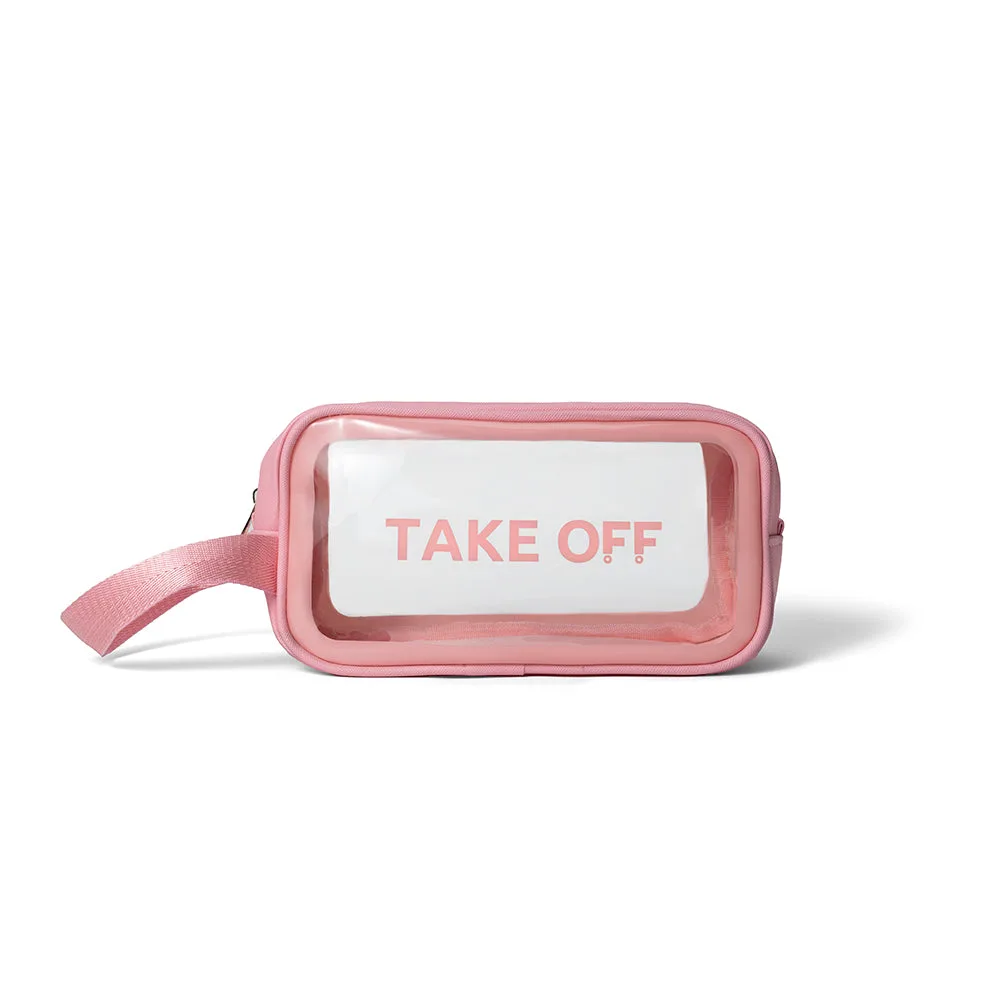
- Big Toiletry Pouch: CARRY WHAT YOU NEED: take your favorite toiletries along in this easy-to-carry pouch. With the ability to fold up, you can easily fit your must-have toiletries while traveling. The fold-up design lets you compress the pouch when it is not full, so it works for both short and long trips without wasting space.
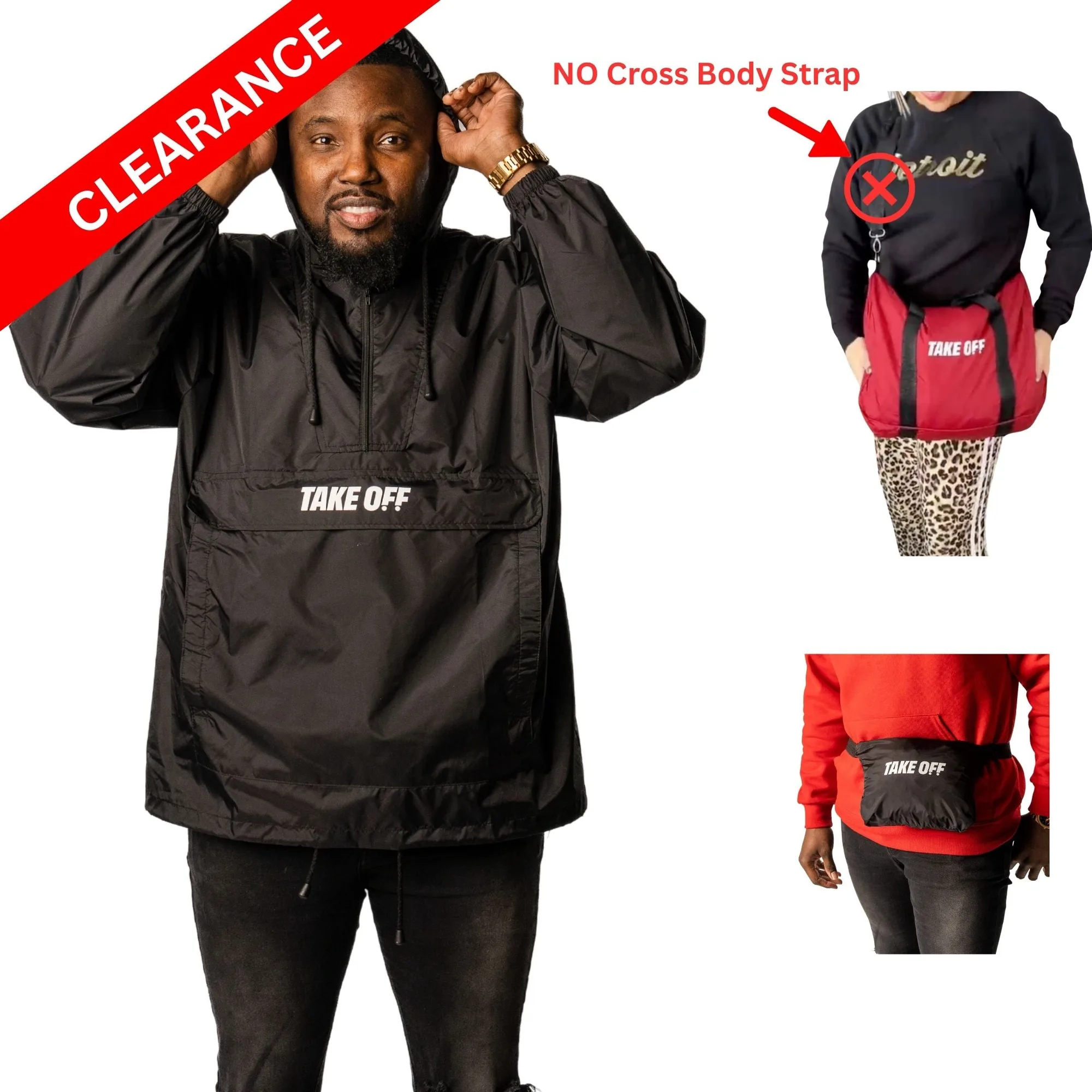
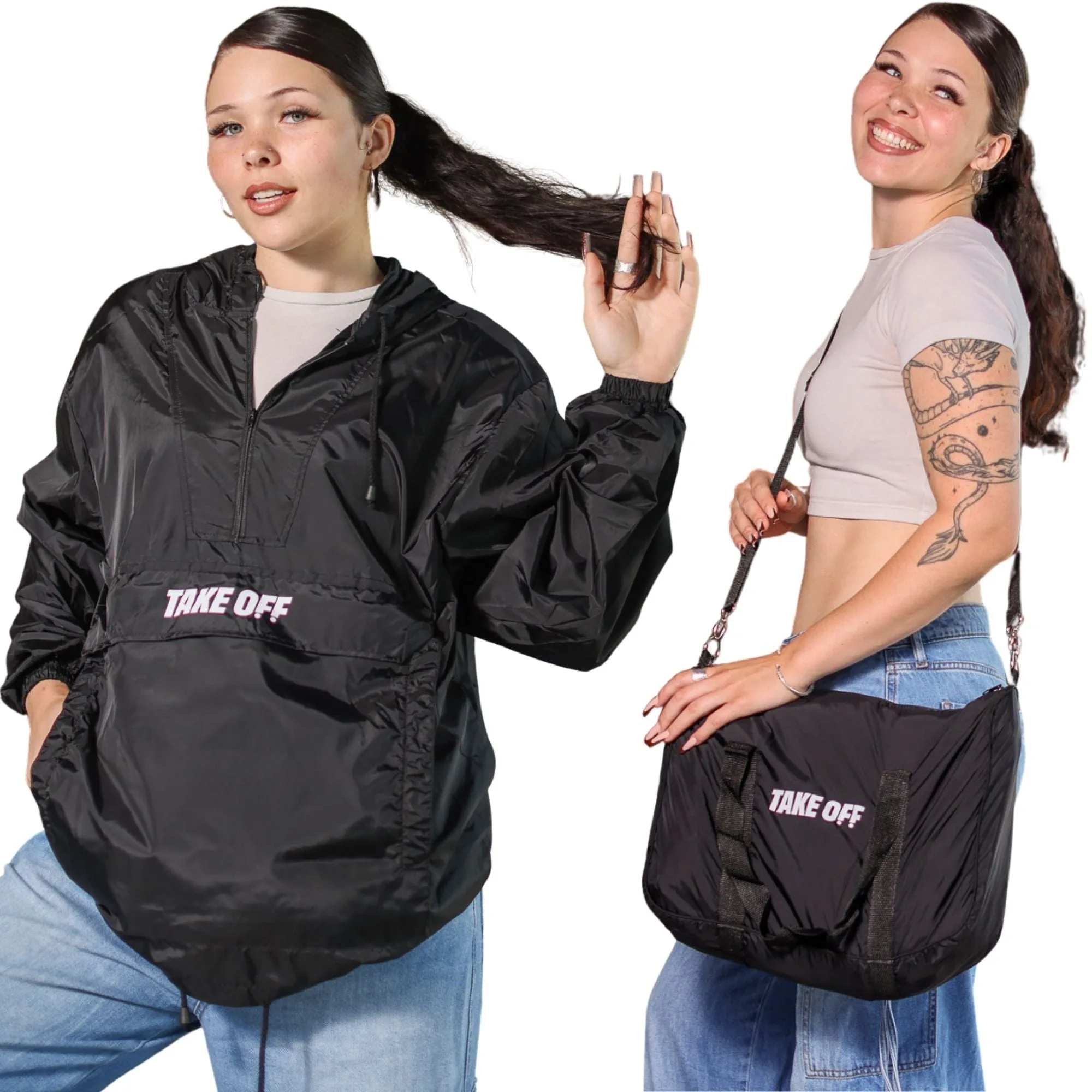
- https://takeoffluggageoiu.com/products/duffle-bag-jacket-no-crossbody-strap-22d8e8d2b7d4dbd0b6734981-1384360Duffle Bag Jacket (No Crossbody Strap): 3-IN-1 DUFFLE BAG JACKET: transforms from a pouch to a jacket to a duffle bag in seconds. If you want one item that covers a toiletry pouch, a layer, and a carry bag, this replaces three separate packing pieces.
Who should buy which pouch
Best for
- Carry-on-only travelers who need a compact, foldable pouch that slips into a personal item.
- Travelers who check a bag and want a large, structured pouch for full-size bottles.
- Anyone who wants one pouch that works for both weekend and week-long trips.
Not for
- Travelers who never carry liquids and only need a toothbrush and razor.
- People who prefer a hard-sided case that cannot compress or fold.
- Those who want a single bag for every toiletry and every trip without adjusting contents.
Buy for the trip you take most often, not the one you take once a year. A foldable, wipe-clean pouch in the right size will outlast three cheap replacements and make security lines faster. Start with the decision rules above, then pick the product that matches your packing style.