Quick Answer
For immediate bad breath relief, mouthwash wins, but for long-term odor control, tongue scraping is more effective because it physically removes the bacteria and debris that cause bad breath. The best approach combines both: scrape your tongue daily and use mouthwash as a refreshing finish.
Bad breath, or halitosis, is a common concern that often leads to a choice between two popular remedies: tongue scraping and mouthwash. Both promise fresher breath, but they work in fundamentally different ways. Understanding these differences helps you pick the right tool—or combination—for your routine.
This comparison breaks down the effectiveness of tongue scrapers versus mouthwash, based on how each targets the root causes of bad breath. We'll also look at how products like the Adult Tongue Scraper and supermouth-293690">supermouth-293688">supermouth-fluoride-free-hydroxyapatite-mouthwash-293728">SuperMouth Fluoride-Free Hydroxyapatite Mouthwash fit into a practical daily routine.
How Tongue Scraping Targets Bad Breath
The tongue's surface is a prime hiding spot for bacteria, food particles, and dead cells—all of which can produce volatile sulfur compounds that cause bad breath. Tongue scraping physically removes this buildup, reducing the bacterial load that brushing alone often misses.
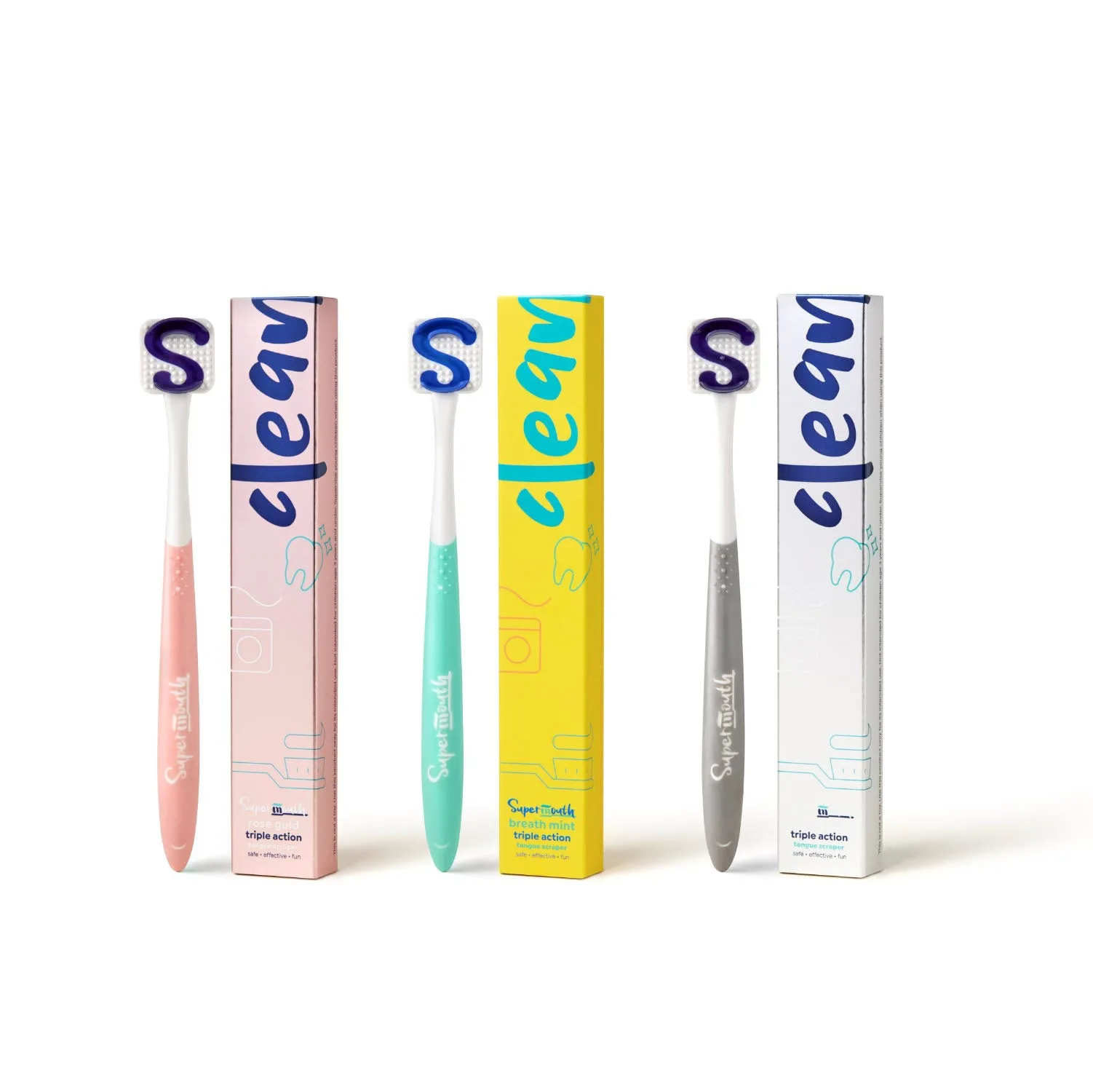
A tongue scraper like the Adult Tongue Scraper is designed with studs that gently exfoliate the tongue, scooping out bad bacteria and making room for a healthier mouth microbiome. This mechanical action addresses the source of odor directly, which is why many people notice a significant improvement in breath freshness after adding scraping to their routine.
- Scrape gently from back to front, and rinse the scraper after each pass.
How Mouthwash Fights Bad Breath
Mouthwash works differently—it rinses away loose debris and delivers active ingredients that kill bacteria or neutralize odors. Many formulas also leave a refreshing flavor that masks bad breath temporarily.
For example, the SuperMouth Fluoride-Free Hydroxyapatite Mouthwash contains prebiotics that fight bad breath-causing germs, along with a patent-pending formula that buffers teeth against acidic attacks. This type of mouthwash targets bacteria throughout the mouth, including areas a scraper can't reach, but its effects are often shorter-lived compared to the physical removal achieved by scraping.
- Swish for the time recommended on the label, then spit—don't rinse with water afterward to let the active ingredients keep working.
The Trade-Off: Immediate vs. Long-Term
The key trade-off between tongue scraping and mouthwash is immediacy versus duration. Mouthwash provides a quick burst of freshness that can last a few hours, making it ideal for on-the-go touch-ups or before a meeting. However, it doesn't remove the biofilm on your tongue, so odor can return once the mouthwash's effects wear off.
Tongue scraping, on the other hand, removes the physical layer of bacteria and debris, which can reduce the source of odor for several hours or longer. It doesn't offer the same instant flavor boost as mouthwash, but its effects are more foundational. For persistent bad breath, scraping is often more effective than rinsing alone.
- Use mouthwash when you need quick freshness; scrape daily to address the root cause.
Trade-Offs at a Glance
- Immediate freshness: Mouthwash delivers instant breath freshening and a pleasant taste, but the effect is temporary and doesn't remove the biofilm on your tongue. Reach for mouthwash when you need quick confidence.
- Long-term odor control: Tongue scraping physically removes bacteria and debris, which can reduce bad breath at its source for a longer period. Make scraping a daily habit for lasting freshness.
- Convenience and portability: Mouthwash is easy to carry and use anywhere, while tongue scrapers are compact but require a sink and a bit more time. Keep a mouth spray or small mouthwash for on-the-go, and scrape at home.
Products That Support Fresh Breath
- Adult Tongue Scraper: The Supermouth adult tongue scraper is a studded tongue scrubber that gently exfoliates the tongue. If you're wondering where to buy a tongue cleaner, look no further. Our adult tongue brush scoops out bad bacteria and makes room for healthy mouth microbiomes. This scraper directly targets the bacteria on your tongue, which is a primary cause of bad breath. Its studded design helps exfoliate gently, making it suitable for daily use.
- SuperMouth Fluoride-Free Hydroxyapatite Mouthwash: Our dentist-formulated non-fluoride mouthwash contains prebiotics that fight bad breath-causing germs and patent-pending superpower formula, Hydroxamin® (nano-hydroxyapatite, vitamin D3, and vitamin K2), which buffers teeth against acidic attacks. Our pH-balanced fluoride free mouth rinse formula contains no antibiotics, no fluoride, no SLS, and is non-GMO. This mouthwash targets odor-causing bacteria throughout the mouth and supports enamel health, making it a good complement to tongue scraping for comprehensive breath protection.
Which Should You Choose?
Best for
- People who want a quick, portable breath freshener for social situations
- Those looking for a fluoride-free option that also supports enamel health
Not for
- If you have persistent bad breath, mouthwash alone won't address the root cause—you'll need to add tongue scraping to your routine.
Both tongue scraping and mouthwash have a place in a fresh-breath routine. Scraping tackles the source, while mouthwash provides a refreshing finish. For the best results, combine them: scrape daily and use mouthwash when you need an extra boost of confidence.