Quick answer
For heavy tools you carry any distance, a tool backpack is usually the better carrier because two shoulder straps spread the load and leave your hands free for ladders, doors, and railings. A tool bag wins when your tools mostly ride in a truck bed, get dumped on a bench, or share a gang box. Pick the backpack for mobility and the bag for stationary access.
Every tradesperson eventually faces the same question: do I strap my tools to my back or swing them from my hand? The answer depends less on the tools themselves and more on how far you carry them, how often you set them down, and what your shoulders can tolerate by Friday afternoon.
This comparison looks at the real trade-offs between a tool backpack and a traditional tool bag, using the same design logic SWISSGEAR applies to its carry line. If you already know your commute involves three flights of stairs, the decision is easier than you think.
How each carrier moves weight
A tool bag concentrates everything into one handle, so the load hangs from your fingers, wrist, and one side of your body. That is fine for short carries, but on a long walk or a stairwell it pulls your shoulder down and forces you to switch hands. A tool backpack moves that same weight onto both shoulders and your torso, which is why it feels lighter even when the scale says otherwise.
The trade-off is access. A bag opens wide and stays open while you work. A backpack usually has to come off your back and be laid down before you can reach the main compartment, so if you are constantly grabbing and re-sheathing tools, the bag keeps the workflow faster.
- Test your route before you buy: count stairs, doors, and the distance from parking to your work area.
- If you carry more than a short block, prioritize a backpack with a padded back panel and wide straps.
Protection and organization inside
Tool bags typically offer one large cavity plus a few exterior pockets, which makes them simple but prone to tool pileups. Backpacks tend to add more internal structure: separate compartments, organizer panels, and dedicated sleeves. That organization matters when you carry a laptop or tablet alongside hand tools for estimates, photos, or job paperwork.
The SWISSGEAR Cecil Laptop Backpack is a useful reference point for how compartment design works in practice. It uses three individual compartments, one with a stay-in-place laptop strap, so heavy or fragile items stay put instead of sliding into each other. A bag with a single open cavity cannot match that separation without added inserts.
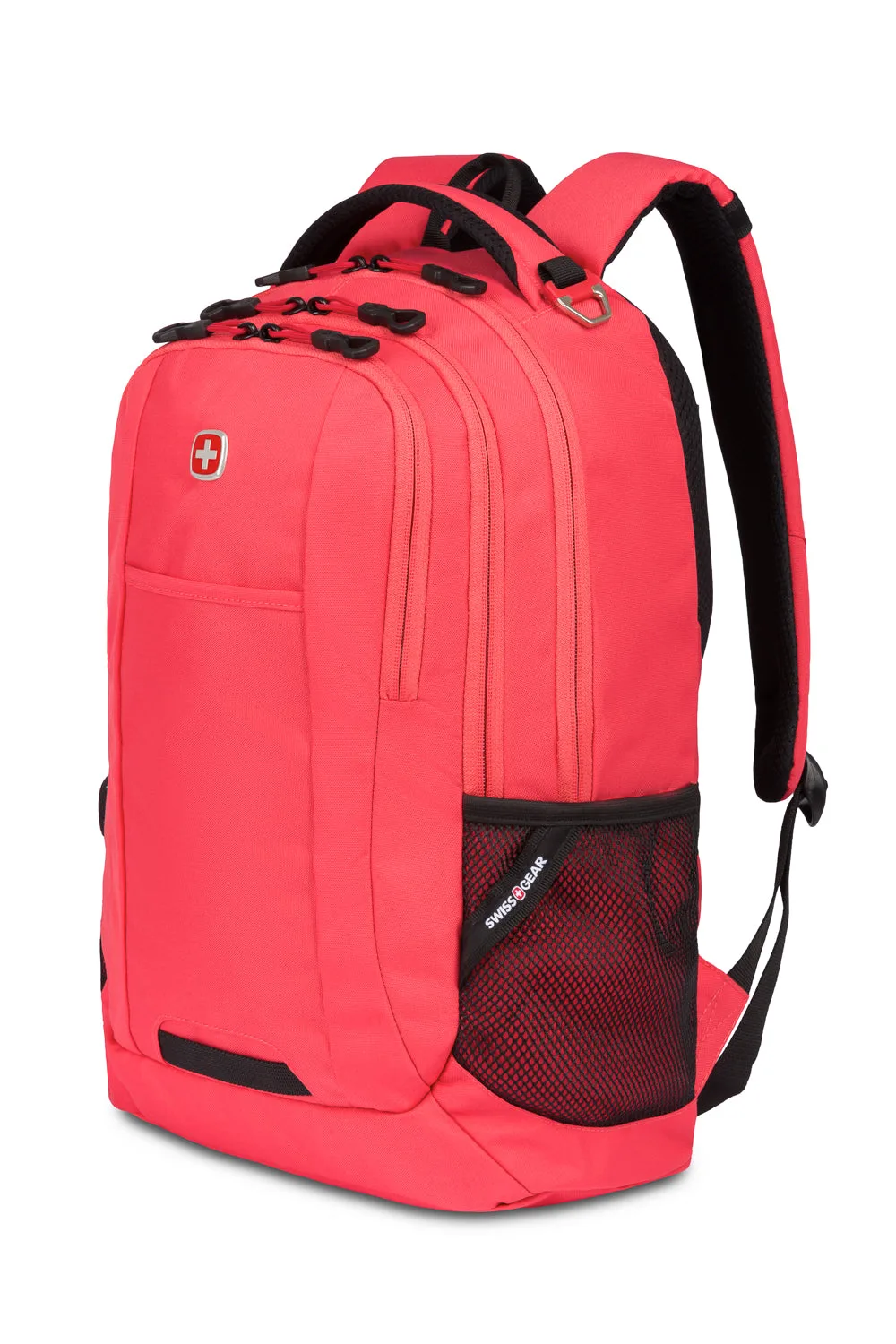
SWISSGEAR Cecil Laptop Backpack
- If you carry electronics with tools, look for a padded laptop compartment and an organizer panel.
- If you carry only bulky hand tools, a simple open bag may be easier to load and empty.
Security and weather on the jobsite
Open jobsites and crowded transit create two different risks: theft and weather. Backpacks can be worn on both shoulders, which keeps zippers against your back and makes a grab harder. Some models go further. The SWISSGEAR Viibe Pro Laptop Backpack uses Anti-Grab zipper pulls and robust nylon loops designed to keep potential thieves at bay, a feature set that matters if you move through public transport before reaching the site.
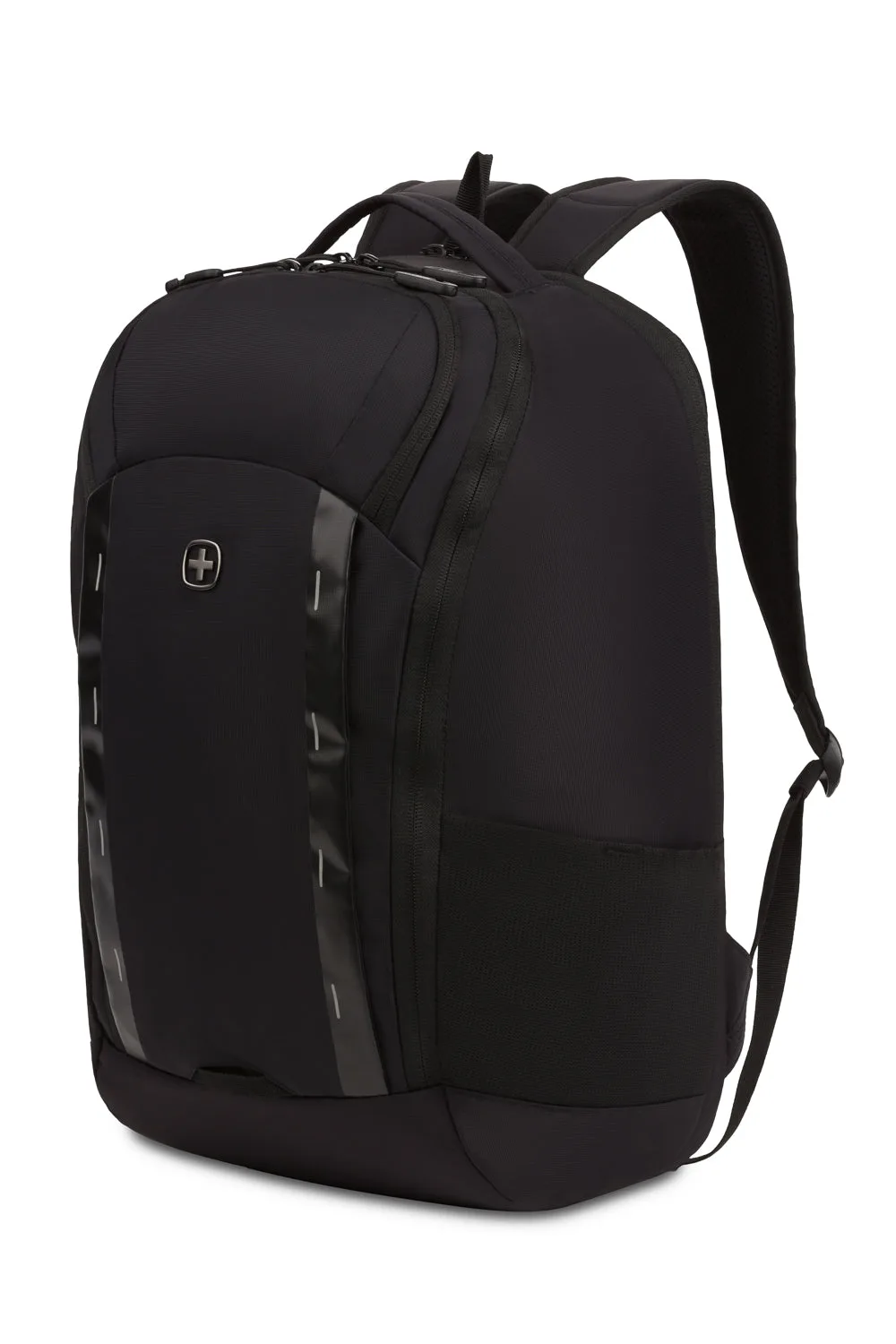
SWISSGEAR Viibe Pro Laptop Backpack
Bags, by contrast, sit open and exposed while you work. That is convenient, but it also means rain, dust, and wandering hands reach your tools faster. Neither format is waterproof unless the manufacturer says so, so check the stated fabric and treat weather resistance as a decision factor rather than an assumption.
- On transit-heavy routes, favor a backpack with security zipper pulls.
- On exposed outdoor sites, keep a rain cover or dry bag for either format.
Capacity, bulk, and storage between jobs
Backpacks generally hold more volume in a taller, narrower footprint, which fits lockers and car trunks neatly. Bags spread out wider and lower, so they slide under a bench or sit flat in a truck bed without tipping. If your tools live in a vehicle overnight, a bag is often the easier shape to secure and stack.
Weight limits are not published for most carriers, so treat this as a decision limitation: match the bag to what you can comfortably lift repeatedly, not to a marketing number. Load your heaviest tools closest to your back in a backpack, and keep the bag's heaviest items centered over the handle.
- Measure your locker or trunk space before choosing a taller backpack.
- Pack heavy items high and close to your spine in a backpack to reduce strain.
Trade-offs at a glance
- Carrying comfort: A backpack distributes weight across both shoulders and your torso; a bag hangs from one hand and one side of your body. Choose the backpack if your walk from vehicle to work area is long or vertical.
- Access speed: A bag stays open at your feet while you work; a backpack usually comes off your back and lies flat before you can reach inside. Choose the bag if you grab and return tools dozens of times an hour.
- Security and weather: A worn backpack keeps zippers against your body and harder to grab; an open bag exposes contents to rain, dust, and theft. Choose the backpack for transit-heavy routes and the bag for enclosed, supervised work areas.
- Storage shape: Backpacks are tall and narrow for lockers; bags are wide and low for truck beds and benches. Measure your storage space before deciding which footprint fits.
Carry features worth comparing
- SWISSGEAR Viibe Pro Laptop Backpack: Anti-Grab zipper pulls and robust nylon loops are designed to keep potential thieves at bay. Useful if your route to the jobsite runs through buses or trains where a bag on your back is exposed.
- SWISSGEAR Cecil Laptop Backpack: Three individual compartments, one accommodating a laptop with a stay-in-place strap. Shows how compartment separation keeps tools, paperwork, and electronics from colliding in transit.
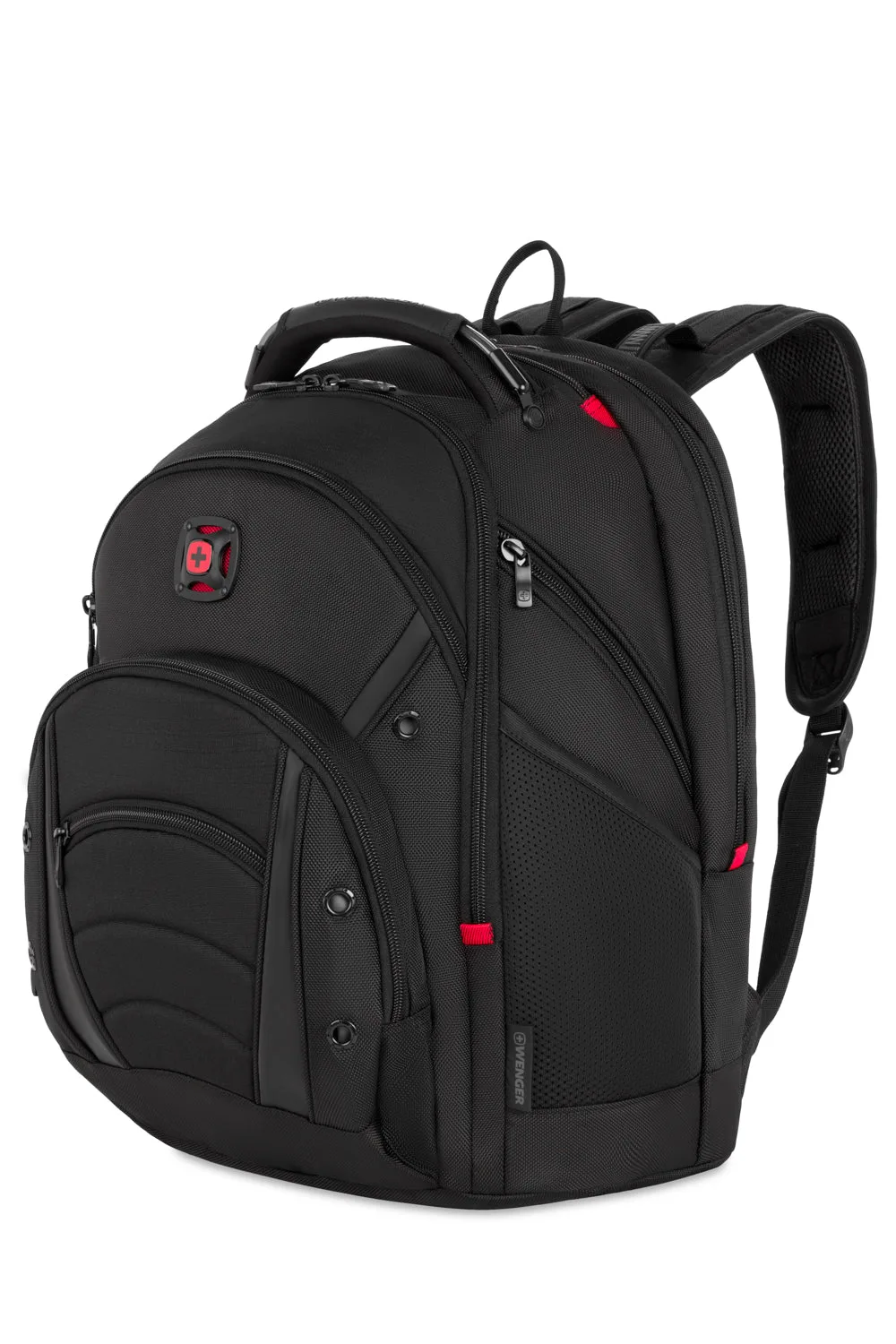
- Wenger Synergy Laptop Backpack: Protective compartments for a laptop and tablet, an essentials organizer, a quick pocket, and mesh side pockets for a water bottle or umbrella. A quick-access pocket and bottle storage reduce how often you set the bag down during a workday.
Which should you carry?
Best for
- Tradespeople who walk long distances, climb stairs, or ride public transit to the jobsite
- Workers who carry a laptop or tablet alongside hand tools and need separated compartments
- Anyone who wants both hands free for ladders, doors, and equipment
Not for
- Workers whose tools stay in a truck bed or gang box and rarely travel on foot
- Jobs where tools are grabbed and returned constantly from a single open cavity
- Anyone who cannot comfortably lift the loaded pack onto both shoulders repeatedly
Match the carrier to the route, not the tool count. If your tools travel on your body, a backpack earns its place; if they mostly sit and wait, a bag keeps the workday simpler. Either way, load it, lift it, and walk your real route before you commit.