Quick answer
Choose the Pincer if you want the smallest, most concealable Toor fixed blade for pocket or under-shirt carry and close-range cutting. Choose the Specter R if you want a longer double-edged dagger with a finger ring for a full grip and a more defensive role. Both are fixed blades, but they solve different problems.
How the Pincer and Specter R differ
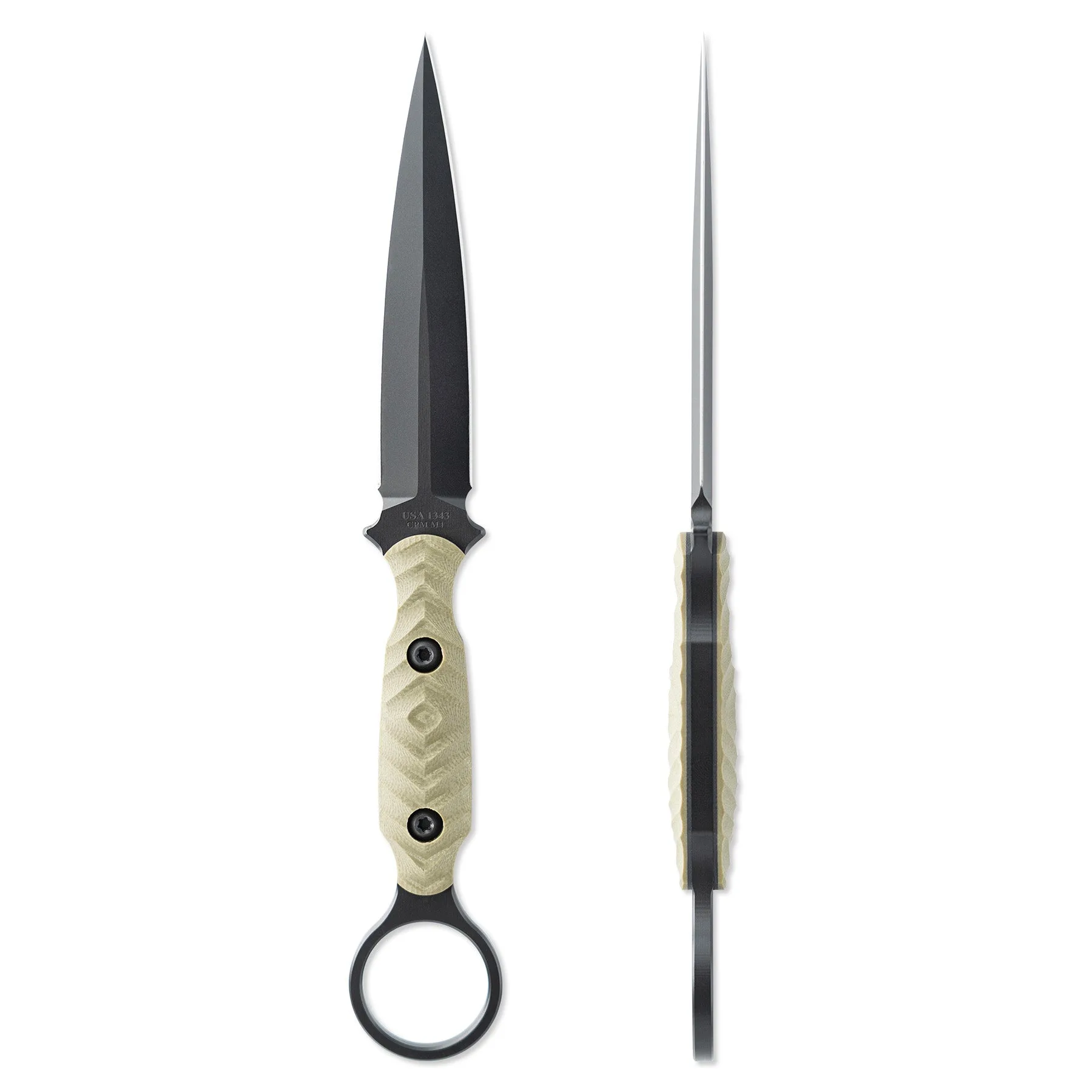
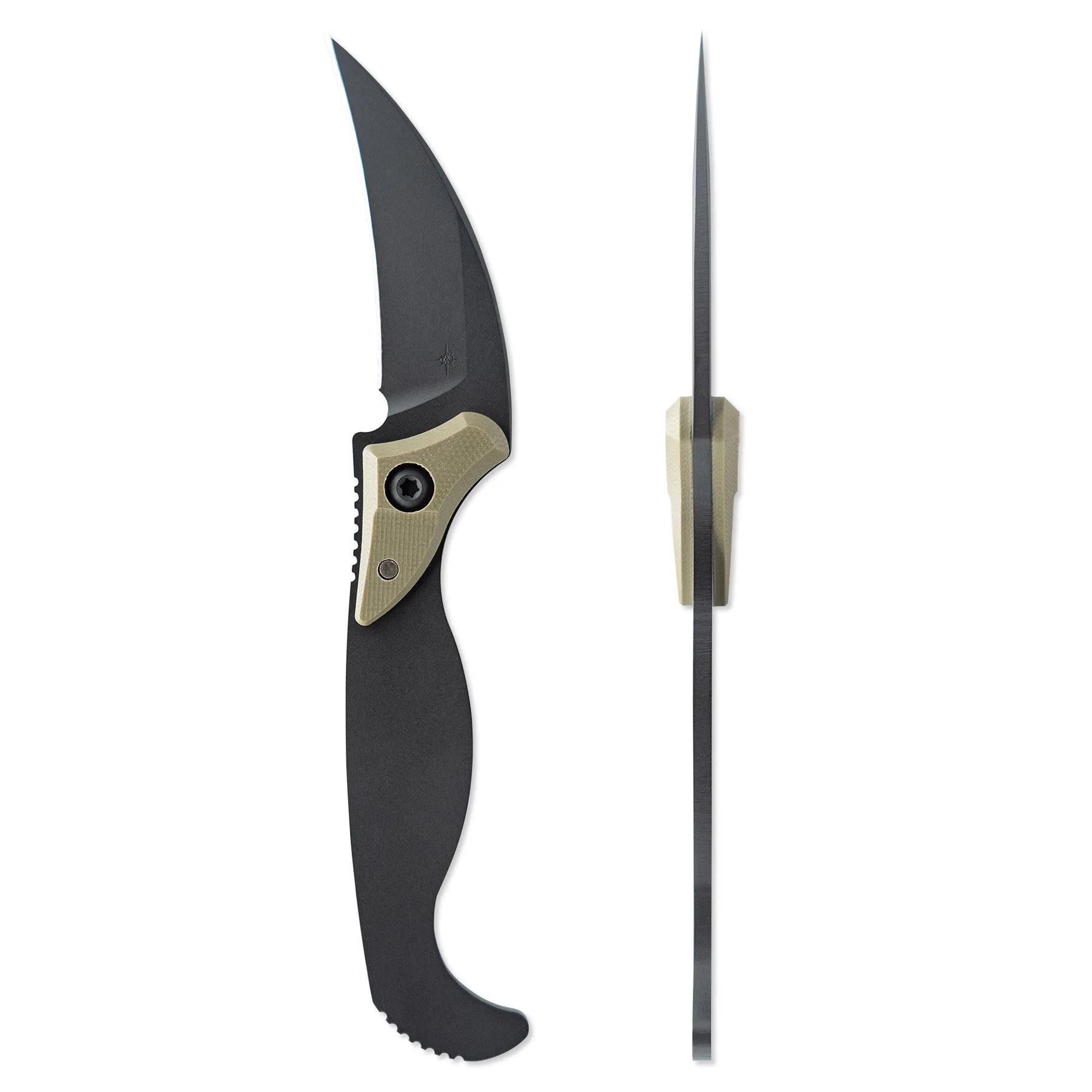
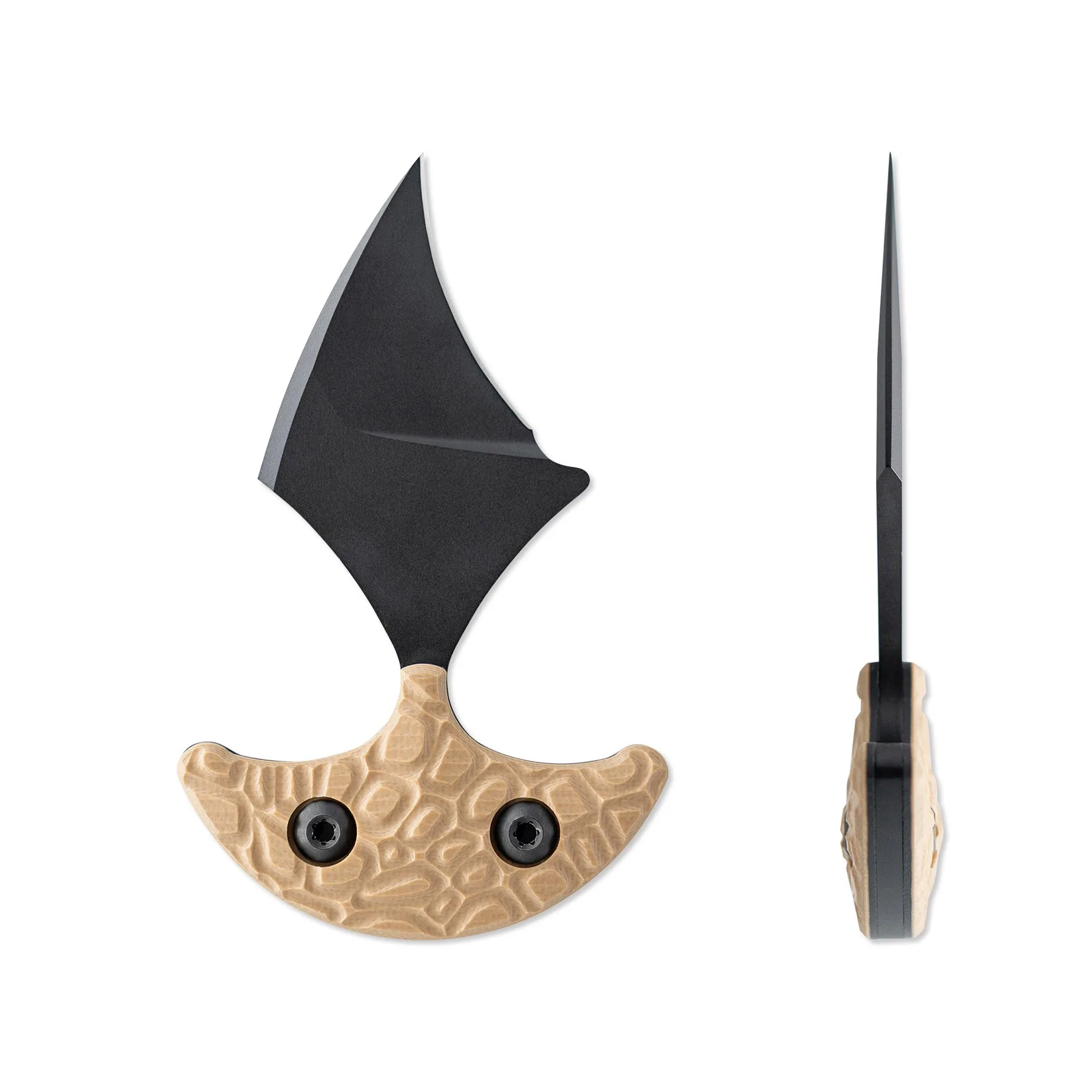
The Pincer is an ultra-compact reverse-edge hawkbill built for discreet everyday carry and rapid access. Its hawkbill profile excels at close-range cutting and pull cuts, and it is compact enough to disappear under a T-shirt or inside a pocket. The Specter R is a tactical and covert double-edged dagger with a ring, an overall length of 9.25 inches, and a weight of 6.5 ounces. That extra length and double edge make it a more deliberate defensive tool, while the ring helps with retention and drawing.
Carry method and access
The Pincer's minimalist footprint suits pocket carry or inside-the-waistband placement where you want the knife to stay out of the way until needed. The Specter R's ring and longer handle give you more to grab during a stressed draw, but its size means you will notice it more on a belt or in a kit. If your priority is disappearing into daily clothing, the Pincer wins; if you want a dedicated defensive blade that stays accessible on a belt or rig, the Specter R is the stronger choice.
Blade geometry and cutting tasks
The Pincer's reverse-edge hawkbill is designed for controlled, close-range cutting where a straight edge would be awkward. The Specter R's double-edged dagger profile is not a utility shape; it is built for defense and covert use. Neither knife is a substitute for a dedicated utility blade, so pick based on the role you actually need filled. If you expect to open boxes or cut rope daily, the Pincer's hawkbill will feel more natural; if the knife is strictly for personal protection, the Specter R's symmetry and reach make more sense.
Trade-offs to weigh
- Concealment vs. reach: The Pincer hides easily in a pocket or under a shirt, but the Specter R gives you a longer blade and a ring for a more secure grip. You cannot have both maximum concealment and maximum reach in one knife. Pick concealment if you carry in public daily; pick reach if the knife lives on a belt or in a kit.
- Hawkbill vs. dagger edge: The Pincer's reverse-edge hawkbill shines at pull cuts and controlled close work. The Specter R's double edge is a defensive shape, not a utility one, so it will feel less natural for everyday cutting tasks. Match the edge to your most common cutting motion, not the one you imagine using.
- Weight and bulk on body: The Specter R weighs 6.5 ounces and measures 9.25 inches overall, so it is a noticeable fixed blade. The Pincer is built to be ultra-compact, which means less bulk but also less handle to hold onto under stress. Carry the knife you will actually keep on you, not the one that only works in theory.
Product facts
- Specter R - Ranger Green: The Specter R is a tactical and covert double-edged dagger with a ring, an overall length of 9.25 inches, and a weight of 6.5 ounces. The ring and double edge support a full grip and defensive use, while the length makes it a centerpiece for a kit rather than a pocket knife.
- Pincer - Ranger Green: The Pincer is an ultra-compact reverse-edge hawkbill designed for discreet everyday carry and rapid access, compact enough to disappear under a T-shirt or inside a pocket. Its small footprint and hawkbill geometry favor close-range cutting and low-profile carry where a larger fixed blade would print.
Which should you choose?
Best for
- Everyday carry where the knife must stay hidden in a pocket or under a shirt
- Close-range cutting tasks that suit a hawkbill edge
- Users who want the smallest possible fixed blade footprint
Not for
- Anyone who needs a longer blade for defensive reach
- Buyers who prefer a double-edged dagger profile
- People who want a ring for a full-hand draw under stress