Quick answer
For flat, short bird walks where you raise binoculars often, a tote bag keeps optics upright and within easy reach. For longer trips, uneven ground, or when you carry water, layers, and a camera, a backpack distributes weight across both shoulders and keeps your hands free. If your walk mixes both, start with a tote and add a backpack only when your load passes roughly five pounds.
How each bag carries binoculars and a spotting scope
A tote holds binoculars vertically in an open main compartment, so you can grab them without unzipping or swinging the bag around. That matters when a warbler flits through and you have seconds to raise your glass. The trade-off is exposure: an open tote lets rain, dust, and branches reach your optics, and a heavy scope can tip the bag sideways on your shoulder.
A backpack keeps optics padded and protected, but most models require you to stop, take the pack off, and unzip a compartment before you can use them. Some birders solve this by wearing binoculars on a harness and using the backpack only for scope, tripod, and layers. That combo adds bulk but keeps your primary optic ready.
Weight, balance, and trail type
On pavement, boardwalks, and mowed refuge trails, a tote's single-shoulder carry is fine because you set it down at each stop. On roots, mud, and side slopes, a one-shoulder load pulls you off balance and forces you to counter-lean. A backpack with two straps and a waist belt keeps the load centered, which reduces fatigue on two-hour walks and leaves both hands free for a scope or trekking pole.
If you carry a spotting scope and tripod, the combined weight usually pushes you into backpack territory. Weigh your kit before you decide: a tote works until the load starts dictating your posture.
What actually fits in each bag
A tote swallows a field guide, a small notebook, a water bottle, and a light layer, but it has no structure, so items shift and small things fall to the bottom. A backpack adds pockets, a laptop sleeve you may not need, and compression straps that keep a jacket from bouncing. The trade-off is that deep backpacks hide snacks and gloves until you unload everything at home.
Pack by frequency of use: put the items you reach for most in the bag's most accessible spot, and store rain gear and first-aid supplies at the bottom of either bag.
Trade-offs at a glance
- Access vs protection: A tote gives instant access to binoculars but leaves them exposed to weather and branches. A backpack protects optics but slows access. Choose based on how often you raise your binoculars versus how rough the trail is.
- One shoulder vs two: A tote loads one shoulder, which is fine on flat ground but tiring and destabilizing on uneven trails. A backpack spreads weight across both shoulders and hips. If your walk includes roots, mud, or side slopes, pick the backpack.
- Organization vs simplicity: A backpack adds pockets and compression straps but can hide small items. A tote is simple but lets contents shift and settle. Pack by how often you reach for each item, not by what fits.
Birding apparel that pairs with either bag
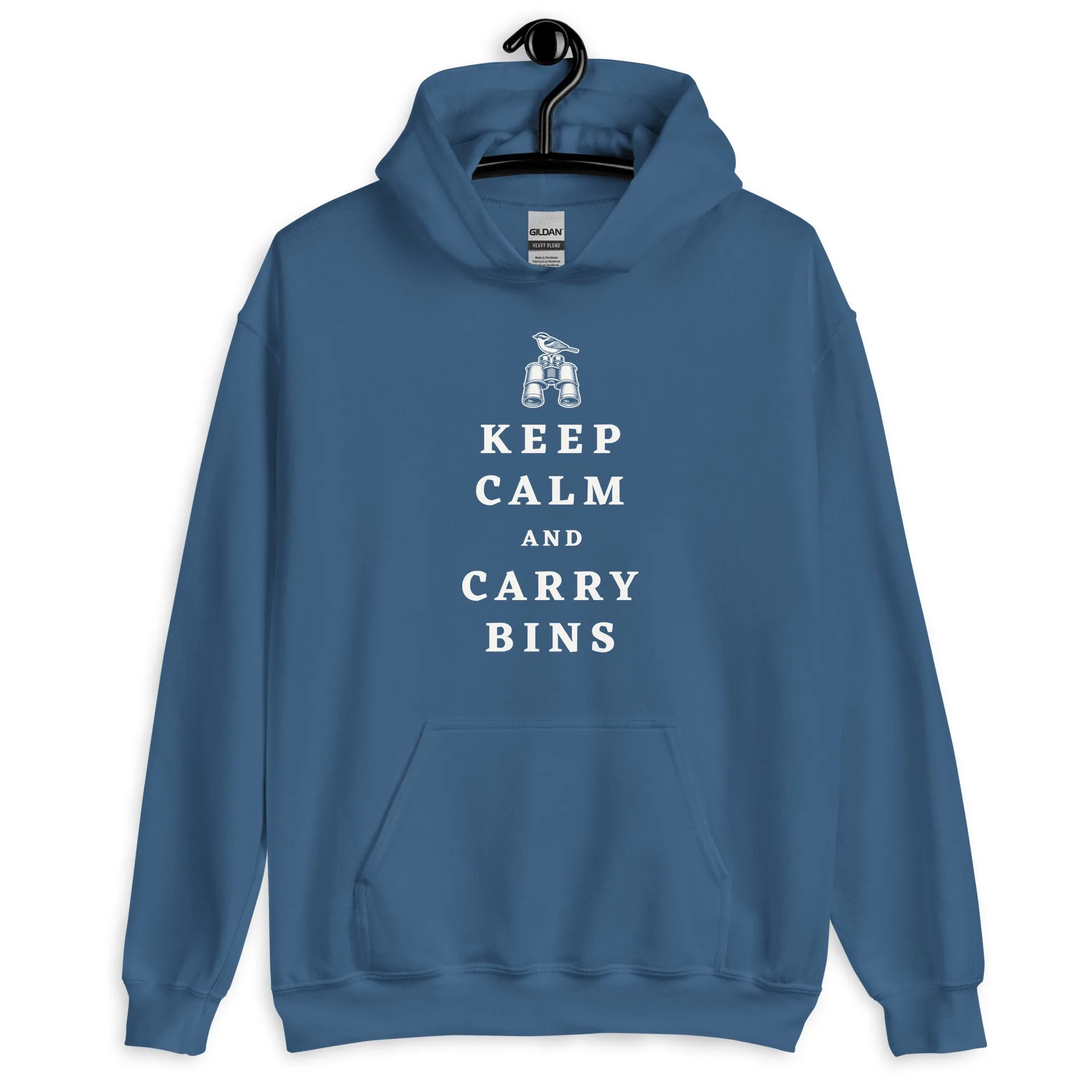
- Keep Calm and Carry Bins Unisex Hoodie: Keep Calm and Carry Bins Unisex Hoodie: air-jet spun yarn for reduced pilling, double-needle stitching, and a cozy brushed lining. A hoodie that resists pilling and holds up to repeated packing and unpacking is useful when you are layering under a backpack strap or tote handle.
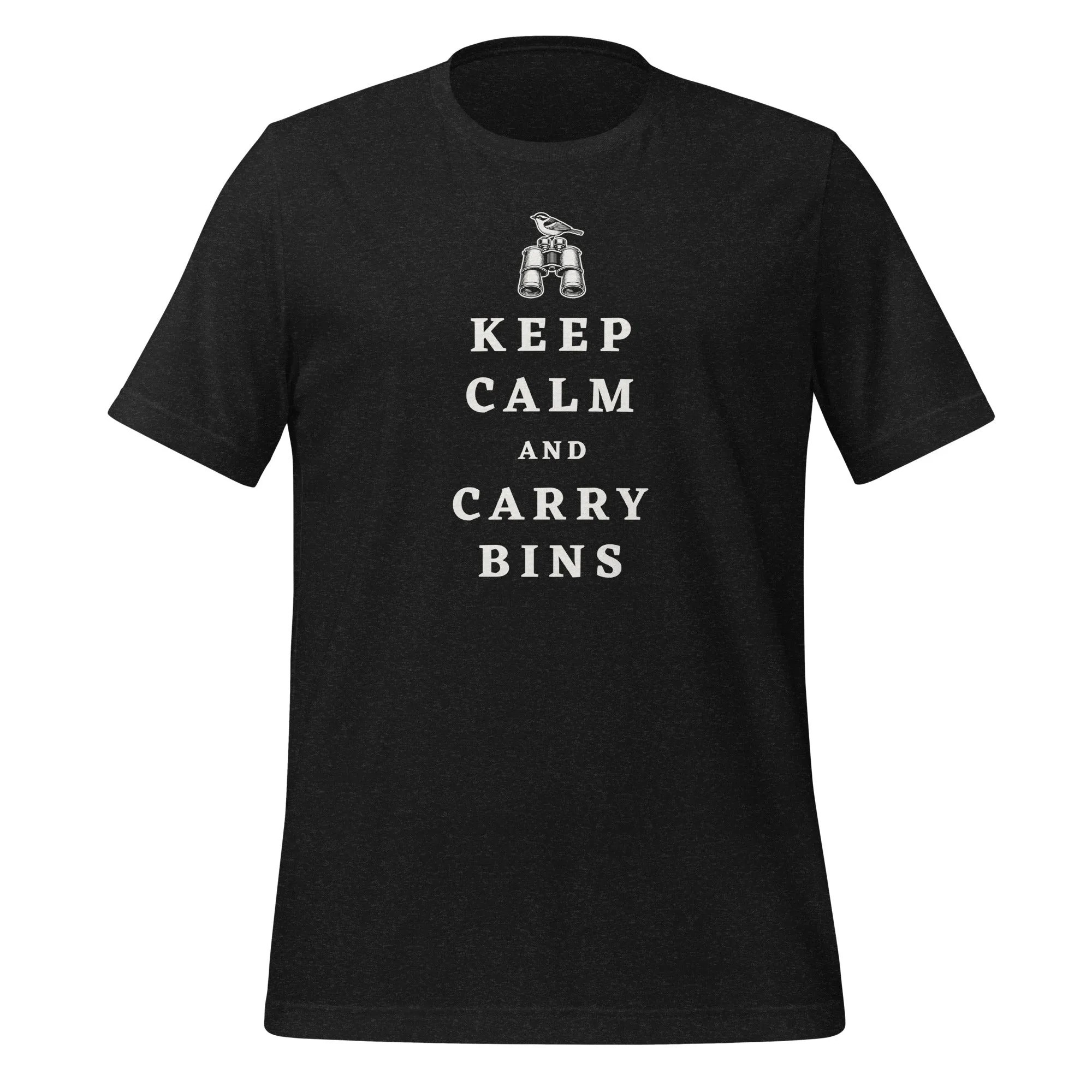
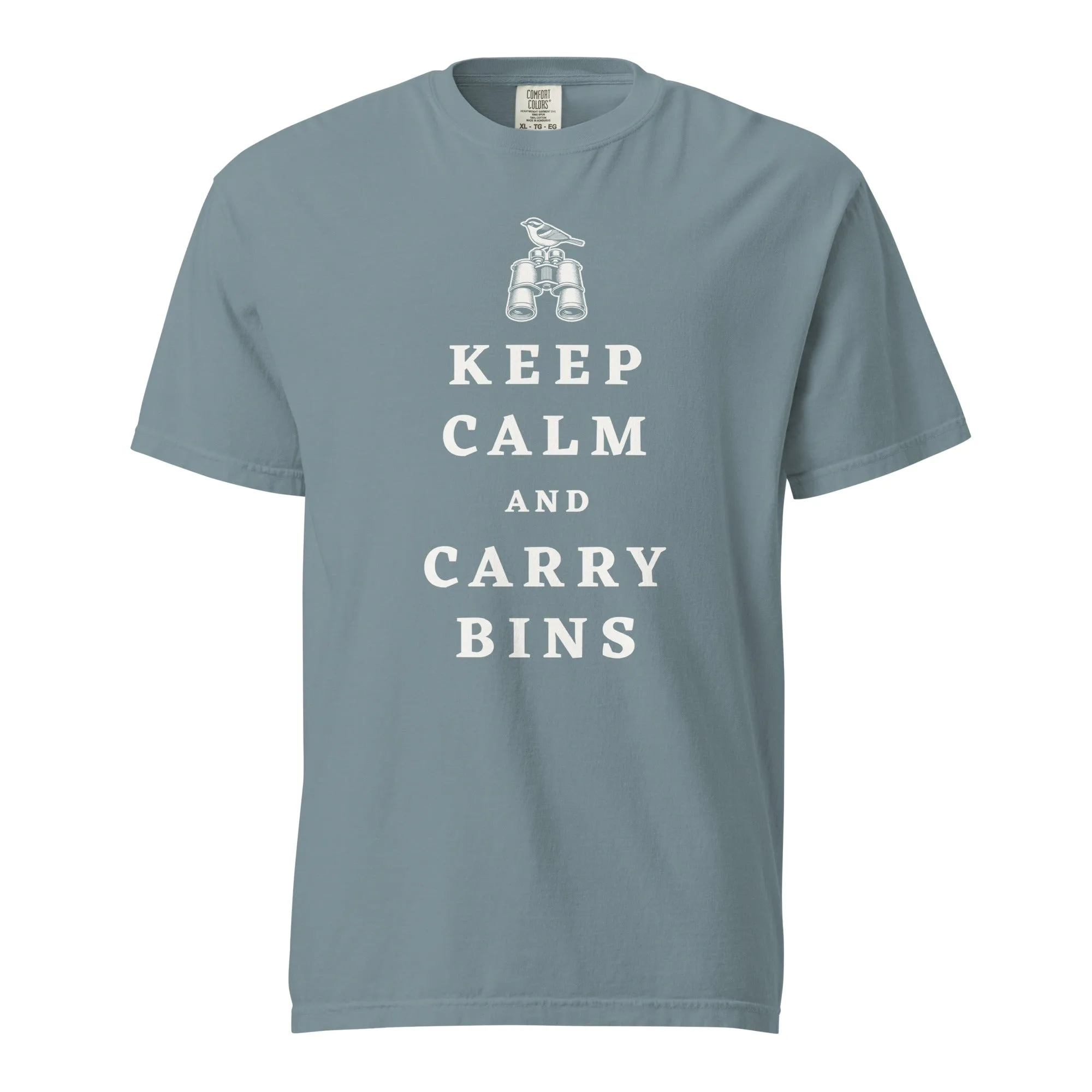
- Keep Calm and Carry Bins T-Shirt (Lightweight): Keep Calm and Carry Bins T-Shirt (Lightweight): soft, lightweight cotton fabric for comfort during birding adventures or casual outings. A lightweight tee keeps you cool on warm-weather walks, so you can carry a smaller bag and still stay comfortable.
Which bag fits your birding day
Best for
- Short, flat walks where you raise binoculars frequently
- Birders who set the bag down at each stop and want quick access
- Warm-weather outings with a light load under five pounds
Not for
- Long trips on uneven ground where one-shoulder carry causes fatigue
- Carrying a spotting scope, tripod, and heavy water bottles
- Birders who need both hands free for trekking poles or a camera