Quick answer
Touch and feel puzzles combine chunky puzzle pieces with varied textures, giving babies a hands-on way to explore shapes, colors, and sensations while building fine motor control and early problem-solving skills.
Why texture matters for infant development
Babies learn about the world through their senses, and touch is one of the first to develop. Tactile toys like touch and feel puzzles introduce different surfaces—soft, bumpy, squishy—that help infants build neural connections and understand object properties. Unlike flat puzzles, these textured pieces encourage repeated exploration, which supports memory and recognition.
A common concern is that babies might mouth the pieces. Most touch and feel puzzles for this age use non-toxic materials and sturdy wood construction. Always check for loose parts, but the chunky design of puzzles like the Forest Friends Touch & Feel Puzzle makes them safe for supervised play starting around age 2.
How touch and feel puzzles differ from standard puzzles
Standard wooden puzzles focus on shape matching and hand-eye coordination. Touch and feel puzzles add a sensory layer: each piece has a different texture or material embedded in it. This extra dimension keeps babies engaged longer and provides more cues for correct placement, reducing frustration for beginners.
The trade-off is that the textured surfaces can collect crumbs or dust, so occasional gentle cleaning with a damp cloth is needed. The sensory benefit usually outweighs this minor upkeep.
Frequently asked questions about touch and feel puzzles
At what age can a baby start using a touch and feel puzzle?
Most touch and feel puzzles are recommended from 18 months to 2 years, when babies have enough hand control to grasp chunky pieces. Always supervise, as some textured parts may be removable. The Forest Friends Touch & Feel Puzzle is labeled for ages 2 and up.
What skills do touch and feel puzzles develop?
They build fine motor skills through grasping and placing pieces, sensory awareness through varied textures, problem-solving as babies match shapes to slots, and language development when you name the animals, colors, and textures during play. Naming textures like 'squishy' or 'smooth' adds a vocabulary boost to each play session.
How do I clean a touch and feel puzzle?
Wipe wooden surfaces with a slightly damp cloth and dry immediately. For silicone or fabric textures, use a mild soap solution and air dry. Avoid soaking the puzzle or using harsh cleaners, as moisture can damage the wood or loosen textures.
Are touch and feel puzzles worth the higher price than regular puzzles?
Yes, if your baby responds well to tactile input. The sensory features can extend playtime and make puzzle-solving more accessible for younger toddlers. If your child already enjoys simple puzzles and doesn't show interest in textures, a standard puzzle may be sufficient. Observe your baby's reaction to textured toys before investing in multiple sensory puzzles.
Product spotlight
-
Forest Friends Touch & Feel Puzzle: This 5-piece wooden puzzle from Melissa & Doug features chunky animal pieces with squishy silicone textures, designed for ages 2 and up. The combination of wood and silicone gives babies two distinct tactile experiences in one toy, helping them practice gripping and pressing while learning animal names and colors.
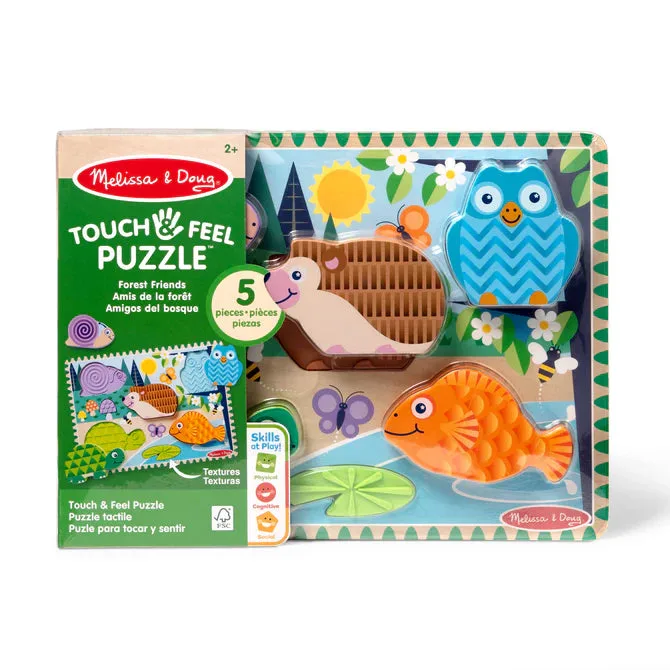
Forest Friends Touch & Feel Puzzle