Quick answer
If your towels are not absorbent, the most likely cause is a coating left behind by liquid fabric softener, dryer sheets, or too much detergent. Stop using those products, wash the towels once with a small amount of detergent and no softener, and tumble dry low. If the towel still repels water after two or three washes, the coating has built up too long or the fiber itself is worn out, and it is time to replace the towel rather than keep treating it.
A towel that smears water around instead of soaking it up is not a mystery. Most of the time, something is sitting on the fibers that should not be there, and it is something you added on purpose. Fabric softener and dryer sheets are the leading culprits, but detergent overload and a crowded dryer can cause the same effect.
The good news is that most towels can be brought back. The bad news is that not every towel is worth saving, and knowing when to stop treating and start replacing saves you time and money. This guide walks through the symptoms, the likely causes, and the fixes in the order you should try them.
Why towels stop absorbing water
Cotton towels absorb because water can move into the spaces between the fibers. Liquid fabric softener and dryer sheets work by depositing a thin waxy or silicone-based film on fabric, which makes clothes feel smooth but also blocks those spaces. Over time the film builds up, and the towel starts pushing water away instead of pulling it in.
Detergent residue causes a similar problem. Using more detergent than the load needs, or washing in cold water when the detergent is not designed for it, leaves a sticky layer that traps oils and dirt. A dryer that is packed too full also matters, because towels need room to tumble and separate so moisture can escape evenly.
- Stop using liquid fabric softener and dryer sheets on any towel you want to stay absorbent.
- Measure detergent instead of eyeballing it; more detergent does not mean cleaner towels.
- Dry towels in a load that leaves room for them to move, not packed tight against the drum.
How to restore towel absorbency
Start with the gentlest fix. Wash the towels on a warm, gentle cycle with a small amount of detergent and no softener, then tumble dry low. If the towels still repel water, run a second wash with one cup of white vinegar in the rinse cycle instead of softener. Vinegar helps break down the waxy residue that softener leaves behind, and the smell rinses away in the dryer.
If vinegar does not work, try a wash with half a cup of baking soda added to the detergent. Do not combine vinegar and baking soda in the same load, because they cancel each other out. After either treatment, dry on low and test the towel by dripping water on it. If the water beads on the surface, repeat once. If it still beads after two or three cycles, the buildup is too deep to reverse.
- Wash warm on gentle with a small amount of detergent and no softener.
- Use one cup of white vinegar in the rinse cycle for a softener buildup problem.
- Use half a cup of baking soda in the wash for detergent or oil residue.
- Test by dripping water on the towel; it should sink in within a second or two.
When to stop treating and replace the towel
There is a point where the problem is not residue but wear. Cotton fibers break down with repeated washing, and a towel that has been through hundreds of cycles will feel thin, flat, and stiff even after you strip the buildup. If the towel is several years old, has lost its loft, or has frayed edges, no amount of vinegar will bring back the absorbency it had when new.
A towel that still repels water after three corrective washes is also a candidate for replacement. At that point you are spending more on vinegar and electricity than the towel is worth. Replace it with a towel you can care for correctly from the start, and keep softener away from it.
- Replace towels that are thin, flat, stiff, or frayed, even after stripping.
- Replace towels that still bead water after three corrective washes.
- Start new towels right: no softener, measured detergent, low dryer heat.
How to care for specific towels so absorbency lasts
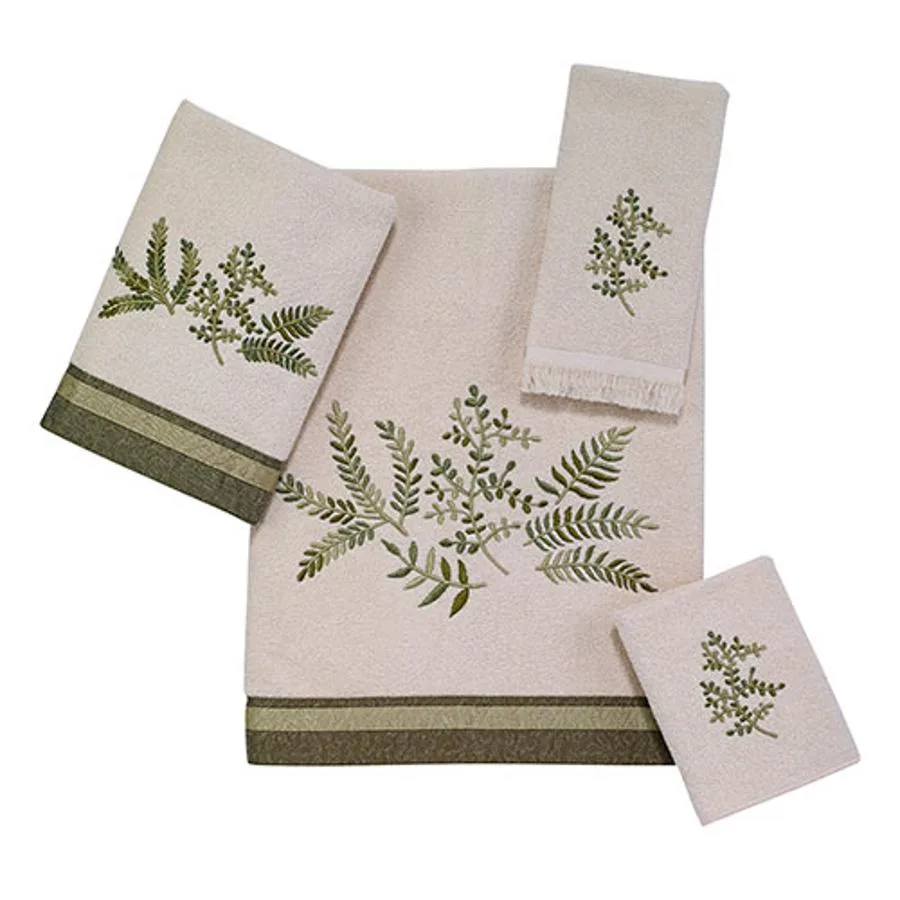
Not every towel is built the same, and the care label matters more than a general rule. The Avanti Linens Greenwood Towel Collection is 100% cotton and the care instructions call for machine washing warm on a gentle cycle and tumble drying low, with dry cleaning recommended. That is a clear signal to keep heat down and skip anything that coats the fibers, including softener and dryer sheets.
Avanti Linens Greenwood Towel Collection
The collection is described as having a botanical motif in shades of green on an ivory towel with a two-tone fabric border. Decorative borders and embellishments are often the first part of a towel to show wear, so wash these with similar colors and avoid overloaded loads that cause extra friction. If you follow the label and keep softener out of the routine, a cotton towel like this can stay absorbent for a long time.
- Follow the care label over general advice; it is written for that specific towel.
- Wash decorative towels with similar colors to protect borders and embellishments.
- Skip softener and dryer sheets entirely on any towel you want to absorb water.
Towel absorbency diagnosis
- Symptom: towel feels greasy or slick and water beads on the surface: This is the classic sign of fabric softener or dryer sheet buildup. The waxy film is sitting on the fibers and blocking water from entering them. Stop using softener and dryer sheets on this towel. Wash once with a small amount of detergent and no softener, then tumble dry low and test with a drip of water.
- Symptom: towel feels stiff and smells slightly sour even after washing: Detergent residue or a crowded, slow-drying load is the likely cause. Excess detergent traps dirt and oils, and a packed dryer leaves moisture behind. Wash warm on gentle with half a cup of baking soda and no softener. Dry in a load with room to tumble. If the stiffness remains after two washes, the buildup is deep and the towel may need replacing.
- Symptom: towel is thin, flat, or frayed and still will not absorb after three corrective washes: The cotton fibers have worn down from age and repeated washing. No stripping method restores fiber structure that is already gone. Replace the towel. Choose a new one and care for it from day one with no softener, measured detergent, and low dryer heat.
Product care facts
- Avanti Linens Greenwood Towel Collection: The collection is 100% cotton exclusive of embellishment and the care instructions say machine wash warm, gentle cycle, tumble dry low, with dry cleaning recommended. Following that label keeps heat and agitation low, which protects the cotton fibers and the decorative border so the towel keeps absorbing water instead of stiffening up.
- Avanti Linens Greenwood Towel Collection: The towels feature a botanical motif in various shades of green on an ivory towel with a two-tone fabric border. Decorative borders and embellishments can wear faster than the main towel body, so washing these with similar colors and avoiding packed loads helps the towel look better and last longer.
Most towel absorbency problems come down to what you put in the washer and dryer, not the towel itself. Strip the buildup with a gentle wash and no softener, test with a drip of water, and repeat once if needed. If the towel still repels water after three tries, or it is thin and frayed, replace it and start fresh with the right routine.