Quick Answer
The most effective trampoline safety rules start with one adult watching every bounce, one jumper at a time, and no flips or somersaults. Combine these rules with proper equipment checks and you can significantly reduce the risk of injury.
Why Trampoline Safety Rules Matter
Trampolines are a backyard favorite, but they also send thousands of children to emergency rooms each year. Most injuries happen when multiple kids jump at once, when someone attempts a flip, or when an adult isn't watching. Teaching clear, consistent trampoline safety rules is the best way to keep the fun from turning into a trip to the doctor.
The Core Trampoline Rules Every Kid Must Know
Start with the one-at-a-time rule. Even if your trampoline is large, only one person should jump at a time to prevent collisions and awkward landings. Second, no flips or somersaults — these moves put enormous stress on the neck and spine and are the leading cause of serious trampoline injuries. Third, always jump in the center of the mat, away from the springs and frame. Fourth, no roughhousing, pushing, or chasing on the trampoline. Finally, teach kids to stop bouncing by bending their knees and coming to a controlled stop, rather than jumping off.
Supervision and Equipment Checks
An adult should be present and actively watching every time the trampoline is in use. That means no phones, no conversations, and no stepping away. Before each session, inspect the trampoline for tears in the mat, loose or rusted springs, and a securely attached safety net. Replace worn parts immediately. Place the trampoline on level ground, away from fences, trees, and other play structures.
When to Consider a Different Kind of Active Play
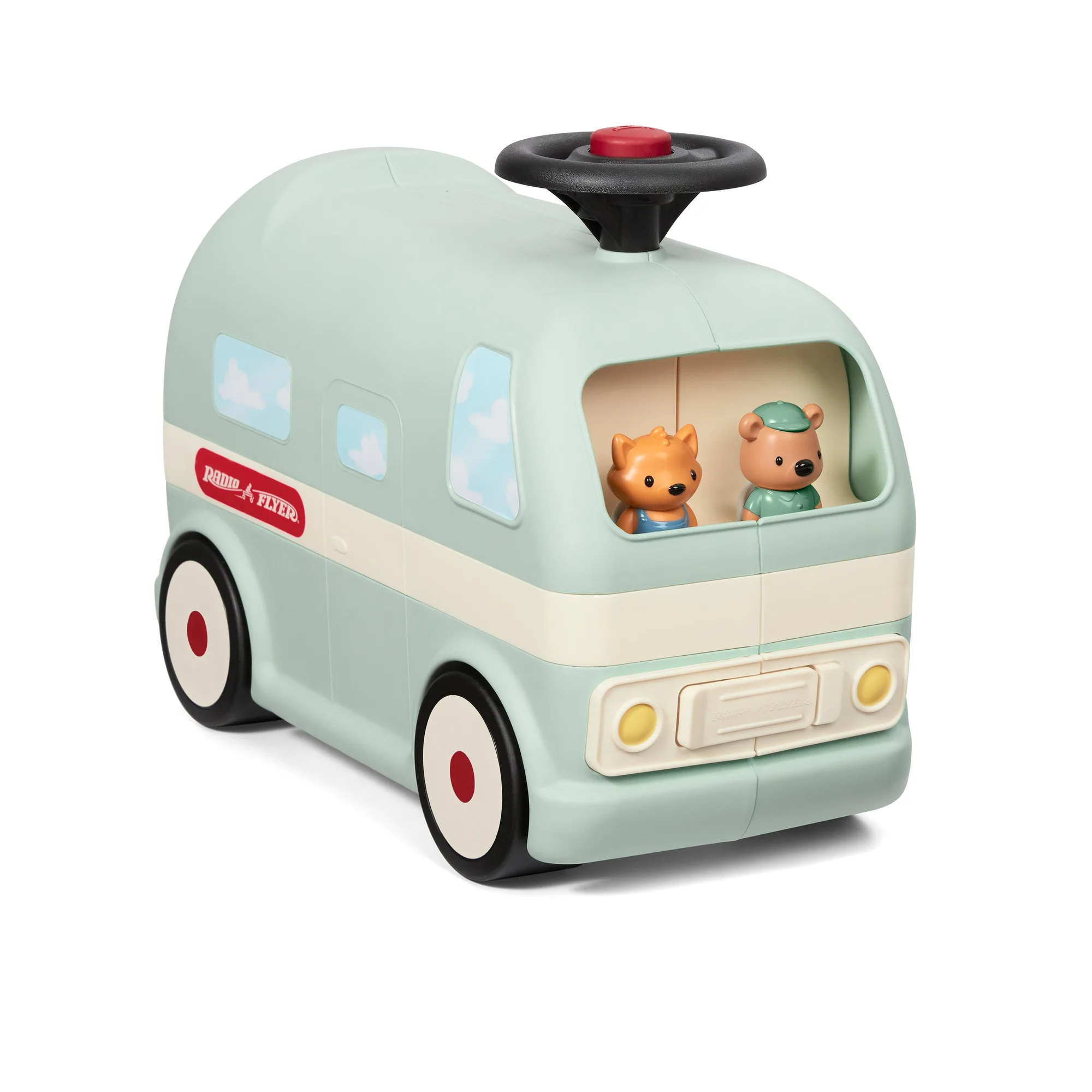
If your child is under six years old, the American Academy of Pediatrics recommends against trampoline use altogether. Younger children have weaker bones and less coordination, making them more prone to injury. For toddlers and preschoolers who love to move, a ride-on toy like the Radio Flyer Tinker Truck® offers a safer way to build balance, coordination, and confidence. It gives them the active play they crave without the high risk of falls and collisions.
Trampoline Safety Diagnosis: Is Your Setup Safe?
- Symptom: Multiple kids jumping at once: You see more than one child on the trampoline at the same time. This is the most common cause of trampoline injuries. Stop all jumping. Reinforce the one-at-a-time rule before resuming.
- Likely cause: Lack of clear, enforced rules: Children often don't understand the risks. Without consistent reminders, they naturally want to jump together or try stunts. Post a written list of trampoline rules near the trampoline and review them with your kids before every session.
- Corrective action: Supervise actively and set limits: An adult must watch every minute of trampoline use. No flips, no rough play, and only one jumper at a time. Check equipment weekly for wear. If you can't commit to active supervision, consider disassembling the trampoline or choosing a different activity.
- When to stop or choose another option: If your child is under 6, if you can't supervise every session, or if injuries keep happening despite rules, it's time to stop using the trampoline. A ride-on toy like the Tinker Truck offers a safer way for young children to build motor skills and stay active.
A Safer Active Play Option
- Tinker Truck®: Radio Flyer’s Tinker Truck® with Lights & Sounds is a new, interactive ride-on that encourages imaginative play and helps develop both fine and gross motor skills. It includes 20 interactive features with fun lights and sounds, and offers three modes: ride, walk, and play. For families who decide a trampoline isn't right for their young child, the Tinker Truck provides a low-risk way to develop balance, coordination, and active play skills without the danger of falls from height.