Quick answer
Transition your dog to frozen meatballs over 7–10 days by mixing a small amount with their current food and gradually increasing the ratio. Thaw meatballs in the refrigerator overnight, never at room temperature, and serve them at a cool temperature. If you see loose stool or vomiting, slow down and hold at the last tolerated ratio.
Why a gradual switch matters for frozen meatballs
Frozen meatballs are a fresh, moisture-rich food, which is a bigger change for your dog’s digestive system than switching between two dry kibbles. A sudden swap can overwhelm gut bacteria, leading to gas, loose stool, or vomiting. The fix is simple: treat the new food as an addition, not a replacement, for the first week. Start with a small proportion of meatballs mixed into their regular meal, then increase that proportion every few days. This gives the gut time to adjust to the new texture, fat level, and ingredient profile. If your dog has a sensitive stomach or a history of food-related issues, extend the timeline to 10–14 days.
How to thaw and portion frozen meatballs safely
Thaw only what you need for the next 24–48 hours in the refrigerator. A full box of meatballs can take 12–24 hours to thaw completely, depending on size and packaging. Never thaw on the counter or in warm water—bacteria multiply quickly in the danger zone between 40°F and 140°F. Once thawed, keep the meatballs in a sealed container in the fridge and use within 3–4 days. For portioning, if your dog weighs 20 lbs, start with about 1–2 meatballs per meal as a topper, then adjust based on your dog’s weight and activity level. The goal is to keep the total daily calories consistent while shifting the source.
Reading your dog’s signals during the transition
Every dog responds differently. Some sail through a food change with no issues; others need a slower pace. Watch for these signs: loose stools that last more than a day, vomiting, excessive gas, or a sudden drop in appetite. If any appear, return to the previous ratio that caused no problems and hold there for 3–5 days before trying to increase again. If symptoms persist or worsen, stop the new food and consult your veterinarian. Also keep in mind that treats and table scraps can muddy the picture—stick to the same treats during the transition so you can accurately judge how the meatballs are being tolerated.
Your 7-day transition schedule
- Days 1–2: Introduce a small taste: Mix one teaspoon of thawed meatball (mashed) into your dog’s regular meal. Keep the rest of the meal unchanged. This tests acceptance and flags any immediate sensitivity. Checkpoint: If your dog eats it without hesitation and has normal stool the next day, proceed. If they pick around it, try warming it slightly to enhance aroma.
- Days 3–4: Increase to a quarter of the meal: Replace about 25% of their regular food with meatballs. For a 20-lb dog, that might be 1–2 meatballs per meal. Mix thoroughly so they can’t separate the new food. Checkpoint: Watch for gas or soft stool. If either appears, hold at this ratio for an extra 2–3 days before moving on.
- Days 5–6: Move to a half-and-half mix: Now half of each meal is meatballs, half is the old food. This is often the point where digestive upset shows up if the transition is too fast, so keep portions consistent. Checkpoint: If stool remains firm and energy is normal, you’re on track. If not, drop back to 25% for a few days.
- Day 7: Go to three-quarters meatballs: Replace 75% of the old food with meatballs. By now your dog’s gut should be adapting well. Continue to thaw only what you need for 1–2 days. Checkpoint: Any vomiting or diarrhea at this stage means stop and consult your vet; otherwise, one more day gets you to a full switch.
- Day 8 and beyond: Full transition: Serve 100% meatballs if your dog has tolerated each step. Keep the first week of full feeding simple—no new treats or table scraps—so you can confirm the diet suits them. Next step: Once stable, you can rotate proteins or introduce other Open Farm recipes, but always transition between any two foods over several days.
Frozen meatball options for your transition
- Harvest Chicken Freshly Crafted Meatballs for Dogs: Harvest Chicken Freshly Crafted Meatballs for Dogs feature humanely raised chicken, chicken liver, and non-GMO veggies, all human-grade ingredients. They ship frozen and are easy to serve as a meal, topper, or treat. These meatballs are a gentle starting point for many dogs because they combine a single primary protein with liver and veggies, making it easier to spot sensitivities. The 13.5 lb box contains 6 x 36 oz bags, so you can thaw one bag at a time and keep the rest frozen.
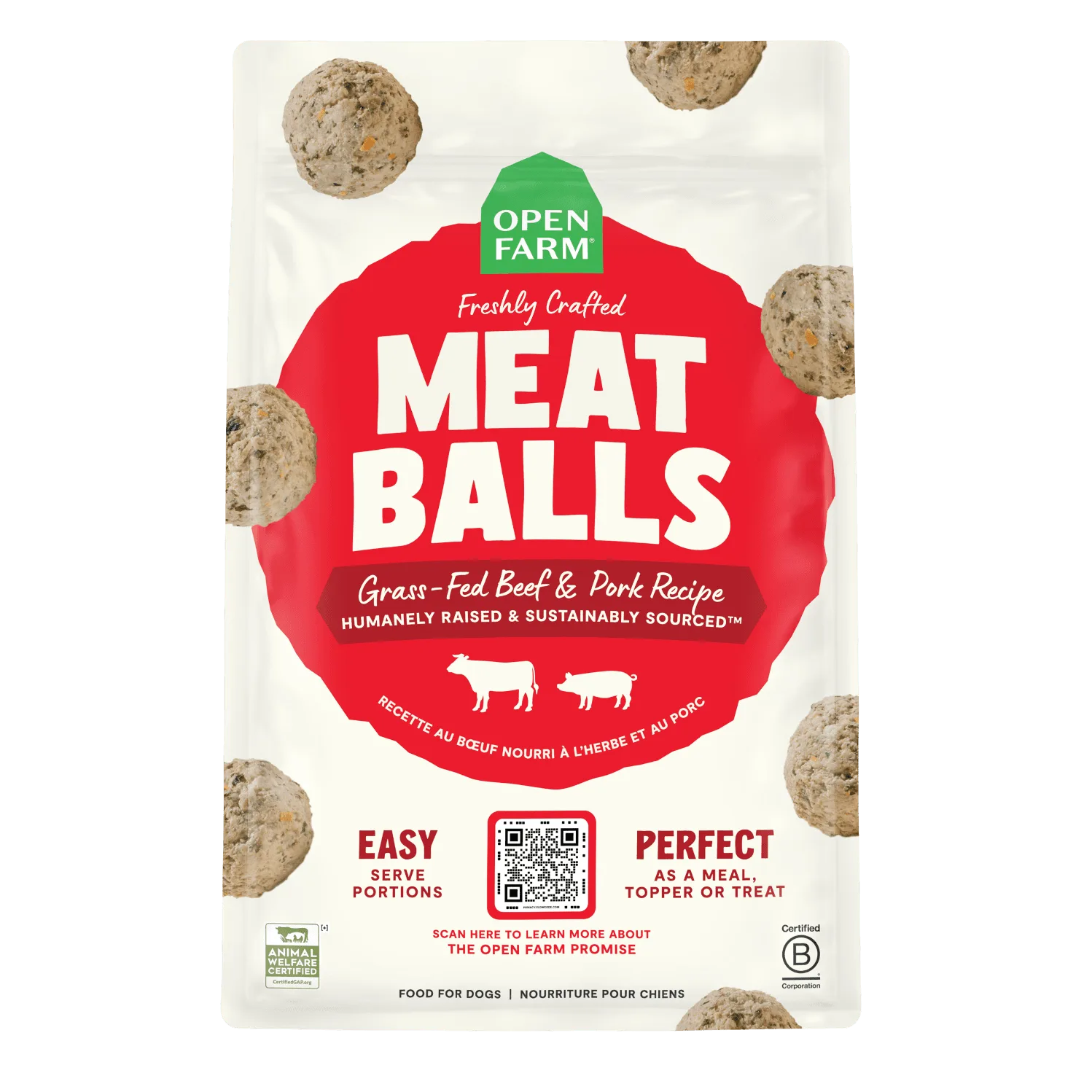
- Grass-Fed Beef & Pork Meatballs Gift: Grass-Fed Beef & Pork Meatballs Gift combine humanely raised beef, pork, pork liver, and non-GMO veggies, all human-grade ingredients. They ship frozen and are easy to serve as a meal, topper, or treat. If your dog has done well with poultry but you want to rotate proteins, this beef and pork blend offers a different flavor profile. The smaller gift size is handy for testing tolerance before committing to a larger box.
- Limited Edition Winter Blend Gently Cooked for Dogs: Limited Edition Winter Blend Gently Cooked for Dogs is a seasonal recipe with humanely raised chicken and non-GMO winter veggies like pumpkin, sweet potatoes, and butternut squash, slow-cooked and shipped frozen in 16 x 16 oz pouches. The gentle cooking process and fiber-rich veggies can be appealing for dogs who need a softer transition, but because it’s a limited edition, it’s best as a short-term rotation rather than a permanent base during a slow switch.