Quick answer
Build the Trap Door Maze to turn abstract probability concepts into a hands-on experiment kids can see and adjust.
Why the Trap Door Maze works for probability
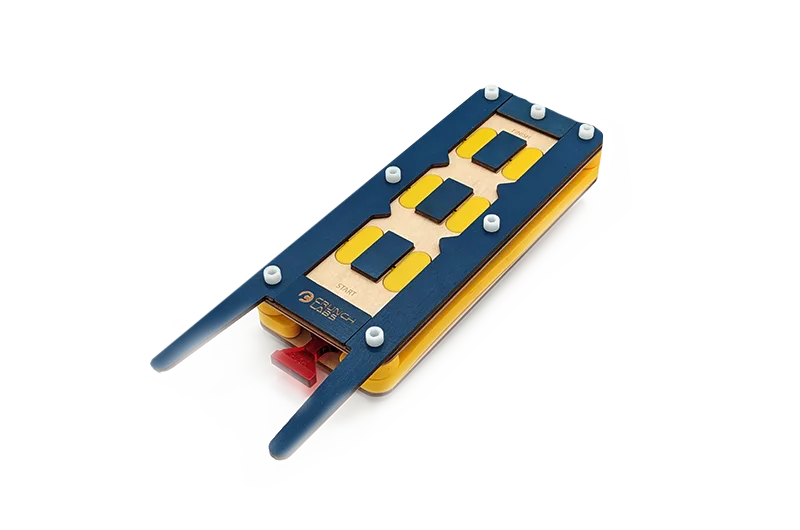
Unlike a standard Galton board where beads fall through fixed pegs, the Trap Door Maze lets you change the path by opening or closing trap doors. This makes probability visible: each decision point becomes a branch where the ball can go left or right, and kids can count outcomes to see how often each path is taken.
Because the maze has 16 parts, assembly is straightforward but still requires following instructions—a good mix of building and playing. The trade-off is that younger children may need help with the initial build, but the learning payoff is worth it.
How to build and explore probability with the Trap Door Maze
- Assemble the base maze: Follow the included instructions to snap together the 16 parts. Ensure each trap door flap moves freely before securing the top layer. Check that all trap doors open and close smoothly—sticky flaps will skew your results.
- Set a starting trap door pattern: Choose a configuration, such as all doors open or alternating open/closed. Drop a marble from the top and note which exit it reaches. Run at least 10 trials with the same pattern before changing anything.
- Record the outcomes: Use a simple tally chart to count how many marbles exit left versus right. Compare the counts to the expected 50/50 split when doors are balanced. If results are far from 50/50, check that the maze is level and doors are fully open.
- Change the probability by blocking paths: Close one or more trap doors to force marbles into fewer exits. Predict the new odds before dropping marbles, then test your prediction. Closing one door on a two-path branch changes the chance from 50% to 100% for the open path—great for showing certainty vs. probability.
- Combine multiple trap doors for compound probability: Set a pattern with two or three trap doors in sequence. Calculate the chance of a marble reaching a specific exit by multiplying the probabilities at each door. Start with simple two-door sequences before adding more; compound probability can be tricky for beginners.
Product facts
-
Trap Door Maze - Probability: Listed with 16 total parts and a trap door mechanism centered on probability. The 16 parts keep assembly simple enough for a single session, while the trap doors let you change the maze layout to test different probability scenarios.
Trap Door Maze - Probability