Quick answer
A trapeze bar is safe for kids when it is mounted at the correct height, attached with the hardware the manufacturer specifies, and used with a rule that kids keep their feet down and their hands on the bar. Most trapeze bars are designed for one child at a time, and younger kids should be supervised until they can mount, swing, and dismount without help. Inspect the bar, chain or rope, and attachment point before every play session.
A trapeze bar turns an ordinary swing beam into a moving challenge: kids grab the bar, swing their legs, and build coordination while they play. That extra motion is exactly why parents ask more questions about it than about a standard belt swing.
The answers below cover the practical side of trapeze bar safety, from age and weight fit to installation checks and daily use rules. If you are adding a trapeze bar to an existing set or choosing a playset that already includes one, these guidelines help you set it up and use it with confidence.
What age is a trapeze bar appropriate for?
There is no single universal age, but most children are ready for a trapeze bar around age 5 to 10. The real test is whether your child can hold their body weight with both hands, keep their feet down, and let go safely at the end of a swing. A child who still needs a parent to catch them mid-swing is not ready to use the bar independently.
Younger kids can often use a trapeze bar with direct adult supervision and a shorter swing arc, but they should not be left to play on it alone. If your child is under 5 or has limited upper-body strength, a belt swing or a toddler swing is a better fit until they grow into the trapeze bar.
- Watch for the ability to grip, hang, and release on command before letting a child swing unsupervised.
- Keep a spotter within arm's reach for any child who is still learning to dismount.
Is there a weight limit for a trapeze bar?
Yes, and the limit comes from the whole assembly, not just the bar itself. The bar, the chain or rope, the swing hanger, and the beam all share the load. A trapeze bar that is rated for one weight may be attached to a swing hanger with a lower rating, so the weakest link sets the real limit.
Check the manufacturer's documentation for your specific trapeze bar and swing set. If the weight limit is not stated, treat that as a missing specification and contact the manufacturer before allowing use. Never assume a bar is stronger than its hardware, and never let two children hang on the bar at once.
- Use the lowest published weight rating among the bar, chain, hanger, and beam.
- Replace any chain or rope that shows stretching, kinking, or worn links.
How high should a trapeze bar hang?
Set the bar so a child can reach it while standing flat-footed, then add a small amount of clearance so their feet do not drag during a normal swing. A common starting point is bar height at roughly chest level for the child using it, but the right number depends on your child's height and the swing arc.
If the bar is too high, kids jump to grab it, which is a common cause of falls. If it is too low, feet scrape the ground and the swing stalls. Adjust the chain or rope length in small steps and test the arc yourself before letting your child swing at full speed.
- Measure clearance with the bar pulled to the highest point of its arc.
- Keep at least 6 feet of clear space in front of and behind the swing path.
What does safe trapeze bar use look like?
Safe use starts with one rider at a time and a rule against standing on the bar or hanging upside down by the legs. Kids should grip with both hands, keep their feet down, and swing in a straight line rather than twisting the chain. Twisting puts side loads on the hanger and can wear the hardware faster.
Teach kids to slow the swing with their body before dismounting, and to let go only when the bar is near the bottom of its arc. Jumping off at the top of a swing is how most trapeze bar injuries happen, so make a calm dismount part of the routine from day one.
- One child on the bar at a time, every time.
- No standing, no flips, and no twisting the chain or rope.
- Clear the landing zone of toys, bikes, and other kids before swinging.
How do I check the installation before kids play?
Start at the beam and work down. Confirm the swing hanger is tight, the hardware matches what the manufacturer specifies, and the beam shows no cracks or soft spots around the mounting point. Then check the chain or rope for worn links, fraying, or sharp edges, and make sure the bar itself has no cracks or exposed metal.
A quick pull test with your own body weight can reveal a loose hanger or a shifting beam before a child gets on. Recheck the installation after heavy rain, after a storm, and at the start of each season, since wood and hardware can loosen over time.
- Tighten any hanger or bolt that moves under a firm pull.
- Replace worn chain, rope, or hardware rather than repairing it with tape or wire.
Can I add a trapeze bar to any swing set?
Not every swing beam is built for the extra motion of a trapeze bar. The beam needs enough strength and enough clear space for the swing arc, and the hanger needs a mounting point rated for the load. Adding a bar to a beam that was designed only for belt swings can overload the structure.
Check your swing set's manual or contact the manufacturer before adding a trapeze bar. If the set already includes one, use the position the manufacturer intended rather than moving it to a different spot on the beam. Some playsets, like the Wilderness Gym Swing Set, include a trapeze bar as part of the original design, which removes the guesswork.
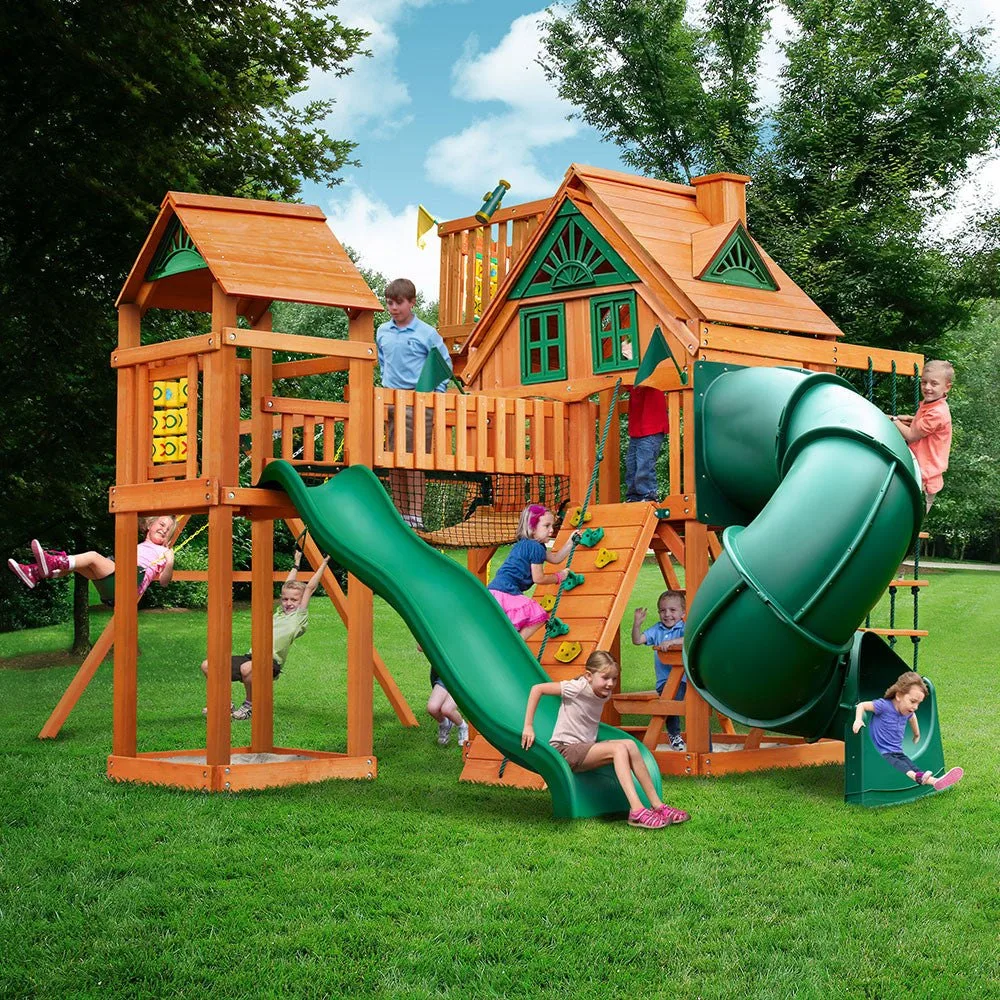
Wilderness Gym Swing Set
- Keep the bar in the manufacturer's intended position if the set came with one.
- Do not add a trapeze bar to a beam that is not rated for it.
Trapeze bar safety checkpoints
Age and readiness
Most kids are ready around age 5 to 10, once they can grip, hang, and release on their own. Supervise closely until your child can mount and dismount without help.
Weight rating
The lowest rating among the bar, chain, hanger, and beam is the real limit for the whole assembly. If the limit is not documented, treat it as unknown and contact the manufacturer.
Bar height
Set the bar so a standing child can reach it, with enough clearance that feet do not drag at the bottom of the arc. Recheck height as your child grows and after any chain adjustment.
Pre-play inspection
Check the hanger, hardware, chain or rope, and bar for wear or looseness before each play session. Fix or replace worn parts instead of improvising a repair.
Use rules
One rider at a time, feet down, no standing or twisting, and a controlled dismount near the bottom of the swing. Clear the landing zone before anyone swings.
Playsets with trapeze bars included
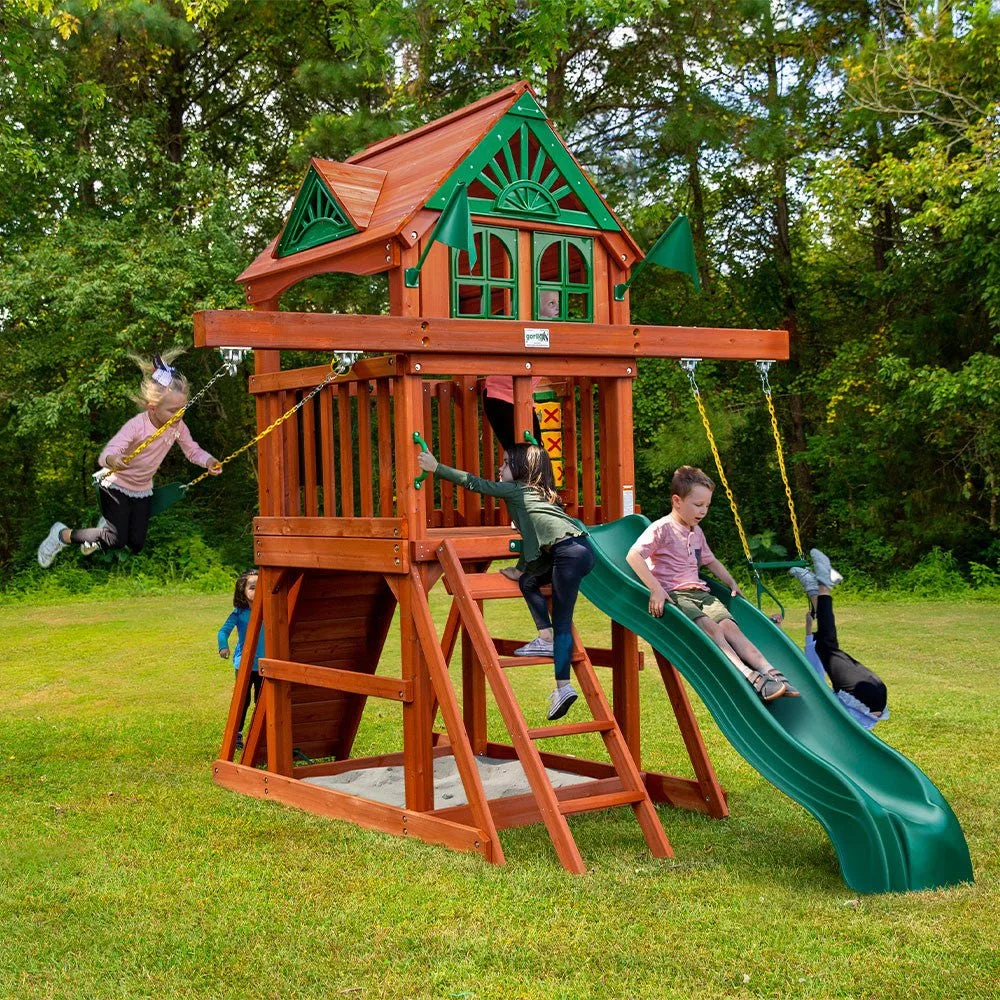
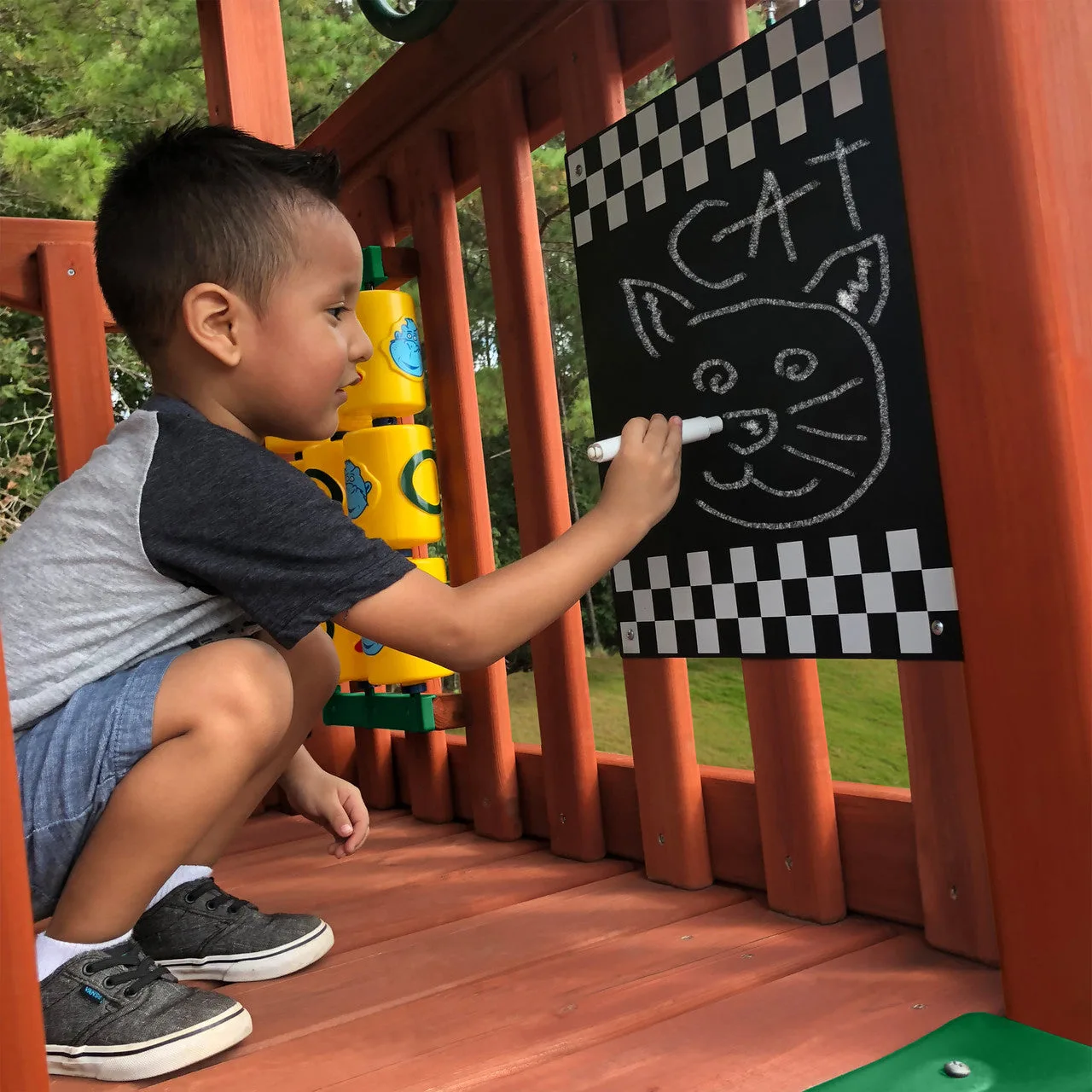
- Five Star Space Saver Swing Set for Kids: Includes a belt swing and trapeze bar along with an Alpine Wave Slide, rock wall, chalkboard kit, and tic-tac-toe panel. A factory-included trapeze bar means the hanger and beam are already set up for it, so you avoid the guesswork of adding one to an unrated beam.
- Wilderness Gym Swing Set: Two play areas connected by a clatter bridge, with double the slides, swings, and a rock wall. Two separate play zones give you more room to space the trapeze bar away from other swinging equipment, which reduces collisions during play.
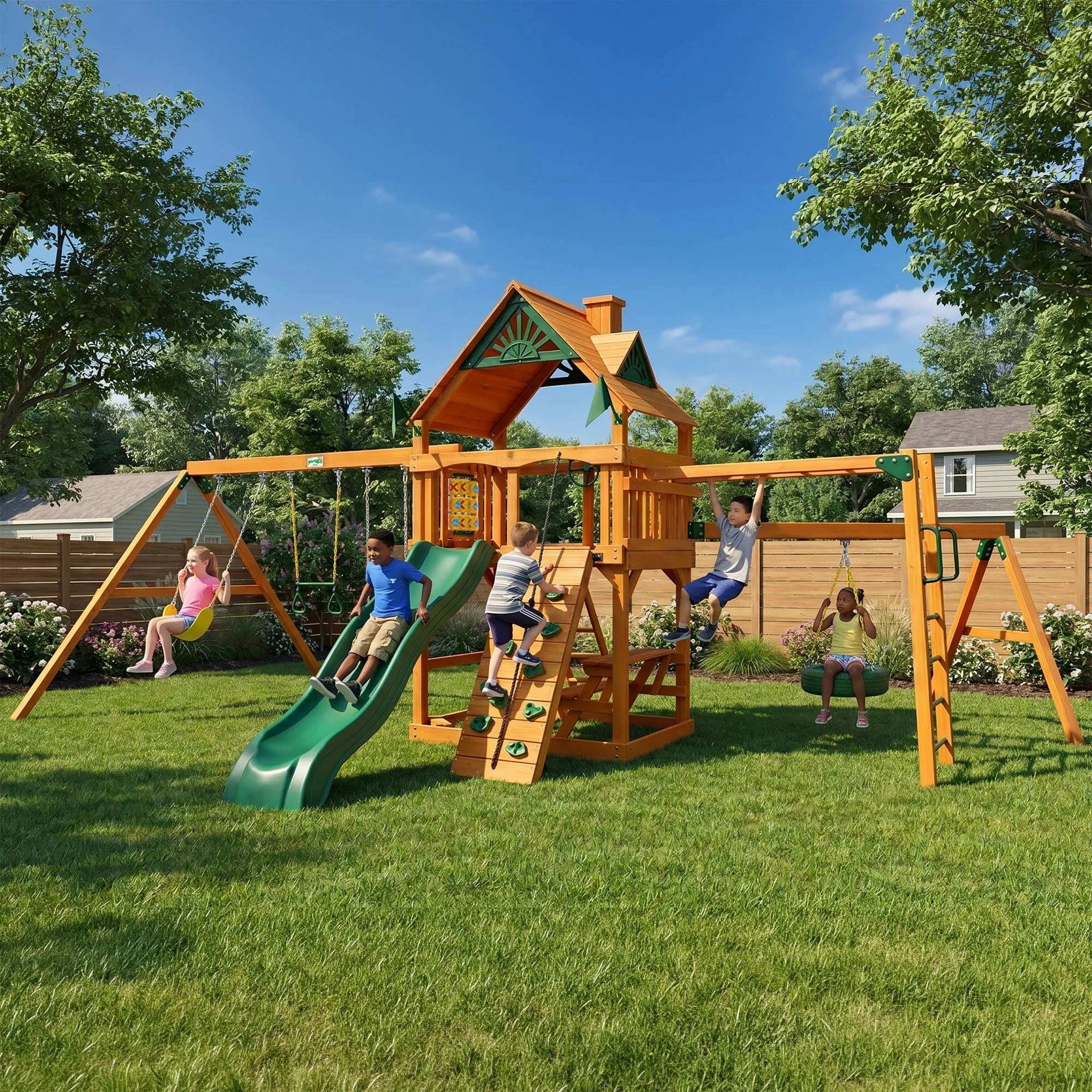
- Homestead Swing Set: Includes an Alpine Wave Slide, monkey bars, a 360° tire swing, and a classic swing beam, and is crafted from premium cedar that naturally resists rot and decay. A cedar beam holds up to outdoor moisture, so the mounting point for a trapeze bar stays solid through repeated seasons of swinging.
A trapeze bar adds a fun physical challenge to a swing set, and most of its safety comes down to three habits: mount it correctly, match it to your child's age and strength, and inspect it before play. Set clear use rules, keep the swing path clear, and replace worn hardware without delay. If you are choosing a playset, look for one that includes a trapeze bar so the beam and hanger are already rated for it.