Quick answer
For most hikers, trekking poles offer better support, shock absorption, and versatility, especially on steep or uneven terrain. Walking sticks are simpler, lighter, and more natural for casual strolls or those who prefer a minimalist approach.
Weight and portability trade-offs
Trekking poles are typically made from lightweight materials like carbon fiber and fold into sections, making them easy to attach to your pack when not in use. This is a key advantage if you need your hands free for scrambling or want to stow them quickly on changing terrain.
Walking sticks are usually a single piece of wood or metal, which means they can't be collapsed. They are often heavier and more awkward to carry when not needed, but they offer a simple, durable design that requires less maintenance.
Support and shock absorption differences
Trekking poles provide two-point contact with the ground, which helps distribute your weight and reduce strain on your knees, especially during descents. Many models include features like EVA foam grips and carbon fiber construction that absorb shock and keep you comfortable over long miles.
A walking stick offers only one point of contact and provides less support for your lower body. It can help with balance and take some pressure off one side, but it won't give you the same level of stability on technical trails or when carrying a heavy pack.
Decision framework: trekking pole vs walking stick
- Terrain and distance: For long hikes, steep ascents, or rocky trails, choose trekking poles to reduce joint impact and improve stability. For short, flat, or well-maintained paths, a walking stick may be sufficient. Assess the most technical section of your route before deciding.
- Portability needs: If you need your hands free for climbing or want to stash poles in your pack, folding trekking poles are the clear winner. Walking sticks are harder to store and may become a burden. Consider how often you'll actually use the pole versus carry it.
- Comfort and shock absorption: Trekking poles with carbon fiber and foam grips absorb more shock and reduce hand fatigue. Walking sticks transmit more vibration and offer less cushioning. If you have joint issues, prioritize shock-absorbing features.
Product spotlight
-
FT3 Folding Trekking Poles: The FT3 Folding Trekking Poles use carbon fiber and EVA foam, folding neatly into thirds for easy storage. This makes them a great choice for fastpacking or trail running when you need to grab your poles quickly as terrain changes.
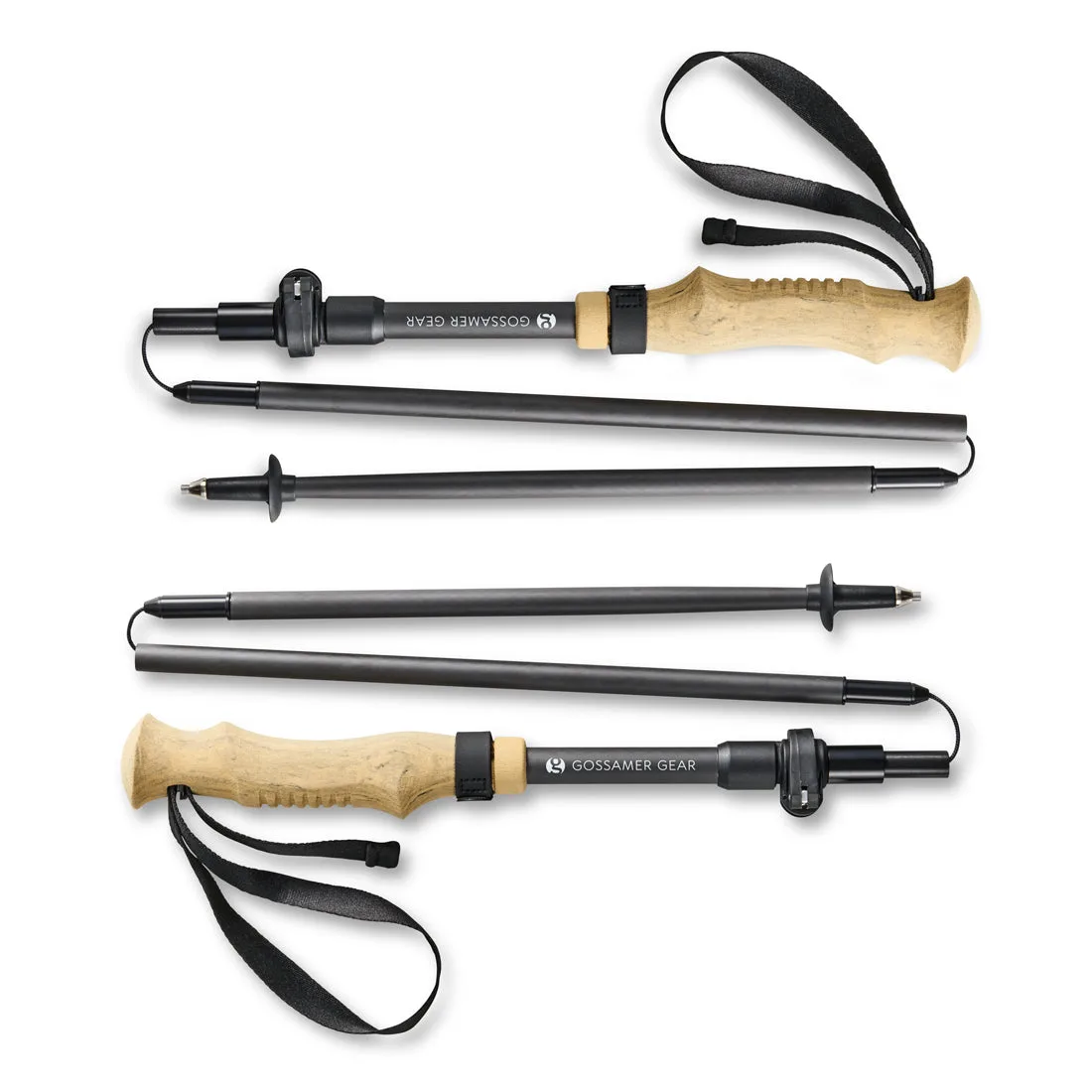
FT3 Folding Trekking Poles
Which should you choose?
Best for
- Hikers tackling steep or uneven terrain who want joint support and stability
- Fastpackers or trail runners who need collapsible poles that are easy to grab and stow
Not for
- Casual walkers on flat, smooth paths who prefer a simple, natural stick