Quick Answer
For the widest, most flexible coverage, choose a tri-lens PTZ camera; for a balance of coverage and connectivity with Wi-Fi 6, a dual lens PTZ is a strong choice.
Why Lens Count Matters for Coverage
The number of lenses on a PTZ camera directly affects how much area you can monitor without moving the camera. A tri-lens design typically provides a wider field of view, reducing blind spots. A dual lens camera still offers broad coverage but may require more panning or tilting to match the same area.
Resolution also plays a role: higher resolution means you can zoom into details without losing clarity. Both Defender models offer 3K+ resolution, so the main difference is the lens configuration and connectivity.
Connectivity Trade-Offs
Wi-Fi 6 in the dual lens model offers faster, more reliable connections, which is useful if you have many devices on your network. The tri-lens model uses standard Wi-Fi, which is still effective but may be more susceptible to interference in crowded networks.
If your property has heavy network traffic or you plan to stream multiple camera feeds, the Wi-Fi 6 advantage could be decisive. Otherwise, standard Wi-Fi is sufficient for most residential or small business setups.
Trade-Offs to Consider
- Coverage vs. Connectivity: Choose tri-lens for the widest field of view; choose dual lens with Wi-Fi 6 for more reliable streaming in busy networks. Assess your network strength before deciding.
- Price vs. Features: The tri-lens 3-pack is slightly cheaper, but the dual lens offers newer Wi-Fi tech. Decide if the connectivity upgrade justifies the small price difference.
- Installation vs. Performance: Both are plug-in PTZ cameras, but tri-lens may require more careful positioning to maximize the multi-lens coverage. Plan your mounting spots accordingly. Map out camera angles before installation.
Product Facts at a Glance
-
AI POWERED 3K+ Guard WIFI Tri-Lens PTZ Security Camera, 3 pc: Tri-lens design with PTZ and 3K+ resolution for wide coverage. The extra lens reduces blind spots, making it ideal for monitoring large areas like driveways or backyards.
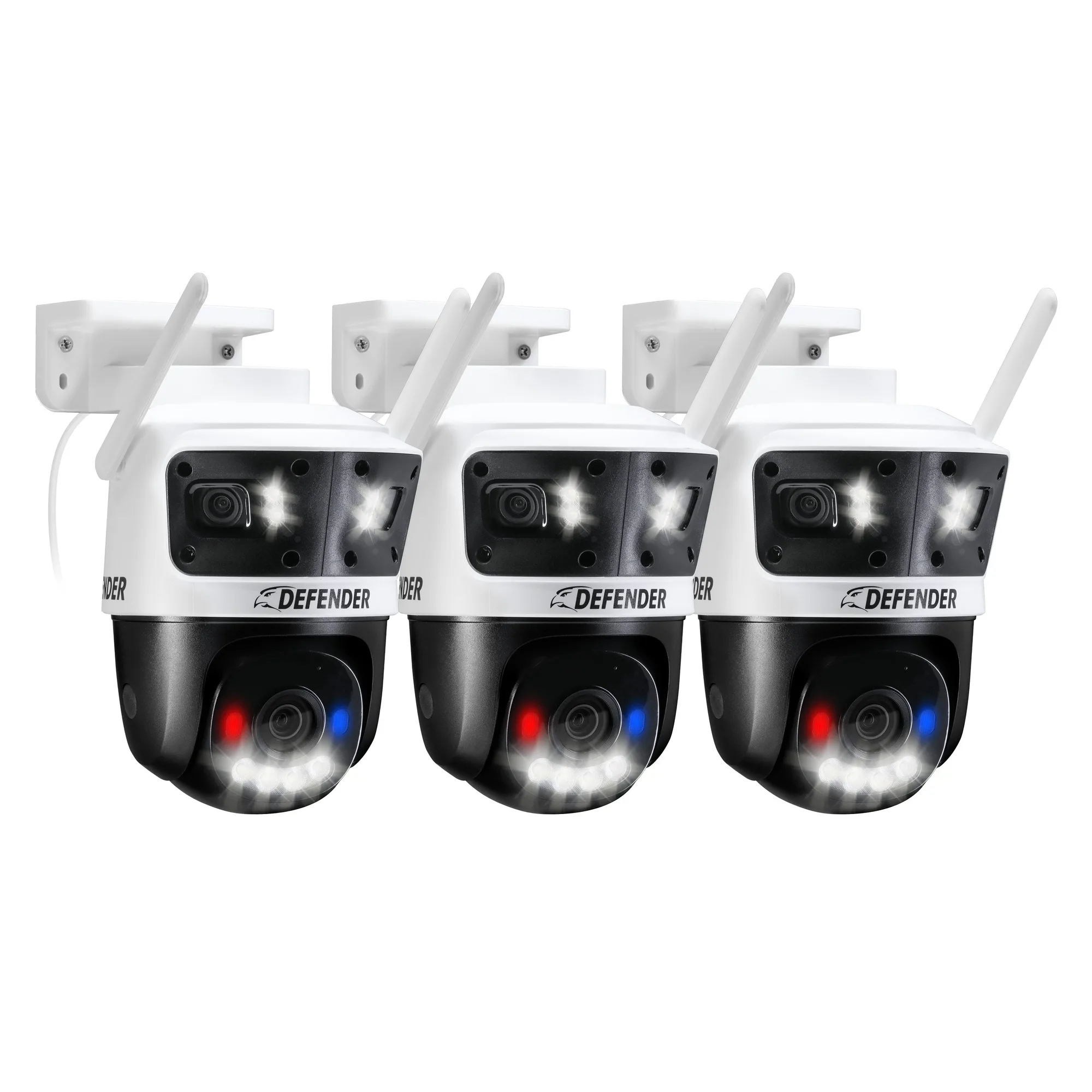
AI POWERED 3K+ Guard WIFI Tri-Lens PTZ Security Camera, 3 pc
-
AI POWERED Guard Pro 3K PLUS Dual Lens PTZ Wi-Fi 6 Plug-in Security Camera, 3 Pack: Dual lens PTZ with Wi-Fi 6 and 3K PLUS resolution. Wi-Fi 6 provides more stable streaming, which is beneficial for high-traffic networks or multiple cameras.
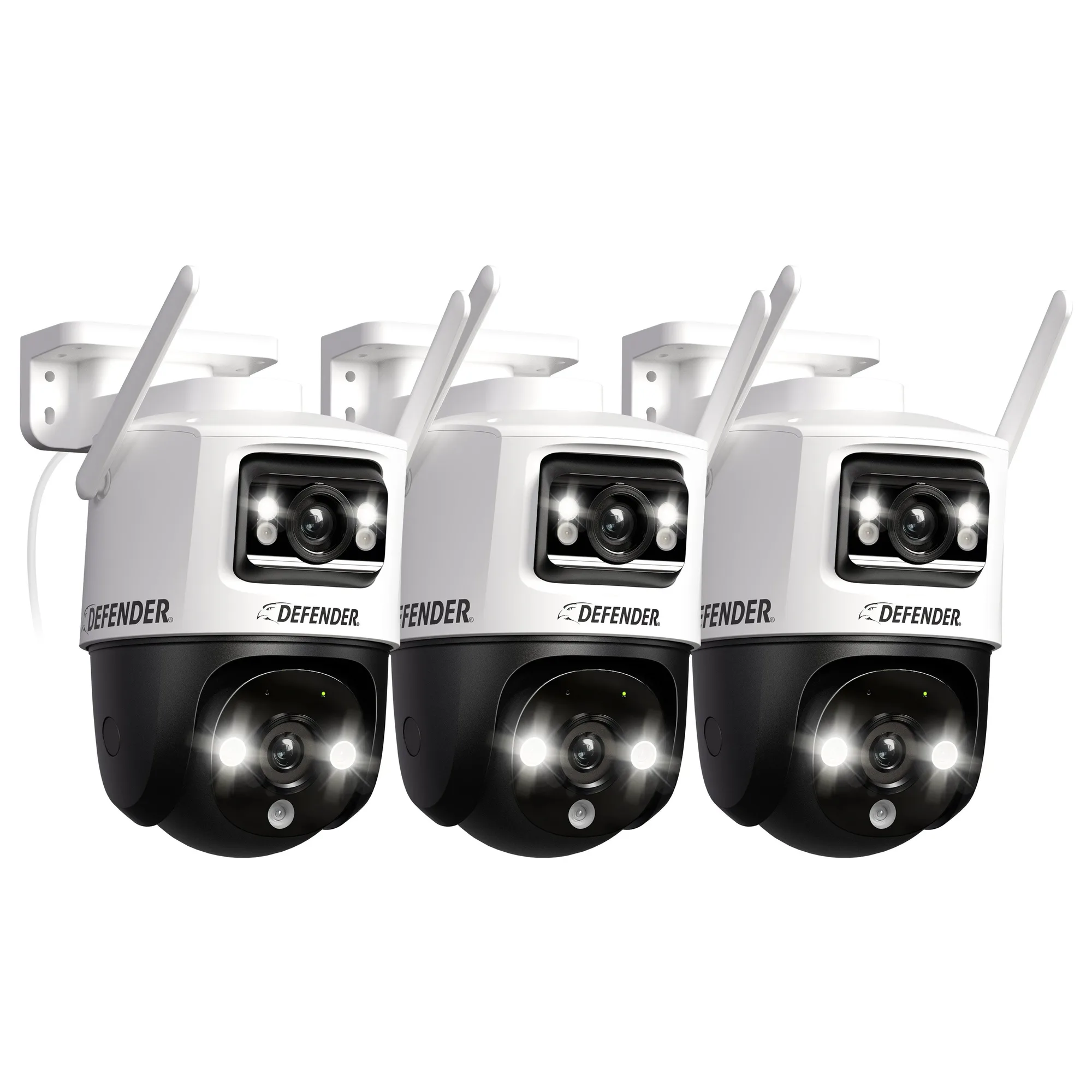
AI POWERED Guard Pro 3K PLUS Dual Lens PTZ Wi-Fi 6 Plug-in Security Camera, 3 Pack
Which One Fits Your Setup?
Best for
- Tri-lens: large open areas where wide coverage is the priority
- Dual lens: homes or businesses with many connected devices needing stable Wi-Fi
Not for
- Tri-lens: networks with heavy interference that could weaken standard Wi-Fi signal
- Dual lens: properties needing the absolute widest field of view without panning