Quick Answer
Choose the TriMag Snow Goggles if you want quick lens swaps, wide peripheral vision, and sharp optics for sunny and cloudy days. Standard goggles are fine for casual riders on a budget, but they lack the versatility and clarity that the TriMag's toric glass delivers.
Why Lens Swapping Matters More Than You Think
Mountain light changes fast. A sunny morning can turn flat and grey by lunch, and the wrong tint can leave you guessing at every bump. Standard goggles usually come with one fixed lens, so you adapt to the light or carry a spare pair. Magnetic snow goggles let you swap lenses in seconds without tools, which keeps you on the slope instead of fumbling in the cold.
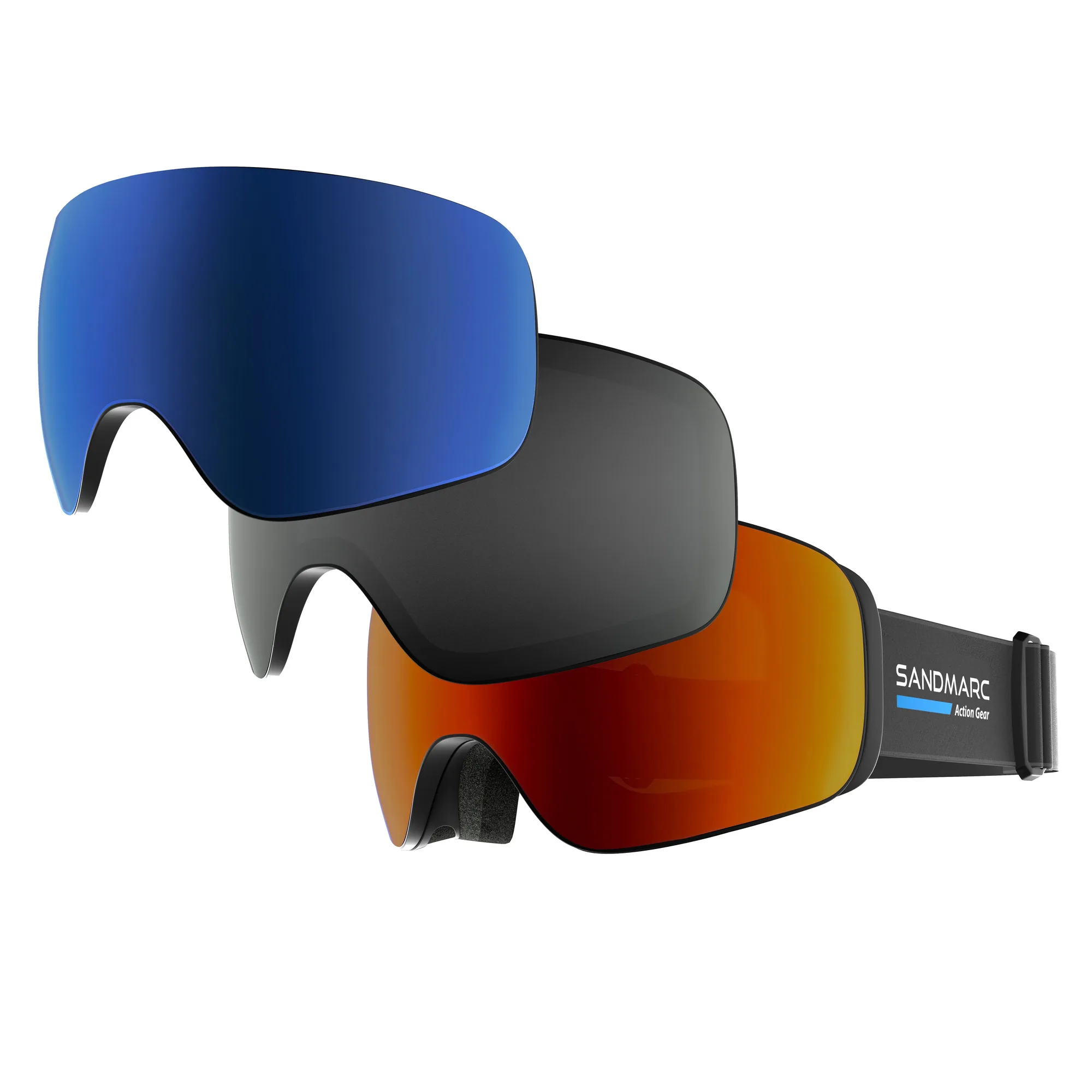
The TriMag Snow Goggles include three lenses for sunny and cloudy conditions, so you can match the lens to the light without owning multiple pairs. That flexibility is the main reason riders choose magnetic systems over standard models.
What makes the TriMag different
The TriMag Snow Goggles use a multi-coated Toric glass lens in a wide frame. The Toric shape follows the curve of your face more closely than a flat or spherical lens, which reduces distortion and gives you a wider, more natural field of view. The multi-coating helps cut glare and improve clarity in changing light.
The set includes three lenses, so you can swap between sunny and cloudy conditions without carrying a second pair of goggles. That is the main practical advantage over standard goggles that come with a single fixed lens.
TriMag vs Standard: The Trade-Offs
- Lens swapping: TriMag uses a magnetic system for quick lens changes; standard goggles typically rely on a frame notch or clip. The trade-off is that magnetic systems are faster but may feel less locked-in to some users.
- Optical clarity: The TriMag's toric glass and multi-coated design reduce distortion and improve sharpness compared to typical flat or spherical standard lenses. If you spend long days on the mountain, prioritize optical clarity over lower cost.
- Versatility: TriMag includes three lenses for sunny and cloudy conditions, so you adapt to changing light without buying extra lenses. Standard goggles often come with one lens, limiting flexibility. Check the weather forecast before choosing which lens to pack.
- Budget: Standard goggles are generally cheaper, but you may need to buy additional lenses later, which adds to the total cost over time. Compare the cost of extra lenses before deciding.
Product facts at a glance
-
TriMag Snow Goggles: Designed from our iPhone and GoPro optical lenses, the TriMag Snow Goggles use a multi-coated wide-frame Toric glass for sharp, non-distorted viewing. The Toric shape and multi-coating reduce glare and distortion, so you can trust what you see when riding fast or shooting through the lens.
TriMag Snow Goggles
-
TriMag Snow Goggles: Three versatile lenses are included to handle sunny and cloudy conditions. You can swap lenses to match changing light instead of carrying a second pair of goggles.
Which goggles should you pick?
Best for
- Skiers and snowboarders who want one pair of goggles that adapts from bright sun to flat light
- Photographers and videographers who need clear, distortion-free views for capturing winter action
Not for
- Budget-focused riders who rarely change light conditions and prefer a single-lens goggle