Quick answer
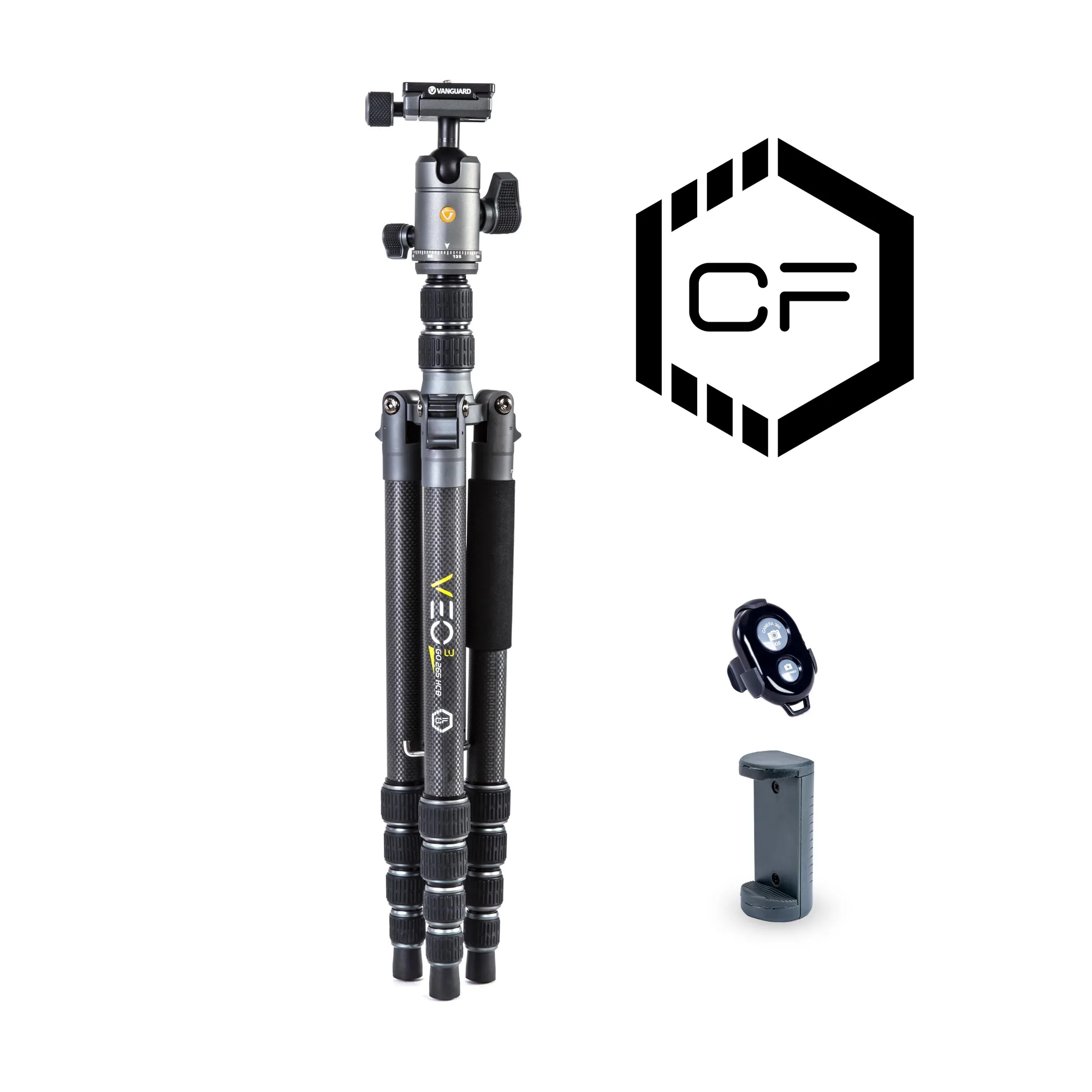
For stills work that needs precise, repeatable framing, a 3-way pan head is the most controllable and the VESTA 203AP is the lightest way to get one. For travel and mixed shooting, a ball head like the one on the VEO 3GO 265HCB repositions fastest in a small package. For video, a fluid head is the only design that pans and tilts smoothly enough for motion, so if you shoot both, budget for two heads rather than compromising on one.
How each head type actually moves
A 3-way pan head separates movement into three independent axes: pan, tilt and a levelling or side tilt. Each axis has its own lock and its own handle, so once you have framed a shot you can lock one axis, adjust another, and the composition stays put. That makes it the natural choice for architecture, product work, panoramas and any shot where you nudge the frame by a few degrees and need it to stay exactly there.
A ball head releases all directions at once through a single locking knob. Loosen it and the camera moves freely; tighten it and everything holds. In practice this is much faster for chasing a moving subject or swapping between portrait and landscape, but it is harder to make a tiny, repeatable adjustment because every axis moves together. Many ball heads add a separate panning base, which restores one controlled axis for panoramas.
A fluid head uses a viscous damping mechanism in the pan and tilt axes. Instead of stopping dead, the head resists movement slightly, so a pan starts and ends smoothly rather than jerking. That damping is what separates a video head from a photo head, and it is the reason a stills tripod head feels unusable the moment you try to follow a subject across the frame.
Pan head vs ball head: the real trade-off
The trade-off is control versus speed. A pan head gives you three separate locks and a handle for fine framing, but it is bulkier and slower to set up because you are adjusting one axis at a time. A ball head is compact, fast and often lighter, but you give up the ability to lock one axis while adjusting another unless the head includes a separate panning base.
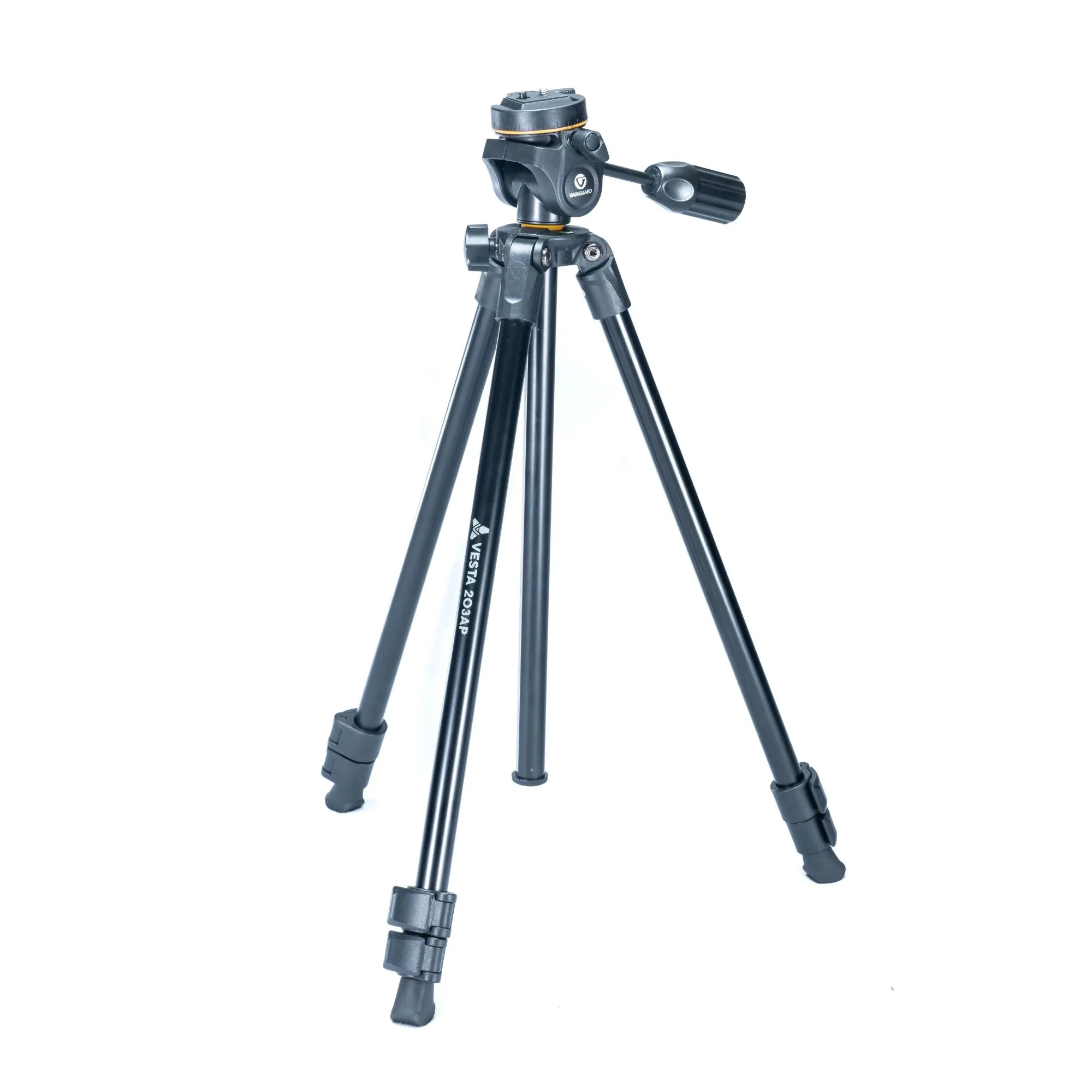
Weight and folded size usually decide it for travel. The VESTA 203AP pairs a PH-23 3-way pan head with a 20mm diameter, 3-section aluminium leg set, collapses to 57cm and weighs just 1.1kg while still reaching 155cm. That is a genuinely portable way to carry pan-head control, and at this price point it is the sensible entry into precise stills work. If your priority is a head that disappears into a day bag and repositions in one motion, a ball head design is the better fit.
Fluid head vs ball head for video
If you shoot video, a ball head will fight you. Without damping, every small correction becomes a visible jolt, and there is no handle to pan with. A fluid head gives you a long handle for leverage and resistance in the pan and tilt axes, which is what produces a watchable moving shot.
The catch is that fluid heads are typically larger, heavier and more expensive than a comparable ball head, and they are awkward for stills because the damping makes fine framing slower. If you shoot mostly stills with occasional clips, a ball head plus careful technique is usually the more practical single purchase. If video is the main output, treat a fluid head as essential rather than optional.
Match the head to the load, not just the style
Head type matters less than whether the head can hold your camera steadily. A ball head rated to carry camera capacities up to 10kg, as on the VEO 3GO 265HCB, is designed for pro-level kits and long lenses, and its 26mm, 5-section carbon fibre legs fold to 41cm at 1.4kg. That combination of low weight and high capacity is what you pay for in a travel tripod, and it is the reason a light aluminium kit with a smaller head is not a like-for-like substitute for a heavy telephoto setup.
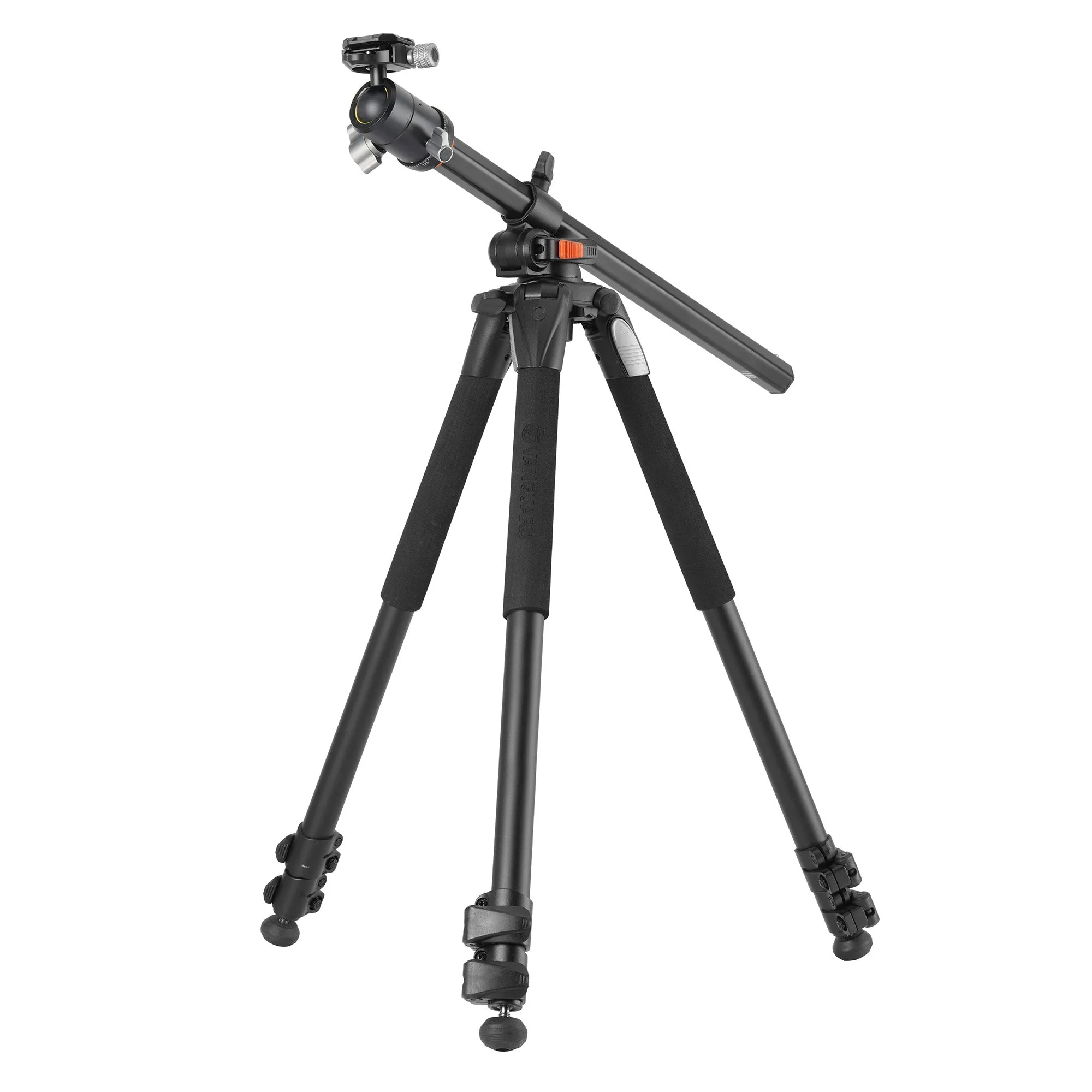
For specialised positioning, some aluminium tripods go further than a standard pan head. The ALTA PRO 263AB G2 uses a multi-angle central column that moves between 0° and 180° and rotates 360°, with an Arca compatible BH-60 ball head, so you can take the camera to positions a conventional head cannot reach. That flexibility is a different purchase decision from head type alone, and worth checking before you assume a pan head is the only precise option.
Trade-offs by head type
- 3-way pan head: Separate locks on each axis give repeatable, precise framing, but setup is slower and the head is bulkier than a ball head of similar capacity. Choose it for architecture, products and panoramas where the frame must not drift.
- Ball head: One knob releases every direction, so repositioning is fast and the head stays compact, but fine adjustments are harder without a separate panning base. Choose it for travel and mixed shooting where speed and pack size matter most.
- Fluid head: Damped pan and tilt produce smooth motion and a handle gives leverage, but the head is larger, heavier and slower for stills. Choose it only when video is a primary output, not an occasional extra.
Head designs in the current range
- VESTA 203AP Lightweight Aluminium Tripod with 3-way pan-head: Aluminium 20mm diameter 3-section tripod kit with an ergonomic PH-23 3-way pan-head, flip leg locks, a closed length of 57cm, a weight of 1.1kg and a maximum height of 155cm. The lightest way in this range to get separate pan, tilt and levelling control, and compact enough to carry on a day shoot.
- VEO 3GO 265HCB Ultra-Tall Carbon Fibre Travel Tripod with Monopod Leg: 26mm, 5-section carbon fibre travel tripod with a compact ball head optimised for camera capacities up to 10kg, folding to 41cm and weighing 1.4kg. A ball head plus high load capacity in a bag-friendly package, which suits pro-level kits and mixed stills and travel use.
- ALTA PRO 263AB G2 Aluminium Arca Compatible Multi-Angle Column Tripod: Aluminium tripod with a multi-angle central column moving between 0° and 180° and rotating 360°, plus an Arca compatible BH-60 ball head. Useful when you need camera positions a standard head cannot reach, and the Arca compatibility simplifies swapping between plates.
Which head should you buy?
Best for
- Stills shooters who need precise, repeatable framing and want the lightest pan-head option available
- Travellers carrying pro-level kits who need a compact ball head with high load capacity
- Photographers who need unusual camera positions and Arca compatible plate swapping
Not for
- Video-first shooters who need damped pan and tilt, since none of these heads is a fluid head
- Anyone expecting a single head to be equally good at precise stills and smooth motion