Quick answer
Choose a tripod light stand for stable, portable support on a desk or floor, and pick a boom stand when you need to position a light overhead or far from the base.
Stability and reach trade-off
A tripod light stand uses three legs and a center column, giving you a stable platform that resists tipping when the load is centered over the base. A boom stand extends a counterweighted arm from a shorter base, letting you place the light where the stand itself cannot sit, such as directly above a subject.
The trade-off is that booms require careful counterbalancing and a heavier base to prevent tipping, making them less portable. Tripod stands, especially compact telescoping models, pack down small and set up quickly with no extra weights.
When portability matters most
For on-the-go creators, streamers, or anyone working in tight desk spaces, a tripod stand is the clear winner. The Lume Cube 19-Inch Tripod Telescoping Light Stand collapses to just 9 inches, fitting in a backpack or drawer. Its telescoping column extends to 19 inches, giving you enough height to raise a webcam, small LED panel, or ring light above eye level.
A boom arm, even a compact one, requires a stand with a wider footprint or sandbags for stability, adding weight and setup time. If you shoot mostly at a desk or on location, a tripod is the simpler, lighter choice.
Overhead and angled lighting needs
When you need to light a product from above, create a hair light, or position a key light at a steep downward angle, a boom stand is the right tool. Its articulated arm lets the fixture hang over the subject while the base stays off to the side, keeping the floor clear and the light out of the frame.
Tripod stands cannot achieve this without a separate boom arm attachment. If your work regularly requires overhead lighting, invest in a dedicated boom or a combo stand that accepts a boom arm. For most desk and portrait work, a tripod provides all the height you need.
Tripod vs boom: decision guide
- Tripod stand: Use when you need a stable, portable base for a webcam, small LED panel, or ring light on a desk or floor. Ideal for video calls, streaming, tabletop photography, and on-location shoots where weight and pack size matter.
- Boom stand: Use when you must position a light directly over a subject, such as for overhead product shots, hair lights, or key lights at steep angles. Requires counterweights and a heavier base for safety.
- Hybrid approach: If you need both, start with a tripod stand and add a separate boom arm attachment later. This keeps your kit modular and lets you carry only what each shoot requires. A compact tripod like the Lume Cube 19-Inch stand handles most desk and location needs; add a boom arm only when your lighting angles demand it.
Product facts
-
Lume Cube 19-Inch Tripod Telescoping Light Stand: The Lume Cube 19-Inch Telescoping Tripod Stand adjusts from 9 to 19 inches and features a sturdy tripod base. It fits on a desk or tabletop without taking over your workspace, and the telescoping column lets you dial in the exact height for your webcam or compact light.
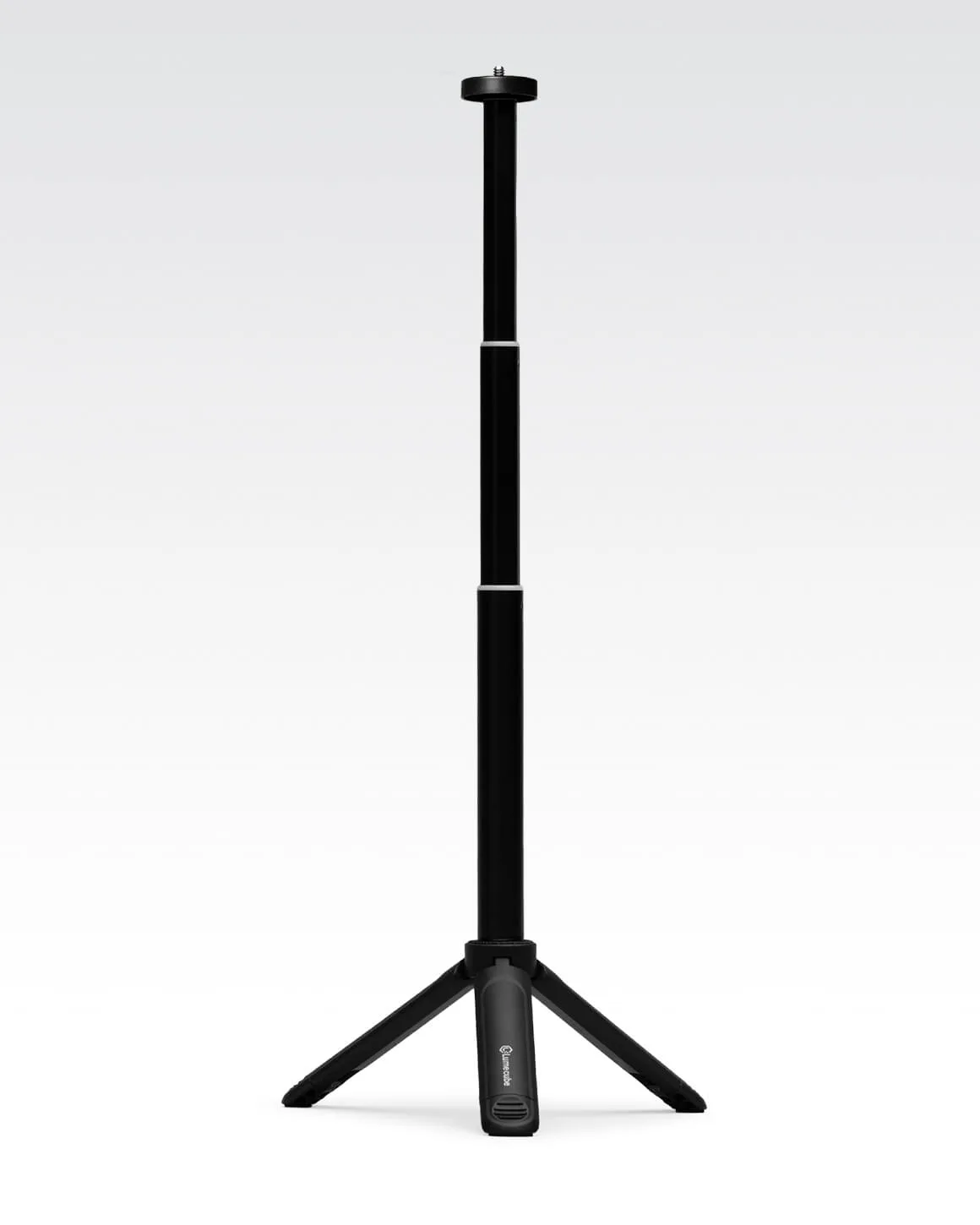
Lume Cube 19-Inch Tripod Telescoping Light Stand
Which support fits your workflow?
Best for
- Streamers and remote workers who need a stable desk light or webcam stand
- Traveling photographers who prioritize packability and quick setup
- Tabletop and product shooters who work at a desk and rarely need overhead angles
Not for
- Studio shooters who regularly need overhead or boom-style lighting positions without an adapter