Quick Answer
Most common rocket flight issues stem from three root causes: insufficient stability, improper motor selection, and recovery system failures. Start by checking your rocket's center of gravity and center of pressure, then verify your motor mount and ejection charge setup. For persistent problems, consult your kit's manual or community forums before modifying your rocket.
Even well-built rockets can misbehave. A wobbly ascent, a parachute that fails to deploy, or a rocket that veers off course can turn an exciting launch into a frustrating experience. The good news is that most flight issues are preventable and fixable with a systematic approach.
This guide walks you through common rocket flight problems, their likely causes, and practical corrective actions. We'll focus on mid-power kits like those from LOC Precision, which are popular for their durability and performance. By understanding the basics of rocket stability and recovery, you'll be better prepared to troubleshoot and get back to flying.
Unstable Ascent: Wobbling or Veering
If your rocket wobbles, corkscrews, or veers sharply after launch, it's usually a stability issue. Stability is determined by the relationship between the center of gravity (CG) and the center of pressure (CP). For a stable flight, the CG must be ahead of the CP by a safe margin—typically one to two body diameters for mid-power rockets.
Check your rocket's CG by balancing it on your finger; it should be ahead of the CP, which you can calculate using software or find in the kit's instructions. If the CG is too far back, add nose weight. Also, ensure fins are aligned straight and securely attached; a warped fin can cause instability. For rockets like the X-Calibur, which has six fins, verify that all fins are identical and properly aligned.
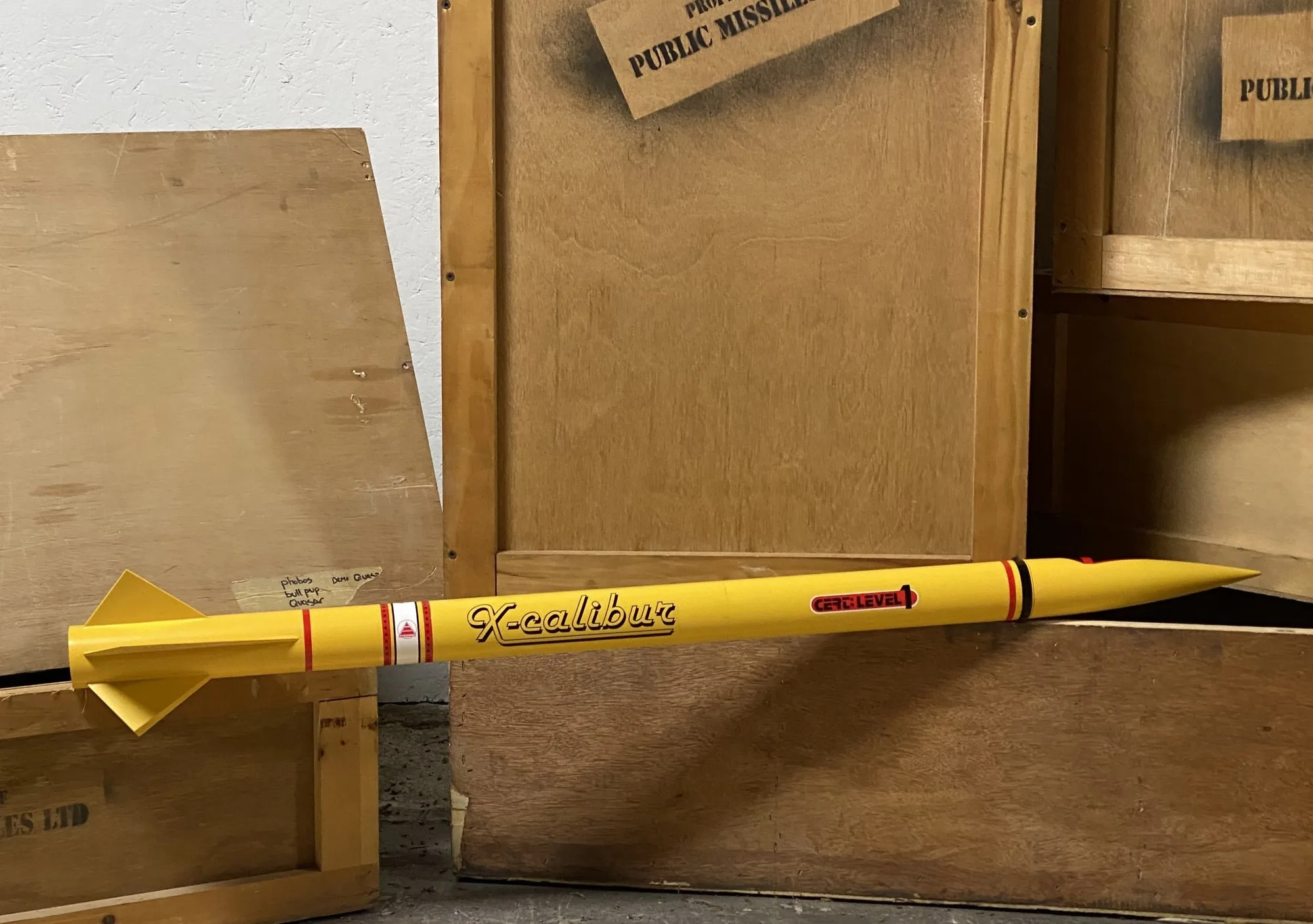
X-Calibur
- Use a launch rod or rail long enough for the rocket to gain speed before leaving the guide.
- Fly on a calm day; high winds can destabilize a marginal rocket.
Recovery System Failures: Parachute Doesn't Deploy
A rocket that comes down ballistic is a serious safety hazard. If your parachute fails to deploy, the most common causes are: the ejection charge not firing, the parachute being packed too tightly, or the shock cord breaking. Start by checking your motor's ejection charge—it should be properly installed and not damp. Use fresh recovery wadding to protect the parachute from hot ejection gases.

recovery wadding
Pack the parachute loosely and ensure it can slide freely out of the body tube. If you use a baffle or piston system, make sure it's not stuck. For rockets with large payload sections, like the X-Calibur, check that the nose cone fits snugly but not too tight. A stuck nose cone can prevent deployment.
- Test your ejection charge by dry-fitting the motor and checking the delay grain.
- Use a small amount of baby powder in the parachute to prevent sticking.
Motor Ejection Too Early or Too Late
If the parachute deploys too early, the rocket may still be moving fast and the parachute can tear. If it deploys too late, the rocket may hit the ground before full inflation. This is usually a motor delay issue. For mid-power motors, you can select a different delay or adjust it if your motor allows.
Check your motor's delay specifications and choose one that matches your rocket's weight and altitude. A heavier rocket needs a shorter delay. For example, the Skinnie Minnie Magg 5.5" is lightweight, so a longer delay might be appropriate. If you're using an electronic altimeter like the TeleMetrum, you can set the deployment altitude precisely.
- Keep a log of your flights and delays to learn what works best.
- For adjustable delay motors, practice with a ground test first.
Rocket Launches but Flips Over
If your rocket does a loop or flips over shortly after launch, it's often due to too much thrust for the rocket's weight or insufficient speed at the end of the launch rod. This can happen if you use a high-thrust motor in a light rocket without enough guide length.
Ensure your launch rod or rail is long enough for the motor you're using. A rule of thumb is that the rocket should leave the rod at least 30 mph for stable flight. If your rocket is very light, like the Skinnie Minnie Magg, consider a lower-thrust motor for the first flight. Also, check that the thrust line is aligned with the rocket's centerline; a misaligned motor mount can cause veering.
- Use a longer launch rail for high-thrust motors.
- Simulate your flight with software to choose the right motor.
Diagnosis Checklist
- Symptom: Rocket wobbles or veers: Check stability: ensure CG is ahead of CP by 1-2 body diameters. Add nose weight if needed. Verify fins are straight and secure. If stable and fins are aligned, move to motor selection.
- Symptom: Parachute doesn't deploy: Inspect ejection charge, wadding, and packing. Ensure nose cone is not too tight. Replace wadding if damp or old. If all are correct, test with a ground ejection test.
- Symptom: Flips over after launch: Check launch rod length and motor thrust. Use a lower-thrust motor for initial flights. Ensure motor mount is aligned. If using recommended motor and rod, consider adding nose weight.
Products That Help
- X-Calibur: Six fins, a large payload section, and PML's standard G10 fins, QT airframe, and great quality make this a bird you're sure to enjoy. Another of our kits that can fly on lower-power motors, the PML X-Calibur! Comes standard with a 38mm motor mount, but can easily fly with 29mm motors using the motor retainer HAMR-38-SET and the HAMR-38/29-ADPTR. Fly it low and slow on a G motor, or put in an I and... Its six fins provide extra stability, making it forgiving for beginners. The large payload section gives room for altimeters like the TeleMetrum, and the flexible motor mount lets you choose motors that match your skill level.
- Skinnie Minnie Magg 5.5": We're taking it back to the beginning! The Skinnie Minnie Magg is an homage to the original, lightweight Minie-Magg from 1986, which was designed to be the largest production kit that you can fly without a certification. With 1/8 inch fins and rings and the absence of shock cord mounting hardware, this svelte beauty goes up great on G motors yet is robust enough to fly on some Level 1 motors. A 38mm motor mount and... Its lightweight design means it's sensitive to motor choice; using too powerful a motor can cause instability. This kit teaches you to balance thrust and weight, and its simple construction makes it easy to diagnose issues.
- Recovery Wadding: LOC/PRECISION's recovery wadding is environmentally safe, NO asbestos fiber, NO glass fiber, NO formaldehyde Flame Resistant, Non-Toxic, does not itch! Use about one body diameter's worth in depth loosely packed to protect your recovery system from harmful ejection gas. Proper wadding is crucial for reliable parachute deployment. Using the right amount prevents the ejection charge from burning your parachute, a common cause of recovery failure.
Troubleshooting rocket flight issues is part of the hobby. By systematically checking stability, motor selection, and recovery systems, you can resolve most problems. Remember to always follow safety guidelines and consult your kit's manual. Happy flying!