Quick answer
For most dog handlers, the Tru-Spec thin blue line luggage tag offers better durability and a clearer statement than a standard paper or flimsy plastic ID tag, especially if you want a tag that survives daily gear abuse. But if you need a tag that holds a lot of written info or fits through narrow slots, a standard ID tag may still be the practical choice.
Why tag material and attachment matter for handlers
Dog handler gear gets knocked around: bags are tossed into truck beds, packs are dropped on gravel, and keychains swing against metal clips. A standard ID tag made of paper or thin plastic can tear, fade, or snap its loop within weeks. The Tru-Spec tag uses durable PVC rubber, which resists cracking and holds up to repeated handling without losing its shape.
Attachment is another overlooked difference. Standard ID tags often come with a small split ring or a flimsy cord that can break under tension. The Tru-Spec tag uses a heavy-duty nylon strap with a plastic quick-release buckle, so you can secure it firmly to a bag handle or D-ring and remove it quickly when needed. That buckle also lets you swap the tag between gear without tools.
Visibility and statement: thin blue line vs plain ID
A standard ID tag usually shows your name, phone number, or a simple logo. The Tru-Spec tag displays a thin blue line on a black US flag, which makes a clear visual statement about supporting law enforcement. For handlers who want their gear to reflect that support, the flag design is more noticeable at a glance than a plain tag.
That visibility cuts both ways: the flag pattern may not suit every environment or audience. If you prefer a low-profile tag that doesn't draw attention, a standard ID tag with a neutral color is less conspicuous. Think about where you'll use the tag—training grounds, public transport, or kennel events—and whether the statement fits.
Price and clearance consideration
The Tru-Spec tag is listed at USD 5.17, compared with a catalog comparison price of USD 6.99, so it's a clearance-priced upgrade over many standard tags that cost similar or more. If you're already buying dog handler gear, adding a durable tag at this price is a low-cost way to improve your kit.
Standard ID tags can be cheaper, but they often lack the rugged build and attachment system. The trade-off is simple: pay a little more for a tag that lasts and attaches securely, or save a few cents and risk replacing it sooner.
Trade-offs at a glance
- Durability: If your gear gets rough treatment, choose the Tru-Spec PVC rubber tag over a paper or thin plastic standard ID tag. It won't tear or crack as easily. Inspect your current tag for cracks or fading—if present, upgrade.
- Attachment: The nylon strap with quick-release buckle is more secure than a split ring or cord. Use it on bags, packs, or as a keychain for easy swapping. Test the buckle on your bag's D-ring to confirm it fits before relying on it.
- Visibility: The thin blue line flag design is a clear statement. If you need a low-profile tag, pick a plain standard ID tag instead. Consider your environment: training fields vs public settings.
- Cost: At USD 5.17, the Tru-Spec tag is a clearance-priced upgrade over many standard tags. If budget is tight, a cheaper standard tag works but may need replacement sooner. Factor in replacement cost, not just upfront price.
Product facts
-
Tru-Spec Thin Blue Line on Black US Flag Luggage Tag: Made of durable PVC rubber with a heavy-duty nylon strap and plastic quick-release buckle. This combination resists wear from daily gear use and lets you attach or remove the tag quickly without tools.
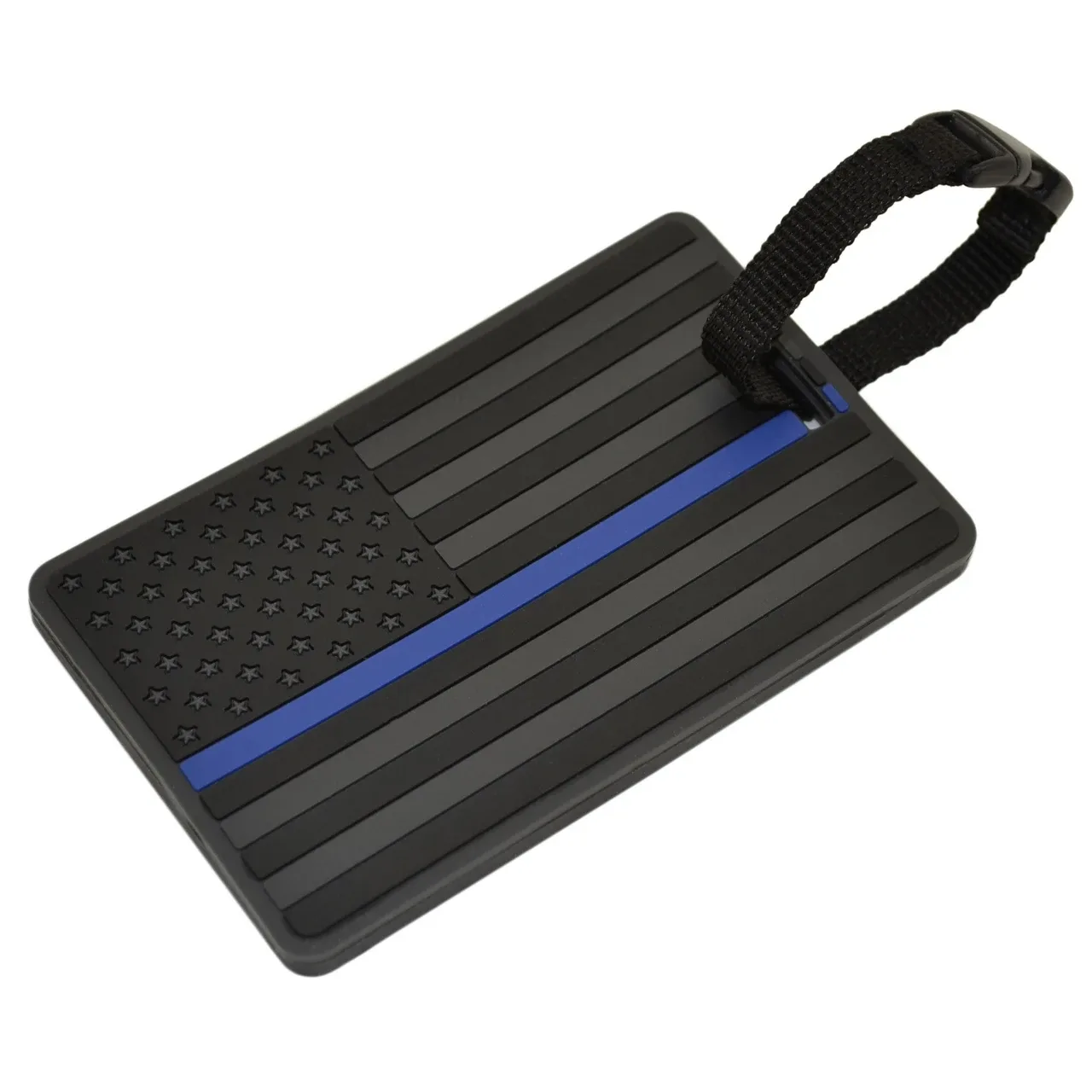
Tru-Spec Thin Blue Line on Black US Flag Luggage Tag
Which tag fits you?
Best for
- Dog handlers who want a rugged, reattachable tag for training bags and packs
- Handlers who want to show support for law enforcement on their gear
Not for
- Handlers who need a tag with lots of written contact info or a low-profile look
- Those who prefer a tag that fits through narrow luggage handle slots