Quick answer
TruStone dice are engineered stone-composite dice made for consistent density and a uniform finish, while gemstone dice are cut from natural materials such as obsidian or cats eye glass, so no two pieces look exactly alike. Choose TruStone if you want repeatable weight and a cleaner, more controlled look; choose gemstone dice if you want natural variation and a display piece. Both are heavier than plastic and both deserve a padded tray.
Stone dice sit in a strange middle ground: heavier than resin, colder than wood, and priced high enough that most players only buy one set. The confusion starts when two sets look almost identical on a shelf but are made in completely different ways.
TruStone is an engineered stone material, which means the density and color are controlled during production rather than pulled from a quarry. Gemstone dice are cut from natural stone or spun glass, and their appeal comes from the variation that engineered materials deliberately remove. That single difference drives everything else: price, finish, durability, and how the dice feel in your hand.
What TruStone Dice Actually Are
TruStone is a manufactured stone composite, which is why it is often described as engineered stone rather than a mined mineral. The point of the material is consistency: the same set should roll with the same heft and show the same surface quality from die to die. That matters for players who like a uniform look across a full set of seven and do not want to hunt for a matching d20 later.
Because TruStone is produced rather than quarried, it also avoids the natural inclusions, pits, and color shifts that come with real stone. Some players love that clean look; others find it a little sterile. Neither reaction is wrong, but it is the honest trade-off at the center of the TruStone question.
- TruStone is engineered, so expect repeatable density and a consistent finish across the set.
- If you want every die to look like it came from the same block, engineered stone is the safer bet.
What Gemstone Dice Actually Are
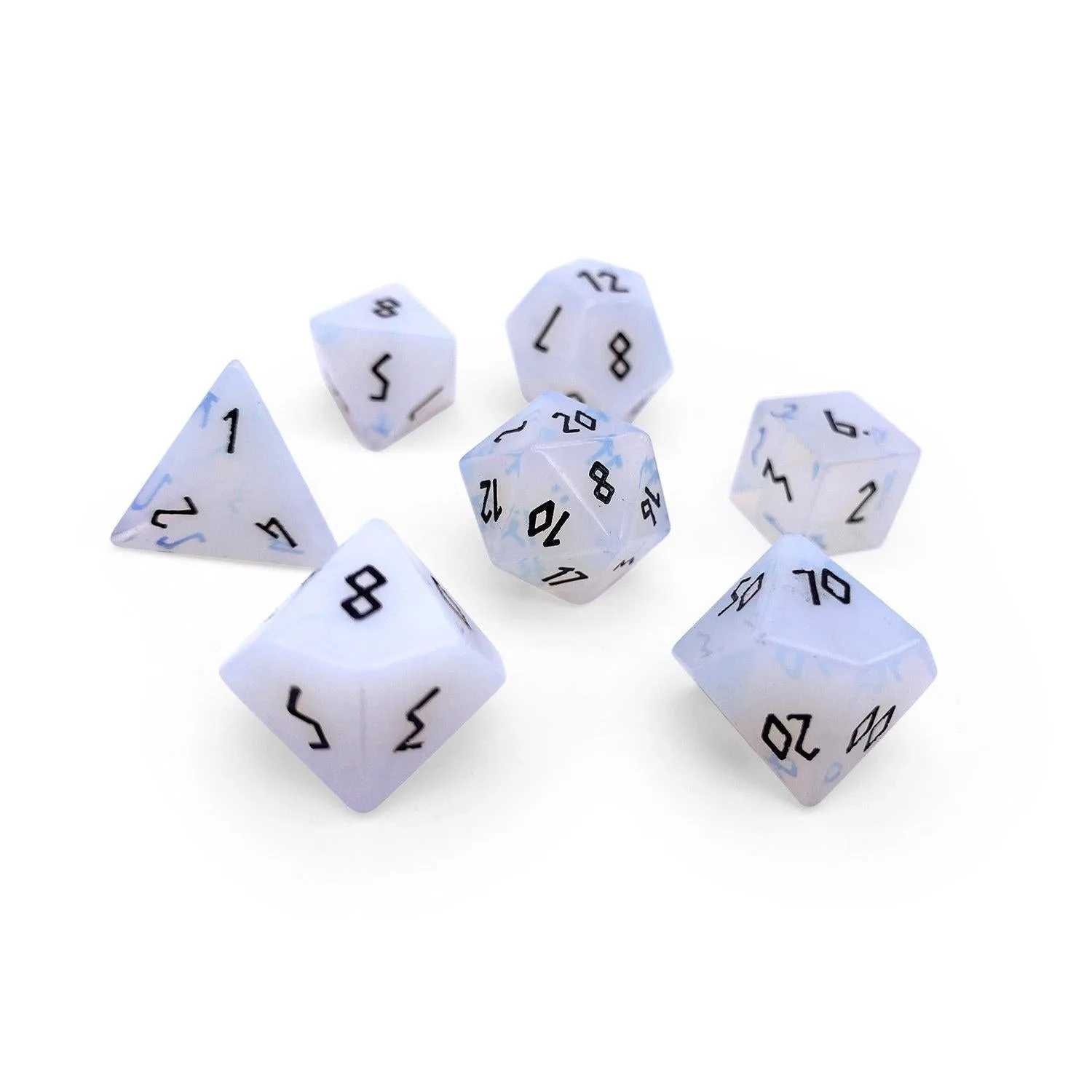
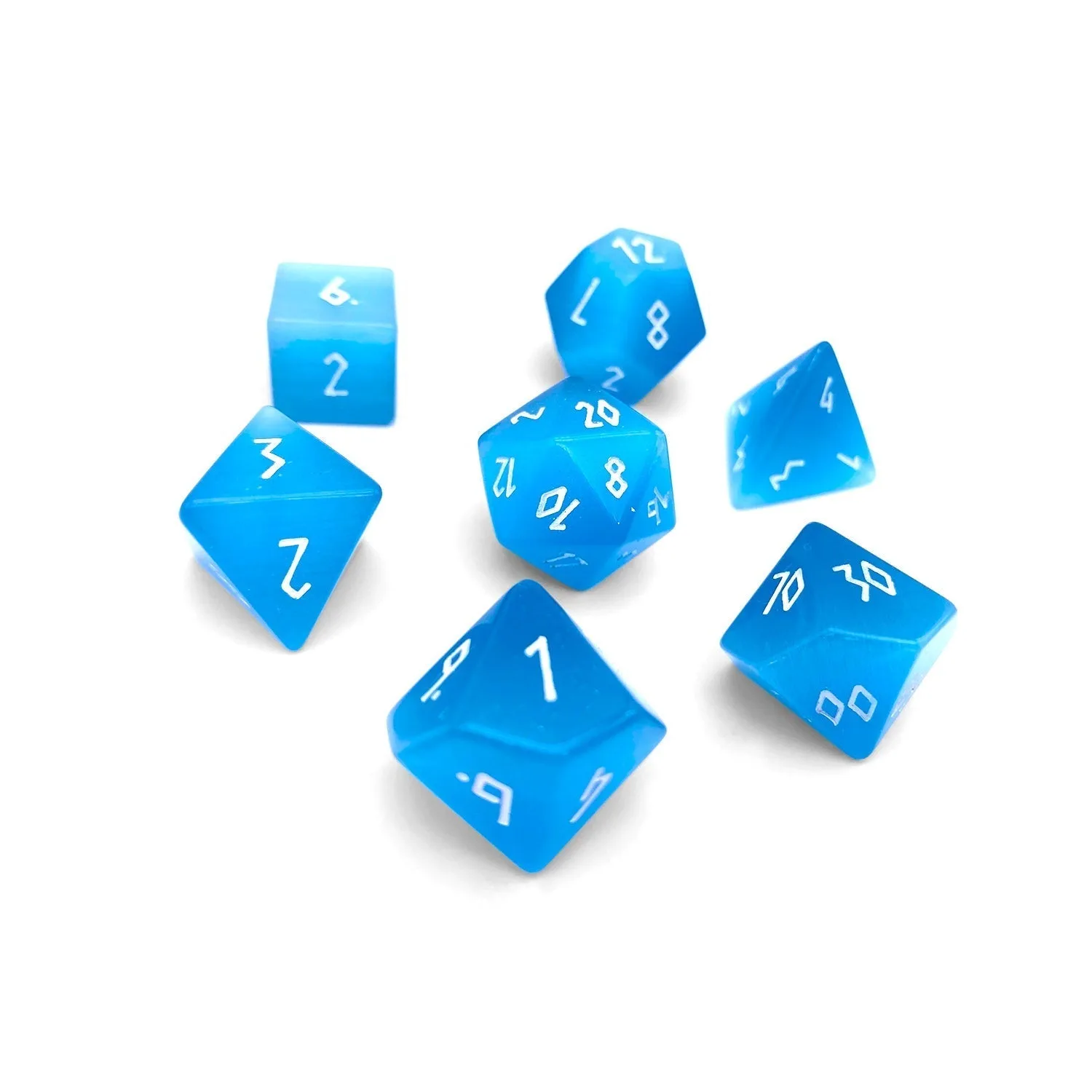
Gemstone dice are cut from natural or semi-natural materials, and the catalog shows how wide that range is. Black Obsidian - Gold Font Pebble RPG Set Gemstone Dice is a raised obsidian stone, while Aquamarine Cats Eye - Pebble RPG Set Glass Dice is made from thin optic glass fibers spun together to create a densely pearlescent, opaque luster. One is stone; the other is engineered glass that mimics a gemstone.
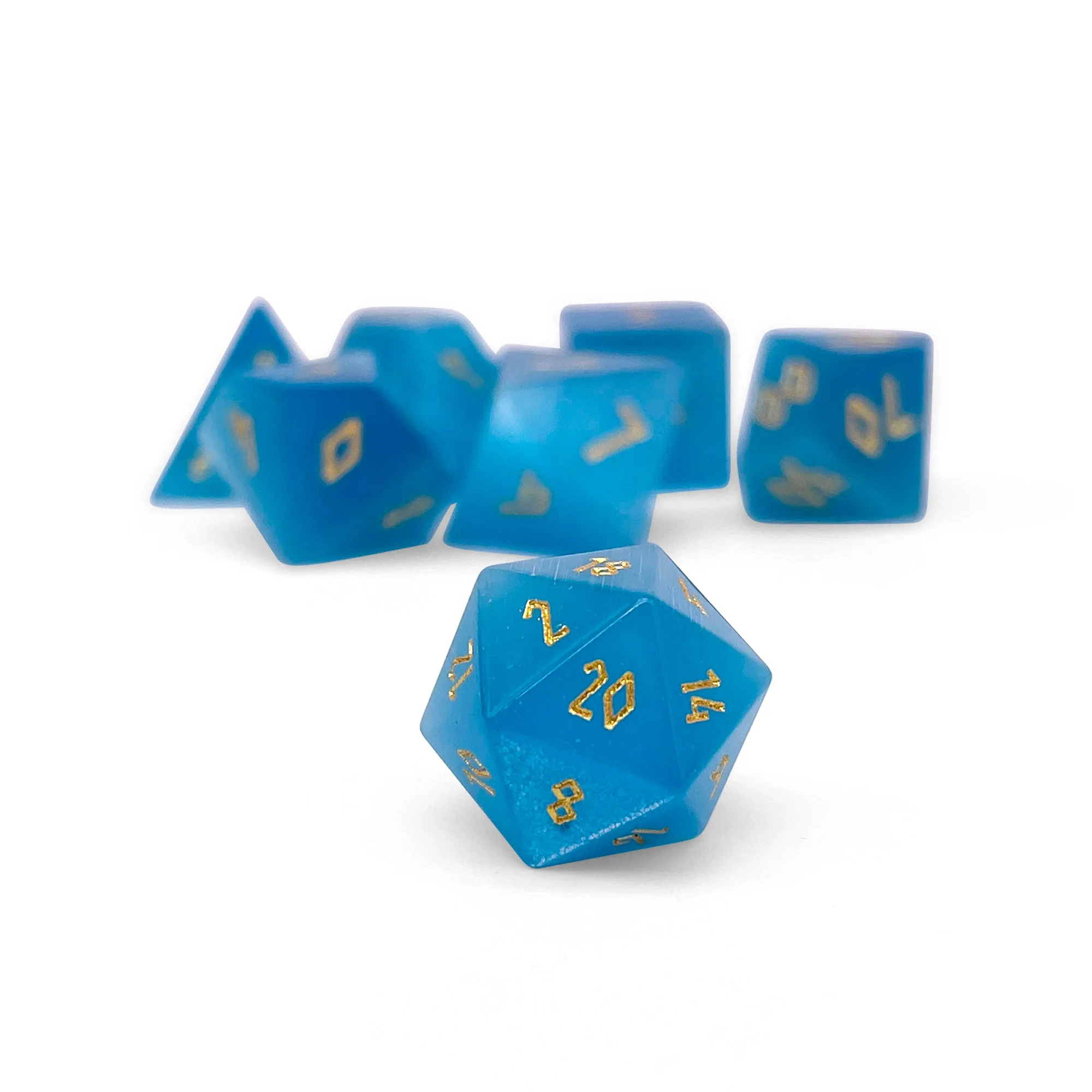
Aquamarine Cats Eye - Pebble RPG Set Glass Dice
That distinction matters because gemstone is a marketing umbrella, not a single material. Natural stone brings unique patterning and the small imperfections that prove it came from the earth. Cats eye glass, by contrast, is described as perfectly cut with a flawless finish, offering a precision that the catalog notes is not possible with natural stones. So gemstone dice can mean either natural variation or engineered perfection, depending on which set you pick.
- Read the material line, not just the category name: obsidian and cats eye glass behave very differently.
- Natural stone sets will vary slightly between units; glass fiber sets will not.
Durability and Feel Compared
Both materials are heavier than standard plastic and both will pick up wear over years of play. Engineered TruStone is valued for holding its shape and finish predictably, which is why it is often recommended for players who want one set to last without surprises. The trade-off is that a uniform material shows scratches and chips as a clean, obvious mark rather than blending into natural texture.
Natural gemstone dice bring their own risk profile. Obsidian is a volcanic glass, so it can chip at sharp edges if it lands on a hard surface. Cats eye glass is described as precision-cut and flawless, which makes it beautiful but still glass, and glass does not enjoy meeting tile or concrete. The practical answer for both is the same: roll on a tray, not directly on the table.
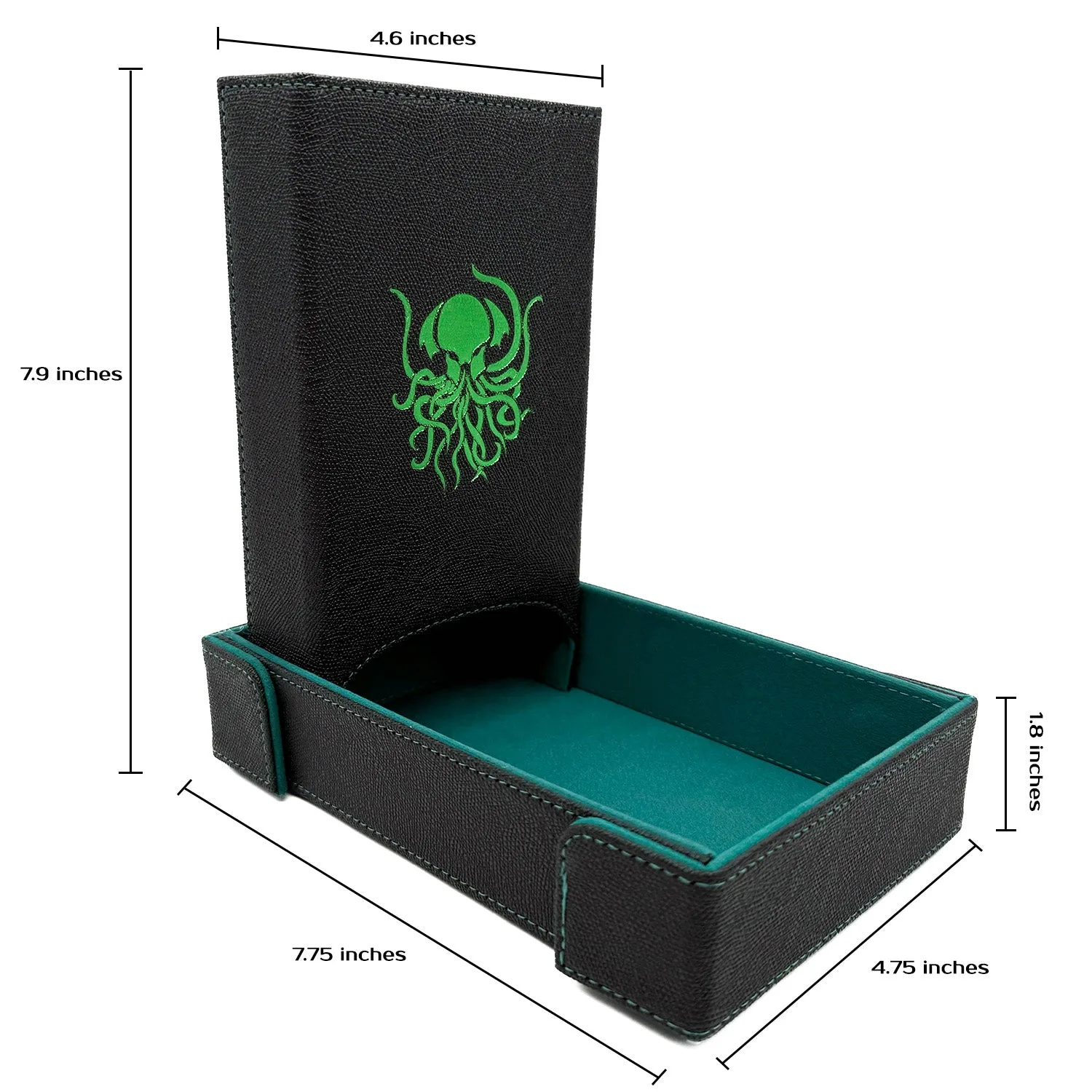
- Use a padded dice tray for both materials; the tray costs far less than replacing a d20.
- Store stone sets in a dice bag or case rather than loose in a backpack pocket.
Look, Price, and Set Composition
The visual difference is the easiest one to judge. Gemstone sets are sold on their natural character: obsidian's pure black with gold font, or the lagoon-blue swirl of cats eye glass. Engineered TruStone is sold on cleanliness and consistency. If your character sheet lives in a themed campaign, the gemstone route gives you a stronger story to point at.
Price tends to follow material and finishing work rather than a strict rule. In the supplied catalog, Black Obsidian - Gold Font Pebble RPG Set Gemstone Dice lists at USD 40.95 against a comparison price of USD 65.00, while Aquamarine Cats Eye - Pebble RPG Set Glass Dice lists at USD 50.25 against USD 75.00. Both are sold as pebble-style sets, so the gap reflects material and finish, not size.
- Decide whether you want variation or uniformity before comparing prices.
- Check whether the set includes the full seven polyhedrals you actually roll.
Trade-Offs to Weigh Before You Buy
- Consistency vs character: Engineered TruStone gives you repeatable density and a uniform finish. Natural gemstone gives you inclusions, color shifts, and a set that is visibly yours. Pick consistency if you want a matched set; pick character if you want a display piece.
- Predictable wear vs natural fragility: TruStone holds its finish predictably, while obsidian and glass can chip at edges if they land on a hard surface. Budget for a padded tray with either material, especially glass and obsidian.
- Stone look vs real durability: Neither stone option is as impact-resistant as machined metal. The Lizardman 7-piece set in 6063 aluminum is CNC machined and built for repeated handling. If your dice travel every week, metal is the lower-risk choice.
Catalog Examples in Both Materials
- Black Obsidian - Gold Font Pebble RPG Set Gemstone Dice: Made from raised black obsidian gemstone, with a catalog price of USD 40.95 against a comparison price of USD 65.00. A natural stone set at the lower end of the stone-dice range, so it is a reasonable first step if you want real stone without the highest spend.
- Aquamarine Cats Eye - Pebble RPG Set Glass Dice: Thin optic glass fibers are spun together to create a densely pearlescent, opaque luster, and the set is described as perfectly cut with a flawless finish. Shows that gemstone-style dice are not always mined stone; this is engineered glass chosen for precision that natural stones cannot match.
- Shattered Zircon Alexandrite - 7 Piece RPG Set Zircon Glass Dice: A 7-piece RPG set made from zircon glass, described as crafted with precision and forged from zircon. A useful comparison point if you want a full seven-piece set in a glass material rather than a natural stone.
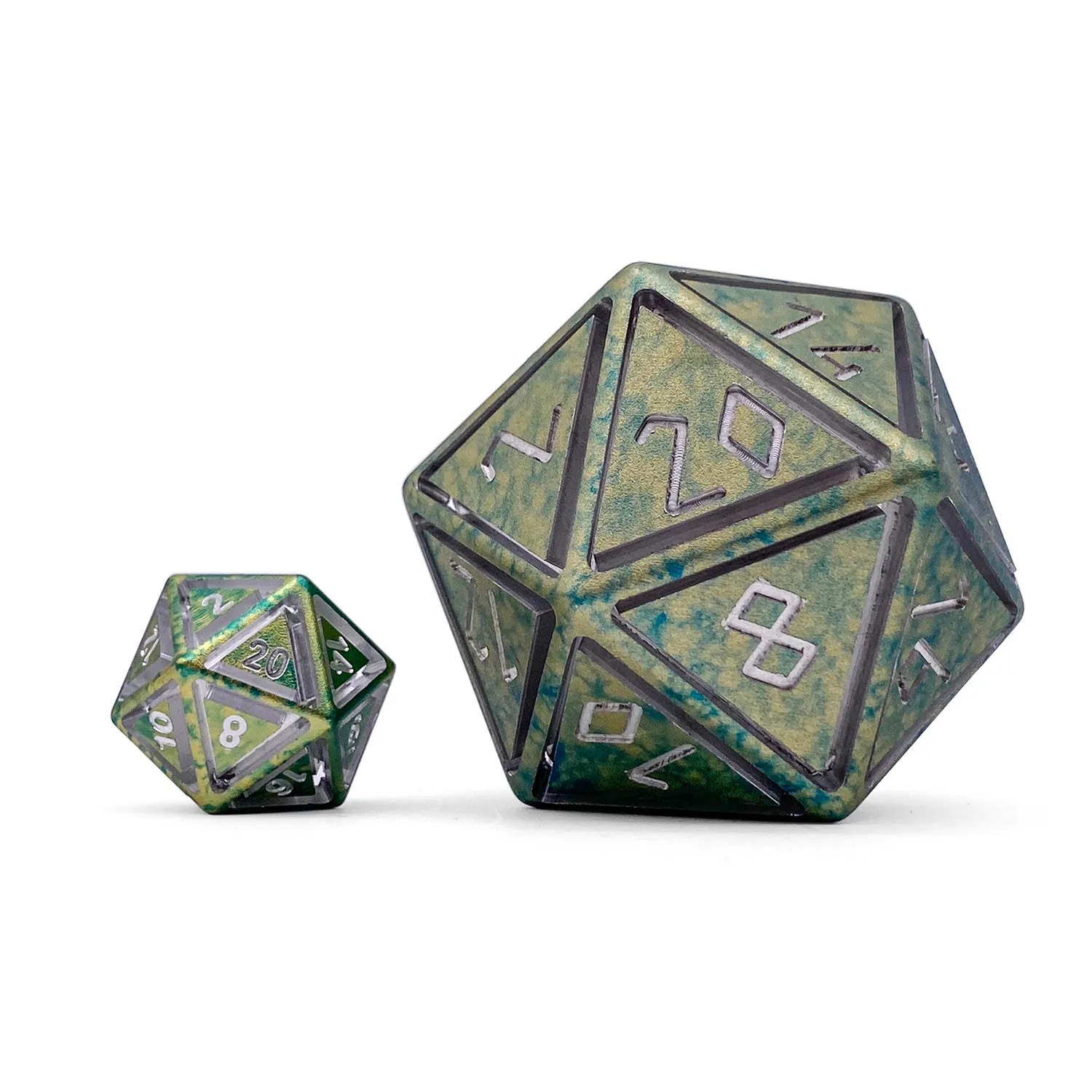
- Lizardman - 7 Piece RPG Set 6063 Aluminum Wondrous Dice: Each die is made using CNC machining, and the set is a 7-piece RPG set in 6063 aluminum. If your real concern is durability rather than stone aesthetics, machined aluminum is the more forgiving material for heavy weekly use.
Which Stone Dice Fits Your Table
Best for
- Players who want one matched set of seven with consistent weight and finish
- Gamers who display their dice and want a clean, uniform look
- Buyers who prefer an engineered material over unpredictable natural variation
Not for
- Players who want every die to look visibly unique, which points to natural gemstone
- Anyone who rolls on bare tables or hard floors, where both stone and glass can chip
- Groups that need maximum impact resistance, where machined aluminum is the better pick
TruStone and gemstone dice solve different problems: one delivers repeatable, engineered consistency, the other delivers natural variation you cannot manufacture. Decide which of those you actually want, then match the material to how and where you roll.