Quick answer
Tug is safe when you control the rules, not the dog. Keep sessions short, use a tug with handles that let you release instantly, and stop the moment your dog's grip turns frantic or their body stiffens. If your dog won't release on cue or redirects onto your hands, end the game and switch to a lower-arousal activity.
Symptom: The game turns into a wrestling match
Your dog lunges before you present the tug, ignores your release cue, and whips their head side to side with a tight, grinding grip. Their eyes may go wide, and they may jump and body-slam into you. This is not aggression—it is overarousal, a nervous system state where thinking stops and reflex takes over. The tug itself is not the problem; the lack of a start-and-stop structure is.
Cause: You are playing tug like a competition, not a training game
Many owners unintentionally teach the dog that tug is a free-for-all. They let the dog grab the toy whenever they want, never ask for a release, and keep going until the dog is exhausted. That pattern builds frustration and makes the dog practice exactly the behavior you do not want. It also increases injury risk because the dog is throwing its full body weight against a toy with no off-switch.
Corrective action: Build a three-second rule
Before the tug comes out, decide on a release word such as 'out' or 'drop.' Present the tug only after your dog offers a sit or a moment of stillness. Let them tug for three seconds, then say your release word and hold the toy still. If they release, mark and restart. If they do not, the game ends immediately—put the tug away and walk off. This teaches that teeth on the toy plus a clean release equals more tug, while clamping down equals no tug. Keep total tug time under five minutes per session, especially for young or reactive dogs.
Corrective action: Protect joints and teeth with the right tug
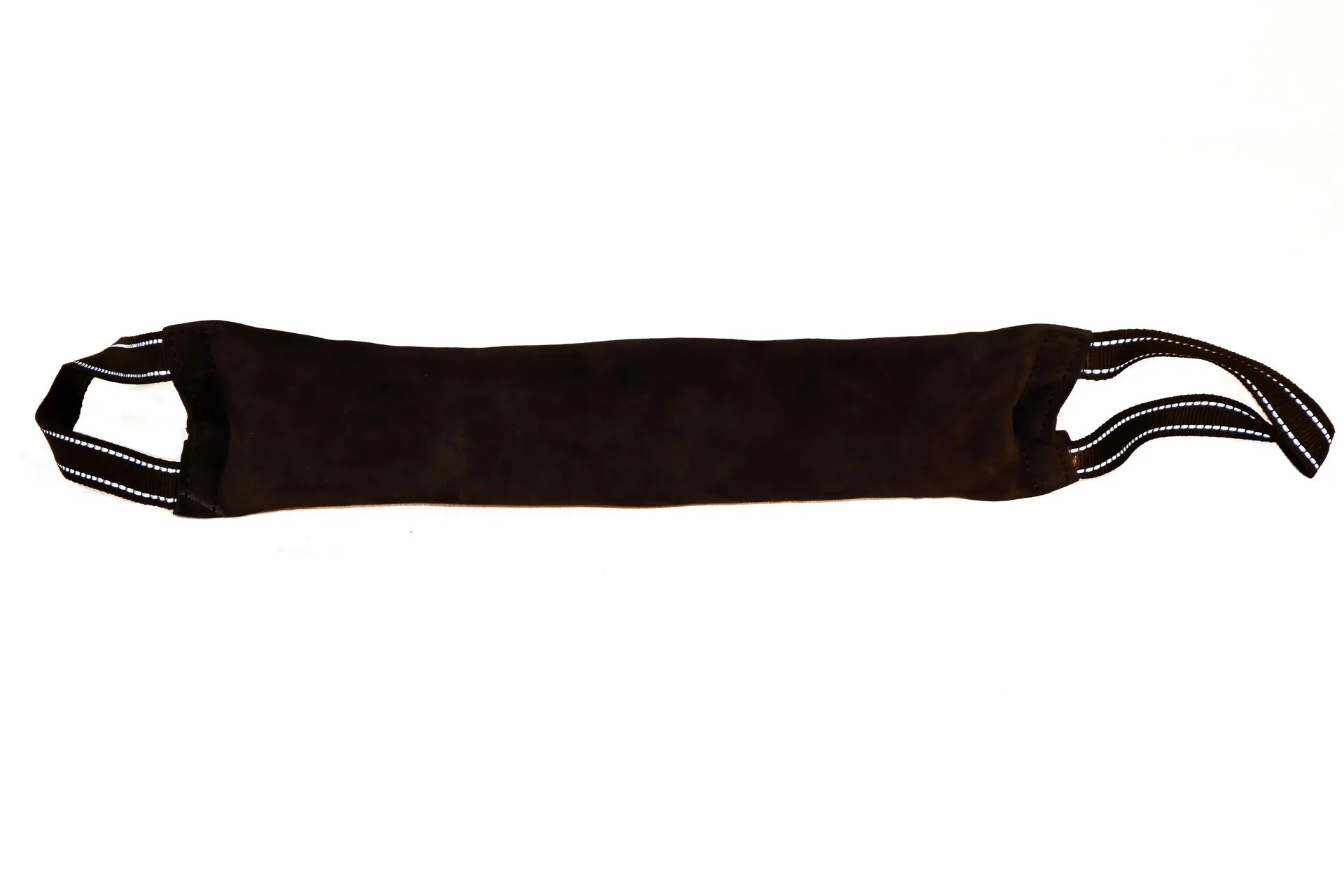
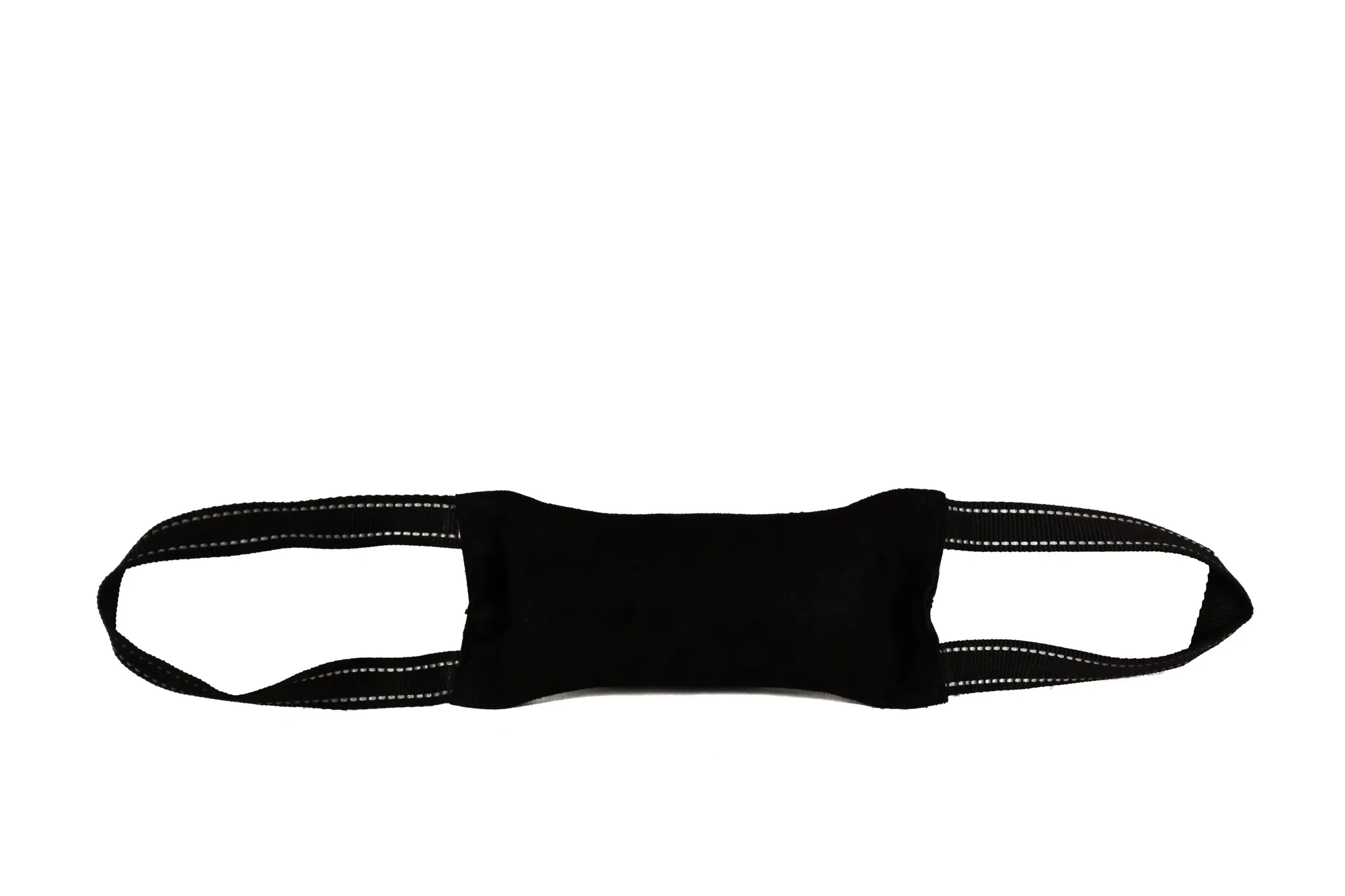
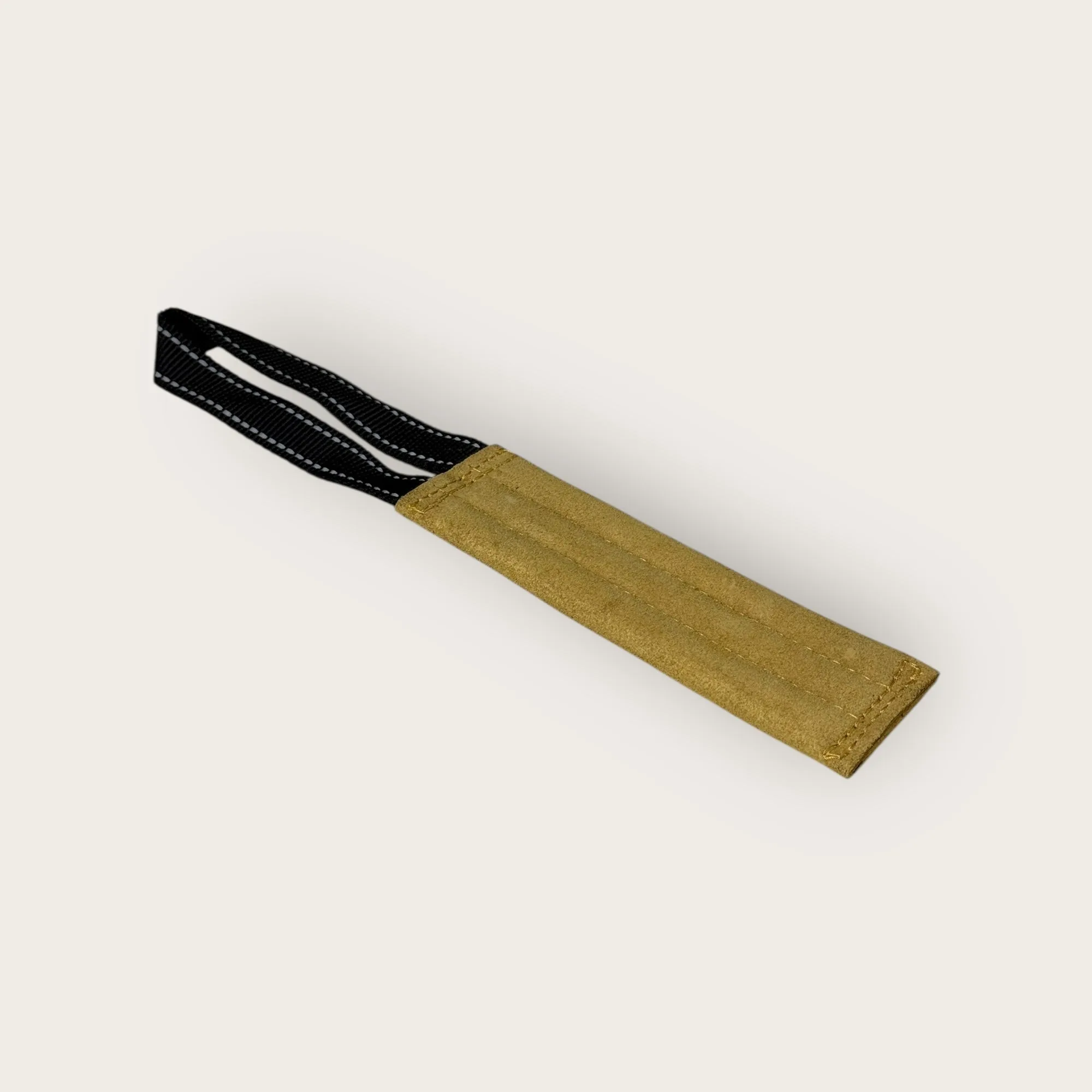
A tug that is too long or too floppy lets the dog whip its neck; one that is too short puts your hand near the dog's mouth. Look for a tug with two handles so you can keep one hand free and release tension instantly. Leather tugs are a good choice for strong pullers because they do not stretch and give the dog a consistent surface to grip. Avoid rope toys with loose fibers that can be swallowed, and never let your dog win the tug and run off with it—that rewards possession, not cooperation.
Corrective action: End on a calm note every time
After the final tug, ask for a simple obedience behavior such as a down or a hand touch, then reward with a piece of food or a quiet chew. This lowers arousal and teaches the dog that tug is a controlled game with a clear finish. If your dog cannot settle within 30 seconds, they were over threshold—next time, shorten the session and add more breaks.
When to stop or choose another option
Stop tug entirely if your dog bites your hand or clothing, if they guard the tug from you, or if they remain agitated for more than a few minutes after the game. These are signs that tug is not yet a suitable outlet. Instead, use a ball with a handle for fetch or a food-stuffed toy for independent work. If your dog has a history of aggression or a neck or spine issue, consult your veterinarian or a certified trainer before using any tug toy.
Tug safety diagnosis: symptom, cause, action, stop point
- Symptom: frantic head whipping and no release: The dog grabs before you offer the toy, ignores your voice, and clamps down. This is overarousal, not dominance. End the session immediately and put the tug away.
- Cause: missing start-and-stop rules: Free access to the tug and no release practice teaches the dog that tug is a free-for-all. Use a three-second tug rule and a release word every time.
- Action: use a two-handle leather tug and keep sessions short: Two handles let you control tension and release instantly; leather gives a consistent grip without stretching. Stop after five minutes or sooner if your dog cannot settle.
- Stop point: biting hands, guarding, or lingering agitation: If your dog redirects onto you, guards the toy, or stays revved up for minutes afterward, tug is not the right game right now. Switch to fetch with a ball or a food toy, and consult a trainer if the behavior persists.
Tug options that support safe play
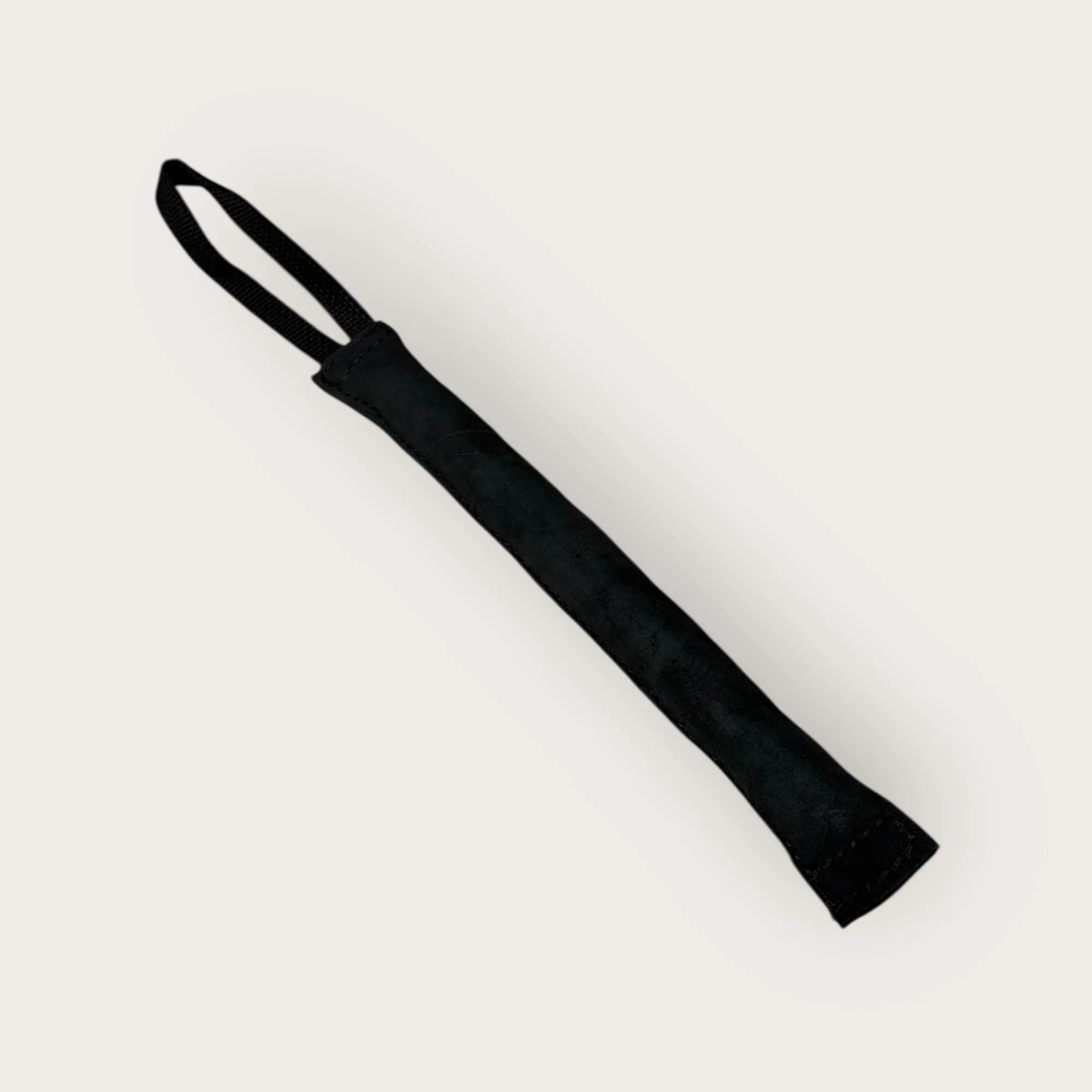
- Tug leather 18"x3" with 2 handles: Leather Tug – 18" x 3" with Two Handles, built from thick, heavy-duty leather with two reinforced nylon handles. The wider leather surface gives strong dogs a solid grip, and the two handles let you keep control and release instantly during high-intensity training.
- Tug leather 18"x 1.5" with 2 handles: Leather Tug – 18" x 1.5" with Two Handles, a slimmer profile made from thick, heavy-duty leather with two reinforced nylon handles. The narrower width suits smaller mouths or precision grip work, making it easier to teach a clean release without the dog feeling crowded.
- Julius-K9 IDC® Natural Rubber Ball with Closable Handle: Julius-K9 IDC® Natural Rubber Ball with Closable Handle, made of natural caoutchouc. A ball on a handle gives you a safe alternative for fetch or lower-arousal play when your dog needs a break from tug.