Quick answer
If your Tulsi Sleep Tea isn't helping you relax or sleep, the problem is usually in your routine—timing, brewing temperature, or expectations. Adjust these variables before giving up on the tea.
Why timing matters more than you think
Herbal teas like Tulsi Sleep Tea work best when your body is already starting to wind down. Drinking it too close to bedtime may not leave enough time for the adaptogens and chamomile to take effect. Aim to sip your tea 30 to 60 minutes before you plan to sleep.
If you drink it right when you hit the pillow, you might not feel the gradual calming effect. The tea is meant to support relaxation, not knock you out instantly.
Brewing mistakes that reduce effectiveness
Water that is too hot can degrade some of the delicate compounds in Tulsi and chamomile. Use water just off the boil (around 200°F or 93°C) and steep for 5-7 minutes. Steeping too briefly won't extract enough of the active herbs.
Also, avoid adding milk or sweeteners that might interfere with the herbal profile. A small amount of honey is fine, but heavy creamers or sugar can mask the taste and potentially reduce the calming effect.
Setting realistic expectations
Tulsi Sleep Tea is not a sedative. It works gently over time as part of a consistent bedtime ritual. If you have severe insomnia or are used to prescription sleep aids, this tea may feel subtle. Give it at least a week of nightly use to assess its effect.
The blend of Tulsi, Ashwagandha, and Chamomile helps release stress from the body and mind, but it won't override high anxiety or a racing mind. Pair it with other wind-down practices like dimming lights or reading.
Diagnose and fix your sleep tea routine
- Symptom: You feel no relaxation after drinking: You may be drinking the tea too close to bedtime, or the water is too hot. Try moving your tea time to 45 minutes before bed and using water just off the boil. Adjust timing and water temperature first.
- Likely cause: Inconsistent routine or high stress: The tea works best when paired with a consistent wind-down ritual. If you drink it one night and skip the next, or if you're under extreme stress, the effect will be muted. Use nightly for at least a week and combine with a relaxing activity.
- Corrective action: Reassess expectations and environment: If you still don't notice improvement after a week, consider that your sleep issues may be more complex. The tea supports relaxation but isn't a cure for chronic insomnia. Try pairing it with other sleep hygiene practices like reducing screen time before bed. If no change after 7 nights, consult a healthcare provider for deeper sleep issues.
Product facts
-
Tulsi Sleep Tea: This organic blend combines Tulsi, Ashwagandha, and Chamomile—all known for supporting relaxation and restful sleep. These herbs work synergistically to help release stress from the body and mind, making the tea a gentle sleep aid rather than a quick fix.
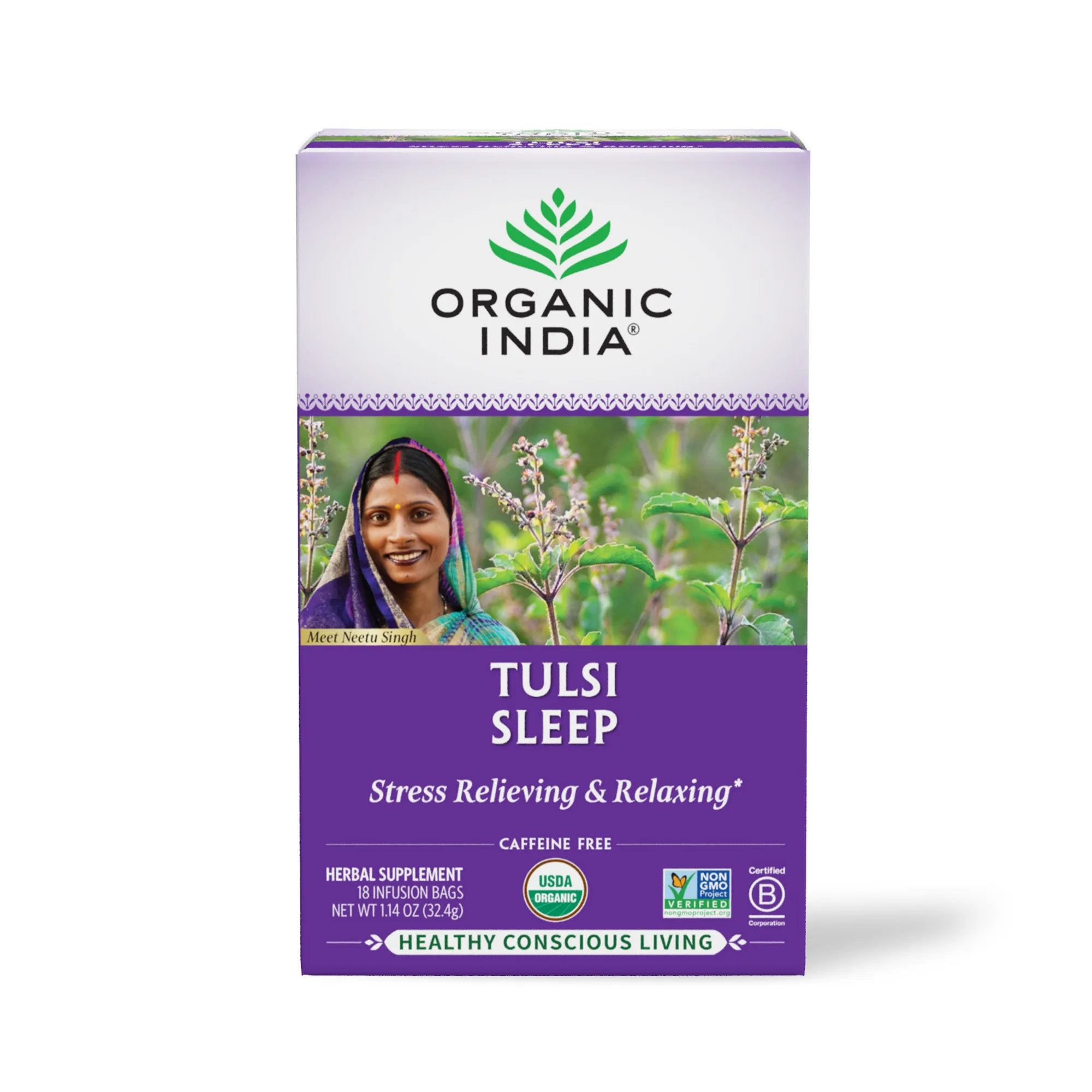
Tulsi Sleep Tea