When you're shopping for a new phone case, you'll often see claims like 'military-grade protection' or 'drops from 6 feet.' But what do these numbers actually mean? And how do they translate to real-world protection for your iPhone? In this guide, we'll break down the science behind drop protection, explain the ratings you see on product pages, and help you choose a case that truly keeps your phone safe.
Whether you're prone to dropping your phone or simply want peace of mind, understanding drop protection is essential. We'll cover everything from drop test standards to the materials that absorb impact, so you can make an informed decision. Plus, we'll highlight some of our favorite shockproof cases that combine durability with style.
What Is Drop Protection and Why Does It Matter?
Drop protection refers to a case's ability to absorb and dissipate the energy from an impact, preventing damage to your phone. When you drop your iPhone, the force of the impact travels through the case to the device. A good case uses materials and design features to spread that force and reduce the shock on the phone's internal components and screen.
Without adequate protection, a drop from even a modest height can crack your screen, dent the frame, or damage internal hardware. Given that repairing an iPhone screen can cost hundreds of dollars, investing in a reliable case is a smart financial decision. But not all cases offer the same level of protection, which is why understanding the numbers is crucial.
- Look for cases with raised bezels to protect the screen and camera.
- Corner reinforcement is key—most drops land on corners.
- A good case should fit snugly to prevent the phone from slipping out.
Decoding Drop Test Ratings: MIL-STD-810G and Beyond
You've probably seen 'MIL-STD-810G' printed on case packaging. This is a military standard that tests equipment's durability against various environmental conditions, including drops. However, the standard doesn't specify a single drop height; it's a series of tests that manufacturers can choose to follow. For phone cases, a common test is a drop from 4 feet onto a hard surface, but some brands test from higher.
Another rating you might encounter is the drop height in feet or meters, such as 'drops from 6 feet.' This is a straightforward measurement of the height from which the case can survive a drop onto a hard surface like concrete. Keep in mind that real-world drops often involve angles and uneven surfaces, so these numbers are a guideline, not a guarantee.
When comparing cases, look for those that explicitly state the drop height and the testing conditions. A case that claims '6-foot drop protection' but doesn't specify the surface may not be as reliable as one that says 'tested on concrete.'
- MIL-STD-810G is a set of tests, not a single drop height.
- Higher drop ratings generally mean better protection, but design matters too.
- Check if the case has been tested on concrete or a softer surface.
Key Materials and Design Features for Maximum Shock Absorption
The materials used in a case play a huge role in its protective capabilities. Thermoplastic polyurethane (TPU) is flexible and absorbs shock well, while polycarbonate (PC) is rigid and helps distribute impact. Many cases combine both: a TPU bumper for flexibility and a PC back for rigidity.
Air cushions, also known as air pockets, are another common feature. These are hollow spaces in the corners that compress on impact, absorbing energy. Raised lips around the screen and camera also prevent direct contact with surfaces when you place your phone face-down.
For ultimate protection, consider cases like the Rugged Shockproof iPhone Case with Kickstand, which uses multi-layer construction and reinforced corners. Similarly, the Kooshock Series Magic Stand Cases combine shock-absorbing materials with a convenient stand, so you don't have to sacrifice protection for functionality.
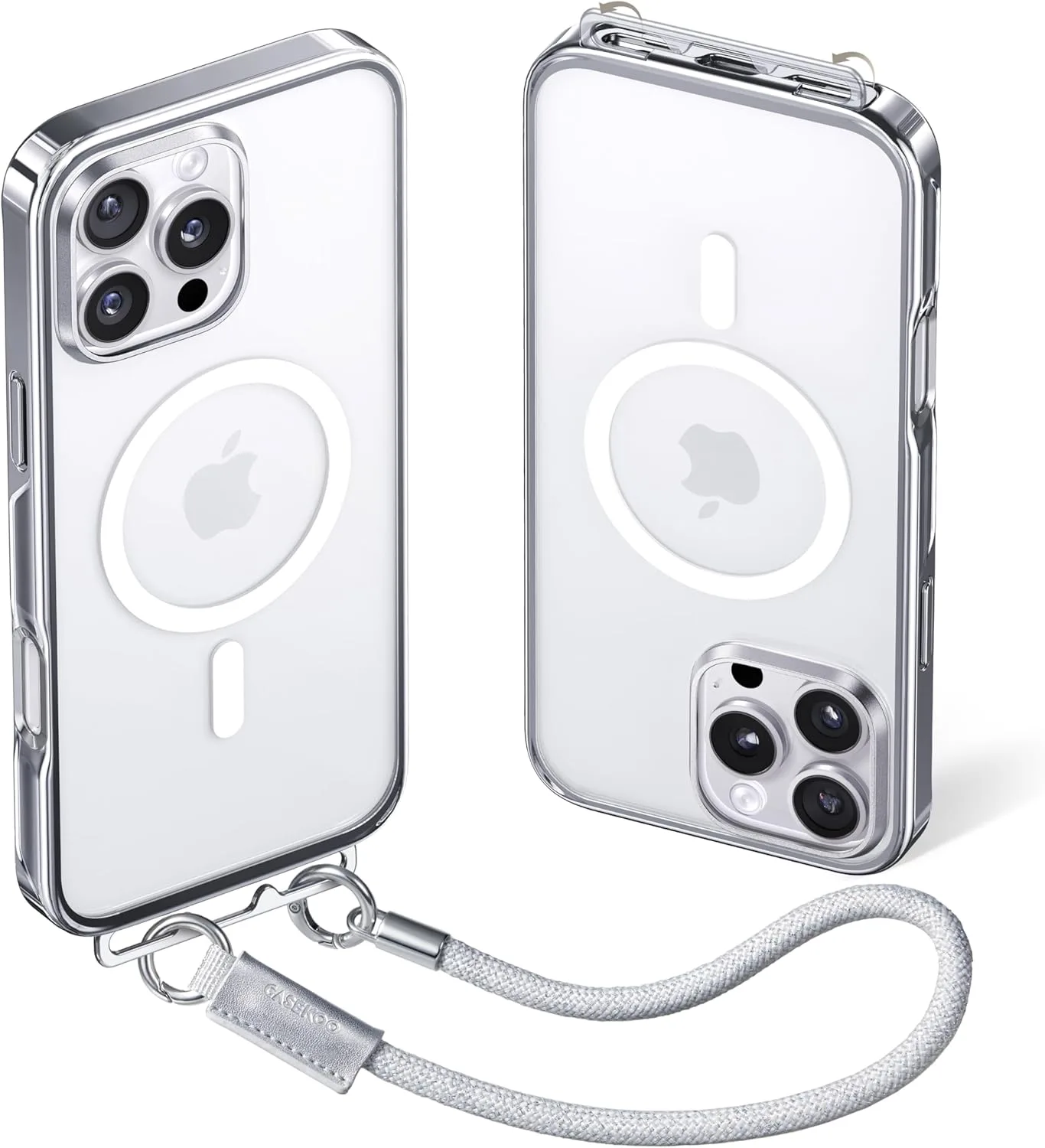
Kooshock Series Magic Stand Cases
- TPU and PC are the gold standard for shock absorption.
- Air cushions in corners significantly improve drop performance.
- A raised lip of at least 2mm is recommended for screen protection.
How to Choose the Right Protection Level for Your Lifestyle
Your lifestyle determines how much protection you need. If you work in construction or spend a lot of time outdoors, you'll want a rugged case with a high drop rating. If you're mostly in an office or at home, a slimmer case might suffice, but you should still look for a decent drop rating.
Consider also the size and weight of the case. Heavier cases with more layers offer better protection but can be bulky. Some people prefer a balance between style and protection, which is why cases like the Glitter Clear iPhone Case offer decent protection while keeping the phone slim and stylish.
For those who want both protection and convenience, the StandKOO Halo Titanium Case is a great option. It provides a built-in stand for hands-free viewing and uses a durable titanium frame to resist drops. Similarly, the Titanium Glitter StandKOO Halo Case for iPhone adds a touch of sparkle without compromising on safety.
- Assess your daily environment—are you often around hard surfaces?
- If you're prone to drops, prioritize a case with a higher drop rating.
- Consider the trade-off between bulk and protection.
Real-World Drop Test: What to Expect
While lab tests provide a baseline, real-world drops are unpredictable. Your phone might hit a curb at an angle, or bounce on a hard floor. That's why it's important to choose a case that over-delivers on protection rather than one that just meets the minimum.
In our experience, cases with a drop rating of at least 6 feet are more likely to survive everyday accidents. For example, the White Lace Magic Stand iPhone Case combines a beautiful design with a sturdy build that can handle unexpected drops. It's a popular choice for those who want both elegance and durability.
Remember, no case is indestructible. But by choosing a well-engineered case, you significantly reduce the risk of damage. Always follow the manufacturer's guidelines for installation and maintenance to ensure the case performs as intended.
- Real-world drops are more complex than lab tests.
- A higher drop rating gives you a safety margin.
- Proper installation is crucial—a loose case won't protect well.
Ultimately, the numbers on a case's drop protection are a helpful guide, but they're not the whole story. Look for cases that combine proven materials, thoughtful design, and a drop rating that matches your lifestyle. Whether you prefer a rugged look or a stylish sparkle, CASEKOO offers a range of shockproof cases that keep your iPhone safe. Explore our collection today and find the perfect balance of protection and style for your needs.