Quick Answer
Shockproof means a case is designed to absorb and disperse impact energy, not that it makes your phone indestructible. Look for cases with reinforced corners, raised edges, and materials that flex on impact. For everyday drops from hand or pocket height, a well-designed shockproof case offers solid protection, but no case can guarantee survival from every fall.
When you see 'shockproof' on a phone case, it's easy to assume your iPhone is invincible. But the truth is more nuanced: shockproof describes a case's ability to absorb and spread out the force of an impact, reducing the chance of damage. It doesn't mean the case is indestructible or that your phone will survive every drop.
In this guide, we'll clear up common myths about shockproof claims, explain how impact resistance actually works, and help you pick a case that matches your real-world habits. We'll also look at what to consider when comparing different cases, using real product examples to ground the discussion.
What Does Shockproof Actually Mean?
Shockproof is a marketing term, not a scientific standard. It generally means the case has features designed to reduce the shock your phone feels when dropped. Common features include air cushions in the corners, flexible materials that deform on impact, and raised lips that keep the screen and camera off surfaces. These elements work together to increase the time over which the force of a drop is absorbed, lowering the peak impact on your phone.
No case can make your phone completely immune to damage. A drop onto a sharp rock or from a high balcony can still break glass or bend metal. The goal of a shockproof case is to handle the most common drops—from hand, pocket, or car seat height—with minimal risk. Understanding this helps set realistic expectations.
- Check for raised edges around the screen and camera—they protect the most vulnerable parts.
- Look for corner bumpers or air cushions; these are the primary impact zones.
- Flexible materials like TPU absorb more shock than rigid plastics.
How Is Drop Protection Tested?
You might see claims like 'military-grade drop protection' or 'tested from 6 feet.' These often refer to standards like MIL-STD-810G, which includes a drop test from 1.22 meters (about 4 feet) onto a hard surface. However, these tests are done under controlled conditions, and real-world drops vary in angle, surface, and force.
It's also important to note that not all brands use the same testing methods. Some may test on concrete, others on metal or wood. Some may test the case alone, while others test it with a phone inside. When you see a drop test claim, ask what the specific test involved. Without transparent testing details, treat the claim as a general indicator rather than a guarantee.
- MIL-STD-810G is a common reference, but it's not the only standard.
- Real-world drops are unpredictable—no test can cover every scenario.
- Ask for test details if a brand makes a specific drop height claim.
Shockproof vs. Drop Proof: What's the Difference?
'Shockproof' and 'drop proof' are often used interchangeably, but they can imply different levels of protection. Shockproof focuses on absorbing impact energy, while drop proof suggests the case can withstand a fall without damage to the phone. In practice, a case that is shockproof may not be drop proof from extreme heights, and a drop-proof case might be bulkier to achieve that level of protection.
When comparing cases, look at the materials and design rather than just the labels. A case with a hard outer shell and soft inner core often provides better shock absorption than a single-material case. Raised bezels and corner protection are also key indicators of drop readiness. Consider your typical drop scenarios: if you often drop your phone from waist height onto hard floors, prioritize corner protection and flexible materials.
- Shockproof = energy absorption; drop proof = survival from a fall.
- Two-layer designs (hard shell + soft core) often offer better protection.
- Match the case to your most common drop risks.
How to Choose an Impact-Resistant iPhone Case
When shopping for an impact-resistant iPhone case, start by checking the materials. TPU (thermoplastic polyurethane) and silicone are flexible and absorb shock well, while polycarbonate is rigid and helps resist scratches but can transfer more impact. Many good cases combine both: a rigid back for structure and a flexible bumper for shock absorption.
Also consider the case's profile. A slim case may not have enough material to absorb a hard drop, while a rugged case with thick corners offers more protection but adds bulk. Think about your daily routine: if you work outdoors or often handle your phone with one hand, a more protective case is worth the extra size. If you prefer a sleek look and mostly use your phone indoors, a slimmer shockproof case may be sufficient.
- Check the case's corners—they should have some give or air cushioning.
- Raised edges around the screen and camera are non-negotiable for drop protection.
- Balance bulk against your need for protection.
Verdicts on Common Shockproof Claims
- Claim: Shockproof means your phone will never break.: False. Shockproof reduces the risk of damage by absorbing impact, but extreme drops can still cause harm. No case can guarantee absolute protection. Set realistic expectations—shockproof is about reducing risk, not eliminating it.
- Claim: Military-grade drop protection is the gold standard.: Partially true. MIL-STD-810G is a recognized test, but it's not the only standard and doesn't cover all real-world scenarios. Look for specific test details. Ask what test was done and under what conditions.
- Claim: A thicker case always means better protection.: Not necessarily. Material quality and design matter more than thickness alone. A well-designed slim case with corner air cushions can outperform a bulky case with poor impact absorption. Evaluate the design, not just the size.
Real Product Examples
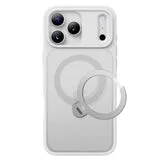
- StandKOO Frost Case for iPhone – Sleek Protection: This case is available for iPhone 17 Pro Max, iPhone 17 Pro, iPhone 17 Air, iPhone 17, iPhone 16 Pro Max, iPhone 16 Pro, iPhone 16 Plus, iPhone 16, iPhone 15 Pro Max, iPhone 15 Pro, iPhone 15 Plus, and iPhone 15. If you have a newer or older iPhone model, you can find a shockproof case that fits your device, so you don't have to compromise protection for compatibility.
- Magkoo Series iPhone Cases: This case is available for iPhone 17 Pro Max, iPhone 17 Pro, iPhone 17 Air, iPhone 17, iPhone 16 Pro Max, iPhone 16 Pro, iPhone 16 Plus, iPhone 16, iPhone 15 Pro Max, iPhone 15 Pro, iPhone 15 Plus, and iPhone 15. When comparing shockproof cases, model availability is a practical factor—this series covers a wide range of iPhones, making it easy to find a compatible option.
Understanding what shockproof really means helps you make a smarter purchase. Focus on the materials, design, and testing behind a case, and match it to your daily risks. A good shockproof case is an investment in peace of mind, not a guarantee against all accidents.