Quick Answer
Fin shape directly influences stability, drag, and altitude. For most sport fliers, a simple clipped delta or trapezoidal fin offers a good balance of performance and durability. If you're flying high-power or high-speed rockets, consider swept or tapered fins to reduce drag, but be ready for more complex construction.
Rocket fins are more than just decorative; they determine how your rocket slices through the air. The shape, size, and material of fins affect stability, drag, and even the altitude you can achieve. In this guide, we'll break down the aerodynamics of rocket fins and give you practical rules for choosing the right fin design for your next build.
Whether you're a beginner assembling your first kit or a seasoned flyer looking to optimize performance, understanding fin design helps you make smarter choices. We'll also look at how LOC Precision's fin sets and kits incorporate these principles, so you can buy with confidence.
The Basics: What Fins Do
Fins keep a rocket flying straight by moving the center of pressure behind the center of gravity. This is called stability. Without adequate fin area or the correct shape, a rocket can wobble or even tumble. The fin's job is to create aerodynamic force that corrects any deviation from the intended path.
The shape of the fin affects how efficiently it does this. A larger fin area increases stability but also adds drag, which can reduce altitude. A smaller fin reduces drag but may not provide enough stability. The key is finding the right balance for your rocket's size, weight, and motor power.
- Always check the stability margin (typically 1-2 calibers) before flight.
- Fin shape is not just about looks; it's a trade-off between stability and drag.
Common Fin Shapes and Their Effects
Trapezoidal fins, also known as clipped delta, have a straight leading edge and a swept trailing edge. They offer a good mix of low drag and adequate stability, making them a popular choice for mid-power rockets. Swept fins (like those on the X-Calibur) reduce drag at high speeds but require precise construction to maintain stability.
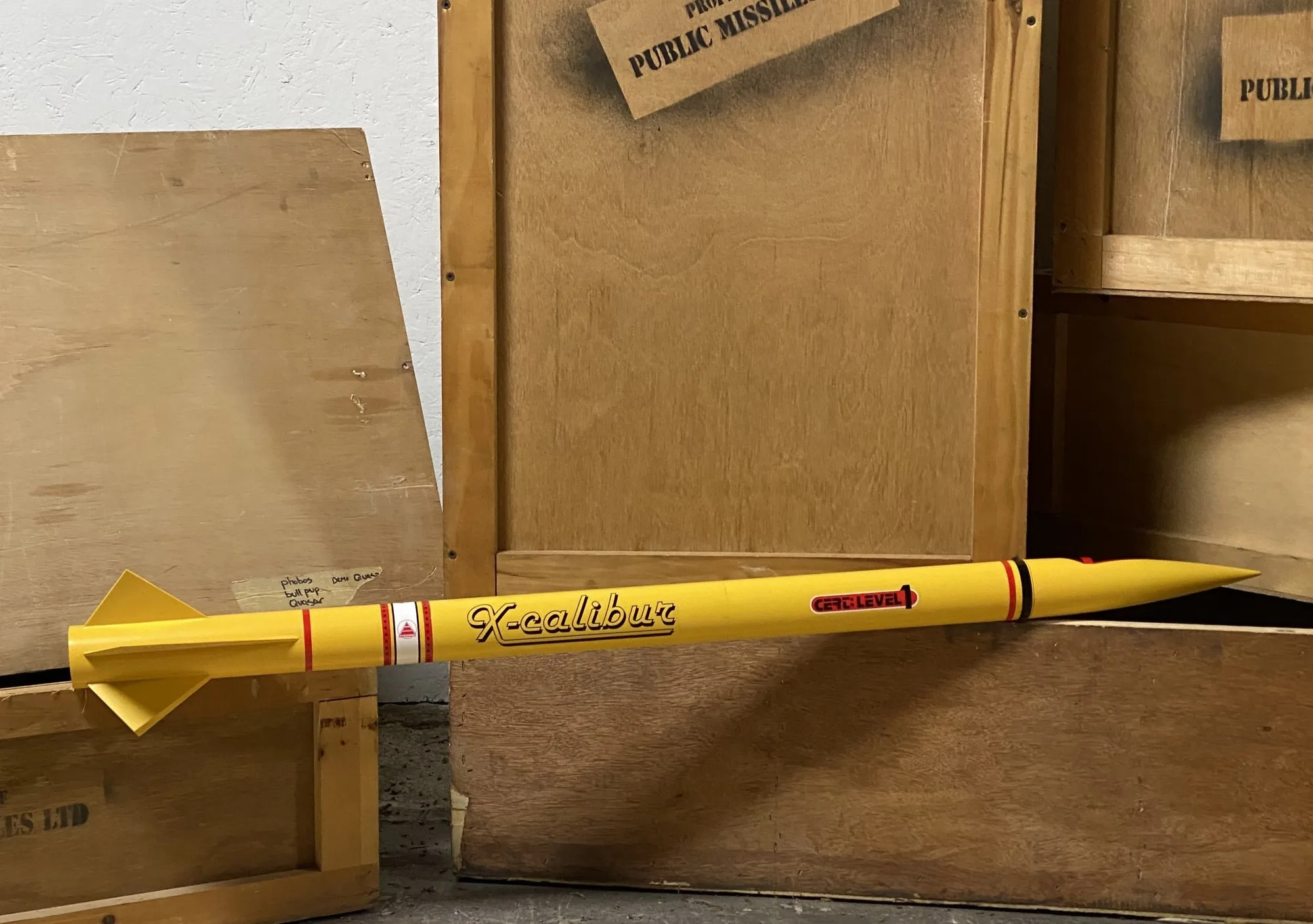
X-Calibur
Rectangular fins are simple to build and provide plenty of stability, but they create more drag. They are often found on beginner kits. Elliptical fins are efficient but harder to manufacture. For low-power rockets, such as the Photon, a simple rectangular or trapezoidal shape is often sufficient.
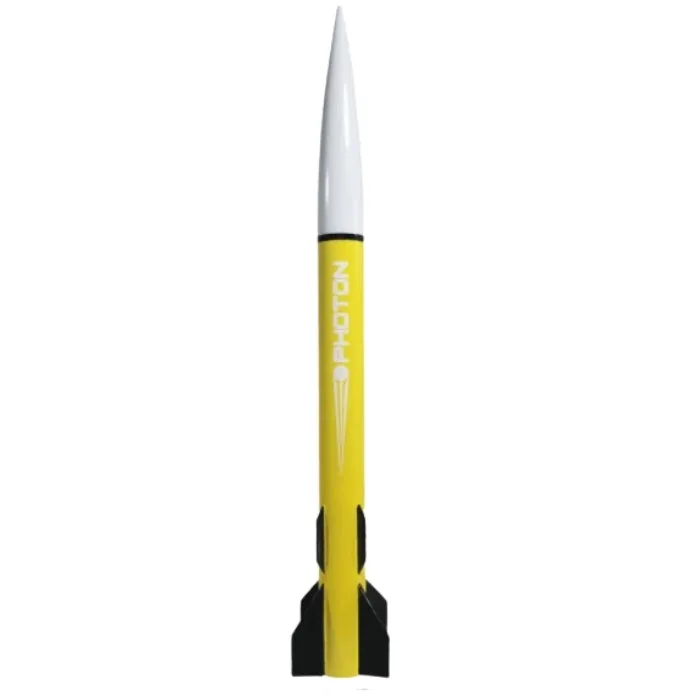
Photon
The number of fins also matters. Three fins are common for stability, while four fins can provide more drag and are sometimes used on scale models. The LIL' Nuke uses a classic fin design that has stood the test of time.
- For high-speed flights, choose swept or tapered fins to reduce drag.
- For low-power and small-field flying, simpler shapes like rectangles are more durable and easier to build.
Fin Materials and Construction
Fin material affects weight, durability, and aerodynamic performance. LOC Precision uses G10 fiberglass fins on many kits, such as the X-Calibur. G10 is stiff and strong, resisting flex during high-speed flight. Plywood is another common material; it's lighter but may require more careful finishing to reduce drag.
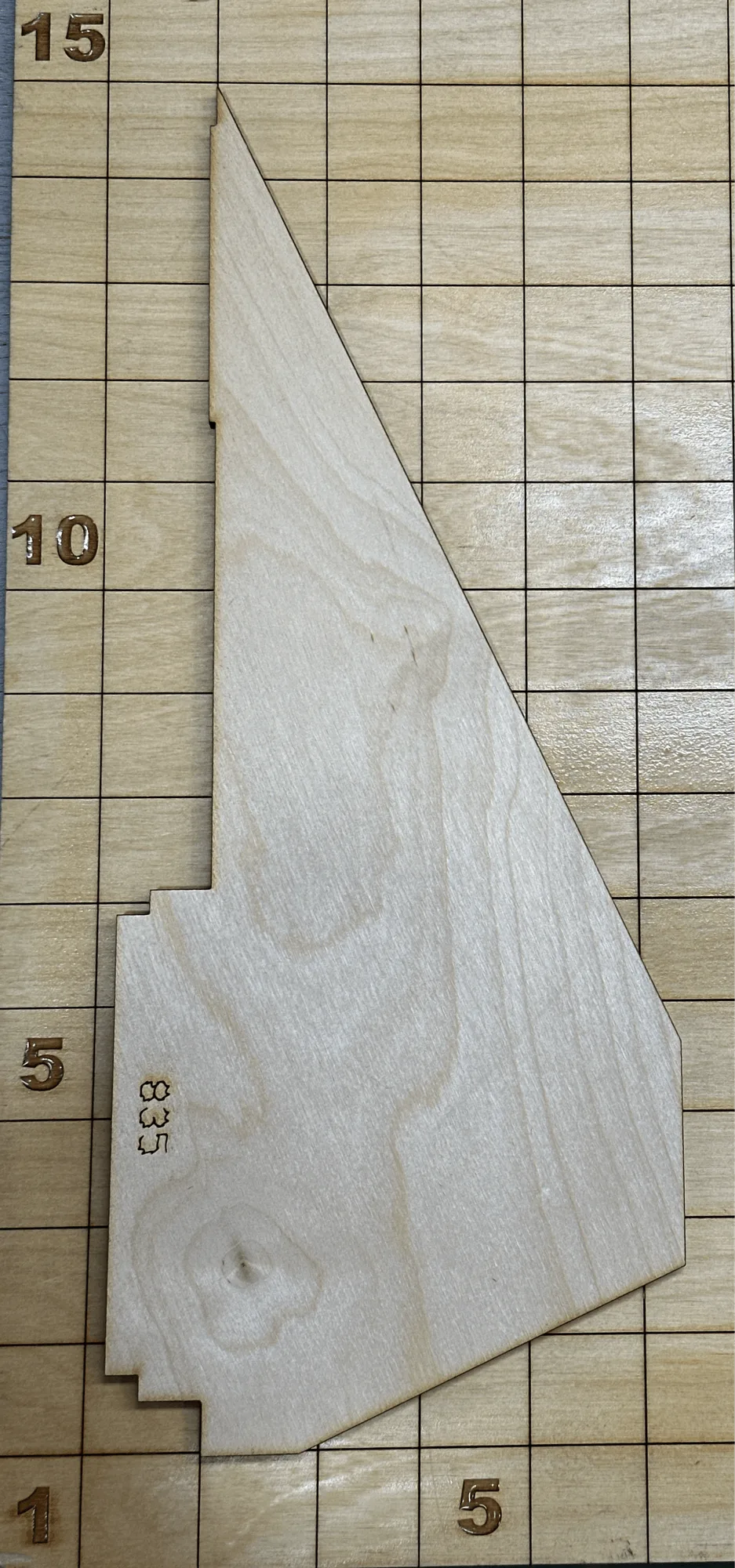
The thickness of the fin also matters. Thicker fins are more durable but add weight and drag. For example, the Photon uses 1/8-inch fins, which are light and adequate for its 24mm motor mount. In contrast, the PK-77 HyperLOC 835 fin set features 1/4-inch fins, designed for the larger 54mm motor mount and higher stresses.
When building, ensure fins are aligned perfectly. Even a slight misalignment can cause roll or instability. Many modern kits, like those from LOC Precision, include pre-slotted airframes and laser-cut fins, making alignment easier.
- Consider the motor size: larger motors require stronger fins.
- Pre-slotted airframes and laser-cut fins simplify accurate fin attachment.
Fin Sets and Kits: What to Consider
When buying fin sets or kits, consider the motor mount size and the intended use. A fin set like the PK-77 HyperLOC 835 is designed for a specific rocket (HyperLOC 835) and includes fins sized for a 54mm motor mount. Make sure the fin set matches your rocket's diameter and motor mount.
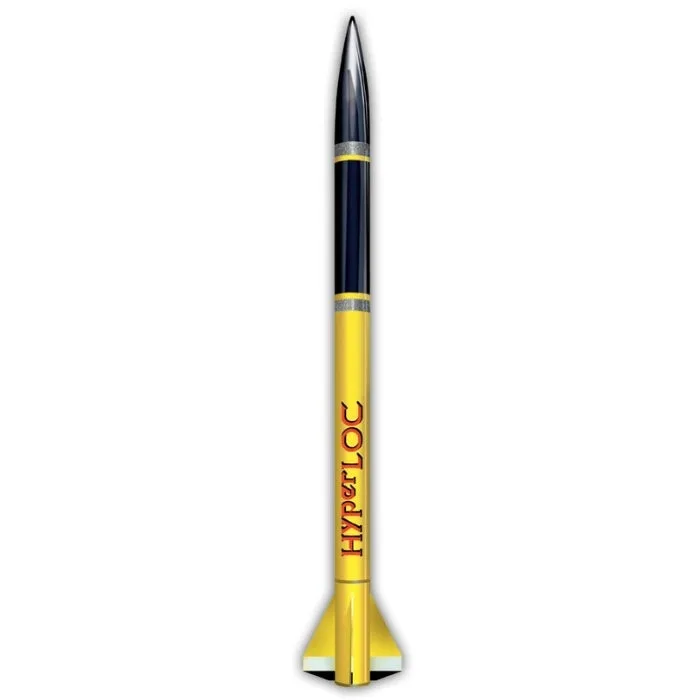
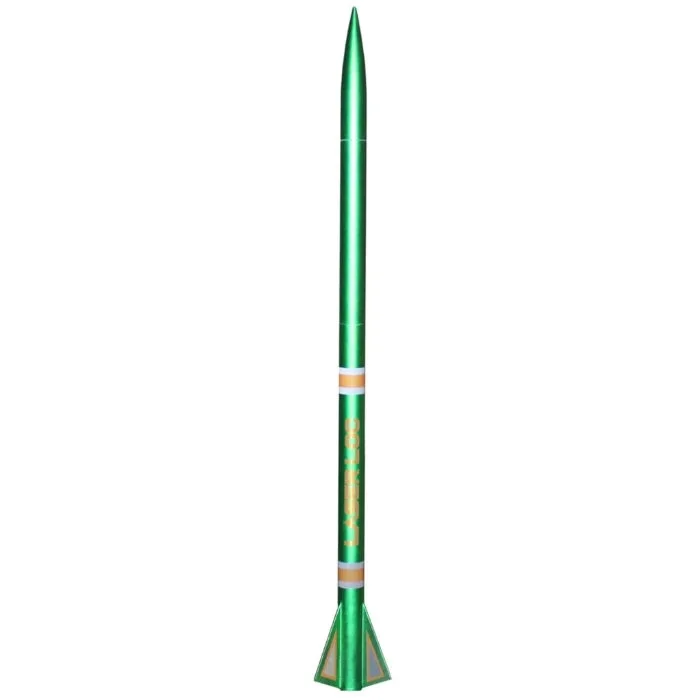
For beginners, kits like the LIL' Nuke or Photon come with fins that are already shaped and ready to attach. These are ideal for learning. For advanced builders, the LaserLoc 163 offers a challenge with its fiberglass fins and multi-slot airframe, allowing fine-tuning of fin alignment.
Always check the fin thickness and material in the specifications. Thicker fins are more robust but may require more sanding to achieve a smooth aerodynamic profile. The LOC Precision website provides detailed specifications for each kit, including fin thickness and material.
- Match fin thickness to your motor power and expected speeds.
- For high-power rockets, invest in fiberglass fins for durability.
Decision Rules for Choosing Fin Shapes
- If you are a beginner building your first rocket: Choose a kit with pre-slotted airframe and laser-cut fins, like the LIL' Nuke. These features ensure accurate fin alignment without advanced tools. Opt for a simple fin shape like trapezoidal or rectangular for easy handling. Start with a novice kit that includes everything you need.
- If you fly mid-power motors (G or smaller): Consider a kit like the X-Calibur that can fly on 29mm or 38mm motors. Its G10 fins provide durability and stability without excessive drag. A multi-fin design (like six fins) offers extra stability, which can be beneficial for larger payloads. G10 fins are a great balance for mid-power flights.
- If you are building a high-power or high-speed rocket: Look for fin sets with swept or tapered shapes, and consider thicker fins like the 1/4-inch fins on the PK-77 HyperLOC 835 set. These reduce drag and withstand higher stresses. Ensure your fin material is stiff (fiberglass) to prevent flutter. Invest in quality fiberglass fins for high-performance builds.
- If you are flying in a small field: Choose a small rocket like the Photon with a 24mm motor mount and lightweight fins. Its 1/8-inch fins are sufficient for low-power motors and keep weight down, minimizing drift on recovery. Keep it light and simple for small fields.
Relevant Products and Facts
- X-Calibur: Six fins, a large payload section, and PML's standard G10 fins, QT airframe, and great quality make this a bird you're sure to enjoy. Another of our kits that can fly on lower-power motors, the PML X-Calibur! Comes standard with a 38mm motor mount, but can easily fly with 29mm motors using the motor retainer HAMR-38-SET and the HAMR-38/29-ADPTR. Fly it low and slow on a G motor, or put in an I and... The X-Calibur's six G10 fins provide high stability and durability, making it a versatile choice for both low and high power flights. The fin design supports a wide range of motor options.
- LIL' Nuke: One of the original NOVICE KIT SERIES which include pre-slotted airframe and 29mm motor mounts, the LIL’ NUKE model rocket is an all around classic performer with sharp styling. It can be flown on an Estes D12-3 motor with an optional MMA-1 Adapter but goes out of sight on Aerotech 29mm Composite Motors! Parachute Recovery. As of 2020 all Pk-4 lil-nuke model rocket kits include slotted boosters (previously fins... The LIL' Nuke's pre-slotted airframe and laser-cut fins simplify fin alignment, making it an excellent choice for novice builders. Its fin design is proven and reliable, offering a good balance of stability and performance.
Fit Guidance: Who Should Choose What
Best for
- Beginners who want a straightforward build with pre-slotted airframes and laser-cut fins, such as the LIL' Nuke.
- Mid-power fliers seeking a versatile rocket that can fly on G to I motors, like the X-Calibur with its G10 fins.
Not for
- Advanced builders looking for a challenging minimum-diameter build might find the LIL' Nuke too simple; consider the LaserLoc 163 instead.
- High-power fliers needing specialized fin sets should avoid kits with thinner fins (1/8-inch) and instead choose fin sets like the PK-77 HyperLOC 835.
Understanding fin shapes is key to making informed choices for your model rocket fleet. Whether you're after durability, performance, or simplicity, LOC Precision offers kits and fin sets that cater to every level. Use the decision rules above to match the right fin design to your flying style and goals.