Quick answer
Wash underwear in cool water on a gentle cycle or by hand, use a mesh bag for delicates, and skip fabric softener and hot dryers. Air-dry flat or line-dry away from direct heat, then store folded in a dry drawer. This routine protects elastic, seams, and fabric softness so your underwear keeps its fit and feel for longer.
Underwear takes more daily wear and washing than almost anything else in your wardrobe, so it ages faster if you treat it like a regular T-shirt. Heat, harsh detergent, and rough drying are the main reasons elastic goes slack and seams start to twist. A simple, consistent routine prevents most of that damage.
This underwear care guide walks through washing, drying, and storing in order, with the mistakes that cause the most harm and the checkpoints that tell you something is wearing out. It also explains why fabric choice matters, using real examples from the SKINY range.
Start with a quick sort, not a full load
Separate underwear from heavy items like jeans, towels, and anything with zips or hooks. Those abrasives break down fine fabrics and pull at lace and bonded edges. Keep light and dark underwear apart for the first few washes, especially with deep colours, and put lace, mesh, and anything with removable pads into a mesh laundry bag before they go anywhere near the machine.
Check the care label on each piece before you sort it. If a label says hand wash or shows a low temperature, follow it. When a care label is missing or unclear, treat the item as delicate: cool water, gentle cycle, air dry. That conservative default is safer than guessing.
- Fasten hooks and close any velcro before washing to stop snagging.
- Turn printed or lace items inside out to reduce surface friction.
- Never mix underwear with towels in the same load.
Wash cool and gentle, and skip the softener
Use cool or lukewarm water and a mild liquid detergent. Hot water and strong detergent speed up the breakdown of elastane, which is what gives underwear its stretch and recovery. If you use a machine, choose the delicate or hand-wash cycle with a low spin speed, and don't overload the drum — underwear needs room to move without rubbing against itself.
Fabric softener and dryer sheets are the most common mistake here. They coat fibres and reduce the stretch and breathability of elastic fabrics, and they can leave a residue that traps odour. If you want a softer feel, use less detergent and a longer rinse rather than adding softener.
- Measure detergent; more is not cleaner and rinses out poorly.
- Wash new underwear before the first wear to remove finishing residues.
- For hand washing, squeeze gently instead of twisting or wringing.
Dry flat or line-dry, away from direct heat
Drying underwear properly is where most people undo a good wash. High heat from a tumble dryer shrinks cotton, weakens elastane, and can warp bonded edges and moulded cups. Air-dry instead: lay items flat on a towel or hang them on a line or drying rack, shaping them back into their original form while damp. If you must use a dryer, choose the lowest heat setting and remove items while slightly damp.
Keep drying underwear out of direct sunlight for long periods, since strong UV can fade colours and degrade elastic over time. A shaded, well-ventilated spot is ideal. Never hang wet bras or soft bras by the straps — the weight of the water stretches them out.
- Reshape cups and waistbands by hand before hanging.
- Hang by the band or lay flat, never by the straps.
- Make sure items are fully dry before they go back in the drawer.
Store folded, dry, and with a little breathing room
Storing underwear well is simpler than it sounds: everything must be completely dry, then folded and kept in a dry drawer or shelf. Damp underwear packed away can develop mildew and odour, and it weakens fibres over time. Fold bras in half at the centre gore, cups facing each other, so they hold their shape rather than getting crushed under other items.
Don't overstuff the drawer. Compressing elastic waistbands and straps for months on end leaves permanent creases and reduces recovery. If you stack, keep the most delicate pieces on top. For travel, use a small pouch or packing cube so items don't snag on zips and shoes.
- Give each bra its own space instead of stacking them flat.
- Keep a separate section for period or everyday underwear you rotate most.
- Rotate your drawer so the same few pieces aren't always worn first.
Know when a piece is done, and choose fabrics that last
Even with perfect care, underwear has a lifespan. Signs it's time to replace: elastic that stays stretched after washing, seams that twist or pull, thinning fabric that feels rough, or a waistband that no longer stays put. Washing and drying habits are the biggest factor in how long that takes, but fabric choice runs a close second.
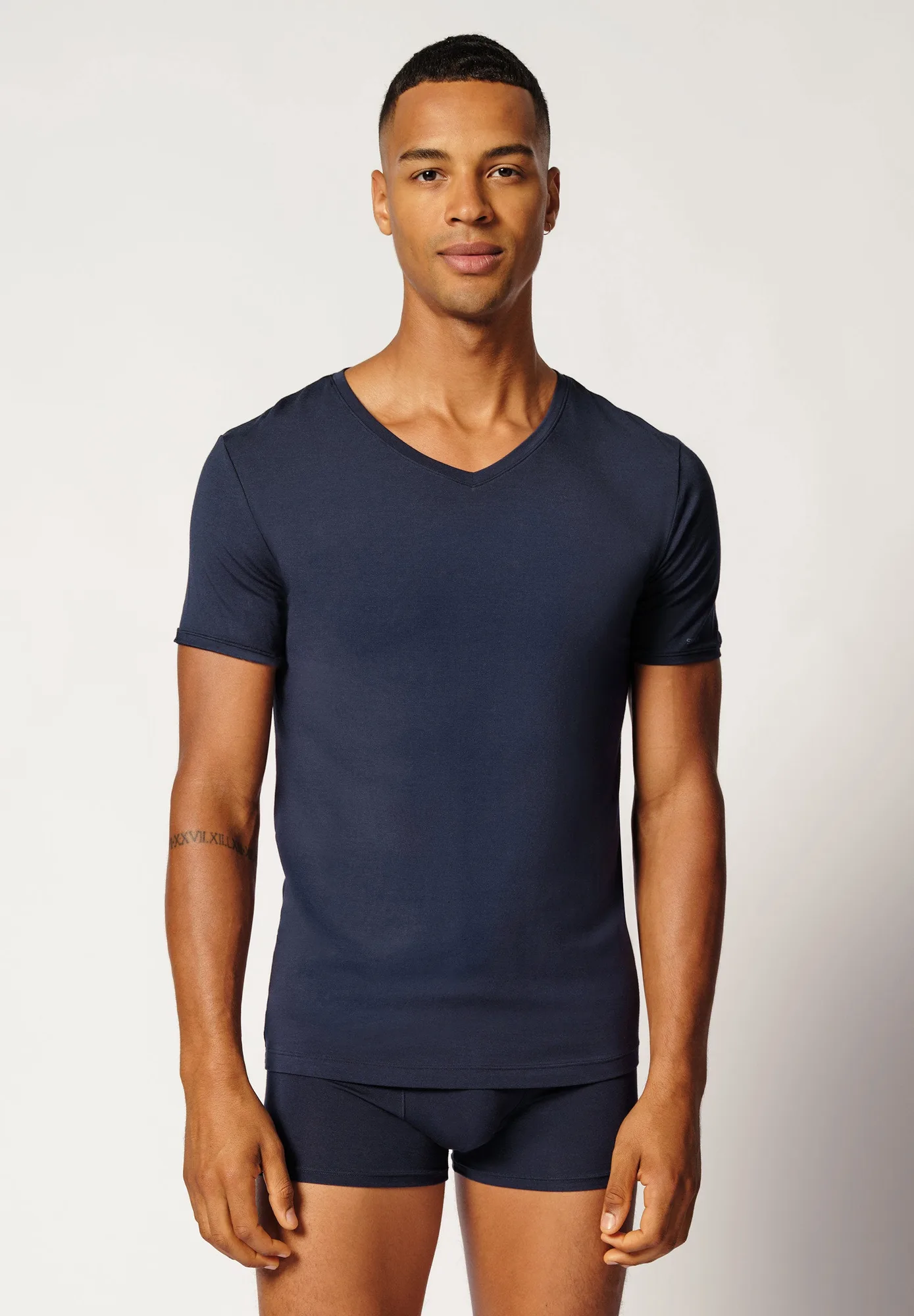
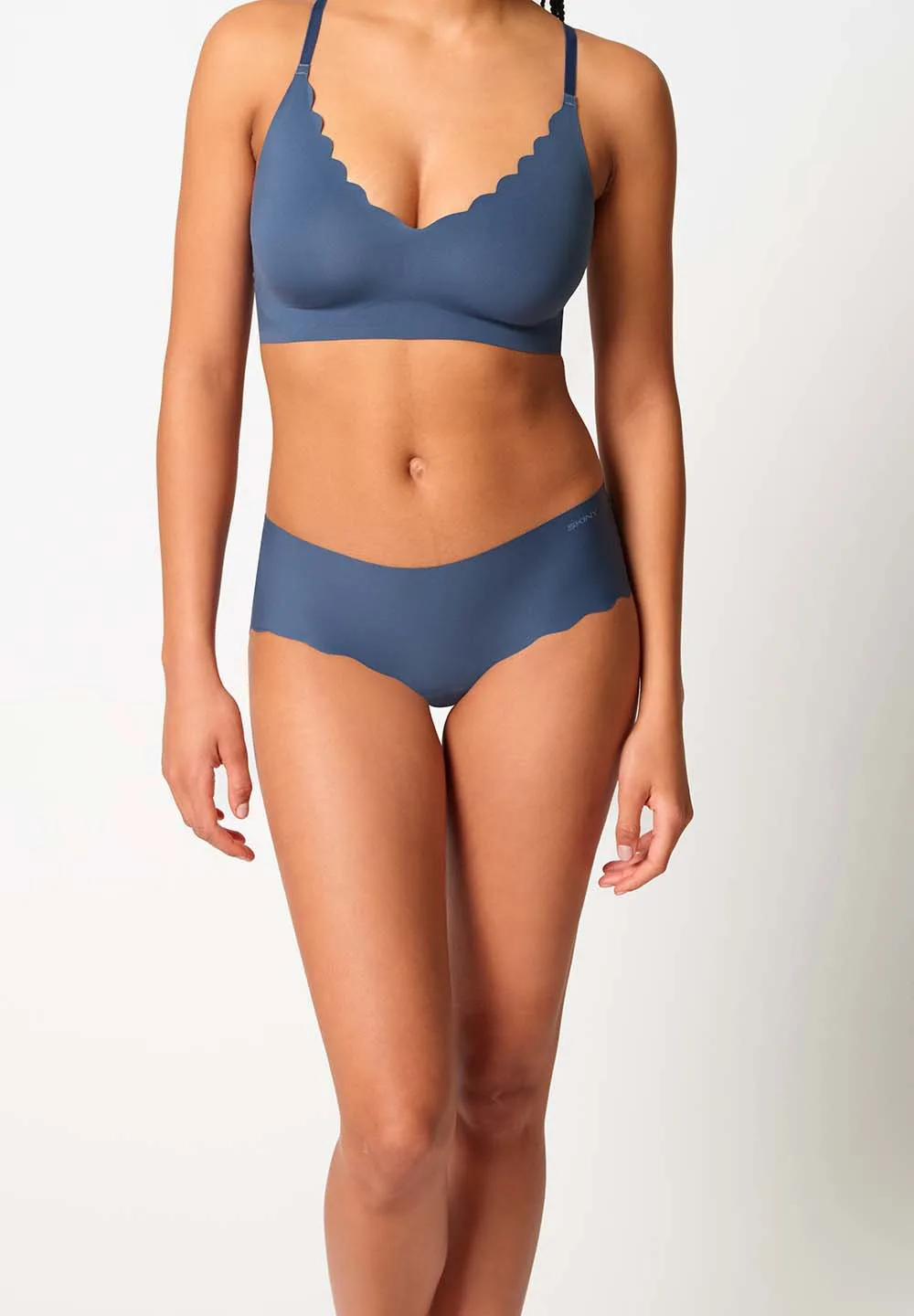
Soft, well-made fabrics tolerate repeated washing better than cheap blends. The Smartouch Boyleg shorts from SKINY use a viscose-elastane fabric with bonded edges, which means no bulky seams to fray and a smooth feel that holds up well with gentle care. The Calmodal V-neck shirt short sleeve uses TENCEL™ Modal, a fibre known for softness and breathability, so it stays comfortable through regular washing when you keep the temperature low.
- Replace anything with exposed elastic or a waistband that rolls.
- If a garment pills after a few washes, check your cycle and detergent first.
- Buying fewer, better-care-for pieces beats replacing cheap ones constantly.
Your 6-step underwear care routine
- 1. Sort by fabric and colour: Separate delicates, lace, and bonded-edge items from heavy cottons and towels. Use a mesh bag for anything with lace, removable pads, or fine straps. Checkpoint: if you wouldn't wash a silk scarf with jeans, don't wash lace underwear with them either.
- 2. Wash cool and gentle: Choose a delicate cycle with cool water and mild detergent, or hand wash with a gentle squeeze. Keep the load small so items don't rub together. Common mistake: using hot water or too much detergent, which dulls colour and weakens elastic.
- 3. Skip fabric softener: Don't add softener or dryer sheets. They coat fibres, reduce stretch and breathability, and can trap odour in elastic fabrics. Checkpoint: if underwear feels slick or stiff after washing, softener residue is the likely cause.
- 4. Dry flat or line-dry: Lay items flat on a towel or hang them in a shaded, ventilated spot. Reshape cups and waistbands while damp. Avoid direct heat and prolonged direct sunlight. Common mistake: hanging bras by the straps, which stretches them out.
- 5. Make sure everything is fully dry: Check waistbands, thick seams, and padded areas before putting anything away. Damp storage causes mildew and weakens fibres. Checkpoint: if it feels cool or damp to the touch, give it more time.
- 6. Store folded with breathing room: Fold bras in half at the centre and stack lightly, or give each one its own space. Keep the drawer dry and don't compress waistbands under heavy items. Next step: rotate your pieces so the same favourites aren't washed and worn every single week.
Products that reward good care
- Smartouch Boyleg shorts | 082627-08A166: Viscose-elastane fabric with bonded edges creates flat, almost invisible hems without seams or digging in, and an elasticated microfibre waistband. Bonded edges and microfibre waistbands are sensitive to heat, so cool washing and air drying protect the smooth finish and stretch.
- Calmodal V-neck shirt short sleeve | 081428-080393: TENCEL™ Modal fabric is soft, breathable, and helps maintain a balanced microclimate, with a close-fitting cut. Modal keeps its softness with gentle washing; high heat and fabric softener dull the fibre and reduce breathability over time.
- SKINY ADVANTAGE Cotton Stretch Boyleg shorts | 089350-080500: High-waisted briefs in stretch cotton with full back coverage and a comfortable waistband that stays reliably in place. Cotton stretch is durable but can shrink with hot water or a hot dryer, so cool washing and air drying keep the fit consistent.
Good underwear care is mostly about avoiding heat, harsh detergent, and rough drying. Wash cool and gentle, skip fabric softener, air-dry flat, and store folded and dry. Do that consistently and stretch fabrics like viscose-elastane and TENCEL™ Modal will hold their softness, shape, and fit far longer.