Quick Answer
Most underwired bra problems come down to one of four mismatches: a band that rides up means the band is too big, gaping cups usually mean the cup is too big or the shape is wrong, digging underwires point to a cup that is too small, and slipping straps are almost always a band that has stretched. Fix the band first, then reassess the cup, because band size changes cup volume. If a correctly sized band and cup still dig or gap, the bra's shape, not your body, is the problem.
How to Run a Bra Fit Check at Home in Five Minutes
Put the bra on the loosest hook and fasten it at the front, then twist it around and settle the wires flat against your ribcage, not on top of breast tissue. Lean forward and scoop each breast into the cup so the wire sits in the crease underneath. Stand straight and check three points: the band should stay level all the way around, the center gore should touch your sternum, and the wire should encircle the breast without pressing into it. If any of those three fail, note which one and move to the matching symptom below.
Do this check on a day when you are not bloated if possible, and wear the bra for ten minutes before judging. Some bands relax slightly with body heat, and a band that feels tight for the first two minutes may settle correctly.
Symptom: The Band Rides Up at the Back
A band that climbs toward your shoulder blades is carrying too little of the weight, which means the band is too large for your ribcage. The straps then do the work, which is why they leave marks and slip. The fix is to go down one band size and up one cup size to keep the same cup volume. For example, a 36C becomes a 34D. If the band still rides up on the tightest hook in a smaller size, the bra has lost its elasticity rather than being the wrong size.
Check the band by pulling it away from your back: you should be able to fit roughly two fingers, no more. If you can pull it several inches, size down.
Symptom: Cups Gape or Wrinkle at the Top
Gaping at the top edge has two common causes. The first is a cup that is genuinely too large, which you confirm by checking whether the wire also sits away from your ribcage at the bottom. The second, and more common, is a shape mismatch: a full-cup or tall-cup style on a shallow or bottom-heavy breast will wrinkle even in the right size. Try a lower-cut or more projected cup before assuming you need a smaller size, because sizing down can cause the wire to dig in.
If the gap appears only on one side, that is normal asymmetry and not a sizing error. Fit to the larger side and use a small pad on the smaller side if the difference bothers you.
Symptom: The Underwire Digs Into Your Ribs
Pain under the wire usually means the cup is too small and the breast is pushing the wire down onto your ribcage. Go up one cup size first, keeping the band the same. If the digging continues in a larger cup, check whether the wire is sitting on breast tissue at the side, which points to a cup that is too narrow rather than too small. Wires that dig only at the center often mean the gore is too high for your ribcage shape.
Never fix digging by loosening the band. A loose band lets the wire move, which increases friction and makes the digging worse.
Symptom: Straps Slip or Leave Deep Marks
Straps are meant to hold the cup in place, not to support the breast, so slipping straps are almost always a symptom of a band that is too loose. Tighten the straps only until they lie flat against your shoulders without indenting the skin, then test the band again. If the band passes the two-finger test and the straps still slip, the strap placement may be too wide for your frame; a style with closer-set straps will help more than further tightening.
Deep marks from straps are a sign they are overtightened to compensate for a loose band. Loosen the straps and size down in the band instead.
When to Stop Adjusting and Choose a Different Bra
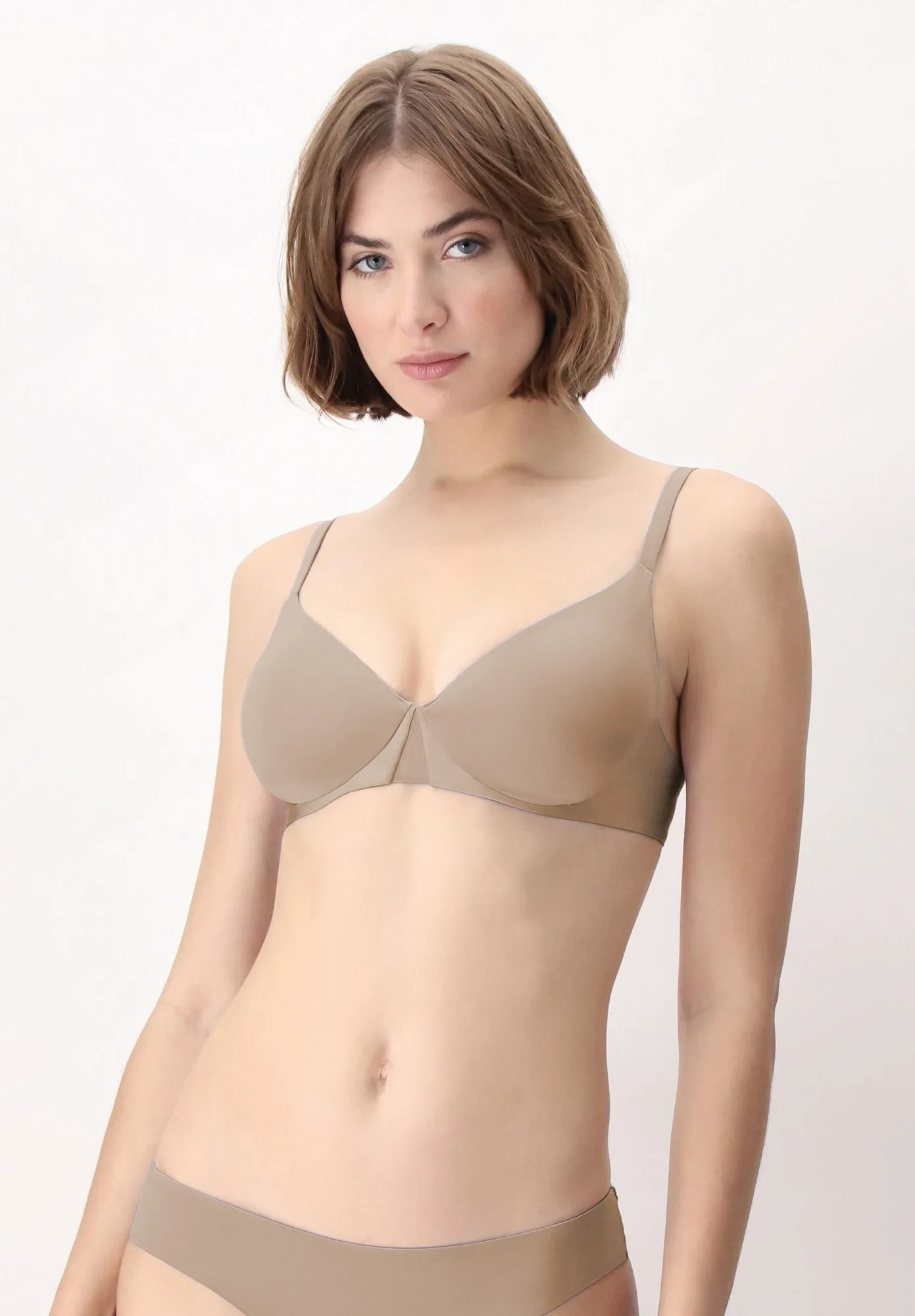
Stop adjusting when you have tried one band size down and one cup size up or down and the problem persists. At that point the issue is the bra's construction, not your measurements. Look for a style with a wider wire, a lower gore, or a different cup depth. If you need a smooth finish under close-fitting clothes, a doubled microfibre bra with preformed cups can remove the seam lines that make fit problems more visible, and it behaves differently from an unlined cup because the cup holds its own shape.
A bra that fits well on the loosest hook will also give you room to tighten it as the elastic relaxes, so always buy to the loosest setting rather than the middle one.
Diagnosis: Match the Symptom to the Fix
- Band rides up at the back: The band is too large for your ribcage, so the straps take the weight. Go down one band size and up one cup size to keep cup volume. Recheck after ten minutes of wear; if it still rides up on the tightest hook, the elastic has gone.
- Cups gape at the top: Either the cup is too large or the cup shape is too tall for your breast. Confirm by checking whether the wire also lifts away at the bottom. Try a lower-cut cup before sizing down; sizing down can make the wire dig in.
- Underwire digs into the ribs: The cup is usually too small, so the breast pushes the wire down. Go up one cup size with the same band. If it still digs, the wire is too narrow or the gore too high. Stop adjusting and change the style.
- Straps slip or leave deep marks: Straps are slipping because the band is loose, or they are overtightened to compensate. Test the band with the two-finger rule. Fix the band first; only then adjust strap length.
Product Facts That Affect Fit
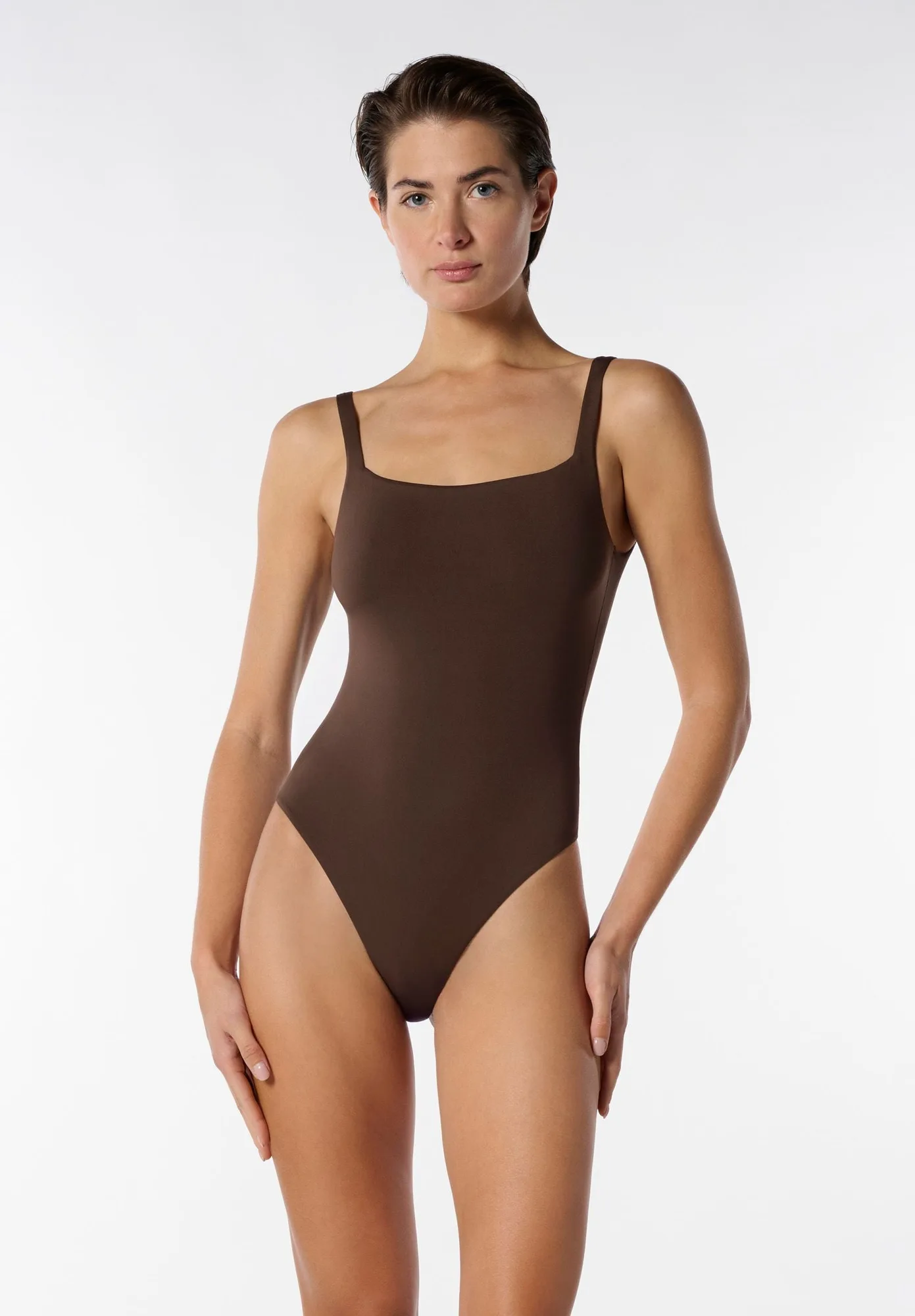
- Perfect Fit Underwired Bra - Nude: Made entirely of soft, doubled microfibre with a peachy hand feel and a slight sheen; the cups are doubled in the same fabric and preformed. Preformed, doubled cups hold their own shape, which reduces the top-edge wrinkling that appears with unlined cups on shallow breasts. The smooth microfibre also sits flatter under clothing, so a correct fit is easier to judge visually.