Quick Answer
An animal nursing kit lets you safely hand-feed newborn puppies, kittens, and other small animals when the mother is unavailable. Follow proper sterilization and feeding technique to avoid aspiration and digestive issues.
When to Use a Nursing Kit vs. Syringe Feeding
A dedicated animal nursing kit with a bottle and soft nipple is usually easier for newborns because it mimics natural nursing and encourages the suckling reflex. Syringe feeding works better for very weak or premature animals that cannot suckle, but it carries a higher risk of aspiration if done too quickly. Use the method that matches the animal's strength and coordination.
Step-by-Step Hand Feeding with an Animal Nursing Kit
- Sterilize All Parts: Disassemble the bottle, nipple, and brush. Boil them in water for 5 minutes or follow the manufacturer's instructions. Let them cool on a clean towel. Never skip sterilization between feedings; leftover milk residue breeds bacteria quickly.
- Prepare the Formula: Use a commercial milk replacer formulated for the species (puppy, kitten, etc.). Mix according to package directions with warm water (around 95-100°F / 35-38°C). Test temperature on your wrist — it should feel warm, not hot. Cow's milk causes diarrhea in most newborns; always use a species-specific replacer.
- Fill the Bottle and Test Flow: Fill the bottle with prepared formula. Squeeze a drop onto your wrist — the nipple should release a slow, steady drop. If it drips too fast, the hole may be too large; if nothing comes out, enlarge the hole slightly with a sterile needle. Too fast a flow can cause aspiration; too slow frustrates the animal and reduces intake.
- Position the Animal Correctly: Hold the newborn on its stomach, never on its back (this prevents choking). Tilt the bottle so the nipple points slightly upward, keeping the animal's head in a natural nursing position. Feeding on the back forces milk into the windpipe — always feed belly-down.
- Feed Slowly and Burp as Needed: Let the animal suckle at its own pace. Pause every 10-15 seconds to let it swallow. If milk bubbles appear at the nose, stop and wipe the nose immediately. After feeding, gently rub the animal's back to encourage burping. Never force the nipple into the mouth; let the animal latch naturally to avoid panic and choking.
- Clean Up and Stimulate Elimination: Wipe any spilled formula from the animal's fur. Use a warm, damp cotton ball to gently rub the genital area — newborns cannot urinate or defecate without stimulation. Wash the bottle and nipple with hot soapy water immediately after each feeding. Without stimulation, a newborn will not eliminate on its own; always do this after every feeding.
Product Facts
-
Animal Nursing Kit: Designed for hand-feeding puppies, kittens, and other newborns. The bottle, nipples, and bottle brush can all be sterilized by boiling in water. Boil-sterilizable parts keep feeding equipment hygienic without needing special chemicals, reducing the risk of bacterial infections in vulnerable newborns.
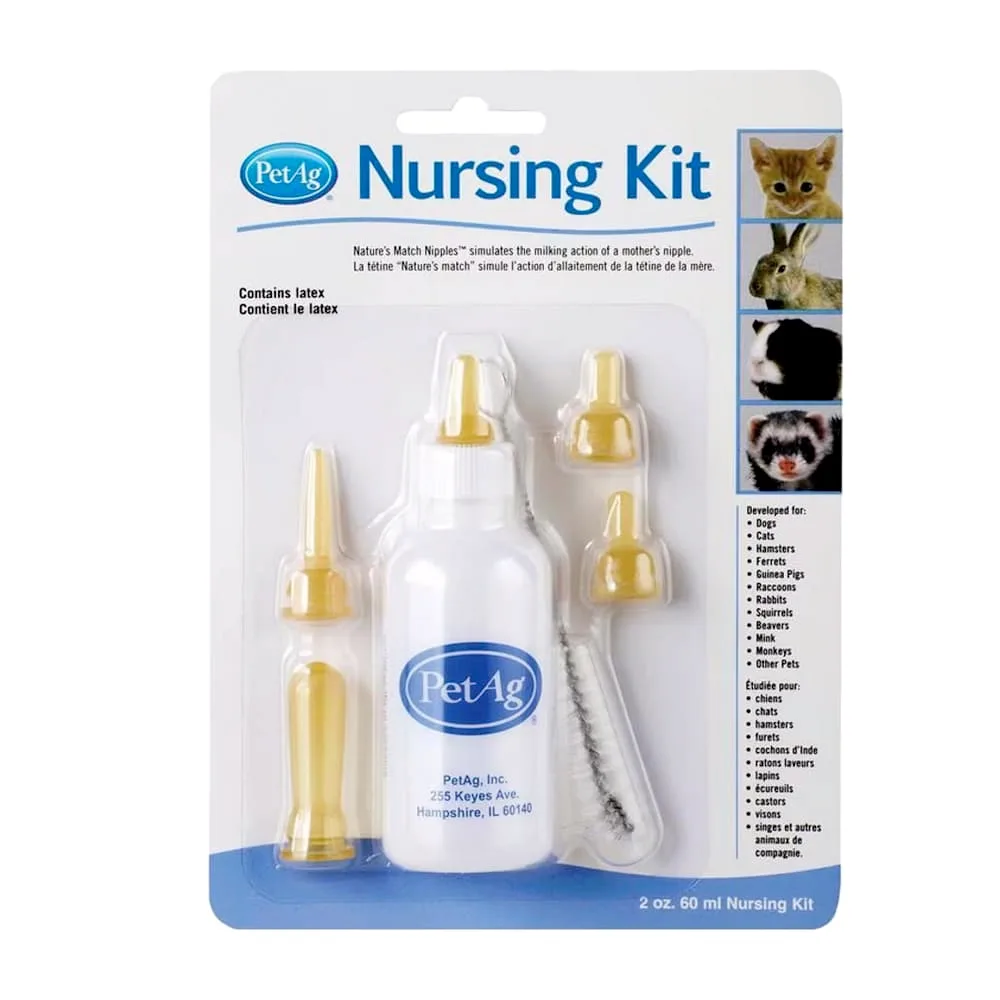
Animal Nursing Kit