Quick answer
Use the Lire et écrire avec Paul et Suzanne Teacher's Guide as your daily roadmap for structured French literacy lessons, pairing its 225 pages of activities with the Paul et Suzanne kits to build reading and writing skills in emergent readers.
Why a dedicated guide matters for French literacy
Teaching French reading and writing to young learners requires more than storybooks. The Lire et écrire avec Paul et Suzanne Teacher's Guide was created because classroom teachers using the Paul et Suzanne tools asked for a structured companion. It gives you a clear sequence of lessons that align with the kits, so you don't have to invent activities from scratch.
The guide focuses on emergent readers who are still building phonemic awareness in French. It assumes you already have the Paul et Suzanne - Un modèle de francisation or Le petit monde de Paul et Suzanne kits, and it shows you exactly how to use those materials to teach literacy step by step.
How to use the Teacher's Guide for literacy lessons
- 1. Preview the lesson sequence for the week: Open the guide to the unit you are teaching. Each section builds on the previous one, so scan the objectives and materials list before class. Pull the matching Paul et Suzanne story cards or posters from your kit. Common mistake: jumping into an activity without checking the materials list, then scrambling for supplies mid-lesson.
- 2. Lead a shared reading with the whole group: Use the guide's scripted prompts to read a Paul et Suzanne text aloud. Point to each word as you read, and pause to ask the suggested comprehension questions. This models fluent French reading and builds vocabulary. Checkpoint: if students cannot follow along, slow down and point to each word again. The guide's pacing is a suggestion, not a rule.
- 3. Guide a targeted writing activity: After the shared reading, turn to the writing page in the guide. Students practice writing a key word or short sentence from the story. The guide provides sentence starters and word banks to support emergent writers. Common mistake: expecting students to write independently too soon. Use the word bank and model the writing on the board first.
- 4. Reinforce with a small-group or center activity: Choose one of the guide's extension activities, such as a word sort or matching game, and set it up as a literacy center. Students work in pairs to practice the week's target sounds or sight words from the Paul et Suzanne kit. Checkpoint: rotate groups every 10 minutes so all students get a turn. The guide includes enough activities for multiple rotations.
- 5. Assess informally and adjust: Use the guide's observation prompts to note which students can identify the target letter-sound or read the focus word. Jot down names of students who need extra support and plan to revisit the activity in a small group the next day. Common mistake: treating the guide as a checklist. The real value is in watching how students respond and adapting your pace.
Product facts
-
Lire et écrire avec Paul et Suzanne - Teacher's Guide: This 225-page guide was written by Lucille Maurice in response to requests from teachers who were using the Paul et Suzanne tools in their classrooms. It means the guide is built on real classroom needs, not theory, so the activities are practical and ready to use with your existing Paul et Suzanne materials.
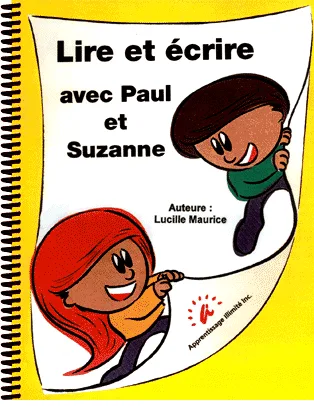
Lire et écrire avec Paul et Suzanne - Teacher's Guide