Quick answer
Both UV and steam sterilizers kill 99.9% of germs, but they work differently. UV is faster and gentler on plastics, while steam uses high heat and may degrade some bottle parts over time.
How each method kills germs
Steam sterilizers use boiling water or steam at temperatures above 212°F (100°C) to destroy bacteria, viruses, and fungi. The heat denatures proteins and disrupts cell walls, making it highly effective but requiring a longer cycle—usually 5 to 10 minutes plus cooling time.
UV sterilizers use U-V-C LED light to damage the DNA of microorganisms, preventing them from reproducing. The process works at room temperature and can sanitize in under a minute, as seen with the Portable UV Sterilizer Feeding Bottle Accessories that achieves 99.99% sanitization in just 59 seconds. UV does not rely on heat, so it is gentler on silicone and plastic components.
Speed and convenience trade-off
Steam cycles require a full heat-up and cool-down phase, meaning you cannot grab a bottle immediately. Many parents run steam cycles overnight or between feeds, which works well for batch preparation.
UV sterilizers offer near-instant results. The Portable UV Sterilizer’s 59-second cycle lets you sanitize a pacifier or nipple right before use, which is ideal for on-the-go touch-ups or when you need a clean bottle in a hurry. However, UV does not dry items, so you may still need to air-dry or wipe them.
Long-term impact on baby items
Repeated steam exposure can warp or discolor certain plastics and degrade silicone nipples over time. Manufacturers often recommend replacing steam-sterilized parts more frequently.
UV sterilization operates at low temperatures, so it does not cause heat-related wear. This makes it a better choice for delicate items like pacifiers, bottle nipples, and teethers. The trade-off is that UV light must reach all surfaces, so items need to be placed without overlapping for full coverage.
UV vs Steam: Key trade-offs at a glance
- Germ-kill effectiveness: Both achieve 99.9%+ reduction. Steam uses high heat; UV uses light. Neither is inherently stronger when used correctly. Choose based on speed and material safety, not raw kill rate.
- Cycle time: Steam: 5–10 minutes plus cooling. UV: 59 seconds (e.g., Portable UV Sterilizer). UV wins for quick turnaround.
- Material wear: Steam heat can degrade plastics and silicone over time. UV is gentler and does not cause heat damage. UV is better for preserving the life of nipples and pacifiers.
- Drying capability: Most steam sterilizers dry items during the cycle. UV sterilizers typically do not dry, so items may need air-drying. If you need dry bottles immediately, steam may be more convenient.
- Portability: Steam sterilizers are usually countertop units. UV options like the Portable UV Sterilizer are compact and battery-operated. UV is the clear choice for travel or small spaces.
Product spotlight
-
Portable UV Sterilizer Feeding Bottle Accessories: 99.99% Sanitization in Just 59 Seconds: Harness the power of U-V-C LED technology to achieve a 99.99% sanitization rate. This speed means you can sanitize a pacifier or bottle nipple between feeds without waiting, making it ideal for busy parents or travel.
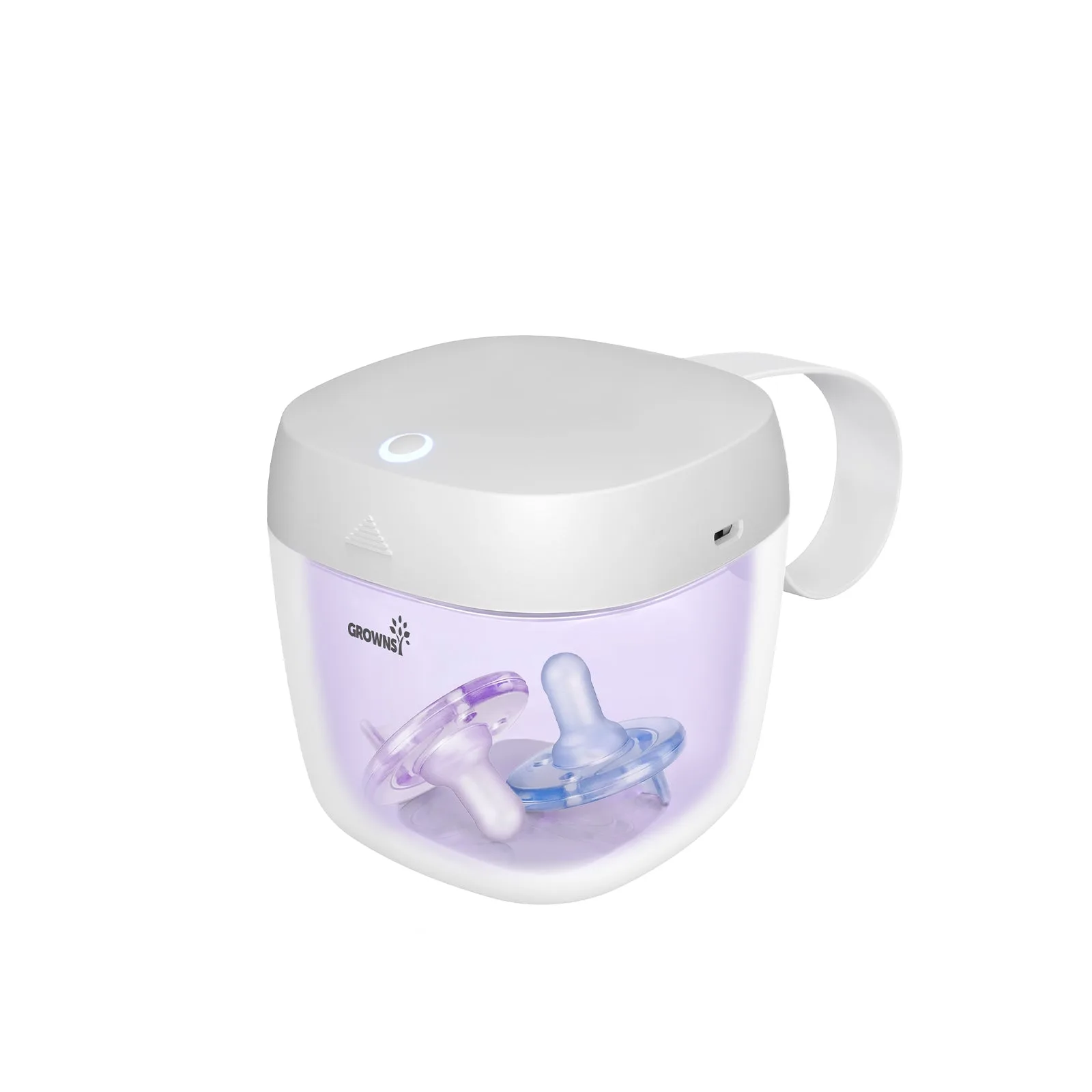
Portable UV Sterilizer Feeding Bottle Accessories
Which should you choose?
Best for
- Parents who need quick, on-demand sanitizing between feeds
- Travel or on-the-go use where a countertop unit is impractical
- Delicate silicone or plastic items that may warp under high heat
Not ideal for
- Parents who want a single device that both sanitizes and dries bottles completely
- Large batch sterilization (e.g., 6+ bottles at once) where steam is more efficient