Quick Answer
For most field shoots, a 98Wh V-mount battery offers the best balance of runtime and portability, but if you need extended power for long interviews or all-day events, the 150Wh version is worth the extra weight and cost.
Why Capacity Matters More Than You Think
The watt-hour (Wh) rating tells you how much energy the battery stores, but it doesn't tell you how long it will last—that depends on your camera's power draw. A mirrorless camera pulling 15W will run about 6.5 hours on a 98Wh battery, while a cinema camera drawing 30W might only get 3 hours. The 150Wh battery extends those times to roughly 10 hours and 5 hours respectively.
Understanding your gear's power consumption is the first step. Check your camera's manual or measure with a power meter to estimate your actual runtime. This prevents both overbuying and the dreaded mid-shoot shutdown.
Weight vs. Runtime: The Core Trade-Off
The most obvious difference between 98Wh and 150Wh is weight. A 150Wh battery is noticeably heavier, which matters if you're mounting it on a gimbal or carrying it in a backpack all day. The extra 50Wh gives you roughly 50% more runtime, but that comes at the cost of added bulk and a higher price tag.
For run-and-gun shoots where you're constantly moving, the lighter 98Wh battery is often the better choice—you can carry a spare and still come out lighter than a single 150Wh. For studio or event work where you're stationary, the longer runtime of the 150Wh means fewer battery swaps and less downtime.
Charging and Power Output: What to Check
Not all V-mount batteries are created equal when it comes to charging speed and power output. Look for batteries with USB-C Power Delivery (PD) if you want to charge your camera or accessories directly. A 60W USB-C PD port can power a laptop or fast-charge your phone, making the battery a versatile power hub on location.
Also consider the charging time. A 150Wh battery will take longer to recharge than a 98Wh, so if you have limited time between shoots, a 98Wh with a fast charger might be more practical. Some batteries feature LCD screens that show remaining charge and power draw, which can help you manage your power budget during a shoot.
Compatibility and Mounting
Most V-mount batteries are designed to work with a wide range of cameras and lights, but it's always wise to check compatibility with your specific gear. Some batteries are marketed as 'suitable for Aputure' lights, meaning they have the correct voltage and connector type. If you're using a camera with a V-mount plate, ensure the battery's dimensions don't block ports or buttons.
Micro V-mount batteries are a compact alternative that offer similar capacity in a smaller footprint, which can be a lifesaver on gimbals or in tight rigs. However, they may not fit standard V-mount plates without an adapter, so verify your mounting system before purchasing.
Decision Rules for 98Wh vs 150Wh
- Estimate your runtime: Divide the battery's Wh by your camera's average power draw (in watts) to get approximate hours. For example, a 98Wh battery with a 15W camera gives about 6.5 hours. Always check your camera's power consumption before choosing capacity.
- Assess your shooting style: If you're constantly moving or using a gimbal, a lighter 98Wh battery reduces fatigue and is easier to balance. If you're stationary for long periods, the 150Wh minimizes swaps.
- Check charging and output options: Look for USB-C PD and D-TAP ports if you need to power accessories or charge devices. An LCD screen helps monitor remaining charge. A battery with USB-C PD can double as a power bank for your other gear.
- Verify compatibility: Ensure the battery fits your camera's V-mount plate and doesn't obstruct controls. Micro V-mount batteries may need an adapter for standard plates. Measure your rig's clearance before buying a larger battery.
Two Solid Options to Consider
-
ZiFon PDZ-98PD 98Wh 14.8V V-mount Battery (Suitable for Aputure): The ZiFon PDZ-98PD is a 98Wh Micro V-mount battery with a travel-friendly design and high energy density. It's a great pick for shooters who need reliable power without the bulk of larger batteries, making it easy to pack and mount on gimbals.
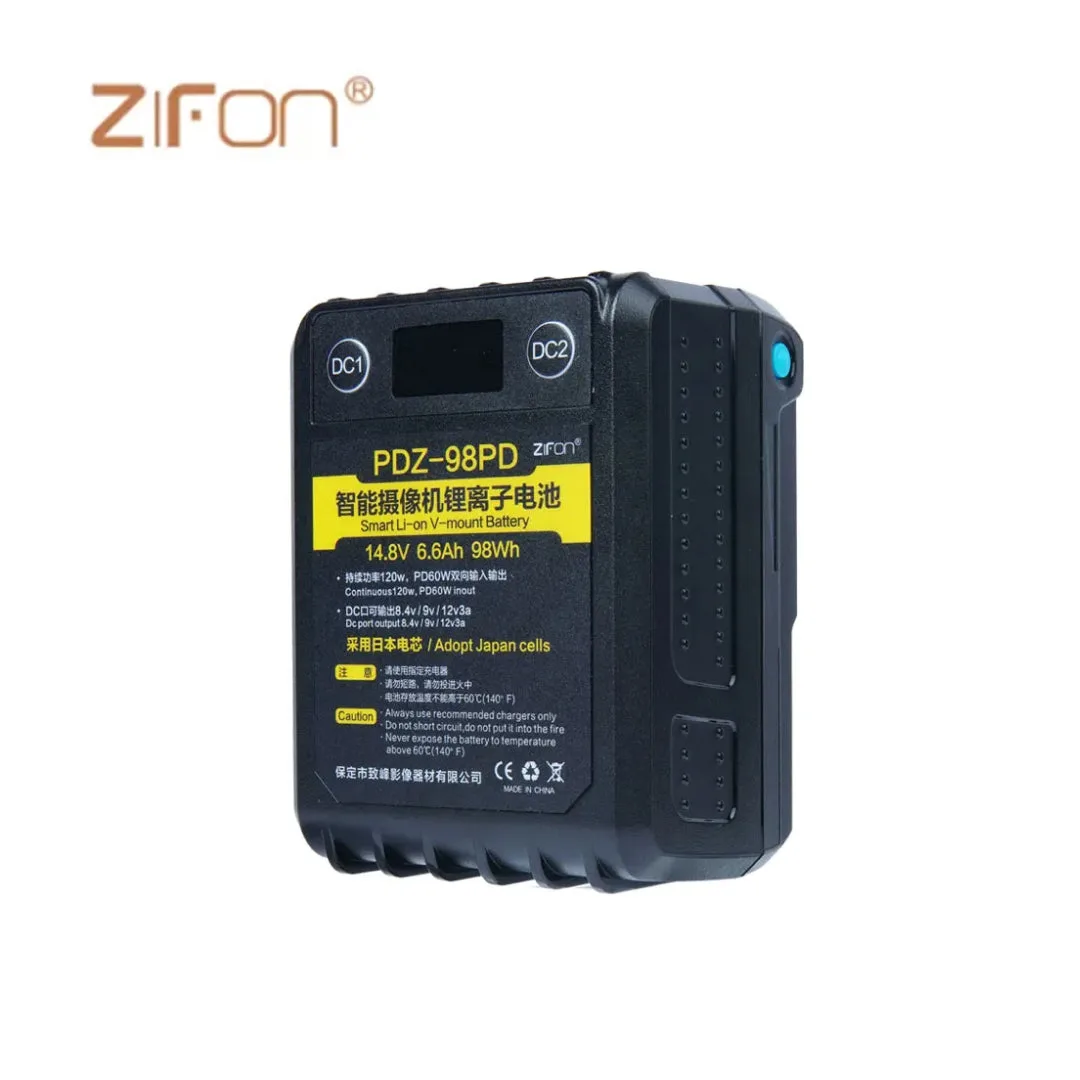
ZiFon PDZ-98PD 98Wh 14.8V V-mount Battery (Suitable for Aputure)
-
ZiFon PDZ-150PD 150Wh 14.8V V-mount Battery (Suitable for Aputure): The ZiFon PDZ-150PD is a 150Wh Micro V-mount battery featuring a 60W USB-C PD port, LCD screen, and D-TAP output. The extra capacity and power delivery options make it a versatile all-in-one power source for longer shoots and charging accessories on the go.
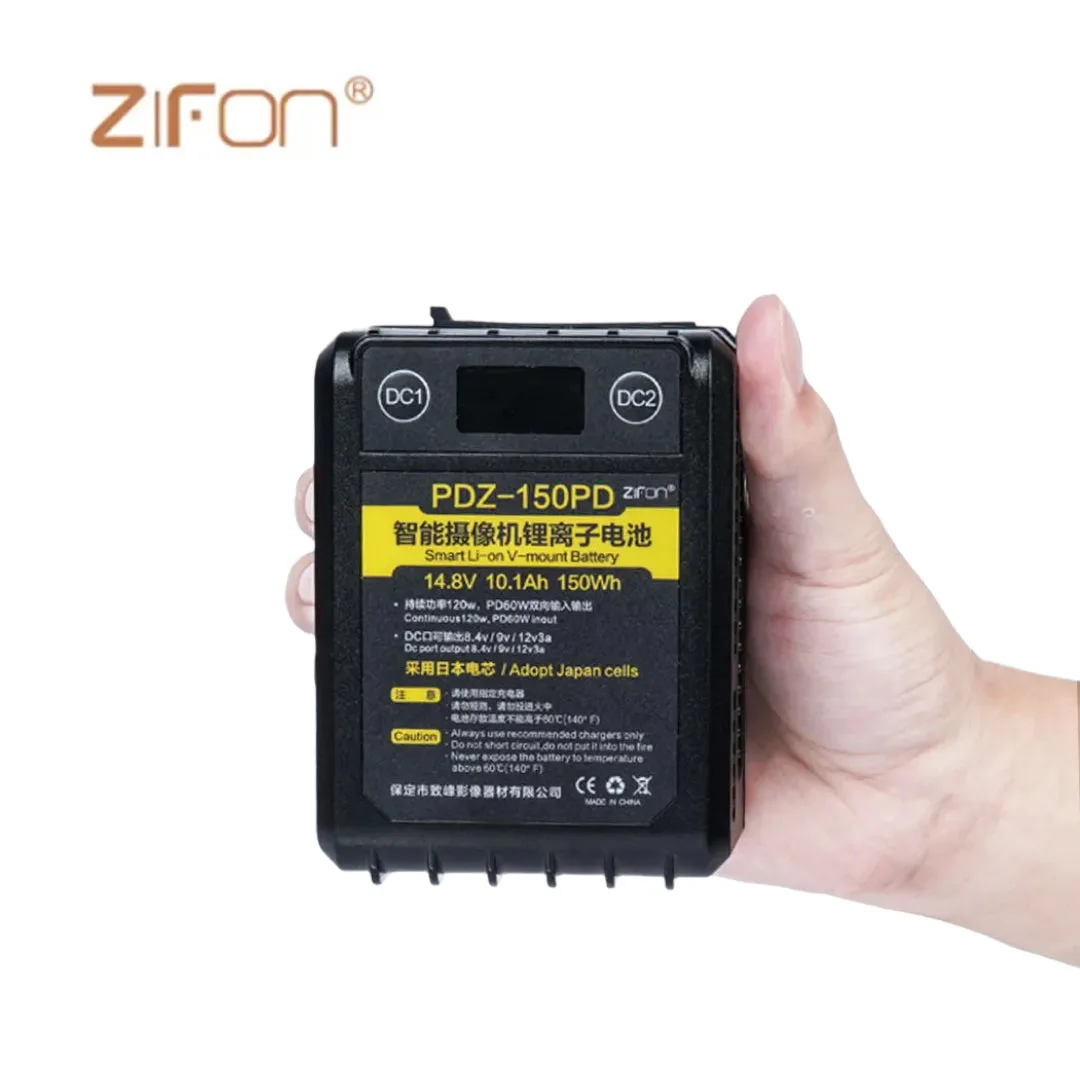
ZiFon PDZ-150PD 150Wh 14.8V V-mount Battery (Suitable for Aputure)
Which Should You Choose?
Best for
- Run-and-gun shooters and gimbal users who prioritize portability and can swap batteries between takes
- Solo creators who need a lightweight setup for travel and don't require extended runtime
Not for
- All-day event or interview shoots where uninterrupted power is critical and downtime is unacceptable
- Rigs with high-power draw like cinema cameras or multiple accessories that need the extra 50Wh