Quick answer
Choose V-Mount if you need the widest accessory ecosystem, hot-swap plates, and easy rentals across most cinema and broadcast crews. Choose Gold Mount if your camera, block battery, or rental house already standardizes on Anton/Bauer-style plates and you want fewer adapters. Whichever you pick, plan the power distribution first: one plate for the camera, a D-Tap or Lemo run for monitors and transmitters, and a block battery only when you need hours of untethered runtime.
What actually differs between V-Mount and Gold Mount
The two systems use different mechanical mounts and locking mechanisms, so batteries and plates are not interchangeable without an adapter. V-Mount is the more common format across third-party battery makers and camera cages, which makes it easier to rent, borrow, or expand on short notice. Gold Mount has a long history in broadcast and documentary work, and many owner-operators stay with it because their existing batteries, chargers, and block batteries already match. Neither mount is inherently better; the practical difference is what your camera, crew, and rental pipeline already support.
Voltage and capacity are separate from the mount. A 14.4V or 26V battery can be built in either format, so do not assume one mount delivers more power. What matters is whether your camera accepts the plate natively, whether your monitor and transmitters can run from the same battery, and whether your charger bank matches the cells you own.
Plan power distribution before you buy a plate
A battery plate is only one part of on-set power distribution. Most rigs need at least three power paths: camera body, monitor, and wireless transmitter or follow-focus. Map those paths first, then choose a plate that gives you the right outputs. A plate with a single D-Tap may be enough for a monitor, but a transmitter, focus motor, and monitor together usually need a small distribution block or a plate with multiple protected outputs.
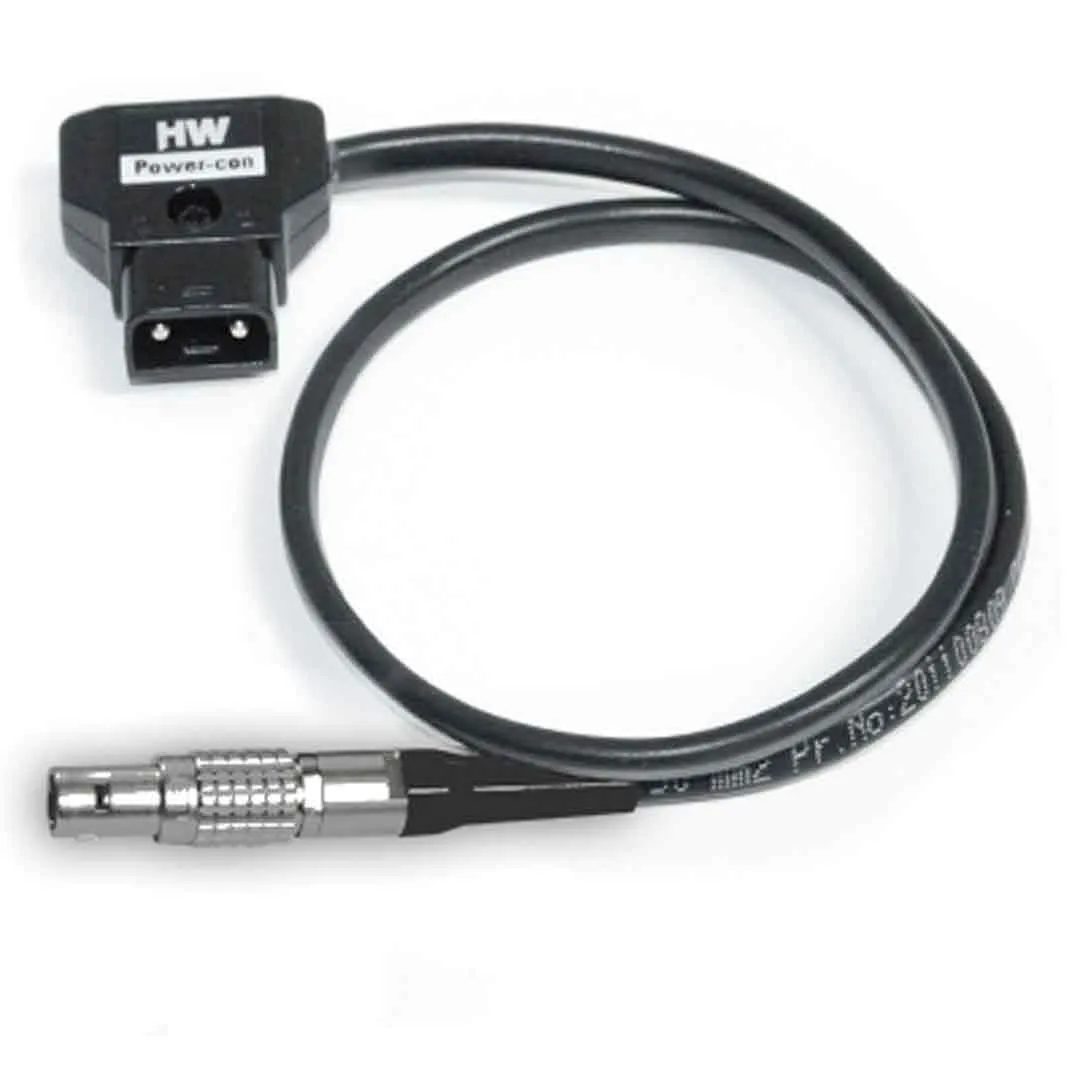
Cable type matters as much as the plate. D-Tap is the common small-connector standard for monitors and accessories, while Lemo 2-pin is frequently used for transmitters and devices that need a more secure locking connection. If your transmitter uses Lemo 2-pin and your plate only offers D-Tap, you need a D-Tap to Lemo cable rather than a new battery system. Buying that cable is often cheaper and faster than switching mounts.
When a block battery makes more sense than a plate
Block batteries sit on the ground or on a cart and feed the camera through a long cable, which is useful for studio days, interview setups, and any shoot where you are not moving far. They reduce the number of onboard batteries you need to carry and can power a monitor, transmitter, and camera from one source. The tradeoff is mobility: a block battery and cable add setup time and limit how far you can roam.
If your day mixes handheld and locked-off work, a hybrid approach works well. Keep a V-Mount or Gold Mount plate on the camera for handheld blocks, and run a block battery for longer stationary takes. Just make sure your camera can accept power from both sources without changing plates mid-shoot.
Monitor power supply: the most common weak point
Monitors are often the first accessory to lose power because they are added late in the rig build. If your monitor accepts 12V DC, a D-Tap cable from the camera plate is usually the simplest solution. If it has a barrel connector, confirm the polarity and voltage before plugging in; a wrong adapter can damage the monitor. For monitors that need more current than a single D-Tap can safely provide, use a dedicated output or a small distribution box.
When your monitor and camera are on different batteries, you add weight and charging complexity. Running both from one plate reduces that load, but it also means a single battery failure takes down the whole rig. On critical shoots, keep one spare plate charged and ready rather than relying on a single high-capacity battery.
Decision rules for your power kit
- Match the mount to your camera and rental house: If your camera cage, rental inventory, or crew batteries are already V-Mount, stay V-Mount. If your block batteries and chargers are Gold Mount, stay Gold Mount. Adapters add failure points and cost. One mount standard across your kit beats switching for a small weight or size difference.
- Count your outputs before choosing a plate: List every device that needs power: camera, monitor, transmitter, focus motor. Choose a plate with enough protected outputs, or add a distribution block. A single D-Tap is rarely enough for a full rig. If you are short one output, a cable or small distributor is cheaper than a new battery system.
- Use the right cable for the device: D-Tap works for many monitors and small accessories. Lemo 2-pin is common for transmitters that need a locking connector. Buy the cable that matches your device rather than forcing an adapter. A D-Tap to Lemo cable is often the fastest fix for a transmitter power problem.
- Decide block battery vs onboard by shooting style: Handheld and gimbal work favor onboard V-Mount or Gold Mount batteries. Studio, interview, and cart-based days favor a block battery for longer runtime and less weight on the camera. If you mix both, keep an onboard plate and a block battery, and test switching between them before the shoot.
Products that solve common power problems
- Hawk-Woods Câble D-Tap M / Lemo 2-Pin M (75cm) (LA-64D): Hawk-Woods LA-64D is a Power-Con (Male) to Lemo 2-Pin cable, 75cm, designed for broadcast and AV setups that need more length flexibility, including Teradek wireless transmission systems. If your transmitter uses Lemo 2-pin and your plate or block battery offers Power-Con, this cable bridges the gap without changing your battery mount.
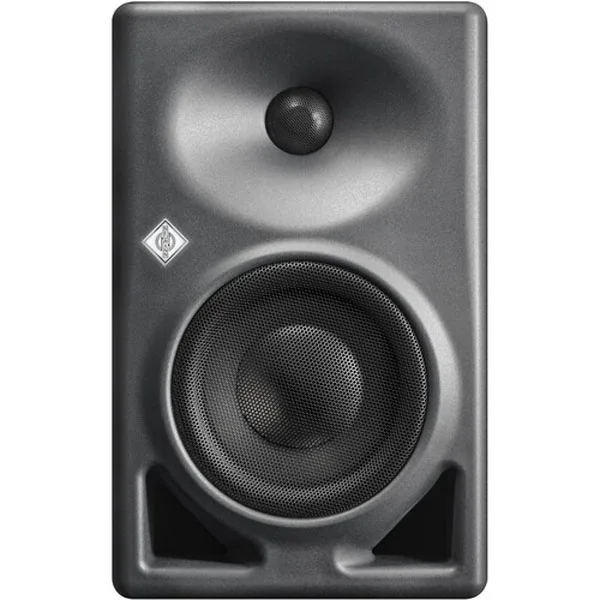
- Neumann KH 120 MKII (AES67, Noire) – Enceinte Active: Neumann KH 120 MKII (AES67, Black) is an active 2-way monitor with AES67 networking and a black finish, built for professional audio reproduction. For studio or post rooms where monitors run on mains power, this is a reference for audio monitoring rather than a field power solution; it shows why not every monitor on set should be battery-powered.
Who should choose which
Best for
- Owner-operators and rental houses already standardized on V-Mount batteries and chargers
- Documentary and broadcast crews who need Gold Mount compatibility with existing block batteries
- Productions that run monitors and transmitters from a single camera plate and want fewer cables
Not for
- Shooters who only use internal camera batteries and never add monitors or transmitters
- Studio audio monitoring setups that run on mains power and do not need field battery plates
- Anyone unwilling to carry the right D-Tap or Lemo cable for their specific devices