What is actually in Vanilla Coconut tea?
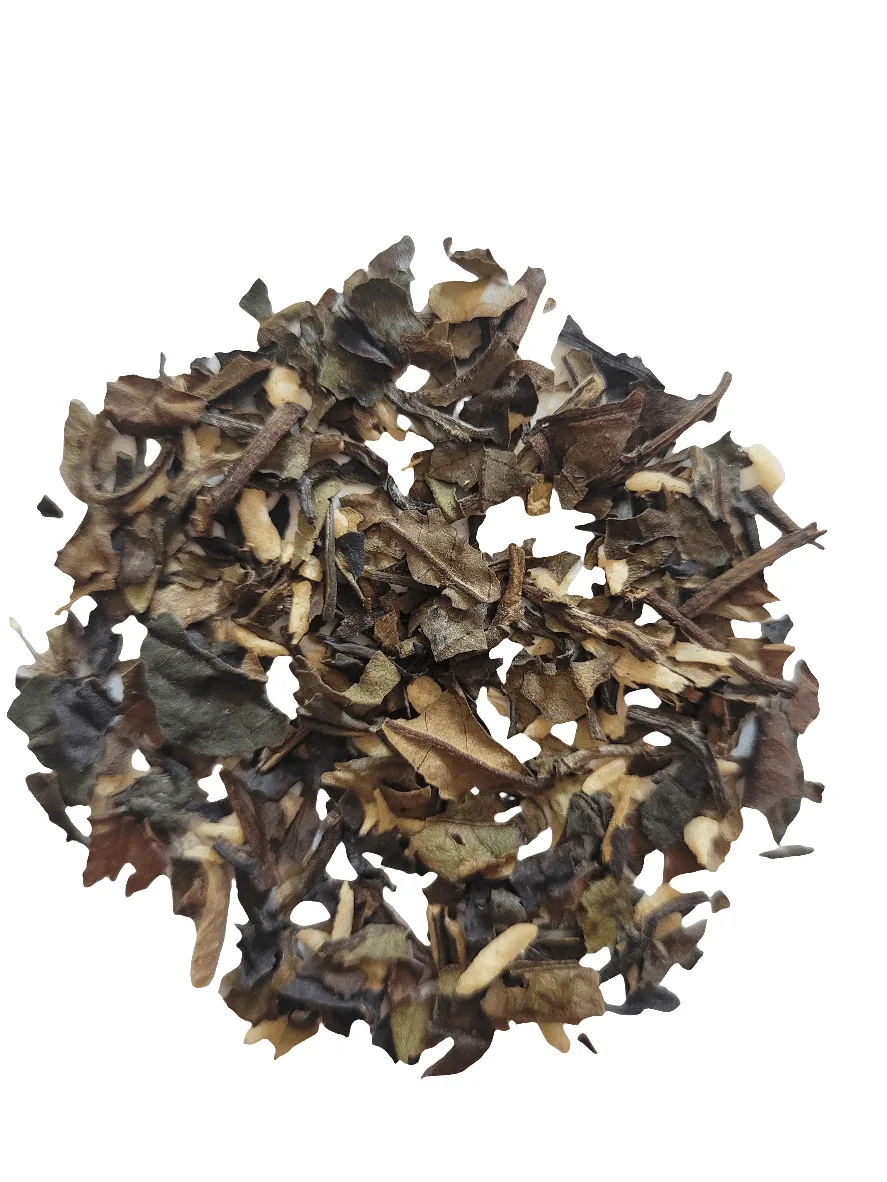
The blend is built on Pai Mu Tan white tea, then layered with coconut, blue mallow flowers, rose petals, and natural flavour. The catalog lists the flavour notes simply as vanilla and coconut, so expect a sweet, tropical direction rather than a grassy or smoky one.
Because the base is a white tea, the cup is generally lighter than a black-tea blend. The coconut and vanilla sit on top of that light base, which is why the floral additions (mallow and rose) matter: they keep the blend from tasting like pure dessert.
The full ingredient list is the one to check if you are sensitive to coconut or to any of the floral components. The supplied record does not confirm allergen-free status or dietary suitability, so treat the ingredient list as your starting point and verify with the brand if you have a serious allergy.
Vanilla Coconut tea caffeine questions
Does Vanilla Coconut tea contain caffeine?
The blend contains Pai Mu Tan white tea, which is a true tea leaf. The supplied record does not state a caffeine amount, so the honest answer is that it is a tea-based blend rather than an herbal infusion, and the exact caffeine level is not confirmed by the information provided. If you are limiting caffeine, treat it as a caffeinated cup and adjust how much you drink.
Can I drink it in the evening?
That depends on your own caffeine sensitivity. Since the base is white tea, some drinkers find it gentler than a strong black tea, but the record does not provide a caffeine figure to plan around. If you are avoiding caffeine close to bedtime, choose a caffeine-free herbal blend instead.
Is it a herbal tea?
No. Pai Mu Tan white tea is a tea leaf, so this is a flavoured white tea blend, not an herbal infusion. The coconut, mallow, rose, and natural flavour are additions to that base.
How to brew vanilla coconut tea
The supplied product record does not include preparation instructions, so there is no manufacturer steeping time or water temperature to quote here. Rather than invent numbers, use the approach you would take with a light white tea: water that is not aggressively boiling, and a steep you taste as you go.
Start with a small amount of leaf, pour the water, and check the cup early. White tea can turn bitter if it sits too long, and the coconut and vanilla are delicate enough that an over-steeped cup flattens them. If the first cup tastes thin, add more leaf rather than steeping longer; if it tastes sharp, shorten the next steep.
Use fresh, filtered water where you can. The floral notes in this blend are subtle, and heavily mineral or chlorinated water can mask them.
Brewing adjustments that actually change the cup
- More leaf, not more time: If the vanilla and coconut seem faint, increase the amount of tea rather than extending the steep. Longer steeping on a white tea base tends to pull out astringency before it pulls out more aroma.
- Cool the water slightly: Let freshly boiled water settle before pouring it over the leaf. Very hot water can flatten the floral top notes from the mallow and rose.
- Taste before you commit: Because no official steeping time is supplied, treat the first cup as a calibration. Note what you did and adjust the next one.
Can you make coconut tea iced?
Yes, and the tropical profile suits a cold cup well. The main risk with icing a white tea blend is dilution: if you pour hot tea straight over a full glass of ice, the vanilla and coconut can taste watery. Brew a slightly stronger concentrate, let it cool, then pour it over ice.
Cold brewing is another option. Put the leaf in cold water and refrigerate it, then strain when the flavour suits you. The supplied record does not give a cold-brew ratio or timing, so start small and taste as it develops rather than following a fixed schedule.
For serving, keep additions simple. A slice of lime or a little extra coconut milk can echo the blend, but heavy sweeteners tend to bury the floral notes.
Sizes, value, and buying questions
What sizes does Vanilla Coconut tea come in?
The catalog offers a 50g pouch and a 500g pouch. The 50g size is a sensible way to try the blend before committing to the larger bag, especially if you are unsure about coconut in tea.
Which size should I buy?
Choose 50g if you drink tea occasionally or want to test the flavour first. Choose 500g if you already know you like coconut-forward white tea blends and want a larger supply for regular hot or iced brewing.
Is it good value?
The catalog lists Vanilla Coconut at USD 6.46, with a comparison price of USD 9.50. That is the listed price at the time of writing; check the current product page for the live figure before ordering.
Vanilla Coconut at a glance
-
Vanilla Coconut: Ingredients: Pai Mu Tan White, coconut, blue mallow flowers, rose petals, natural flavour. This tells you the base is a true white tea, not an herbal blend, and identifies coconut as a listed ingredient.
Vanilla Coconut
-
Vanilla Coconut: Flavour notes: vanilla, coconut. Sets expectations for a sweet, tropical cup rather than a grassy or smoky one.
-
Vanilla Coconut: Available sizes: 50g and 500g. Lets you match the pouch to how often you brew and whether you want to sample first.