Start with what the set actually gives you
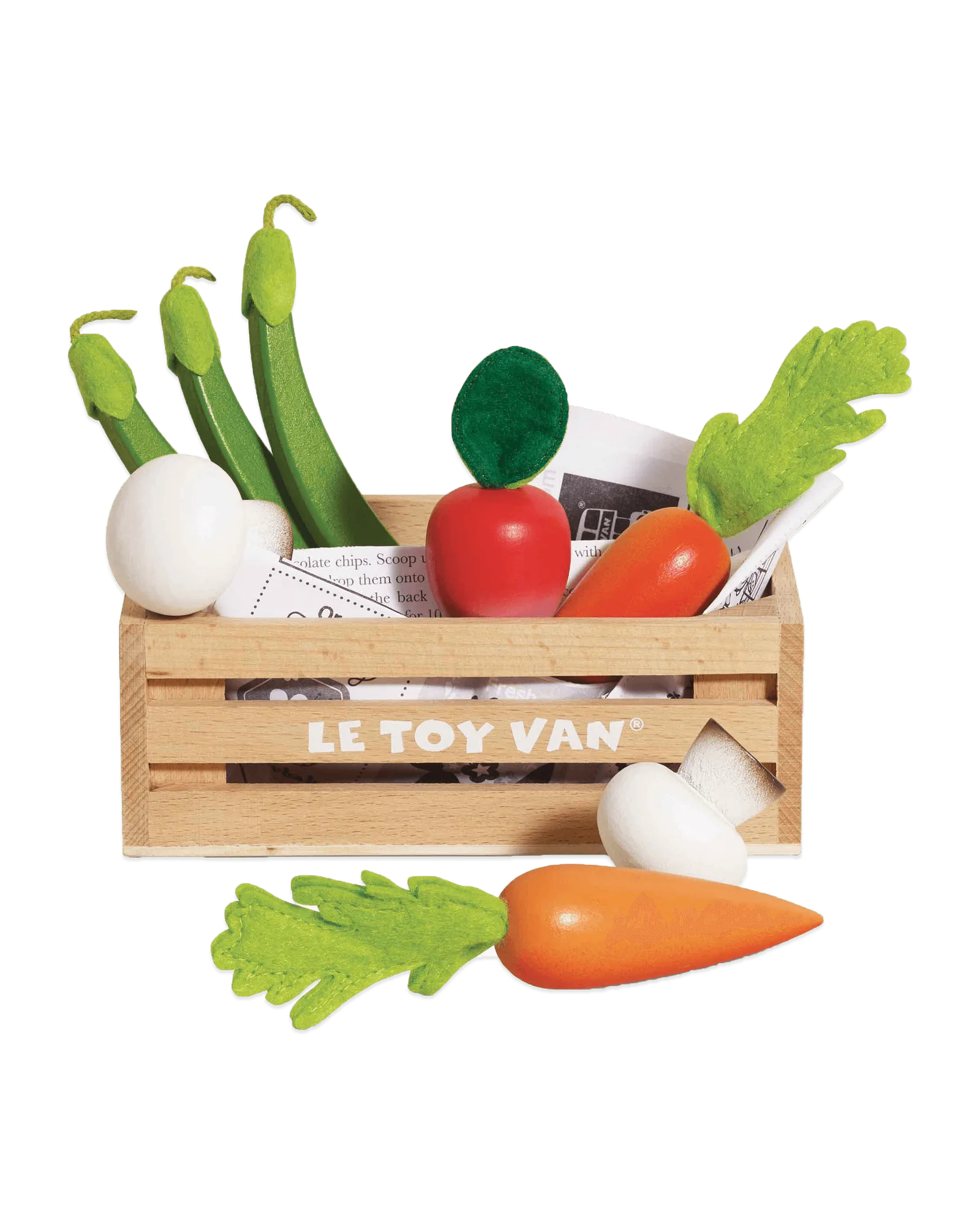
The Le Toy Van Vegetables 5 A Day set is a wooden collection of fresh vegetables — carrots, mushrooms, radish and cucumbers among them — made from FSC-certified wood and painted with non-toxic, water-based paints. It is designed for role-play, storytelling and fine motor practice, not as a feeding tool or a first-teething object.
That matters for how you introduce it. A baby vegetable toy like this works best when an adult sets up a simple pretend-kitchen moment and lets the child handle, sort and name the pieces. The set does not come with a stated age range, care instructions or safety limits in the supplied information, so treat those as questions to confirm with the retailer before handing it to a very young baby.
What the Vegetables 5 A Day set includes
-
Vegetables 5 A Day: A wooden collection of vegetables including carrots, mushrooms, radish and cucumbers. Knowing the actual pieces helps you plan naming, sorting and pretend-cooking games around what is in the box.
Vegetables 5 A Day
-
Vegetables 5 A Day: Crafted from FSC-certified wood and painted with non-toxic, water-based paints. These are the material details parents most often ask about when choosing a baby vegetable toy.
-
Vegetables 5 A Day: Designed for role-play, storytelling and developing fine motor skills. This frames the set as a pretend-play and coordination toy rather than a teether or feeding product.
A simple first play session for a baby
Keep the first session short and led by the child. The aim is familiarisation, not a lesson.
- Set out two or three pieces: Choose a carrot and a cucumber, for example, and place them within reach on a low tray or play mat. Fewer pieces make it easier for a baby to focus.
- Name each piece as it is picked up: Say the vegetable name clearly when your baby grasps or mouths a piece. This is early vocabulary play, not a test — repeat the same word without demanding a response.
- Let handling lead: The set is intended to support fine motor skills, so allow your baby to pass pieces between hands, drop them and pick them up again. Stay close and supervise throughout.
- Stop when interest fades: Put the set away once your baby loses interest. Short, repeated sessions suit babies better than one long structured activity.
Pretend play food ideas for toddlers
Once your child is steady on their feet and starting to talk, the same set supports richer pretend play. These ideas use only the pieces and play purposes described in the supplied product information.
- Vegetable shop: Lay the pieces out on a table and take turns being the shopkeeper and the customer. Ask for 'one carrot' or 'two mushrooms' to weave counting and vocabulary into the game.
- Sorting by colour and shape: Make two or three shallow bowls and ask your toddler to group the vegetables. This uses the set's role-play and fine motor strengths without adding rules the toy does not claim.
- Pretend soup: Pair the vegetables with a toy pot or bowl from your existing kitchen toys and stir, serve and 'taste'. Storytelling is one of the stated uses of the set, so narrate what you are cooking.
- Story basket: Put the vegetables in a basket and pull one out at a time to start a simple story — 'Once there was a little radish who…'. This turns the set into a language prop rather than a meal-time toy.
Using the set for early vocabulary play
The set's stated link to storytelling and healthy-food learning makes it a natural fit for word games. Keep the language concrete: name the vegetable, describe its colour or shape, and use it in a short sentence ('The carrot is orange'). Avoid turning the activity into a quiz.
For babies, single words repeated across sessions are enough. For toddlers, you can add simple questions — 'Can you find the mushroom?' — and let them point or hand you the piece. This is play ideas for babies and toddlers that grow with the child rather than a fixed programme.
Practical points before you hand it over
- Supervise young babies: The supplied information does not state an age range or small-parts warning. Until you have confirmed suitability with the retailer, treat the set as a supervised play item for babies.
- Check the paint finish in person: The set is painted with non-toxic, water-based paints, but no care or cleaning instructions are supplied. Inspect the pieces on arrival and follow any guidance that comes with the packaging.
- Keep it dry and separate from food: This is a toy, not a feeding set. Store it away from actual food preparation areas and do not use it to serve real meals.
- Note the catalogue price context: The set is listed at USD 131.34 against a comparison price of USD 199.00. If budget matters, that is the figure to weigh against how often your child will use a wooden pretend-food set.
What the set does not tell you
The supplied product information does not include a stated age range, care instructions, or safety limits such as small-parts guidance. It also does not describe the number of pieces in the box. Those are reasonable questions to ask before buying, especially for a baby under twelve months.
What the information does support is a clear picture of the set's purpose: a wooden, FSC-certified, non-toxic-painted vegetable collection for role-play, storytelling and fine motor practice. Plan your play around those strengths, and confirm the practical details with the retailer before the first session.