Start with the instrument in front of you
The Giraffe Xylophone is a wooden musical toy that gives your child a real first instrument: each key produces a distinct note, so hitting the bars is not just noise but a first lesson in pitch and cause and effect. For babies and toddlers, that immediate feedback is what makes it engaging.
Before you introduce it, check the basics. The xylophone arrives fully assembled, so there is no setup beyond unpacking. Its dimensions are 41 x 15.8 x 2.5 cm (16.4 x 6.22 x .98 inches), which makes it a good size for a child to hold or place on a lap or low table. The rounded edges and sturdy construction are designed for young hands, and the paint is environmentally friendly and non-toxic. The listed age is 12+ months, so keep that in mind when deciding when to start.
What the Giraffe Xylophone gives you to work with
-
Giraffe Xylophone: Material: Plywood and Iron. Knowing the materials helps you understand the weight and feel of the toy, and reminds you to check for any loose parts or exposed edges before play.
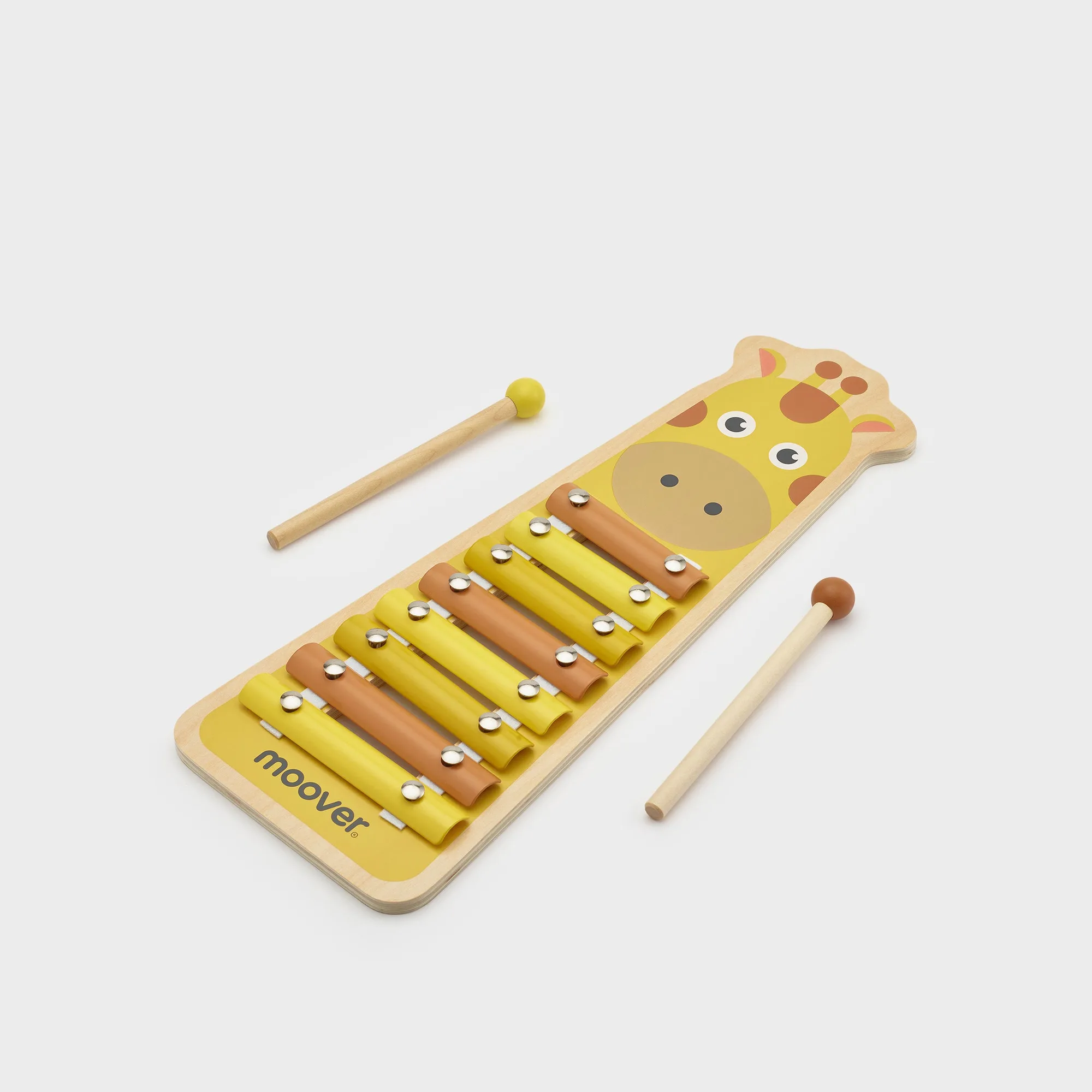
Giraffe Xylophone
-
Giraffe Xylophone: No assembly required; dimensions 41 x 15.8 x 2.5 cm (16.4 x 6.22 x .98 inches). The size is practical for small hands and for storage; you can plan where it will live without measuring a shelf.
-
Giraffe Xylophone: For kids 12+ months; helps develop fine motor skills and stimulates creativity and imagination. This gives you a clear starting age and a reason to choose this toy over others: it supports both physical coordination and open-ended play.
-
Giraffe Xylophone: All paint is environmentally friendly and non-toxic. For a toy that will be mouthed and handled, this is a reassuring detail, though you should still inspect regularly for wear.
A simple first-play routine
You do not need a lesson plan. The goal is to let your child explore the sound on their own terms. Start by placing the xylophone on a stable surface—a floor mat or low table works well—and let your child approach it. Sit nearby and show one gentle tap with the mallet (or your finger) to demonstrate. Then hand over the mallet and let them try.
Expect experimentation: random banging, sliding the mallet, or turning the xylophone over. That is normal and part of learning. Resist the urge to correct; instead, mirror back what they do. If they hit a key, hit the same one and say the note name or just “ding.” This turns play into a back-and-forth game.
Keep sessions short—a few minutes at a time is plenty for a baby or young toddler. Follow their interest; if they wander off, let them. The xylophone will be there later.
Simple rhythm activities to try
- Echo game: Tap a short pattern (two taps, then one) and see if your child copies. Start with one tap and build up as they get the idea.
- Sing and play: Sing a familiar song and tap the xylophone on the beat. Your child can join in with their own taps, even if it is not perfectly timed.
- High and low: Point to the high end and the low end. Play a note at each end and use the words “high” and “low.” This builds early pitch awareness.
- Stop and go: Play a note, then pause and say “stop.” Wait a second, then play again and say “go.” This introduces the idea of silence and control.
What to check before and after each play session
Wooden toys are durable, but they still need a quick look. Before play, run your fingers along the edges and keys to feel for splinters or rough spots. Check that the keys are secure and that the frame is not cracked. After play, wipe the xylophone with a damp cloth and dry it immediately; do not submerge it in water. The paint is non-toxic, but repeated moisture can damage the wood over time.
Also check the mallet, if one is included or if you use a separate one. The supplied information does not confirm whether a mallet is included, so if you do not have one, you can use a soft-ended mallet or even a finger. Avoid hard objects that could dent the keys.
Keeping the xylophone in rotation
To keep the toy interesting, store it where your child can see it but not where it becomes background noise. A low shelf or a basket with other musical toys works well. Rotate it out for a few days and bring it back; the novelty helps. You can also pair it with other wooden musical toys or simply with singing and dancing.
The Giraffe Xylophone is a straightforward first instrument: it is ready to play, sized for small hands, and designed for the way young children explore sound. With a little guidance and a few simple games, it can become a regular part of your child's play.