Quick answer
Most vinegar and oil sprayer faults come from dried residue in the nozzle, not a broken pump. Rinse the bottle with warm water and a drop of dish soap, pump clean water through until the mist returns, then dry fully before refilling. If the spray stays weak or one-sided after two cleaning cycles, stop repairing and replace the sprayer.
Separate the symptom before you take anything apart
A sprayer that produces nothing, a sprayer that squirts a single jet, and a sprayer that mists weakly are three different problems. No spray at all usually means the dip tube or nozzle channel is blocked. A single jet means the nozzle opening is partly obstructed. A weak, sputtering mist usually points to air in the pump or a loose nozzle cap. Test with plain warm water first, so you are not adding more oil to an already sticky channel.
Clear a blocked nozzle without damaging it
Unscrew the nozzle head if your sprayer allows it, then soak it in warm water with a drop of dish soap for ten minutes. Rinse under running water and pump clean water through the bottle. Never push a pin, needle, or wire into the nozzle opening: it enlarges the hole and turns a fine mist into a stream. If the nozzle does not unscrew, fill the bottle with warm soapy water and pump it through until the spray pattern clears.
Remove sticky vinegar and oil residue
Vinegar leaves mineral film and oil leaves a gummy layer, and together they clog narrow channels quickly. After every few uses, fill the bottle about one-third with warm water, add a drop of dish soap, shake, and pump the solution through until it runs clear. Then pump plain warm water through twice. Let all parts air-dry completely before refilling, because trapped moisture makes oil spray uneven.
When to stop fixing and replace the sprayer
If the pump feels stiff, the trigger sticks, or the spray stays weak after two full cleaning cycles, the internal mechanism is worn and further cleaning will not restore it. A sprayer with a cracked body or a nozzle that no longer seals should also be replaced rather than repaired. For occasional use, a fresh 100 ml sprayer is usually the simpler and safer choice.
Sprayer diagnosis
- No spray at all: The dip tube or nozzle channel is blocked, often by dried oil or vinegar film. Soak the nozzle in warm soapy water and pump clean water through. If nothing changes after two cycles, replace the sprayer.
- Single jet instead of a mist: The nozzle opening is partly obstructed, so liquid exits through a narrow gap. Clean the nozzle by soaking and pumping. Never insert a pin or wire, which permanently widens the hole.
- Weak or sputtering spray: Air is trapped in the pump or the nozzle cap is loose. Tighten the cap, pump warm water through until the stream is steady, then dry fully before refilling with oil or vinegar.
Product facts
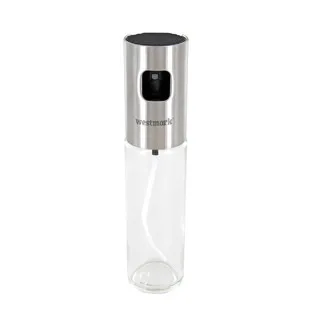
- Vinegar and oil sprayer, 100 ml: This Westmark vinegar and oil sprayer holds 100 ml and is designed for spraying vinegar and oil. The compact 100 ml capacity suits everyday kitchen use and makes it easy to rinse and refill often, which is the main way to prevent clogs.