Quick Answer
Vitamin B2 (riboflavin) is essential for energy because it helps your body convert carbohydrates, fats, and proteins into usable energy. If you're often tired and suspect low riboflavin, a supplement like Solgar's Vitamin B2 100 mg capsules can help, but check for deficiency signs first.
Why Riboflavin Matters for Energy
Riboflavin is a water-soluble vitamin that your body cannot store in large amounts, so you need a regular supply from food or supplements. It acts as a coenzyme in energy production, helping your cells generate ATP from the nutrients you eat. Without enough riboflavin, your energy metabolism slows down, which can leave you feeling fatigued even if you sleep well.
Riboflavin also supports healthy skin and eyes, and it helps your body use other B vitamins, especially B6 and folate. This makes it a foundational nutrient for overall metabolic health, not just energy.
Signs of Low Riboflavin
Mild riboflavin deficiency can be hard to spot because symptoms overlap with other conditions. Common signs include sore throat, redness and swelling of the mouth and throat, cracks at the corners of the lips, and a scaly rash on the face or genitals. You might also notice eye fatigue, sensitivity to light, or a feeling of grittiness in the eyes.
If you have several of these symptoms and your diet is low in dairy, eggs, lean meats, or leafy greens, riboflavin deficiency is a real possibility. However, these signs can also point to other health issues, so don't self-diagnose without considering other causes.
Food Sources vs. Supplements
Before reaching for a supplement, look at your diet. Riboflavin is found in milk, yogurt, cheese, eggs, lean beef, pork, poultry, salmon, almonds, spinach, and fortified cereals. If you regularly eat these foods, you may already meet your needs. But if you're vegan, avoid dairy, or have a restrictive diet, a supplement can fill the gap.
Also, certain medications and conditions can increase your need for riboflavin. For example, some antidepressants, antipsychotics, and the malaria drug chloroquine can interfere with riboflavin metabolism. If you take any of these, talk to your doctor about whether a supplement is appropriate.
How to Tell If You Need Riboflavin
- Symptom: Persistent fatigue, cracks at the corners of the mouth, sore throat, red or swollen tongue, scaly skin rash, or eye irritation with light sensitivity. If you have several of these symptoms, note how long they've lasted and whether they worsen with time.
- Likely cause: A diet low in riboflavin-rich foods, or a condition/medication that increases riboflavin needs. Alcoholism and malabsorption disorders also raise risk. Review your recent diet and any medications you take to see if low riboflavin is plausible.
- Corrective action: Increase intake of riboflavin-rich foods. If that's not enough, consider a riboflavin supplement like Solgar's 100 mg capsules. Take it with food to enhance absorption. Give the change 2–4 weeks to see if symptoms improve.
- When to stop or choose another option: If symptoms persist after 4 weeks of supplementation, or if you have severe symptoms like difficulty swallowing, bleeding, or unexplained weight loss, stop self-treating and see a doctor. Also, if you are pregnant or have a chronic condition, consult a healthcare provider before supplementing. Persistent or severe symptoms warrant medical evaluation, not just more riboflavin.
Product Spotlight
-
Vitamin B2 (Riboflavin) 100 mg Vegetable Capsules - Pack of 100: Solgar's Vitamin B2 100 mg Vegetable Capsules provide a high dose of riboflavin in a convenient capsule form. This dose is well above the daily recommended intake and is useful for correcting a deficiency or supporting energy metabolism when dietary intake is low.
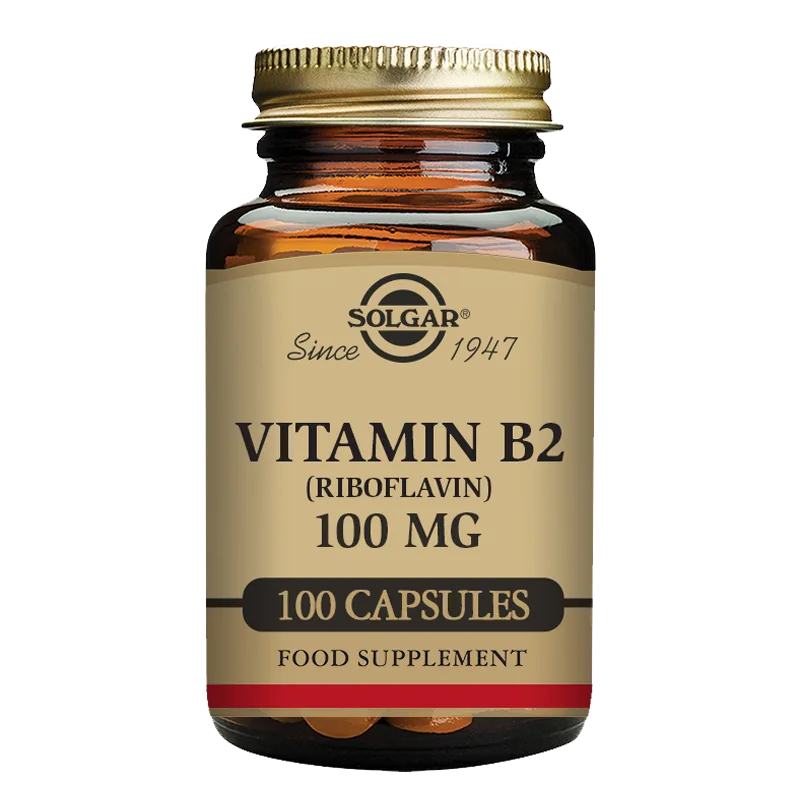
Vitamin B2 (Riboflavin) 100 mg Vegetable Capsules - Pack of 100