Quick Answer
For most adults, taking Vitamin D3 10,000 IU once a week is a safe and effective way to maintain healthy vitamin D levels, but you should always confirm the right schedule with your healthcare provider, especially if you have underlying health conditions.
Why 10,000 IU is High-Potency
Vitamin D3 10,000 IU is considered a high-potency supplement, providing a robust dose that is often used to correct deficiencies or maintain levels in individuals with limited sun exposure. Because of its strength, it's not a one-size-fits-all dose.
The upper tolerable intake level for vitamin D in adults is generally 4,000 IU per day, but short-term use of higher doses under medical supervision can be appropriate. The key is to avoid prolonged high-dose use without monitoring.
Who Might Need 10,000 IU?
This dose is typically considered for adults and seniors who have been diagnosed with a vitamin D deficiency, have malabsorption issues, or are on medications that affect vitamin D metabolism. It is not intended for children or for long-term maintenance without a doctor's guidance.
If you are unsure whether you need this potency, a blood test can measure your 25-hydroxyvitamin D levels and help you and your doctor decide on the right dose and schedule.
Your Weekly Vitamin D3 10,000 IU Schedule
- Check your current vitamin D status: Before starting a high-potency supplement, ask your healthcare provider for a blood test to confirm your vitamin D levels. This establishes the right starting dose and frequency. Never self-prescribe a high dose without a recent blood test.
- Take one softgel with a meal containing fat: Vitamin D is fat-soluble, so taking your softgel with a meal that includes healthy fats (like avocado, nuts, or olive oil) improves absorption. Swallow the softgel whole with water. Skipping the meal can reduce absorption, so pair it with food.
- Follow your prescribed weekly schedule: If your doctor recommends 10,000 IU once a week, pick a consistent day and time, such as every Sunday morning with breakfast. Use a pill organizer or a phone reminder to stay on track. Consistency matters more than the exact day, but a fixed routine helps avoid missed doses.
- Monitor for signs of over-supplementation: While toxicity is rare, symptoms like nausea, weakness, or kidney issues can occur with excessive intake. If you experience any unusual symptoms, stop taking the supplement and consult your healthcare provider. Regular blood tests (every 3-6 months) help ensure your levels stay in the optimal range.
- Reassess your dose periodically: After a few months of supplementation, have your vitamin D levels rechecked. Your doctor may adjust the dose or frequency based on your results, potentially reducing to a lower maintenance dose. Your needs may change with seasons, sun exposure, and lifestyle.
Product Facts
-
Vitamin D3 10000 IU: Zahler's Advanced Nutrition Vitamin D3 10,000 IU softgels provide high-potency Vitamin D3 per softgel for robust daily support. This makes it convenient to take a single softgel once a week or as directed by your healthcare provider, without needing multiple pills.
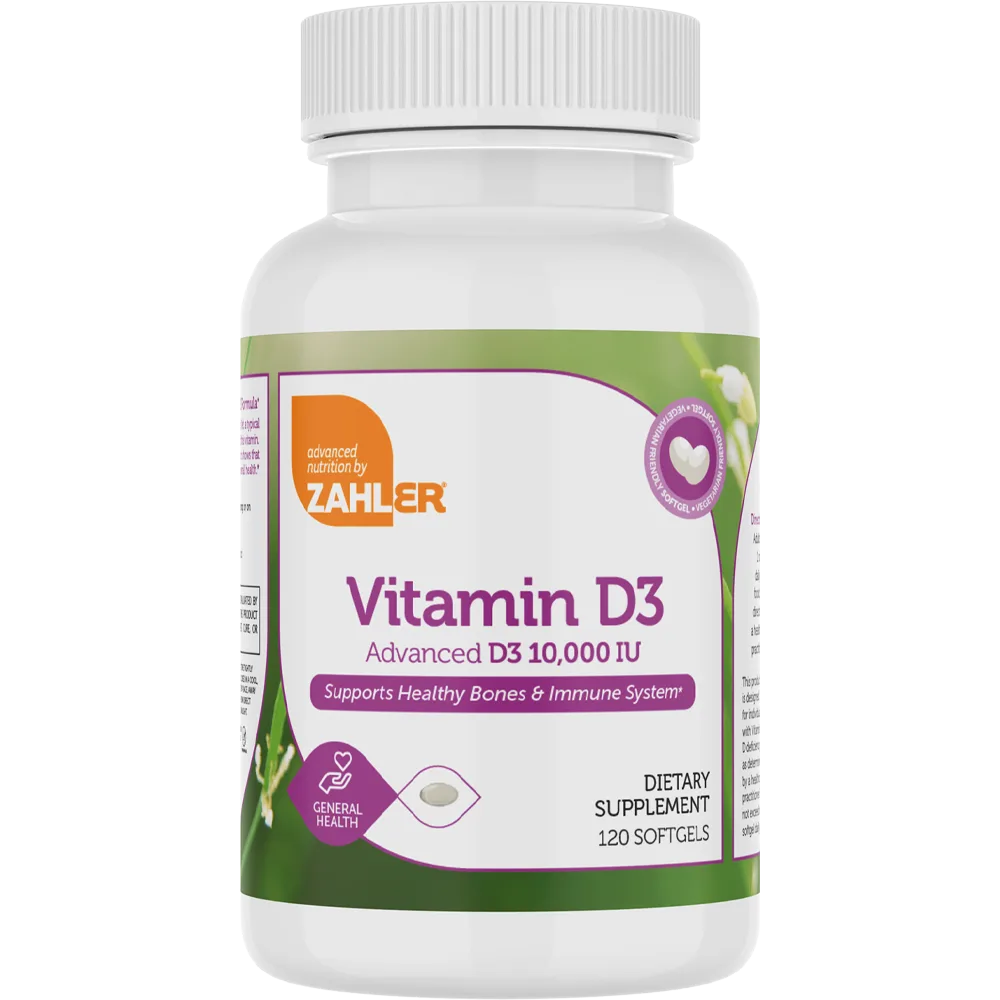
Vitamin D3 10000 IU