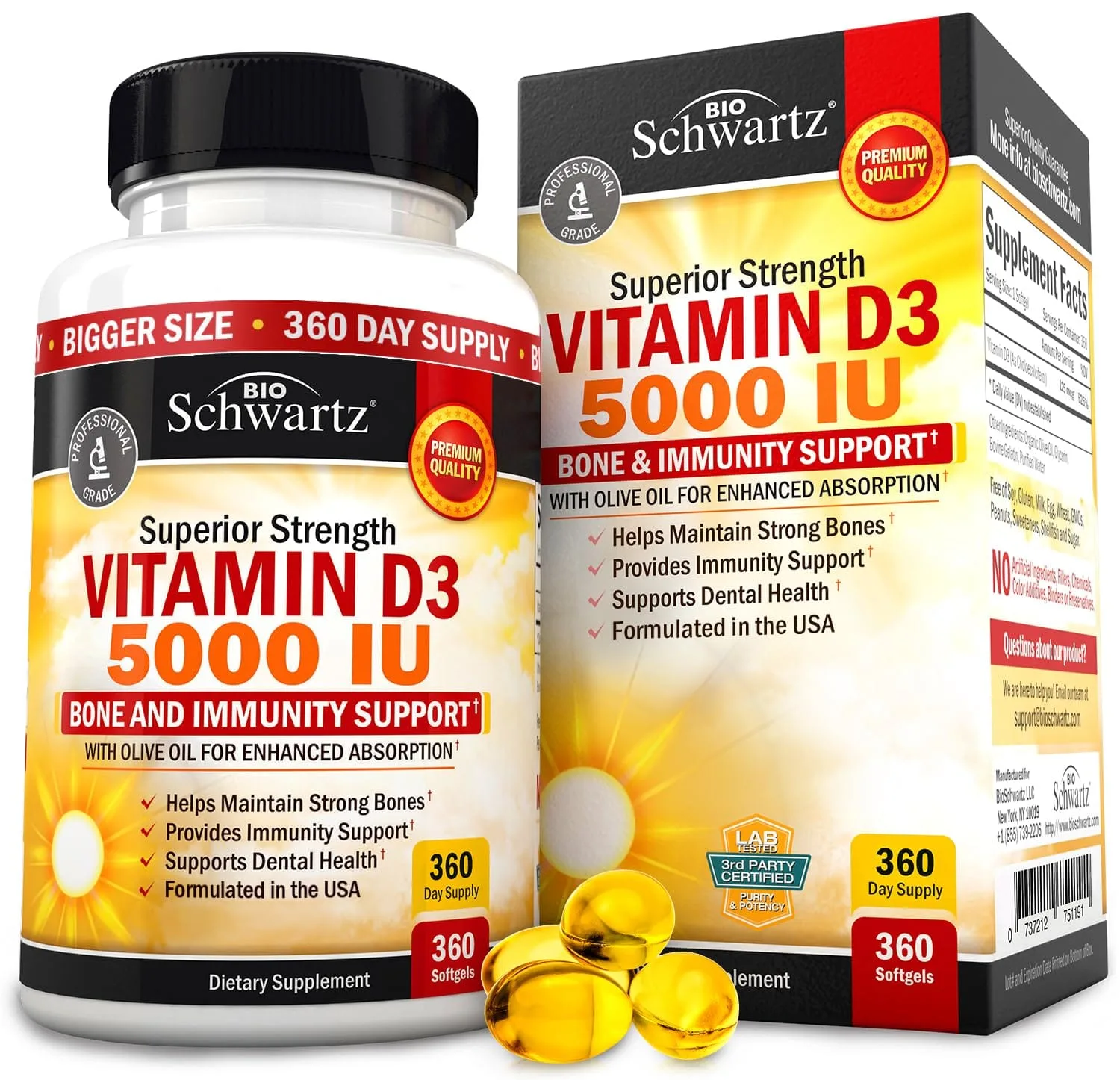
The label gives you a daily dose, not a weekly one
If you are looking at Vitamin D3 250 mcg (10,000 IU) and wondering how often to take it, the first place to check is the label. The directions for this product are specific: for adults, take one softgel daily, preferably with a meal. That is the only dosing schedule the supplied information confirms.
A weekly vitamin D3 schedule is not described on this label. High-dose vitamin D3 dosing varies by individual and should be based on your own health status and a doctor's advice. The label does not provide a weekly regimen, so do not assume that multiplying or dividing the daily dose is appropriate without professional guidance.
What the Vitamin D3 250 mcg record confirms
-
Vitamin D3 250 mcg (10,000 IU): Serving Size 1 Softgel; Vitamin D 250 mcg (10,000 IU) provides 1,250% of the Daily Value. This is a high-dose product, so the daily softgel is the entire serving. Knowing the potency helps you follow the label exactly.

Vitamin D3 250 mcg (10,000 IU)
-
Vitamin D3 250 mcg (10,000 IU): Directions: For adults, take one (1) softgel daily, preferably with a meal. This is the only dosing schedule supplied. It sets a daily routine, not a weekly one.
-
Vitamin D3 250 mcg (10,000 IU): Other Ingredients: Safflower Oil, Gelatin, Vegetable Glycerin, Sunflower Oil. These ingredients are part of the softgel base. If you have allergies or dietary restrictions, review them before use.
Why "preferably with a meal" matters for a high-dose softgel
The label directs you to take the softgel with a meal. This is a practical timing cue that can help you remember your daily dose and may support absorption, since vitamin D is fat-soluble. The supplied information does not specify which meal or how much fat is needed, so simply choose a meal you eat consistently.
Taking it at the same time each day also reduces the chance of missing a dose. If you are considering a weekly vitamin D3 schedule instead, that is a conversation for your doctor—not something the label supports.
Check these before you start a 10,000 IU softgel
- Are you pregnant or nursing?: The label warns that if you are pregnant, nursing, taking any medications, or have any medical condition, you should consult your doctor before use.
- Are you taking other vitamin D or calcium products?: This formula assists with calcium absorption. Combining multiple vitamin D sources without medical advice could lead to excessive intake. Talk to your doctor about your total daily vitamin D.
- Do you have a medical condition or take prescription drugs?: The label explicitly says to consult your doctor before use in these cases. Do not start or change a high-dose regimen on your own.
- Is the seal intact?: Do not use if the seal under the cap is broken or missing.
What to do if you experience side effects
The label advises discontinuing use and consulting your doctor if any adverse reactions occur. It does not list specific side effects, so any unusual symptom should be discussed with a healthcare professional. Do not try to adjust the dose or switch to a weekly schedule on your own to manage side effects.
Storage and handling for a daily softgel
Store the bottle at room temperature. Keep it out of reach of children. These are the storage instructions supplied with the product. The label does not specify a temperature range or whether refrigeration is needed, so follow the room-temperature guidance and avoid leaving the bottle in hot or humid places like a bathroom or near the stove.
Because this is a high-dose product, keep the bottle in a secure place—especially if you have children or pets in the home.
The bottom line on weekly dosing
Vitamin D3 250 mcg (10,000 IU) is labeled for daily use by adults, one softgel with a meal. There is no weekly schedule on the label, and high-dose vitamin D3 should not be self-prescribed. If you are wondering how often to take it or whether a weekly schedule might suit you, ask your doctor. They can review your individual needs and help you use this product safely.