Quick Answer
To win in Viticulture World, balance your individual vineyard growth with the region's collective influence track, and adapt your strategy to each asymmetric region's unique event cards and win conditions.
Why the Cooperative Twist Changes Your Priorities
In the Viticulture World expansion, you're no longer just competing to build the best vineyard. You and your fellow players are working together to gain influence within a shared region. This means your usual Viticulture instincts—hoarding coins, rushing to fill orders—need to be adjusted. A move that helps you personally but hurts the group's influence can set the whole team back.
The expansion introduces a new game board, tiles, tokens, and event cards that overlay the original vineyard mats. These components create a second layer of planning on top of your usual worker placement. You'll need to think about both your personal engine and the region's progress every turn.
One of the biggest shifts is that you'll want to communicate openly about your hand of cards and your planned moves. Unlike a competitive game, information sharing is not only allowed but encouraged. The more your group knows about each other's intentions, the better you can coordinate who should push for influence and who should focus on producing wine.
Understanding the Region's Win Conditions
Each asymmetric region in Viticulture World has its own win conditions and event deck. Before you start, read the region's rules carefully and identify what triggers a victory. Some regions may require you to fill a certain number of orders, while others might demand a specific level of influence or a combination of both.
Because the regions play differently, a strategy that works in one game may fail in another. For example, a region that punishes slow starts will force you to prioritize early influence, while a region with generous event cards might let you focus on long-term vineyard development first.
Don't assume that the same opening moves from the base game will carry you to victory. Take a few minutes at the start to discuss as a group which milestones are most urgent and assign roles accordingly.
Solo Play Considerations
Viticulture World also supports solo play, which offers a different kind of challenge. Without teammates, you must manage both your vineyard and the region's influence track on your own. This means every worker placement and card choice carries extra weight.
In solo mode, pay close attention to the event cards because they can disrupt your plans. Since you don't have other players to help cover for missed influence, you'll need to be more conservative in the early game. Build a stable engine before chasing high-risk, high-reward moves.
If you're new to the expansion, consider playing one or two solo games on an easier region to learn the flow before jumping into a team game. This will help you understand how the influence track moves and how event cards shape the game.
Step-by-Step Strategy for Viticulture World
- Step 1: Read the Region's Rules and Win Conditions: Before placing any workers, read the region's specific rules and win conditions. Identify what triggers victory and what the event deck does. Discuss as a group how to prioritize influence versus personal growth. Checkpoint: Everyone should be able to state the region's victory trigger before the first turn.
- Step 2: Assign Roles Based on Player Strengths: Decide who will focus on producing wine, who will push for influence, and who will manage the event deck. In solo play, identify which role you must handle first. A common mistake is having everyone chase the same goal, leaving the region's influence track neglected. Checkpoint: Write down each player's role or say it aloud so the group stays aligned.
- Step 3: Balance Personal Vineyard Growth with Influence: Each turn, ask yourself: does this move help the region's influence, or does it only help me? Try to do at least one influence-related action every round. In solo play, alternate between building your engine and advancing the influence track. Checkpoint: After each round, check that the influence track is moving at the expected pace.
- Step 4: Adapt to Event Cards Quickly: Event cards can change the game state instantly. When an event card is revealed, pause and re-evaluate your plan. A common mistake is sticking to a rigid strategy even when the event makes it obsolete. Checkpoint: After each event card, ask the group: does this change our priorities?
- Step 5: Communicate Openly About Your Hand and Intentions: In team play, share what cards you hold and what your next move is. This helps the group coordinate who should take which action. In solo play, talk through your options out loud to keep your thinking clear. Checkpoint: Before each turn, briefly state your planned action and why it helps the team.
- Step 6: Review and Adjust After Each Game: After the game, discuss what worked and what didn't. Did you focus too much on personal growth? Did you miss a key influence milestone? Use this review to refine your strategy for the next region.
The Expansion That Makes This Strategy Possible
-
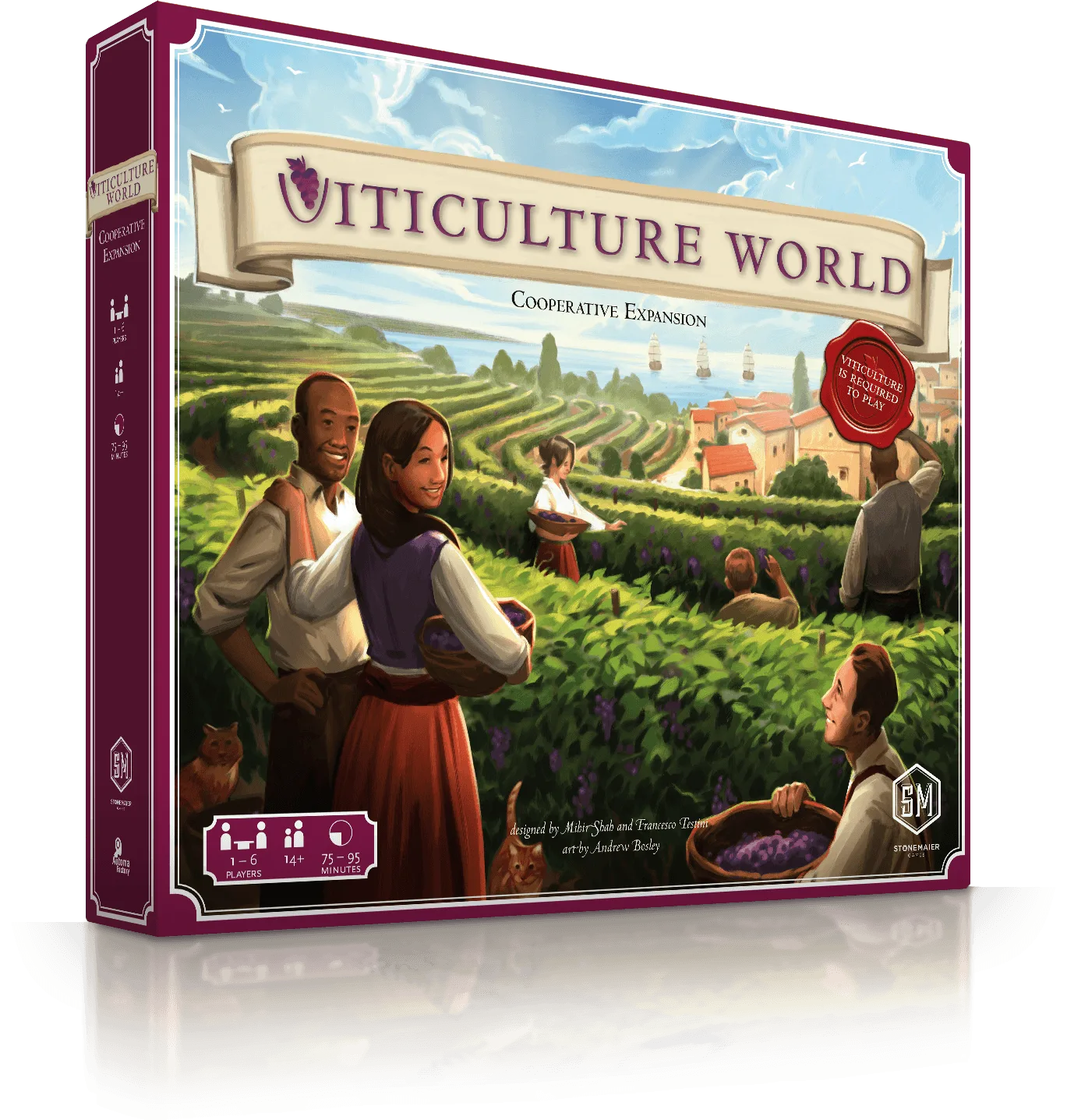
Viticulture World (Cooperative Expansion): In the Viticulture World expansion, cooperate with members of your extended winemaking family in various asymmetric regions around the world as you try to achieve global recognition. This cooperative layer changes the game from a pure competition to a shared challenge, so your strategy must account for both personal progress and the region's influence track.
Viticulture World (Cooperative Expansion)