Quick answer
Choose a cardholder if you carry five or fewer cards and want the smallest possible footprint. Choose a wallet if you need cash, coins, receipts, or multiple passports in one place. Choose a pouch when you want to move small essentials between bags without repacking. For most travelers who juggle cards, a passport, and a phone, a compact wallet like the Luka Zip Passport Wallet or a multi-passport style like the Colette Multi Passport Canvas Wallet covers the widest range of days.
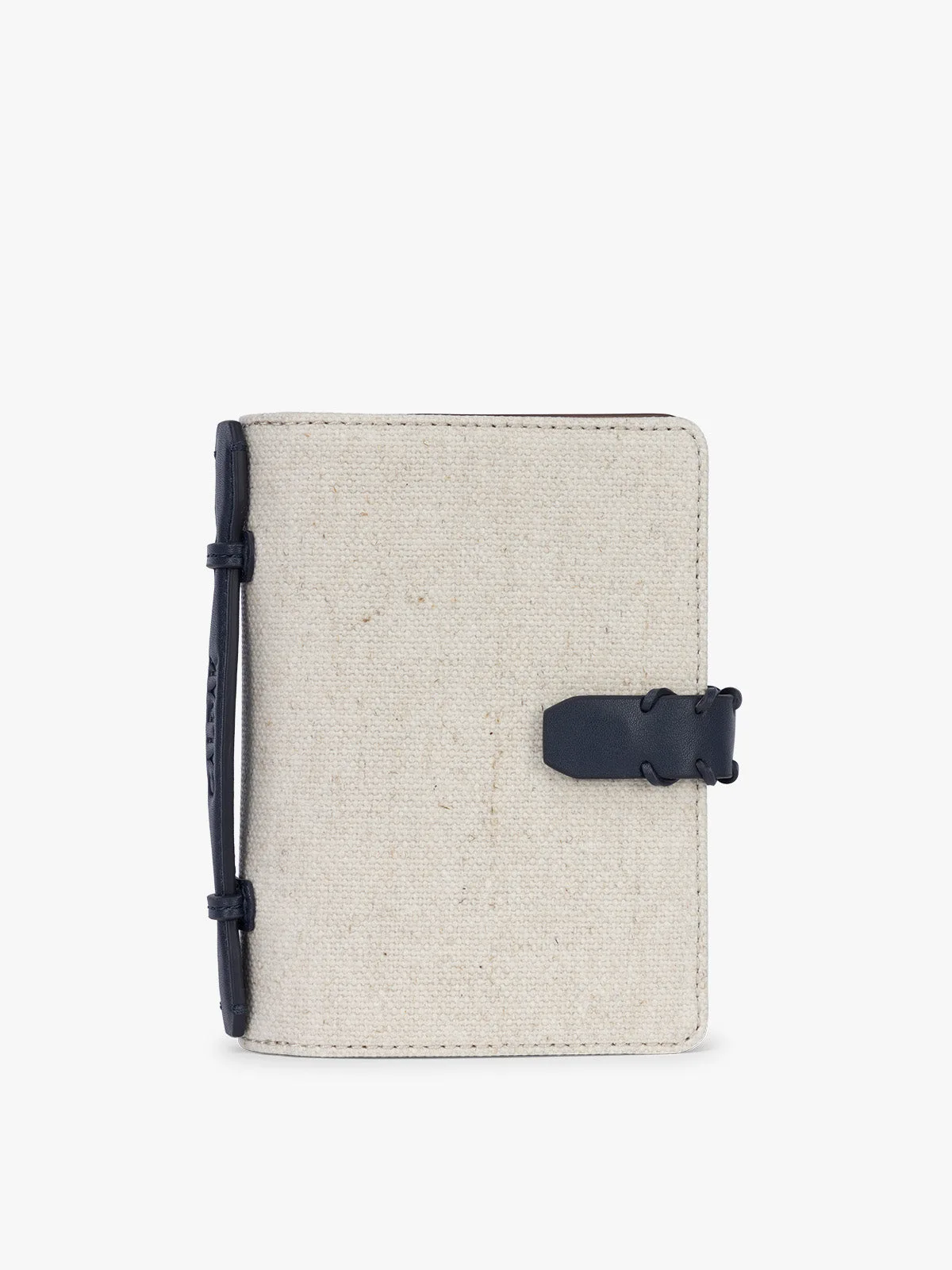
Colette Multi Passport Canvas Wallet
Your everyday carry should match how you actually move, not how you wish you moved. The wallet vs cardholder decision usually comes down to one question: how many flat things do you need to carry at once, and do you ever need to carry a passport? A cardholder handles the bare minimum. A wallet handles the messy reality of receipts, transit cards, and a second ID. A pouch handles the in-between items that do not fit either.
This guide gives you concrete decision rules instead of a vague list. You will see how capacity, closure, and material affect daily use, and where each format breaks down. You will also see how three CALPAK options fit specific routines, so you can pick one format and stop second-guessing.
Start with card count, not style
Count the cards you touch in a normal week: primary debit, backup credit, transit card, work badge, insurance card, library card, and any hotel or loyalty card you keep on hand. If that number is five or fewer and you rarely carry cash, a cardholder is the lightest option. If it is six or more, or you regularly carry cash and receipts, a wallet gives you room without forcing a daily edit.
A useful test: lay every card and folded bill you would carry on a table. If the stack is thicker than your phone, a cardholder will feel cramped. If it is thinner, a cardholder keeps your pocket or bag flat. This is the single fastest way to settle wallet vs cardholder before you look at colors or materials.
- Count cards you use weekly, not every card you own.
- If you carry cash more than twice a week, lean wallet.
- If you swap bags daily, prioritize a format with a handle or strap.
Cardholder vs pouch: closure and carry matter more than size
A cardholder is built for flat storage. A pouch is built for loose items: keys, earbuds, a lip balm, a charging cable, or coins. The cardholder vs pouch choice is really about whether you want one flat stack or one small container. If your essentials are all card-shaped, a cardholder wins. If even one item is not flat, a pouch prevents that item from stretching out card slots.
Closure is the second difference. Cardholders often rely on friction or a snap, which is fast but less secure in a crowded bag. Pouches typically use a zip or magnetic closure, which keeps small items contained but adds a step to open. Pick based on how often you access the item: frequent access favors a cardholder, less frequent access favors a pouch.
- Flat items only: cardholder.
- Any non-flat item: pouch.
- Frequent access: friction or snap closure.
- Crowded bag: zip or magnetic closure.
Match the format to your travel day
Airport days add a passport, a boarding pass, and sometimes a second document. A cardholder alone usually cannot hold a passport without bending it, so travelers often pair a cardholder with a separate passport cover. A travel wallet solves this by combining passport storage, card slots, and a zip pocket in one object you can pull out at the gate.
If you move between a work bag, a personal item, and a tote, a pouch or a wallet with a handle reduces the repacking cycle. A crossbody wallet bag goes further: it can leave the bag entirely for a quick errand or a walk to dinner. The trade-off is bulk. A crossbody carries more but takes more space than a cardholder, so it works best when you want one object to cover both transit and evening.
- Passport days: choose a wallet with dedicated passport space.
- Multiple bags per day: choose a handle or strap.
- Evening without a bag: choose a crossbody wallet bag.
Materials and construction that hold up
Vegan leather gives a structured feel and wipes clean, which suits daily handling and repeated opening. TPU-coated cotton canvas is water-resistant and lighter, which suits crossbody and travel styles that get set down on floors and counters. Neither material is automatically better; the right choice depends on whether you prioritize a crisp shape or a lighter carry.
Look at the lining and pockets as much as the outside. A scratch-resistant lining protects cards from scuffing, and interior card slots keep cards from sliding into one pile. If a product page does not list a lining or a closure type, treat that as an unknown and choose a style that does list what you need. Do not assume a feature that is not stated.
- Structured shape: vegan leather.
- Lighter, water-resistant: TPU-coated cotton canvas.
- Check for stated lining and closure before buying.
Decision rules: pick your format in three questions
- Rule 1: Card count under six, no cash: If you carry five or fewer cards and rarely use cash, a cardholder is the smallest and lightest choice. It keeps your pocket or bag flat and forces a daily edit that prevents clutter. Choose a cardholder unless you need passport space.
- Rule 2: Passport or cash in the mix: If you carry a passport, cash, coins, or receipts, step up to a wallet. Look for dedicated passport space, a zip pocket, and stated card slots so items do not pile up. Choose a travel wallet like the Luka Zip Passport Wallet or a multi-passport style like the Colette Multi Passport Canvas Wallet.
- Rule 3: One object for transit and evening: If you want to leave your main bag behind without repacking, a crossbody wallet bag covers cards, phone, and small essentials with an adjustable strap and magnetic closure. Choose a crossbody wallet bag when convenience beats minimal size.
Three CALPAK options that cover the main formats
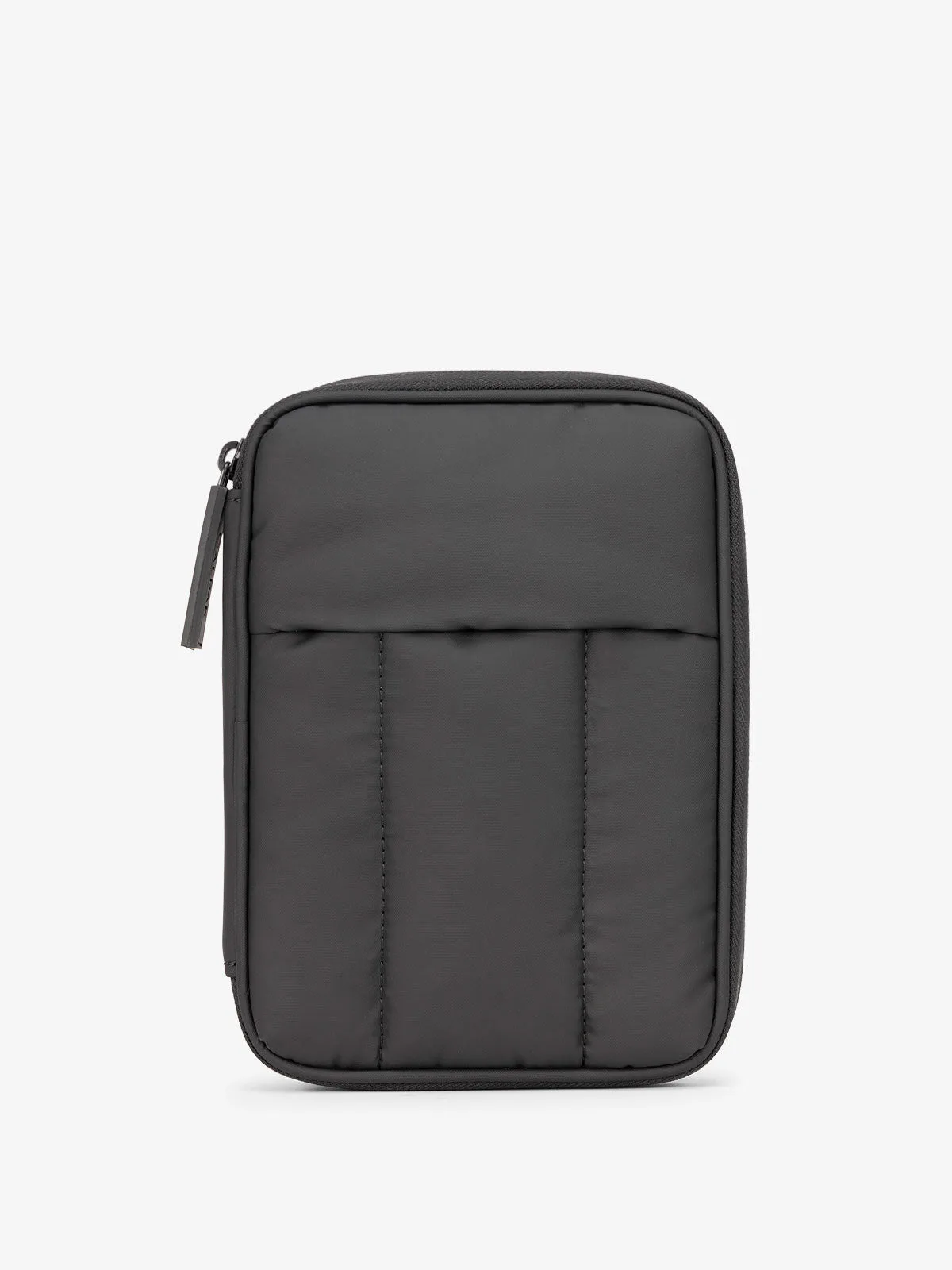
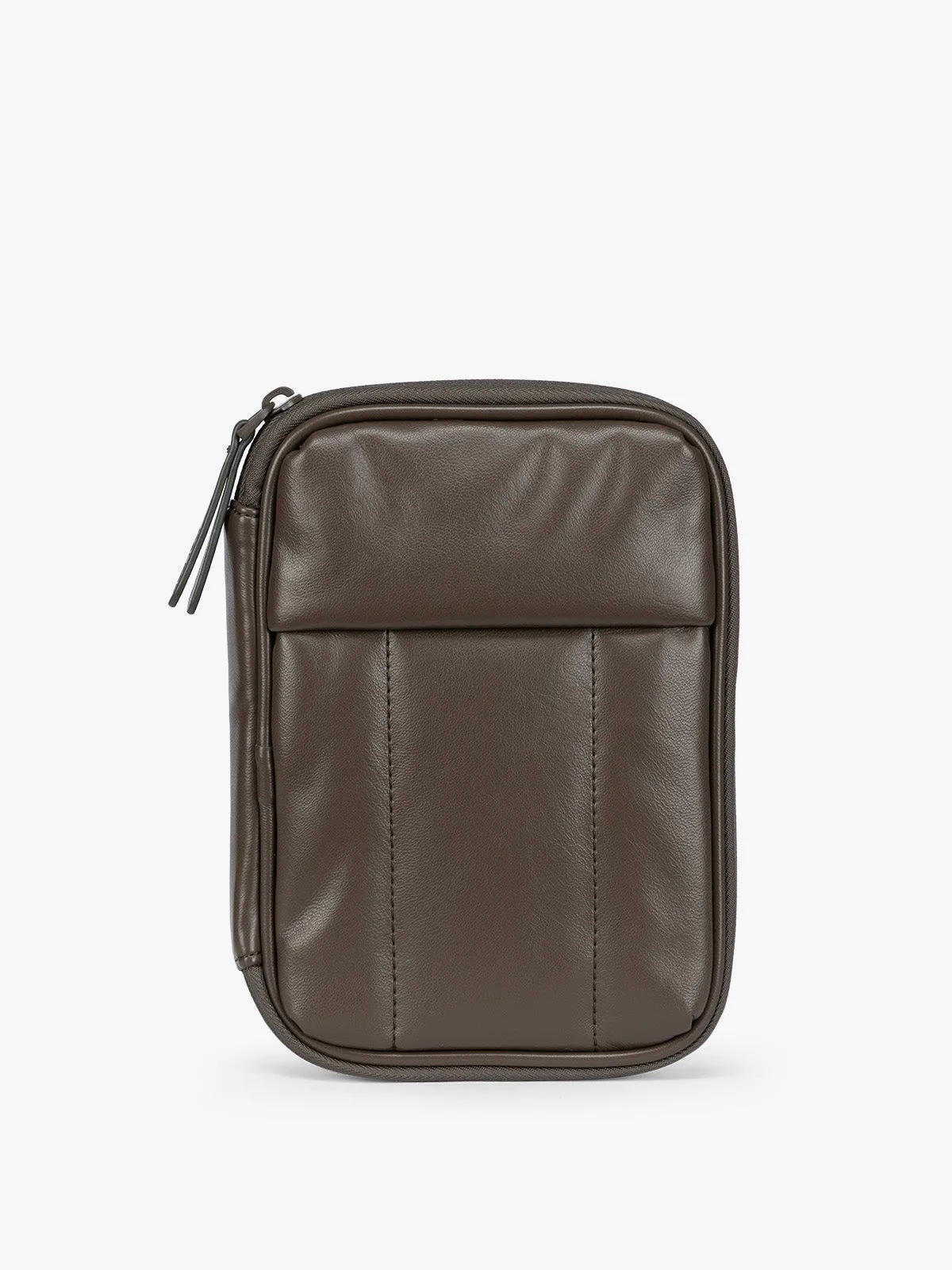
- Luka Zip Passport Wallet in Vegan Leather: Designed to keep travel essentials close and organized, it holds a passport, cards, and documents in one place without adding bulk, with a soft, compact shape. This is the travel wallet choice when you want passport, cards, and documents in one object instead of juggling a cardholder and a separate cover at security.
- Colette Multi Passport Canvas Wallet: Made from TPU-coated cotton canvas with water-resistant fabrication, it carries up to two passports and includes multiple interior pockets and card slots, plus a carrying handle. The two-passport capacity and handle make this the strongest pick for couples or families who manage more than one passport and want to move the whole set between bags.
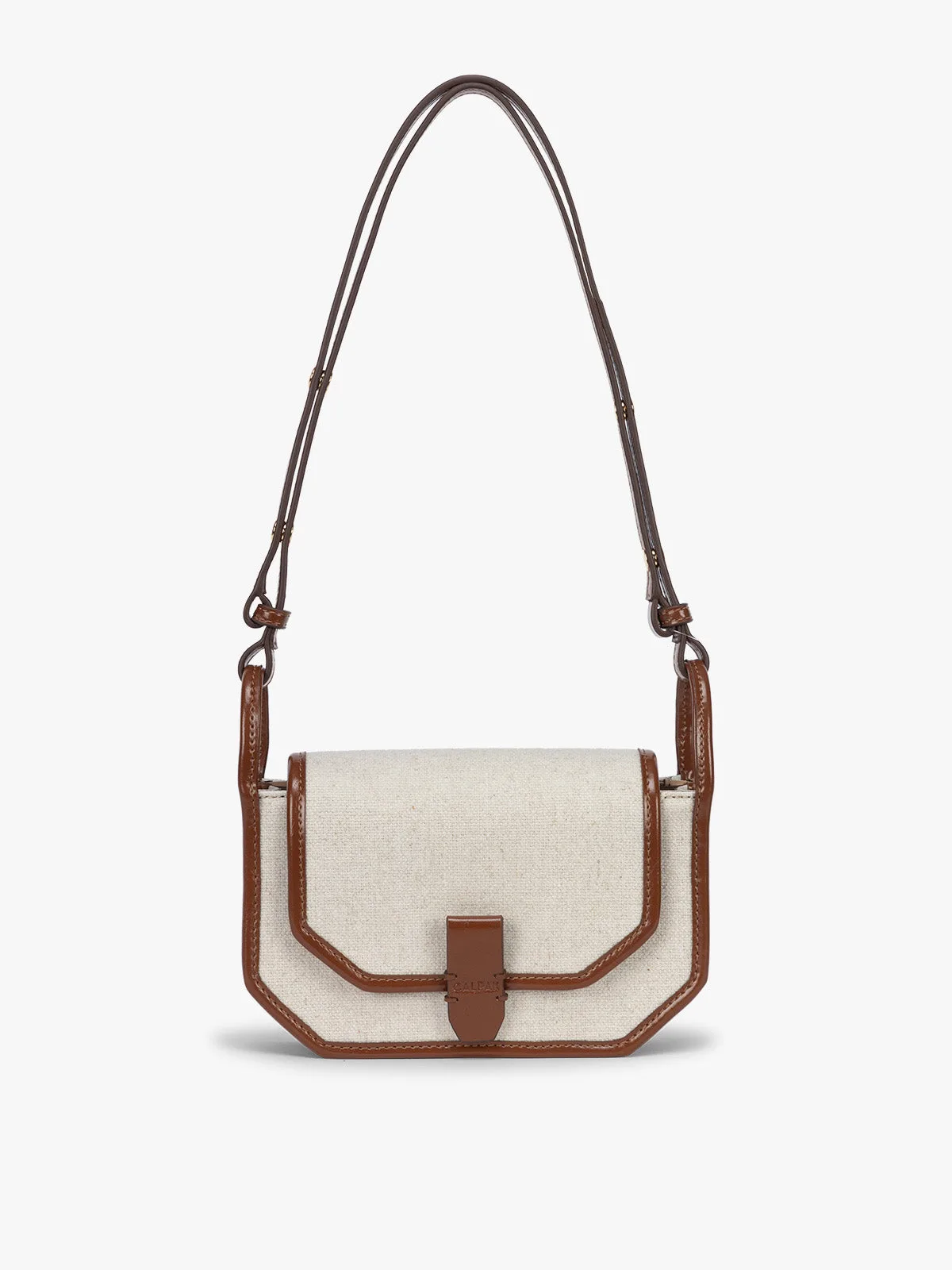
- Colette Canvas Crossbody Wallet Bag: A compact TPU-coated cotton canvas crossbody with an adjustable strap, magnetic closure, interior pockets, and built-in card slots in a lightweight, structured silhouette. This replaces both a cardholder and a small bag on days when you want to leave your main bag behind but still carry cards, phone, and a few small items.
Who each format fits
Best for
- Minimal carriers who use five or fewer cards and no cash
- Travelers who need passport, cards, and documents in one place
- People who move between bags and want a handle or strap
- Couples or families managing two passports at once
Not for
- Anyone carrying a passport who wants a flat cardholder only
- Travelers who need to carry coins, keys, or earbuds in the same object
- People who want the absolute smallest footprint and never carry a passport
Pick the format that matches your card count and passport needs, then stop optimizing. A cardholder keeps things flat, a wallet keeps things together, and a pouch or crossbody keeps things moving. If you travel with a passport, start with a travel wallet and add a cardholder only if you want a lighter evening option.