Quick answer
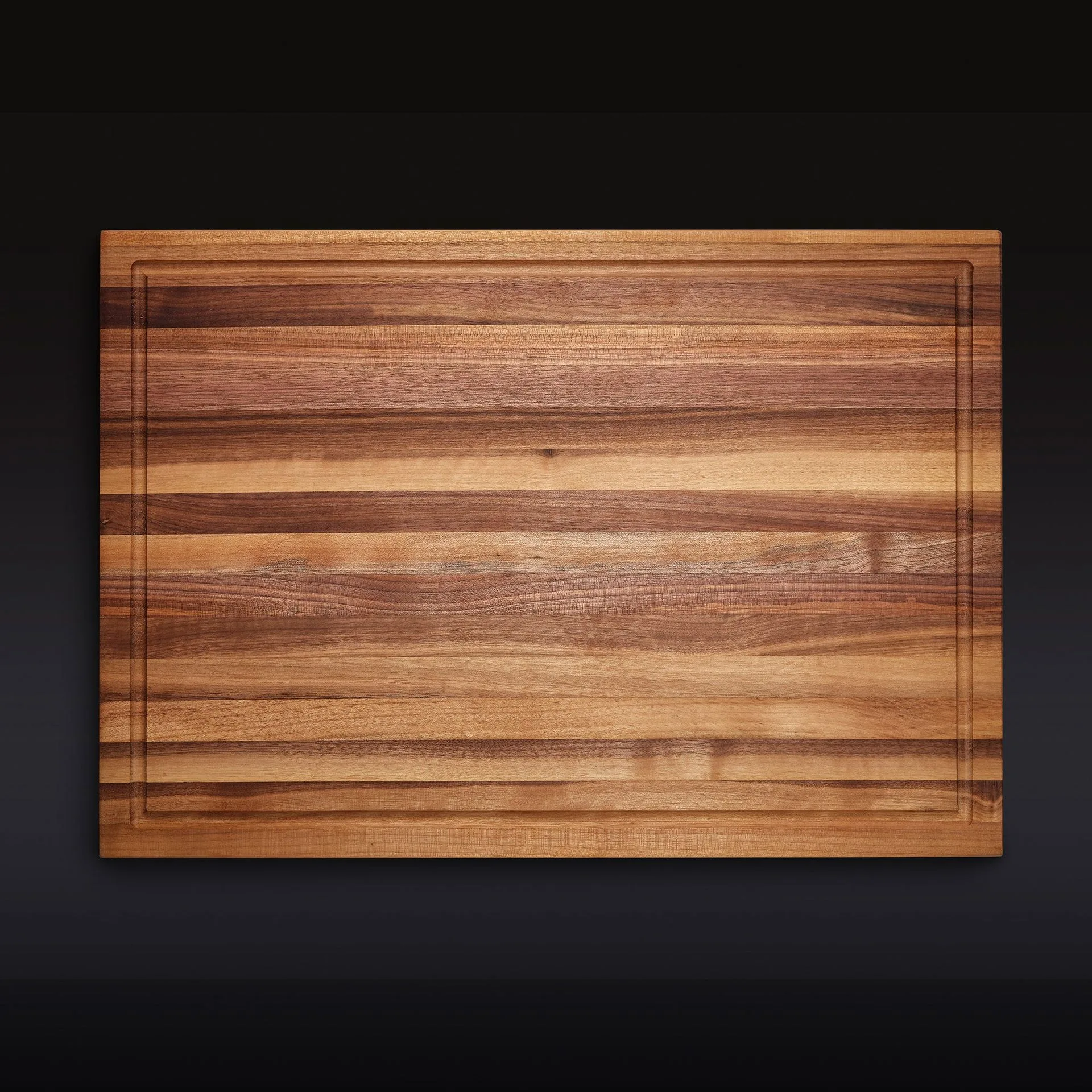
Use a walnut cutting board for your Damascus knives. Walnut is softer than the steel, so it cushions the edge instead of dulling it, and it resists deep scratches better than softer woods. Keep the board dry and oiled, and your Damascus blades will stay sharp longer.
Why wood beats plastic for Damascus edges
Plastic boards feel convenient, but they can be tough on a fine edge. A hard plastic surface offers little give, so the blade can micro-chip or roll over time. Walnut, by contrast, has enough softness to let the edge sink in slightly, protecting the steel. It also resists deep scratches better than softer woods like pine, which means fewer grooves to harbor bacteria and less wear on your knife.
The trade-off: walnut needs a little care
Walnut is not dishwasher-safe and shouldn't be soaked. If you leave it wet or skip oiling, it can dry out and crack. That's the price of a board that's gentler on your knives. Plastic can go in the dishwasher, but it won't protect your Damascus edge as well. For most home cooks, a few minutes of maintenance is a fair swap for longer edge life.
When a walnut board might not be the right pick
If you regularly chop raw meat and want the easiest possible sanitation, a plastic board dedicated to proteins is a practical choice. Walnut is best for vegetables, bread, and cooked foods. Also, if you prefer a board you can toss in the sink without a second thought, walnut will feel high-maintenance. But for Damascus knife owners who value edge retention, the care routine is simple and worth it.
Walnut board and Damascus knife FAQs
Will a walnut board dull my Damascus knife?
No—walnut is softer than steel, so it cushions the edge rather than wearing it down. It's gentler than plastic or bamboo, which can be harder on a fine edge.
How do I clean a walnut cutting board?
Wash it by hand with mild soap and warm water, then dry it immediately with a towel. Never soak it or put it in the dishwasher. Oil it monthly with food-grade mineral oil to keep it from drying and cracking. Set a monthly reminder to oil your board—it takes two minutes and prevents cracks.
Can I use a walnut board for raw meat?
You can, but it's safer to keep a separate plastic board for raw meat. If you do use walnut for meat, wash and sanitize it thoroughly right after, and don't let juices sit.
Is walnut better than plastic for Damascus knives?
For edge protection, yes. Walnut's slight give protects the blade, while plastic can be unforgiving. Plastic wins on dishwasher convenience, but walnut wins on knife longevity and looks.
Which side of the walnut board should I use?
Use the grooved side when carving juicy foods like roasts or tomatoes. Use the flat side for general chopping and slicing. Both sides are safe for your Damascus knife.
Product facts
-
Walnut Cutting Board, Medium: Double-sided walnut board with a juice groove on one side and a flat chopping surface on the other. The groove catches juices when carving, while the flat side gives you a full area for prep, so one board handles both tasks.
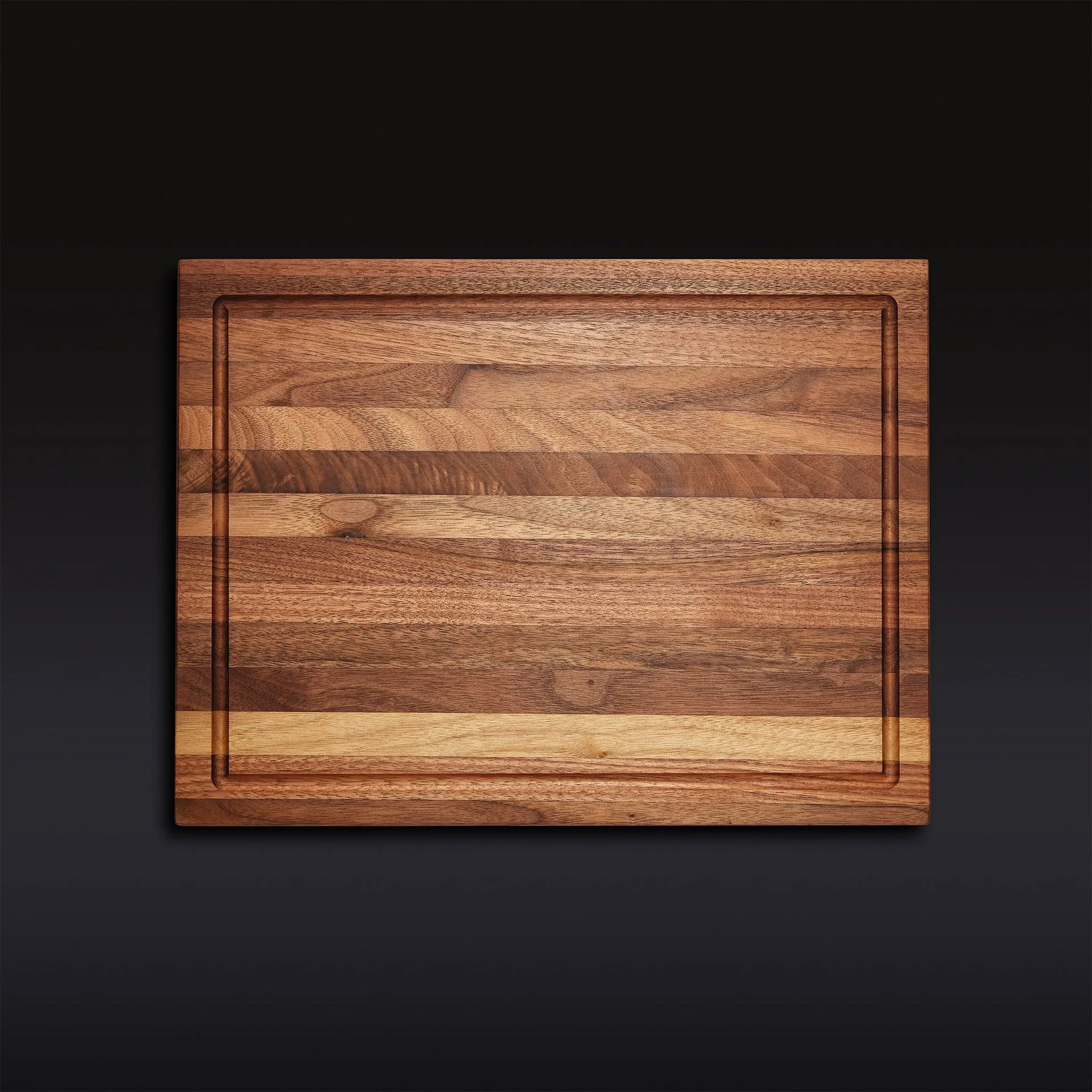
Walnut Cutting Board, Medium