Quick answer
Most warped Dwarvenite pieces can be straightened at home with gentle heat and a flat surface. Warm the piece until it is flexible, press it flat, and let it cool completely before you test the fit. If the piece has torn, cracked, or lost its shape near a thin detail, stop and treat it as a replacement rather than a repair.
A wall that will not sit flush, a floor tile that rocks on the table, or a passage piece that leaves a visible gap is frustrating when you are mid-build. Before you assume the piece is ruined, check where the bend actually is. Dwarvenite is a rubbery, flexible material, and that flexibility is exactly why many warped pieces can be brought back into line instead of thrown out.
This guide separates the symptom from the likely cause, walks through a safe corrective action, and tells you when to stop. It applies to warped terrain pieces in general, including the Dwarvenite sets and individual pieces sold by Dwarven Forge. The goal is a piece that sits flat and connects cleanly, not a piece that looks factory-new.
Symptom: the piece rocks, bows, or will not seat
The most common symptom is a piece that rocks when you press one corner. You may also see a visible bow along a long wall, a floor tile that lifts at one edge, or a passage that leaves a gap where two pieces should meet. These are fit problems, not surface problems, so paint and texture are not the issue.
Check the piece on a known flat surface such as a table or a glass cutting board. If the gap is small and only appears under pressure, the piece is probably usable as-is. If the gap is visible with no pressure, the warp is significant enough to address before you build.
- Test on a flat surface, not on carpet or a textured mat.
- Mark the high corner with a small piece of tape so you can track progress.
- Compare the piece against a straight edge to see whether the bow runs along the length or across the width.
Likely cause: heat, storage, or shipping pressure
Dwarvenite softens with heat and holds whatever shape it cools into. A piece left in a hot car, stored in a warm attic, or packed tightly against other pieces can take a set over time. Shipping pressure can do the same thing, especially on long walls and thin edges.
This is why the fix is heat and pressure rather than force. Bending a cool piece can tear the surface or stress the connection points. Warming the piece first makes the material willing to move, which is the whole point of the repair.
- Store pieces flat or on edge in a stable, room-temperature spot.
- Avoid leaving terrain in direct sun or in a vehicle on warm days.
- Do not stack heavy boxes on top of loose walls for long periods.
Corrective action: warm, press, and cool
Warm water is the safest heat source for most Dwarvenite pieces. Fill a bowl with warm tap water, not boiling water, and submerge the warped section for a minute or two. Test the piece with your hands. When it feels flexible, pull it out and press it flat against a hard surface.
Hold the piece in the corrected shape and let it cool. You can run cool water over it or simply wait. Once it is cool, test the fit again. If the warp returns, repeat the process with slightly warmer water and a longer hold. A hair dryer on low heat works too, but keep it moving so you do not overheat one spot.
- Never use boiling water or a heat gun on Dwarvenite.
- Press with flat hands or a flat weight, not pliers or clamps that can dent the surface.
- Let the piece cool completely before you judge the result.
When to stop and choose another option
Stop if the piece cracks, tears, or develops a white stress mark. Stop if a thin detail such as a window frame or a connection prong bends out of shape. Stop if the piece has been heated three times and still will not hold. At that point you are risking more damage than you are fixing.
For a piece that will not straighten, you have practical alternatives. Use it at the edge of a build where the warp is hidden, place it behind another wall, or relegate it to scatter duty. If it is a small individual piece, replacing it is often cheaper and faster than fighting the warp. The Dwarven Forge catalog includes individual pieces at low prices, which makes this a reasonable path for a single bad wall.
- Stop at the first sign of cracking or tearing.
- Do not keep heating a piece that has already failed twice.
- Consider replacing a badly warped individual piece instead of repairing it.
Warp diagnosis: symptom, cause, action, stop point
- Symptom: rocks or bows on a flat surface: The piece does not sit flush and shows a visible gap without pressure. This is a fit problem, not a paint problem. Move to the heat method.
- Likely cause: heat and storage pressure: Dwarvenite softens when warm and holds the shape it cools into, so a hot car or a tight stack can set a bend. Fix the storage first so the repair does not undo itself.
- Corrective action: warm water, flat press, full cool: Soak in warm tap water until flexible, press flat, and let it cool completely before testing the fit. Repeat once if needed. Do not use boiling water or a heat gun.
- Stop point: cracks, tears, or three failed attempts: Damage to thin details or repeated failure means the piece will not hold a correction. Hide it at the edge of a build or replace it, especially if it is a low-cost individual piece.
Catalog pieces worth knowing about
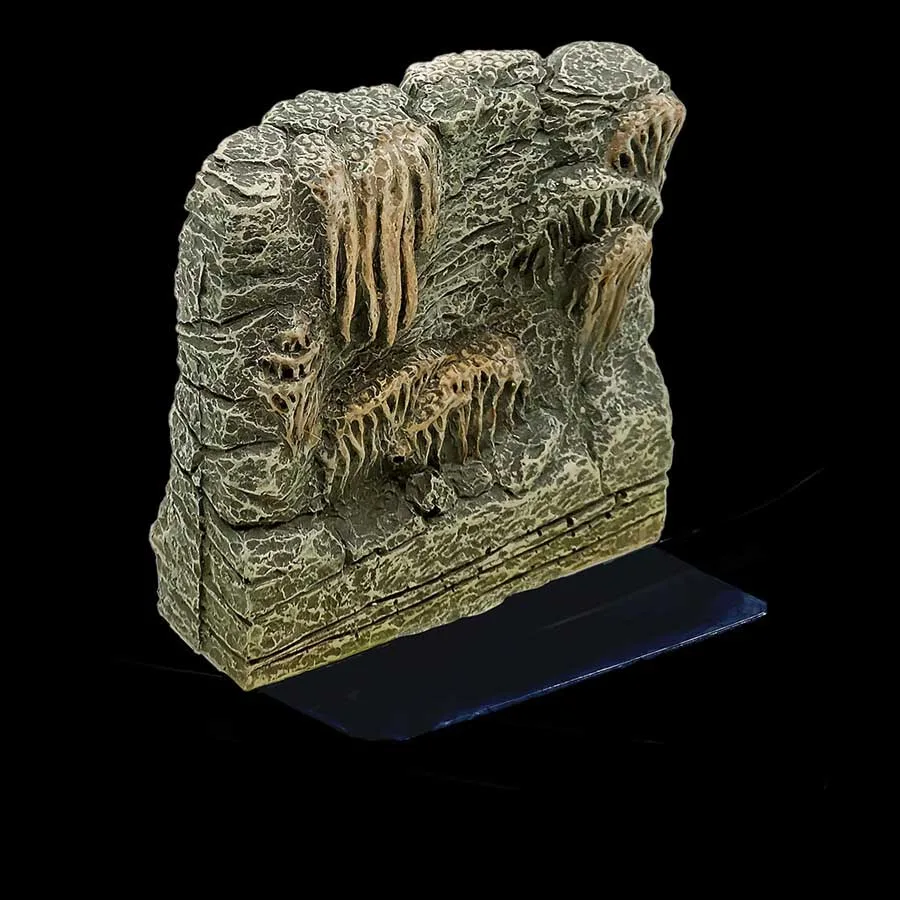
- Outside Standing Cave Wall (Unpainted): Outside Standing Cave Wall (Unpainted) is an individual piece from the Caverns Deep (KS6) line, made of Dwarvenite and offered unpainted. A single wall like this is a good candidate for the warm-water method, and if it will not straighten, replacing one individual piece is simpler than replacing a whole set.
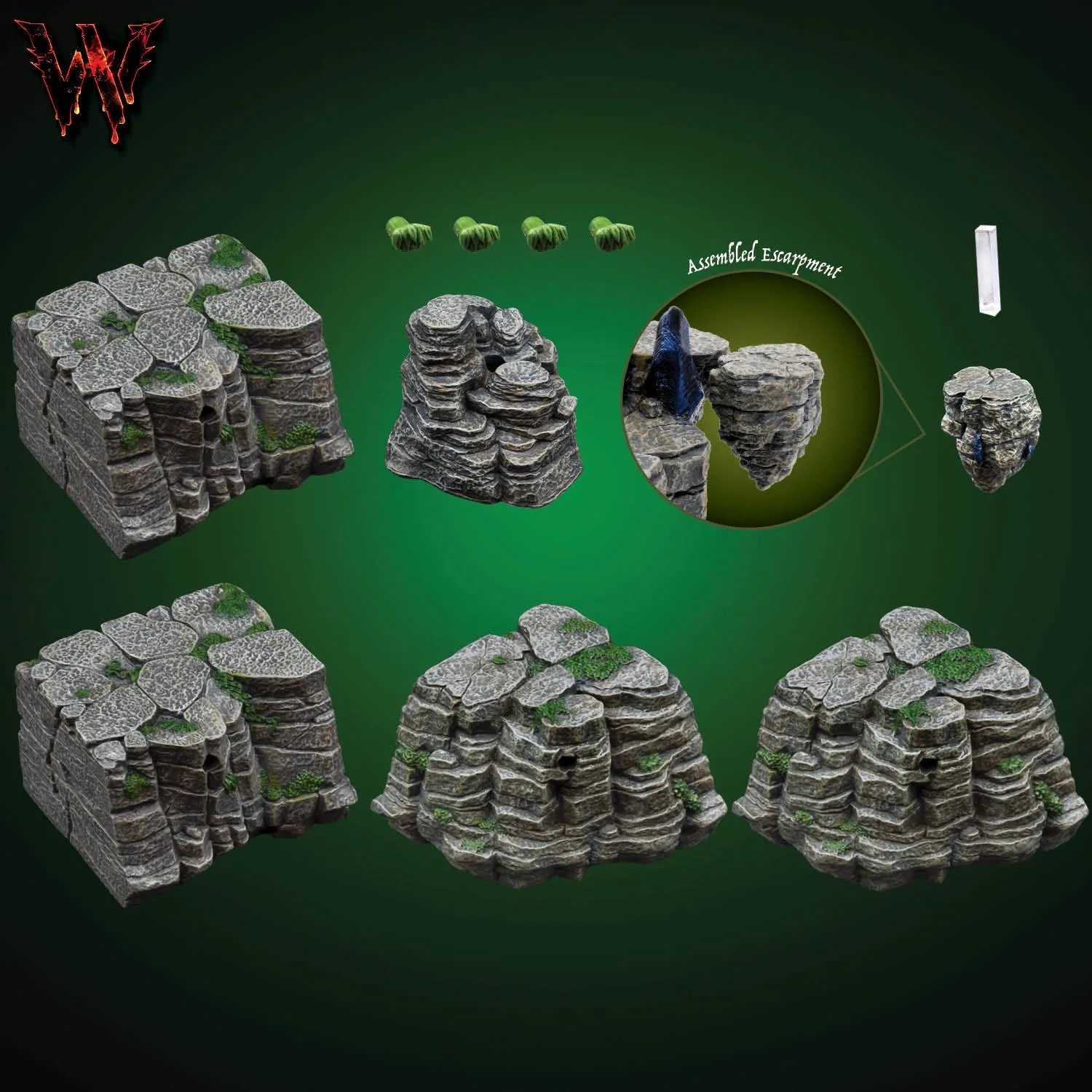
- Escarpments - Basic Builder (Unpainted): This escarpment set contains small straight and convex escarpments that can cap off a run of mountains or stand alone as a small mound. Long, thin escarpment pieces are among the most likely to take a set in storage, so check them flat before a build and warm them gently if they bow.
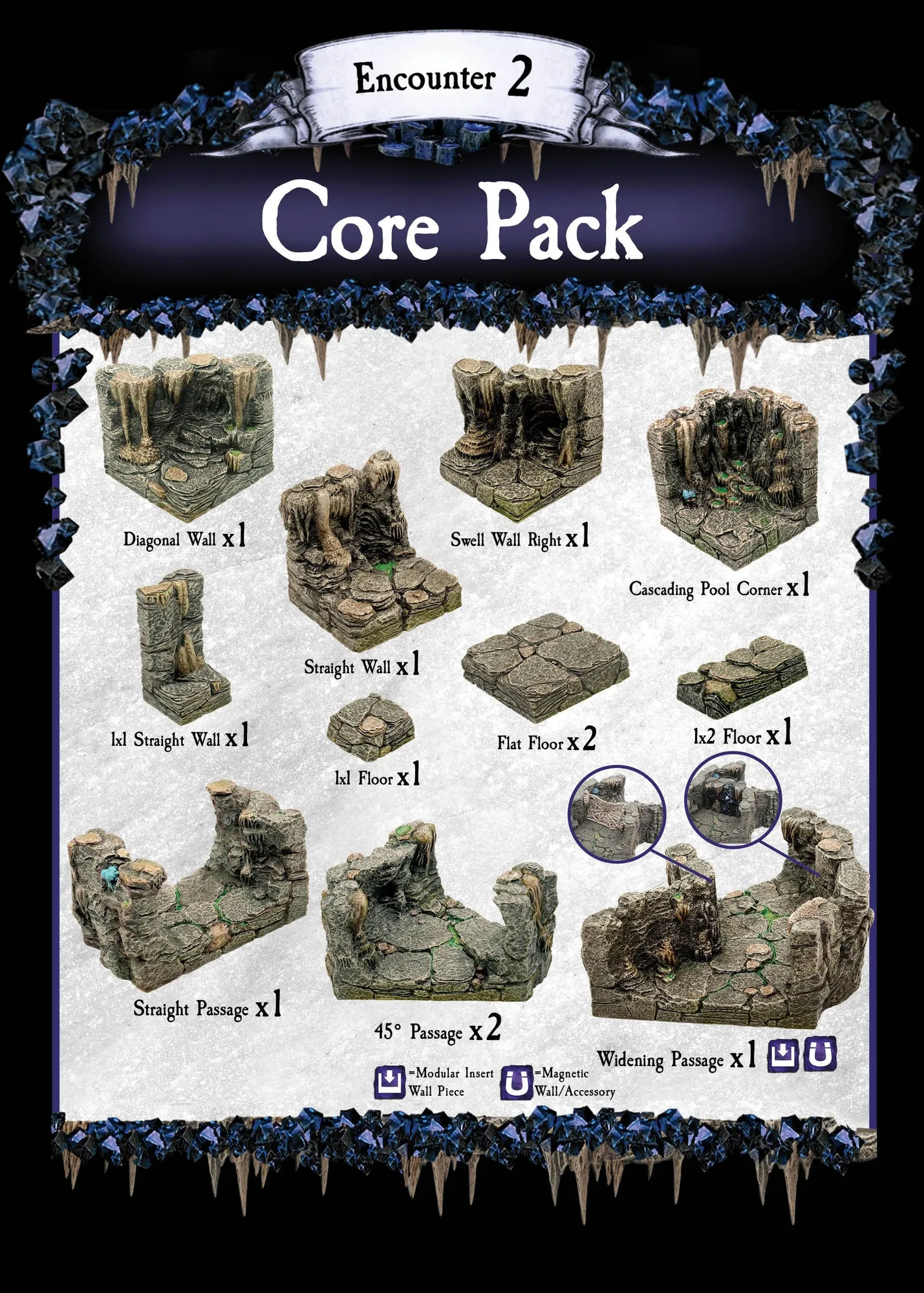
- Prison Passage Core Pack (Unpainted): The core building elements of Prison Passage, a small selection to build passages that can host its own dangers. Passage pieces need to seat cleanly to avoid gaps, so a warped core piece is worth straightening before you commit to a layout.
Warped Dwarvenite is usually a storage problem, not a dead piece. Warm it, press it flat, let it cool, and test the fit on a hard surface. If it cracks or keeps springing back, stop and use it where the bend will not show, or replace it with an individual piece. Either way, you keep the build moving.