Quick answer
Wash organic baby clothes in cold water on a gentle cycle with a fragrance-free, dye-free detergent. Skip fabric softener and dryer sheets. Tumble dry low or line dry, and always leave a little room for shrinkage because organic cotton is cut slightly long to account for it.
Why organic cotton needs a gentler wash
Organic cotton is grown without synthetic pesticides and often processed with fewer harsh chemicals, so the fibers can be softer and slightly more delicate than conventional cotton. Hot water and strong detergents strip natural oils and break down fibers faster, which leads to pilling, fading, and a stiff feel. Cold water and a mild formula protect the fabric and help it keep its shape through repeated washes. This matters most for items that touch a baby's skin all day, like bodysuits and kimono styles.
Choosing the right detergent (and what to avoid)
The best detergent for baby clothes is one that is free of fragrances, dyes, and optical brighteners. Those additives can leave residue that irritates sensitive skin and dulls organic cotton over time. Plant-based or specially formulated baby detergents work well, but you do not need a separate detergent for every load. If your baby has eczema or very reactive skin, a fragrance-free formula is the safest starting point. Avoid bleach, fabric softener, and dryer sheets. Softener coats fibers and reduces absorbency, while dryer sheets can leave a waxy film that makes cotton feel less breathable.
Step-by-step wash and dry routine
- 1. Pre-treat stains and close all snaps: Before washing, dab stains with a small amount of fragrance-free detergent and let it sit for 10 minutes. Close snaps and turn garments inside out to protect the outer fabric and hardware. Common mistake: scrubbing stains aggressively, which can pill organic cotton. Checkpoint: no loose snaps or exposed velcro that could snag other items.
- 2. Wash in cold water on a gentle cycle: Use the gentle or delicate cycle with cold water. Add the recommended amount of fragrance-free, dye-free detergent. Do not overload the machine; organic cotton needs room to move so dirt rinses away without abrasion. Common mistake: using hot water, which can shrink cotton and set stains. Checkpoint: water temperature is cold, and the drum is no more than three-quarters full.
- 3. Skip fabric softener and dryer sheets: Fabric softener and dryer sheets leave a coating that makes organic cotton feel stiff and reduces breathability. If you want extra softness, add a half-cup of white vinegar to the rinse cycle instead. Common mistake: assuming softener is needed for softness; it is not. Checkpoint: no softener or sheets in the load.
- 4. Tumble dry low or line dry: Shake garments out and tumble dry on low heat until just damp, then hang or lay flat to finish. Or line dry completely in the shade to prevent fading. Common mistake: overdrying on high heat, which causes shrinkage and wrinkles. Remember that organic cotton is cut a little long to account for some shrinkage, so slight shrinking is normal. Checkpoint: garments are slightly damp when removed from the dryer.
- 5. Store clean and dry: Make sure items are completely dry before folding and storing. Damp cotton can grow mildew and smell musty. Store in a cool, dry place away from direct sunlight. Common mistake: putting away slightly damp clothes, which undoes the fresh wash. Checkpoint: fabric feels dry to the touch, including snaps and seams.
Product care notes
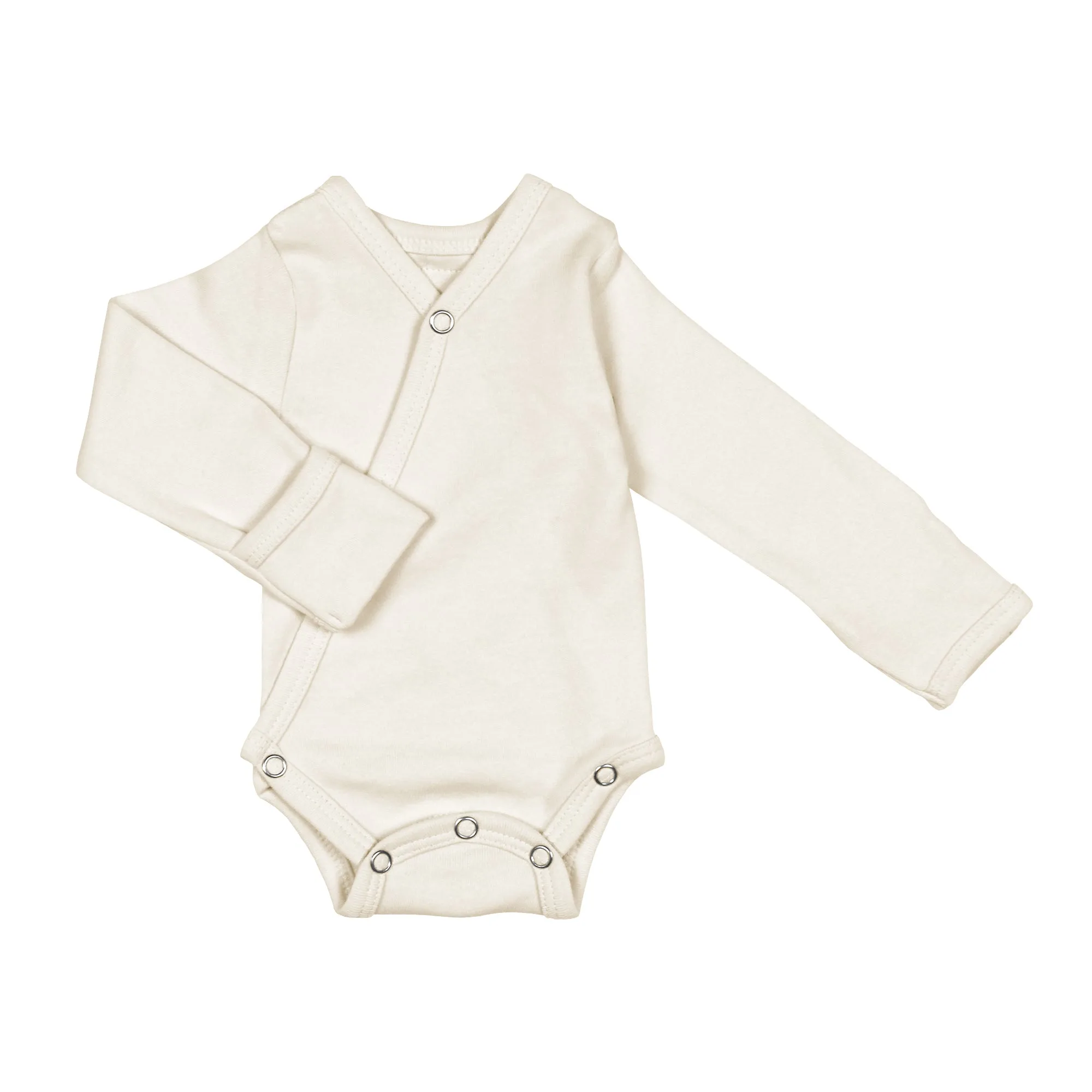
- Buttercream | Organic Kimono Bodysuit: GOTS certified 100% organic cotton kimono bodysuit with a seamless torso design and fold-over mitt-sleeves. The seamless torso means fewer seams to rub against delicate skin, and the mitt-sleeves protect against scratching. Wash it inside out on gentle to keep the wrap-style front and snaps working smoothly.
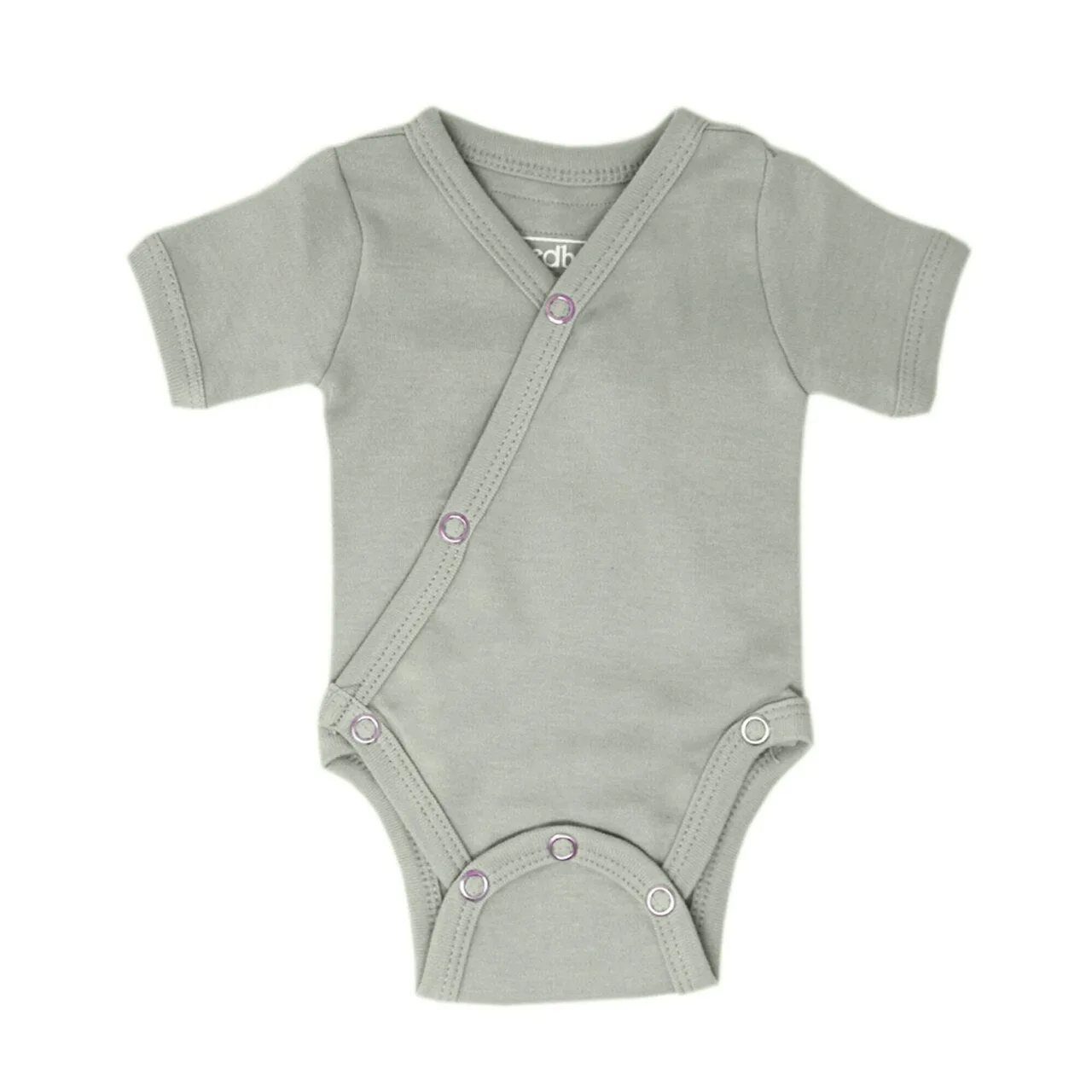
- Seafoam | Organic Short-Sleeve Kimono Bodysuit: GOTS certified 100% organic cotton short-sleeve kimono bodysuit with chrome/lead/nickel-free snaps and tagless neckline. Tagless construction and metal-free snaps reduce irritation, but the snaps still need care. Fasten them before washing to prevent snagging, and check that no detergent residue builds up around the closures.