Quick Answer
For most people, the best water bottle carrier is a sling or crossbody style with an adjustable strap, a secure closure, and a pocket sized to your bottle's diameter. If you already carry a sling bag, choose one with an external bottle sleeve so you do not need a second bag. If you need to carry a larger bottle plus essentials, a small backpack with a side pocket works better.
A water bottle bag solves a simple problem: you want to stay hydrated without holding a bottle or digging through a packed backpack. The right carrier keeps your bottle upright, accessible, and secure whether you are walking, commuting, or navigating an airport.
This guide explains the practical differences between sling packs, crossbody carriers, and backpack sleeves so you can choose based on bottle size, carry duration, and what else you need to bring. We will also cover fit checks and trade-offs you should consider before buying.
Measure Your Bottle Before You Shop
Bottle dimensions matter more than brand names. Measure the height and diameter of the bottle you plan to carry most often. A standard disposable water bottle is roughly 2.5 inches wide, while many reusable insulated bottles are 3 to 4 inches wide. If your carrier has a fixed sleeve, a bottle that is too wide will not fit, and one that is too narrow will slide around.
Also check the weight of a full bottle. A 32-ounce insulated bottle can weigh over two pounds when filled. A lightweight sling with a thin strap may dig into your shoulder at that weight, while a wider strap or a crossbody design distributes the load better. If you plan to carry a large bottle all day, look for a carrier with a padded strap or a backpack-style option.
- Measure bottle diameter at its widest point, including any handle or lid.
- Test the carrier with a full bottle, not an empty one.
- Check whether the sleeve is open-top or has a drawstring or flap closure.
Choose a Carry Style That Matches Your Day
Sling bags and crossbody carriers keep the bottle in front or at your side, so you can grab it without stopping. They work well for short walks, sightseeing, and commuting because they stay close to your body. A bottle sling bag often has a single strap that crosses your chest, which keeps the weight centered and leaves both hands free.
Backpacks with side pockets are better for longer outings or when you also need to carry a jacket, snacks, or a laptop. The trade-off is access: you usually have to swing the pack off one shoulder to reach the bottle. If you drink frequently, a sling or crossbody carrier is more convenient. If you carry more gear, a backpack with a dedicated bottle pocket is more practical.
- Sling or crossbody: best for quick access and light loads.
- Backpack with side pocket: best for all-day carry and extra gear.
- Waist pack with bottle loop: best for running or hiking when you want weight on your hips.
Check Security and Stability Features
A bottle that shifts or falls out is worse than carrying it by hand. Look for a carrier with a drawstring, elastic loop, or flap that holds the bottle in place. If you carry a wide-mouth bottle, a simple elastic loop may not be enough; a drawstring or zippered pocket is more secure. For travel, consider anti-theft features like locking zippers or slash-resistant straps if you will be in crowded areas.
Stability also depends on how the carrier sits on your body. A crossbody strap with a wide adjustment range lets you position the bag at your hip or chest. A sling pack that converts to a front carry gives you quick access without removing the bag. Test the strap length with a full bottle to make sure the bag does not bounce when you walk.
- Choose a closure that matches your bottle shape: drawstring for tapered bottles, elastic for standard sizes, zipper for full security.
- Look for a strap that adjusts long enough to fit over a coat in winter.
- If you plan to wear the carrier on your front, check that the strap does not twist.
Decide What Else You Need to Carry
A water bottle bag can be a standalone carrier or part of a larger bag. If you only need a bottle, keys, and a phone, a small crossbody or sling with a bottle sleeve is enough. If you need a wallet, sunglasses, and a snack, look for a carrier with at least one zippered pocket and a small interior slip pocket. Some sling packs include RFID-blocking pockets for cards, which is useful for travel.
If you already carry a backpack or briefcase, you may not need a separate bottle bag. Instead, choose a bag that has an external bottle pocket. This keeps the bottle separate from your laptop and documents, and it prevents condensation from dampening your gear. The trade-off is that you cannot access the bottle as quickly as you can with a dedicated sling.
- List everything you carry on a typical walk: phone, keys, card, small snack.
- If you carry a tablet or laptop, choose a bag with a separate tech compartment.
- For travel, prioritize a bag that can be worn on your front for security.
Decision Rules for Choosing a Water Bottle Bag
- If you carry a bottle wider than 3.5 inches: Choose a carrier with a drawstring or open-top sleeve rather than a fixed elastic loop. Measure the sleeve opening before buying. A bottle that does not fit securely will bounce or fall out.
- If you walk for more than an hour: Prioritize a padded strap or a crossbody design that distributes weight across your torso. A thin sling strap can dig in when the bottle is full. Comfort matters more than a minimal design for long walks.
- If you need to carry a laptop or tablet: Choose a backpack or briefcase with an external bottle pocket instead of a standalone sling. Keep the bottle away from electronics. A separate bottle bag adds a second item to manage.
- If you travel in crowded areas: Look for anti-theft features like locking zippers, slash-resistant straps, or RFID-blocking pockets. Wear the bag on your front. Security features add peace of mind but may add weight.
Product Facts That Matter for Bottle Carry
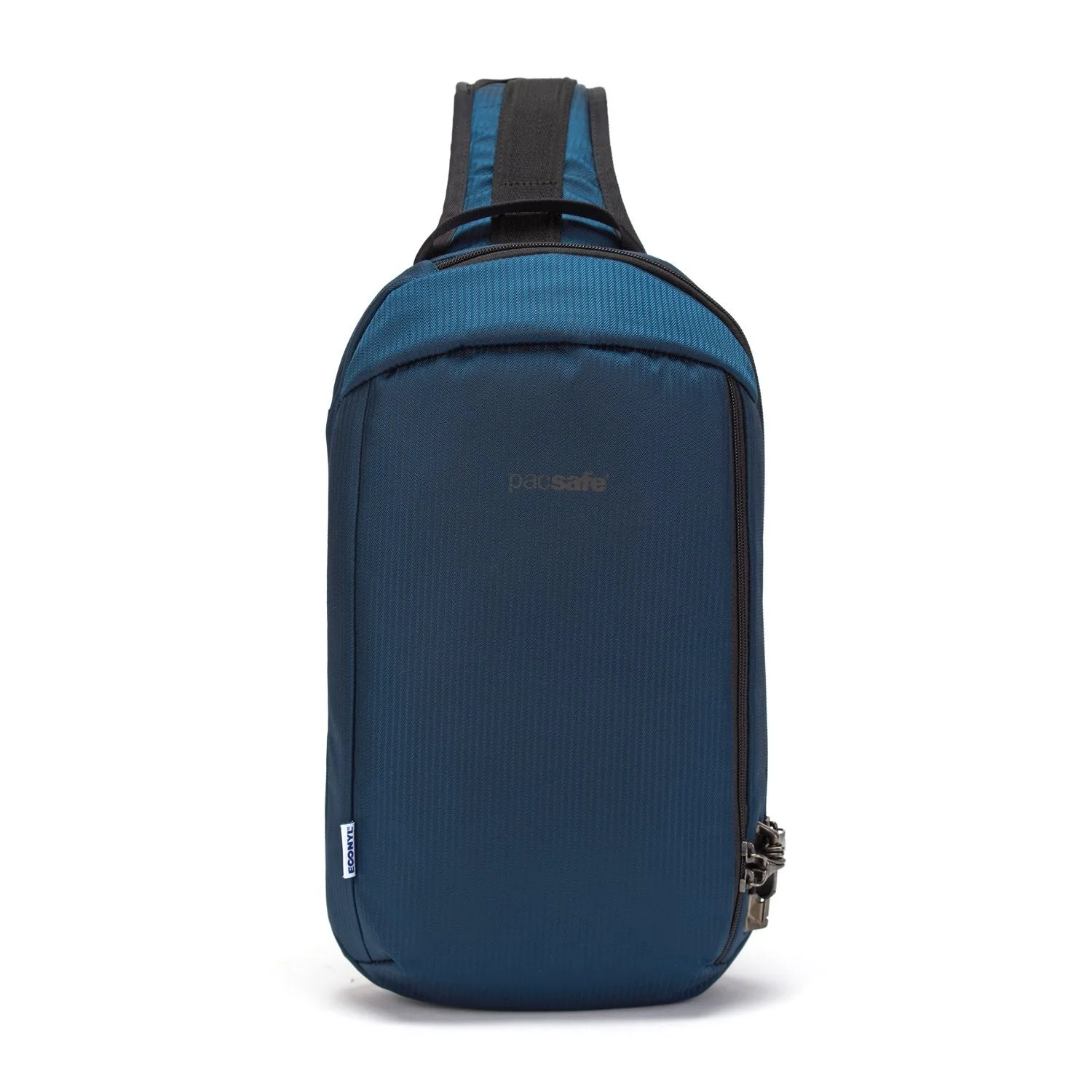
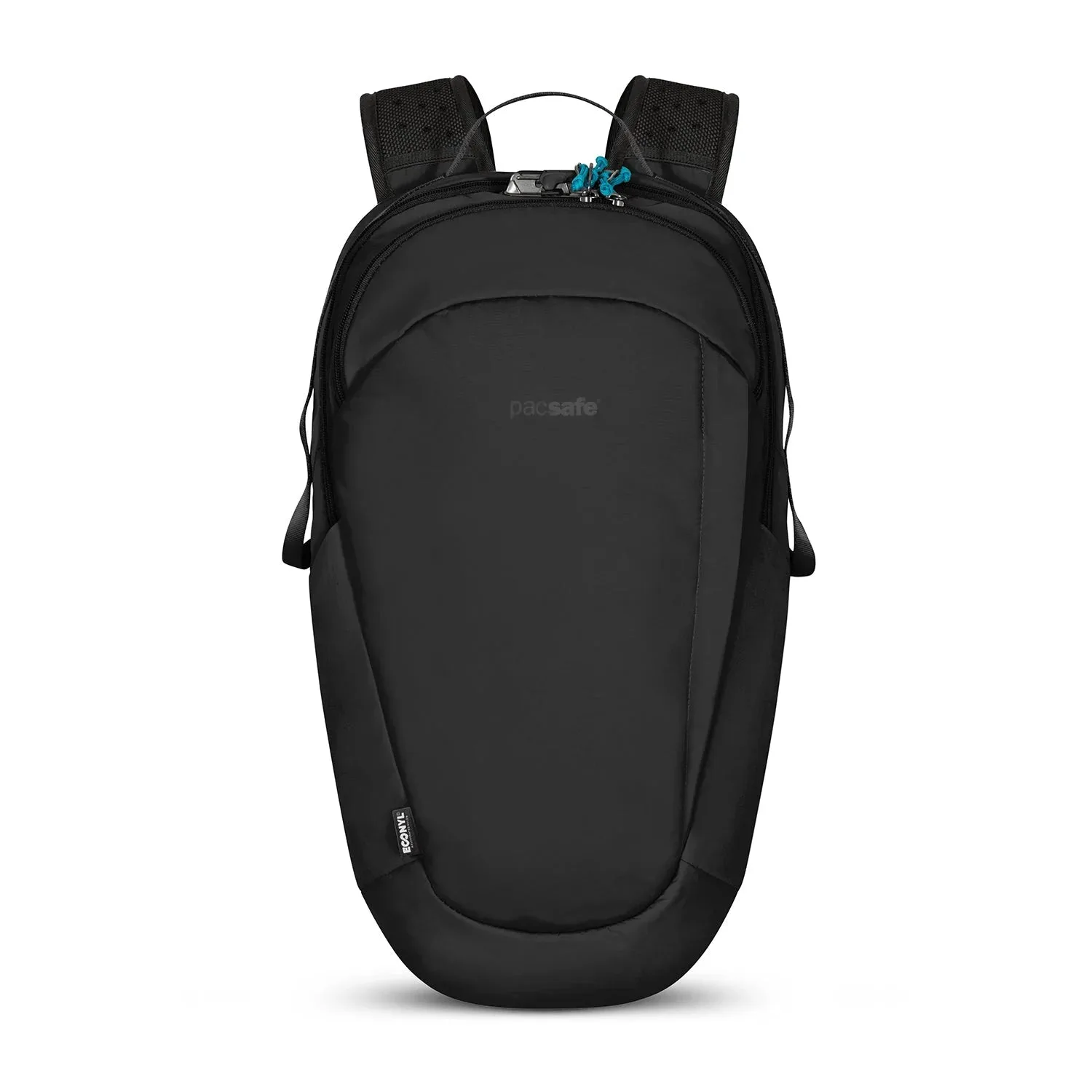
- Vibe 325 Anti-Theft Sling Pack: It can be worn on your back or across your front to access things quickly, has innovative anti-theft technology, and is made from either recycled PET or ECONYL regenerated nylon fiber depending on the variant style chosen. Front carry gives you fast access to a bottle without removing the pack, and the anti-theft features add confidence in crowded areas. The material choice lets you prioritize sustainability if that matters to you.
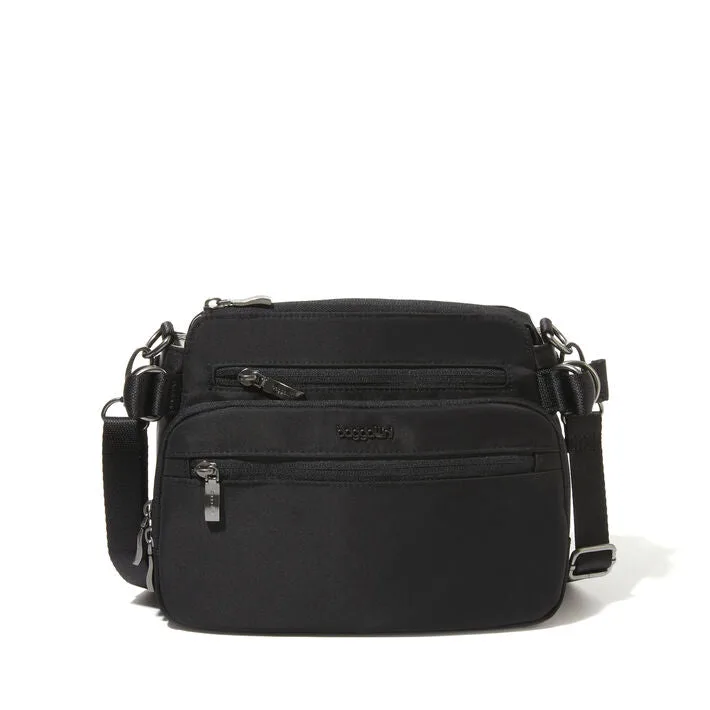
- Classic Convertible Crossbody and Waist Pack: It is designed to carry more and keep more items organized than everyday bags, made from lightweight, durable polyester that is water and dirt resistant. The convertible design lets you switch between crossbody and waist carry, which is useful if you want the bottle at your hip for walking or at your side for commuting. Water-resistant fabric handles splashes and light rain.
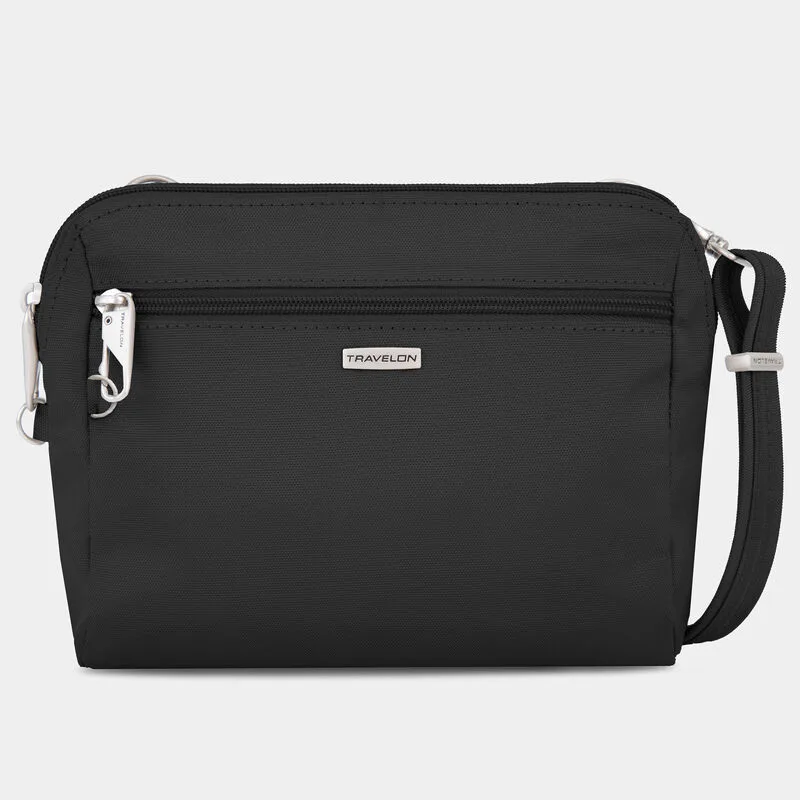
- Marais Crossbody: It has a built-in RFID front wallet with 6 credit card slots and a scratch-resistant phone pocket, plus a 52-inch detachable, adjustable crossbody strap. If you want one bag for a bottle, cards, and a phone, this crossbody keeps valuables separate and accessible. The long strap adjusts for different body types and layering.
Who This Guide Is For
Best for
- Walkers and commuters who want hands-free hydration without a backpack
- Travelers who need a secure, accessible bottle carrier for day trips
- Anyone who carries a reusable bottle and a few small essentials
Not for
- Hikers carrying more than 2 liters of water who need a hydration reservoir
- Cyclists who need a frame-mounted bottle cage
- People who carry a large laptop and prefer a single backpack for everything
The best water bottle carrier is the one that fits your bottle, your body, and your daily route. Measure your bottle, decide how much else you need to carry, and choose a carry style that keeps the bottle secure and accessible. A sling or crossbody with a dedicated sleeve is the simplest solution for most people, while a backpack with a side pocket works better when you have more gear.