Quick answer
For most home sewists, waxed canvas is the easier strap material: it's lighter, more flexible, and sews on a standard machine without special needles. Choose leather handles when you want maximum abrasion resistance, a structured feel, and a dressier look, and you're ready to punch holes and hand-stitch or use a heavy-duty machine.
How the two materials behave on a bag
Waxed canvas straps soften with use and conform to your shoulder, which makes them comfortable for crossbody and bucket bags. They're also forgiving to sew: you can fold and topstitch them, and they won't crack at fold lines. The trade-off is that waxed canvas can crease and show rub marks over time, and it needs occasional re-waxing to stay water-resistant. Leather straps hold their shape, resist abrasion, and develop a patina, but they're stiffer, heavier, and less forgiving if you need to adjust length after cutting. Leather also requires hole punching, rivets or hand-stitching, and it can stretch slightly under heavy loads.
Sewing and tools: what each material demands
Waxed canvas sews on a standard home machine with a denim or heavy-duty needle; you may need to lengthen your stitch and avoid backstitching bulk. Leather typically needs a leather needle, a walking foot or hand-stitching awl, and a hole punch for hardware. If you don't own those tools, a waxed canvas strap is the lower-friction choice. If you're building a kit like the Naito or Oberlin, check whether the pattern calls for folded fabric straps or pre-cut leather handles, because that determines which skills you'll use.
Durability and care over time
Leather wins on raw abrasion resistance: it resists fraying and handles daily friction from car seats and door frames better than canvas. Waxed canvas can fray at cut edges if not folded or bound, and its wax coating wears away at high-friction points, so it needs re-waxing every year or two depending on use. Leather needs conditioning to prevent drying and cracking, and it can be stained by oils or water if not protected. Neither is maintenance-free; the question is which maintenance you'll actually do.
Mixing materials: the best of both
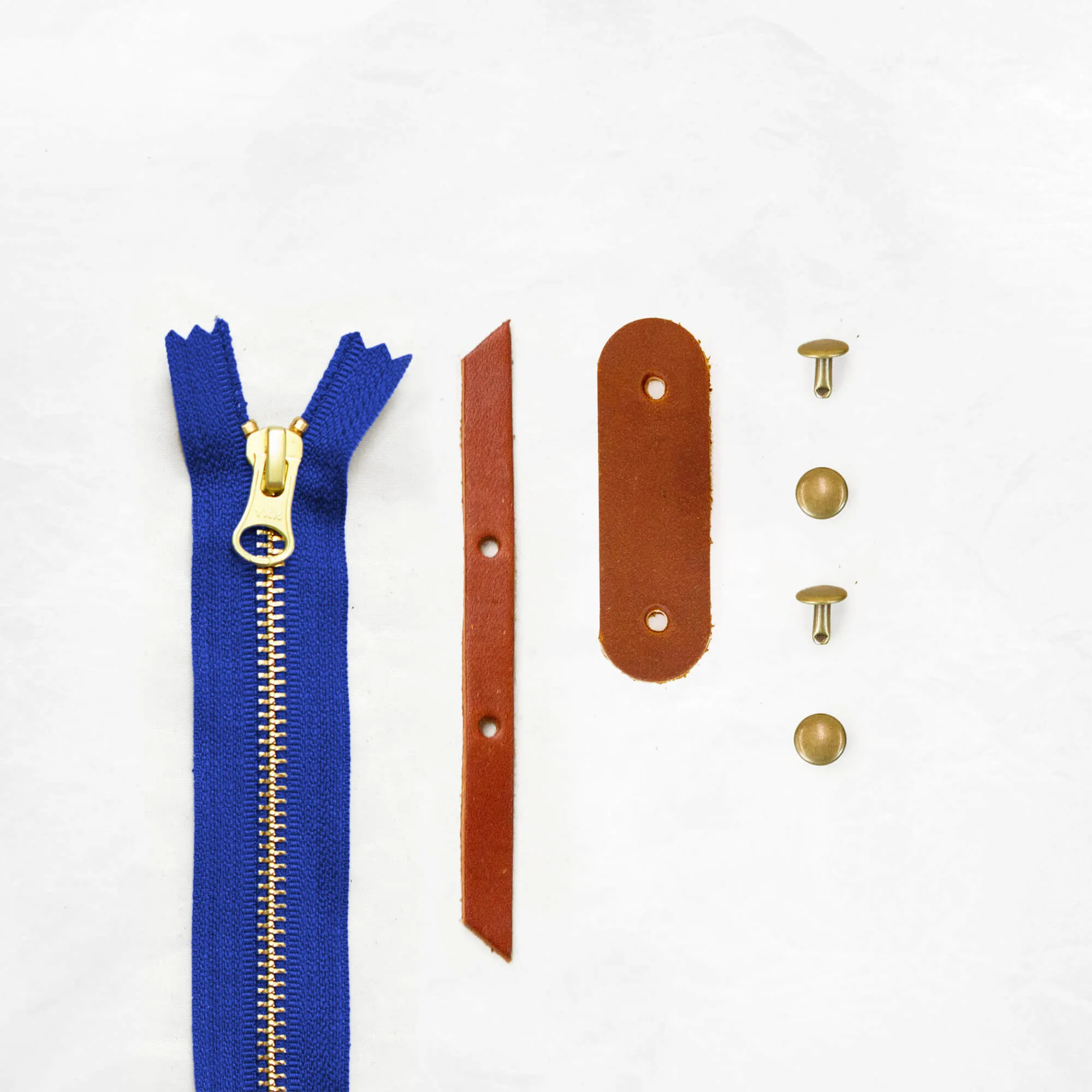
Many bag makers use waxed canvas for the strap body and leather for the tabs, ends, and hardware anchors. This gives you the comfort and sewability of canvas with the strength and polish of leather where the strap meets the bag. The Portsmith expansion kit is a good example: it supplies leather zipper pulls, end tabs, and rivets to reinforce a waxed canvas tote, so you get leather's durability at the wear points without sewing a full leather strap.
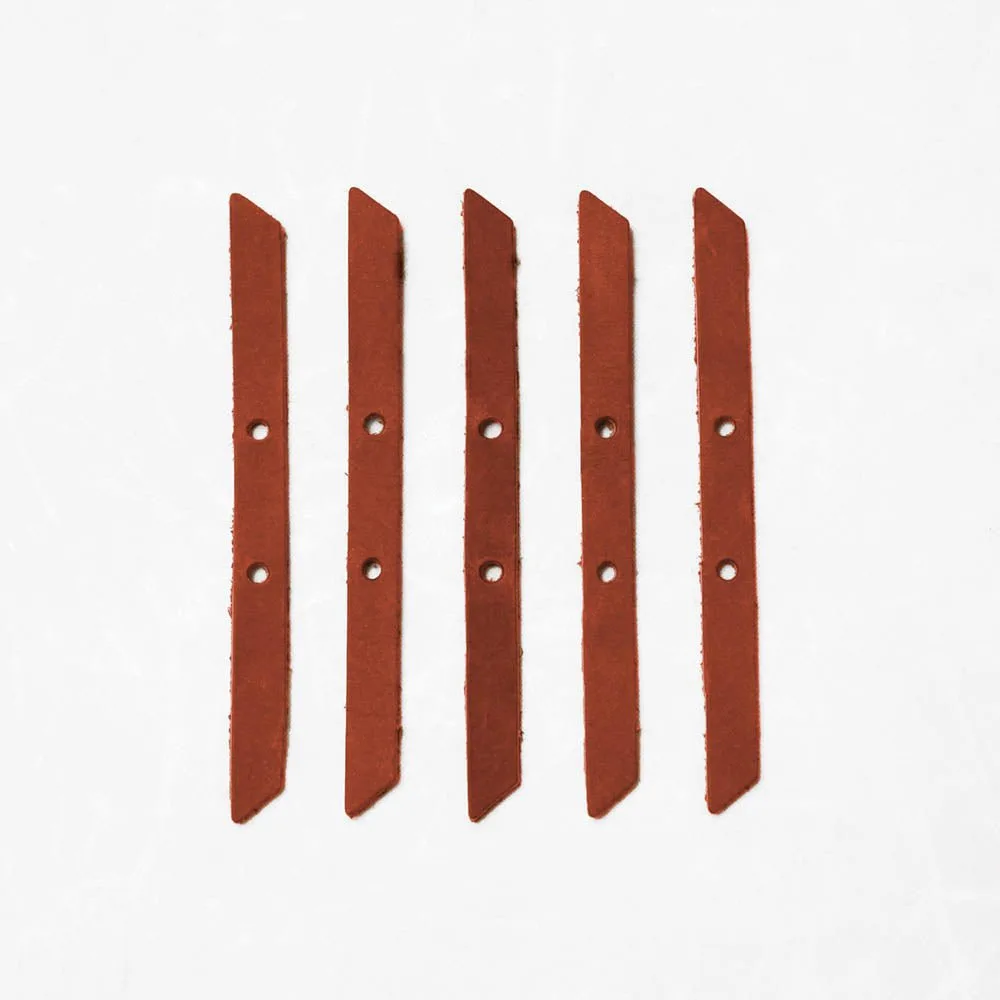
leather zipper pulls
Trade-offs at a glance
- Comfort and packability: Waxed canvas straps are lighter and soften to your shoulder; leather stays stiffer and adds weight. Choose waxed canvas for crossbody or travel bags you'll carry for hours.
- Abrasion and structure: Leather resists friction and holds a crisp shape; waxed canvas can fray at edges and crease with use. Choose leather for totes that rub against car seats, doors, or heavy loads.
- Tools and skill: Waxed canvas sews on a standard machine; leather needs a leather needle, punch, and rivets or hand-stitching. If you don't own leather tools, start with a waxed canvas strap or a kit that supplies pre-cut leather parts.
Kits that show both materials in action
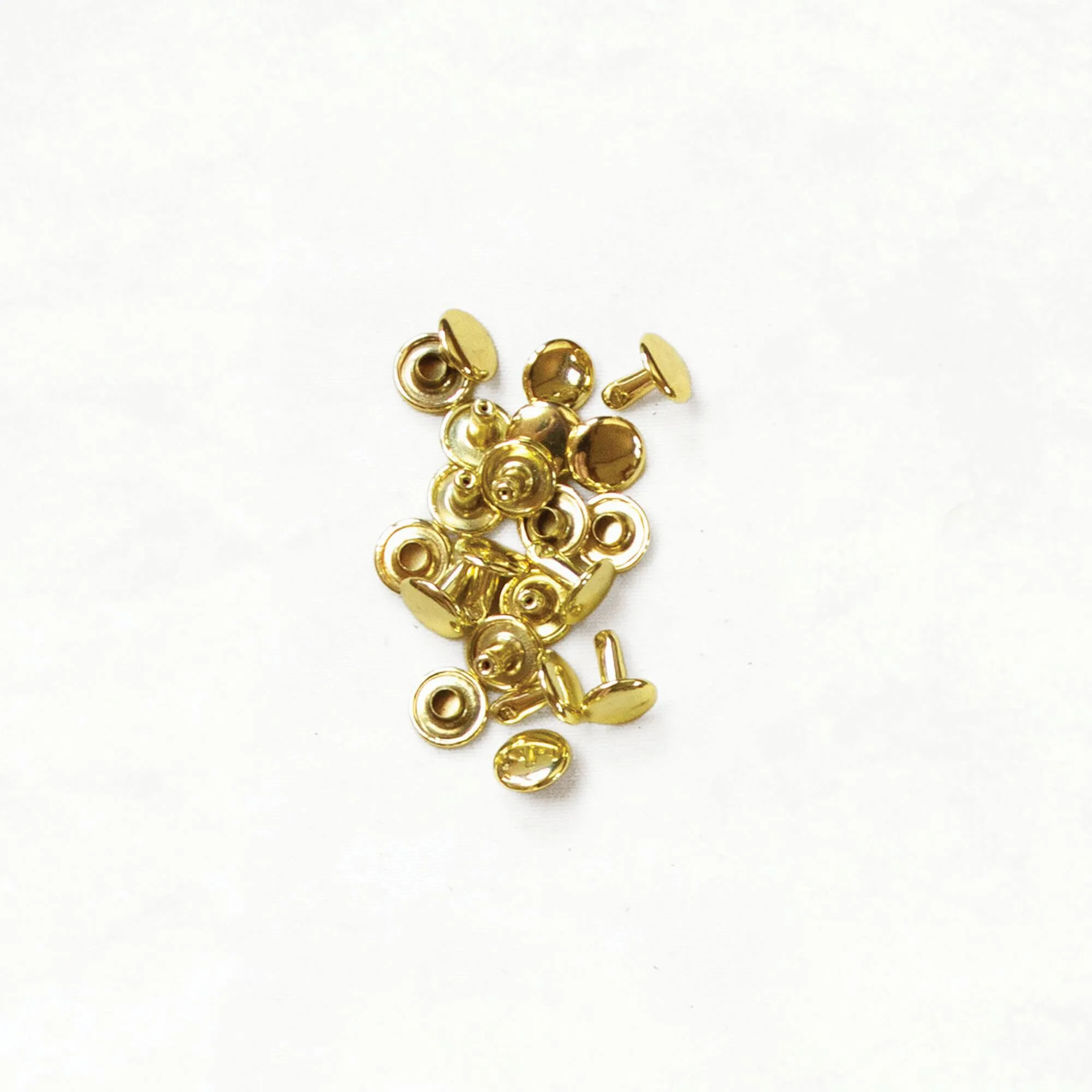
- Portsmith - Chestnut Zipper Closure Kit: Includes a 14-inch brass zipper, leather zipper pull, leather end tab, and two double-cap rivets to add a zipper closure to a Portsmith Tote. Shows how small leather parts reinforce a waxed canvas bag at high-wear points without requiring a full leather strap.
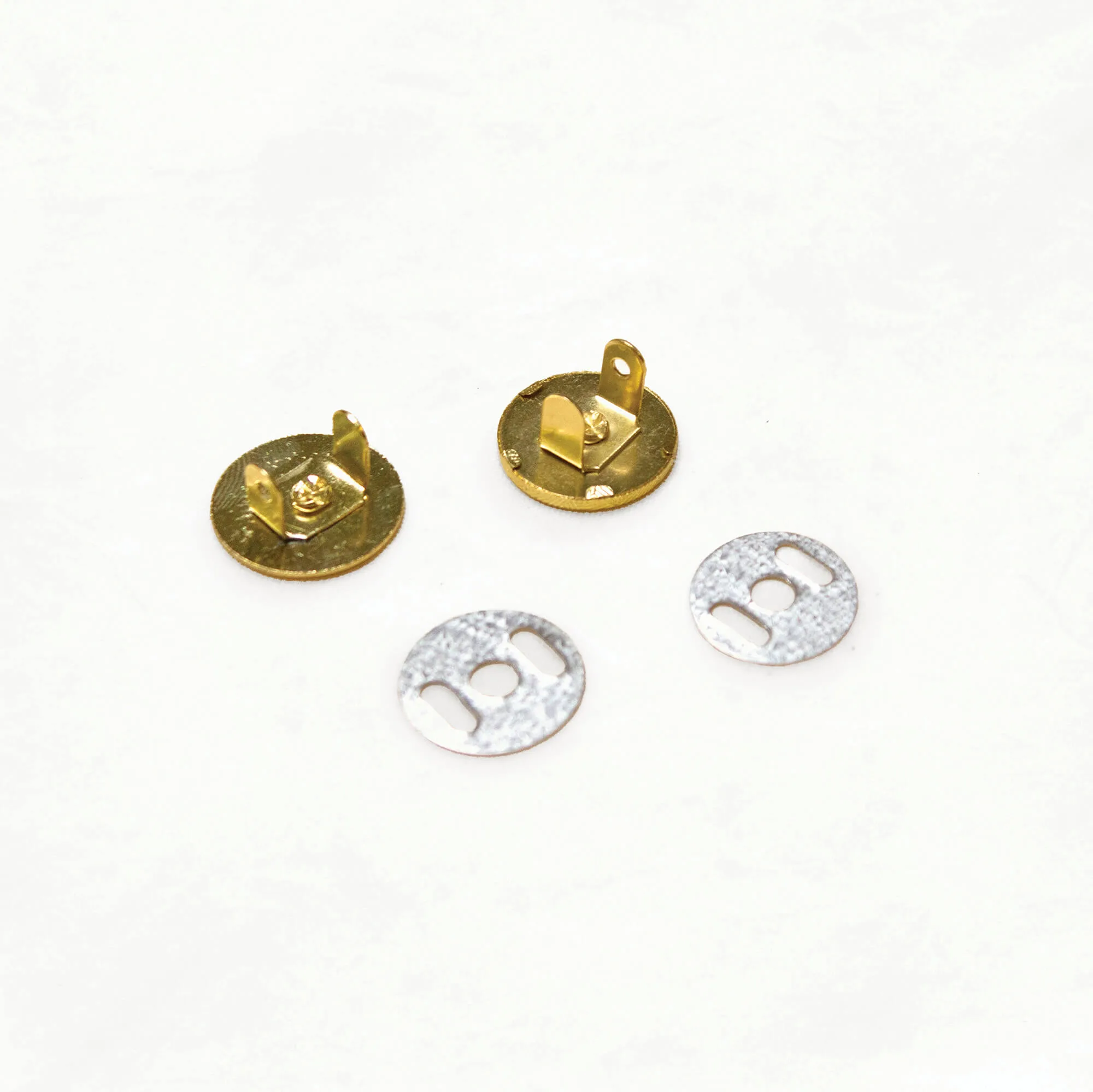
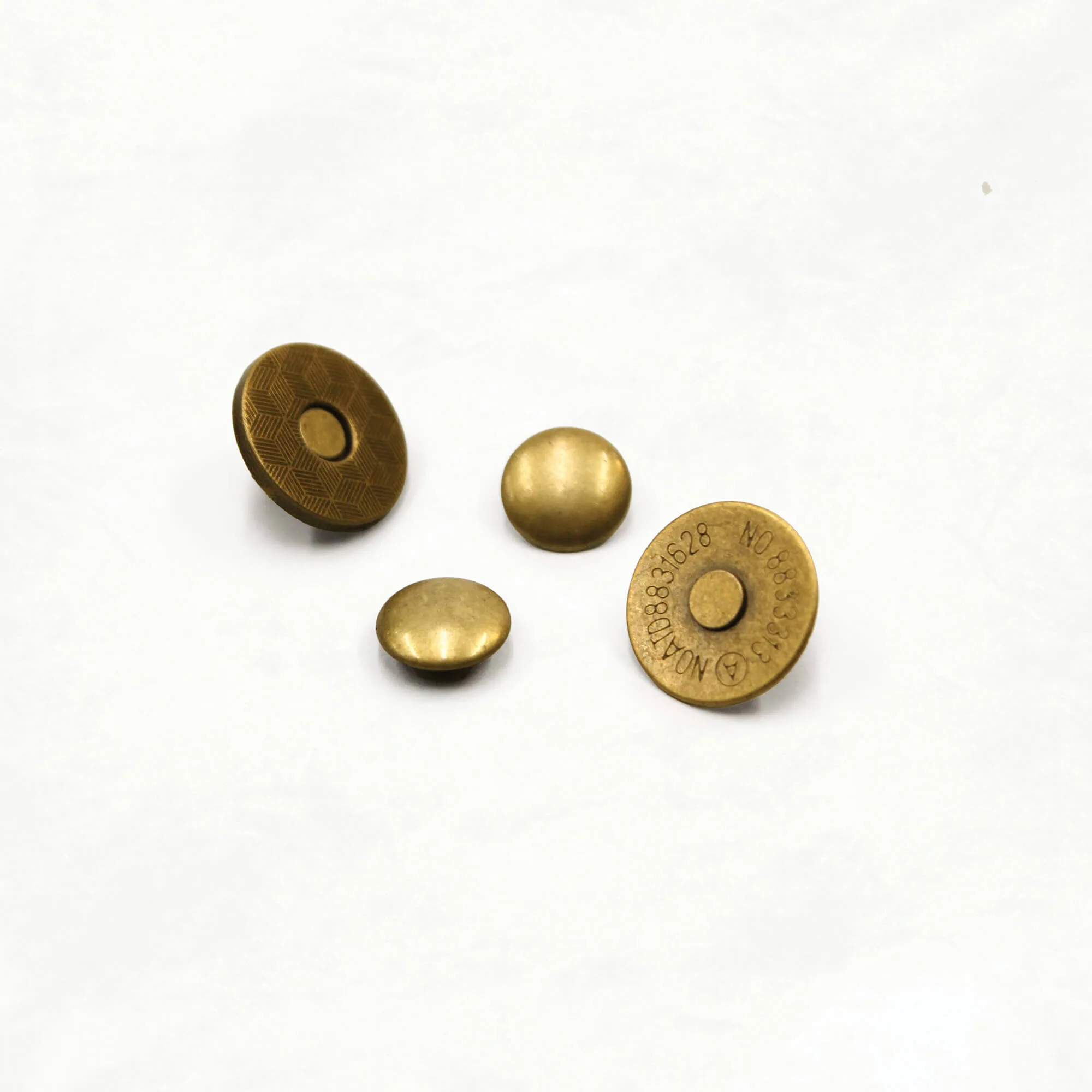
- Naito - Spring Green Custom Bag Maker Kit: The Naito is a pocket-filled bucket bag that converts from tote to crossbody sling, with a cylindrical body, sit-flat base, 360 degrees of pockets, a https://klumhouses.com/products/magnetic-snap-rivet-25afaf609cb6743570ea5661-1236878magnetic snap rivet, and a closure that cinches into pleats. A convertible bag like this benefits from a softer waxed canvas strap that packs down and adjusts easily for crossbody wear.
- Oberlin - Field Tan Custom Bag Maker Kit: The Oberlin is a market tote with sturdy leather straps, a magnetic snap closure, an interior zipper pocket, exterior pocket compartments, and a reinforced base. Demonstrates a leather-handled build where structure and load-bearing matter more than packability.
Which strap material fits your project?
Best for
- Sewists using a standard home machine without leather tools
- Crossbody, sling, and bucket bags that need a soft, packable strap
- Bags where you want to adjust length or add topstitching after assembly
Not for
- Projects that need maximum abrasion resistance and a structured, dressy handle
- Makers who prefer hand-stitching leather and want a patina over time
- Bags that will carry heavy loads and rub against rough surfaces daily