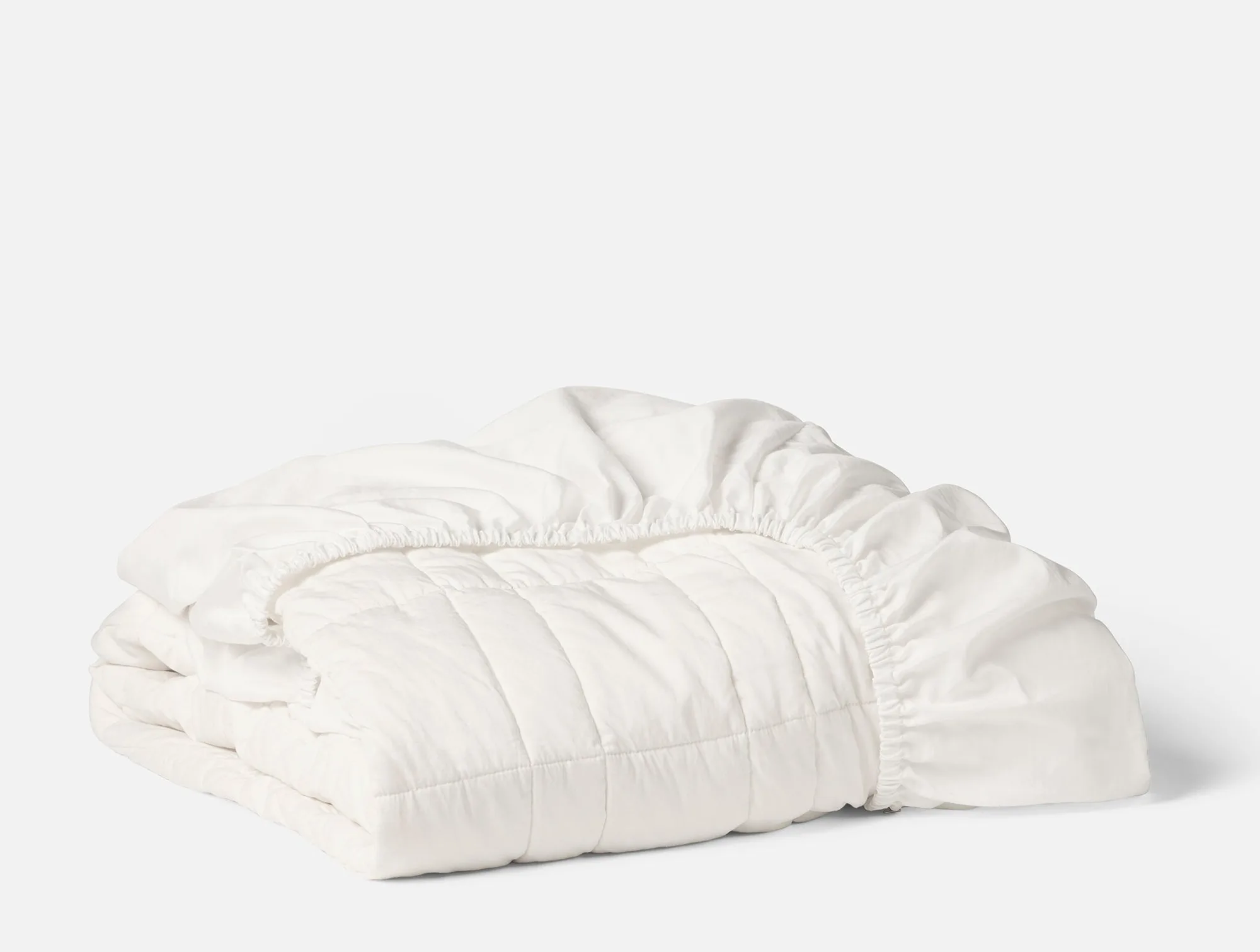
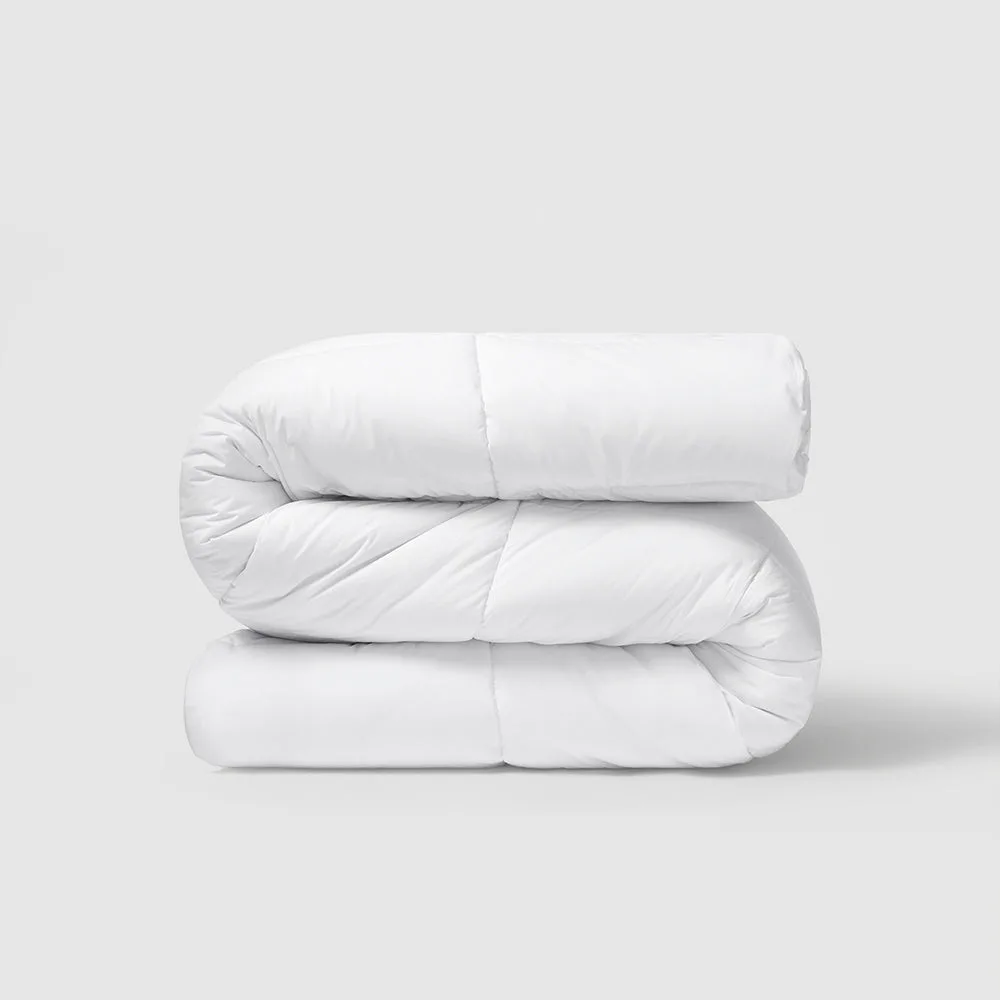
What this pad does—and what it does not
The Wendy Anne Wool Moisture Protection Mattress Pad is a moisture-resistant wool layer, not a vinyl-style waterproof sheet. The product record is explicit: it is not waterproof like vinyl is. Wool repels water on the outside of the fiber and absorbs on the inside, so the pad resists moisture and absorbs some when it needs to, much like a wool diaper cover works.
That difference shapes both layering and washing. You are not trying to create a sealed barrier. You are giving liquid somewhere to go before it reaches the mattress, then letting the wool air out. Because the pad is breathable and moisture-wicking, it avoids the sweaty plastic feel and outgassing associated with waterproof plastic fabrics.
The pad is 1/8" thick, made with untreated wool, and described as hypoallergenic, anti-bacterial, chemical-free, dye-free and flame resistant. It contains no treatments and no plasticizers. You may see small specks on the reverse side because the wool is minimally processed.
Sizes to match before you layer
-
Wendy Anne Wool Moisture Protection Mattress Pad: Puddle size, 16" x 32", fits many changing tables. Use the puddle size where changes happen, not on the bed, so the pad matches the surface it sits on.
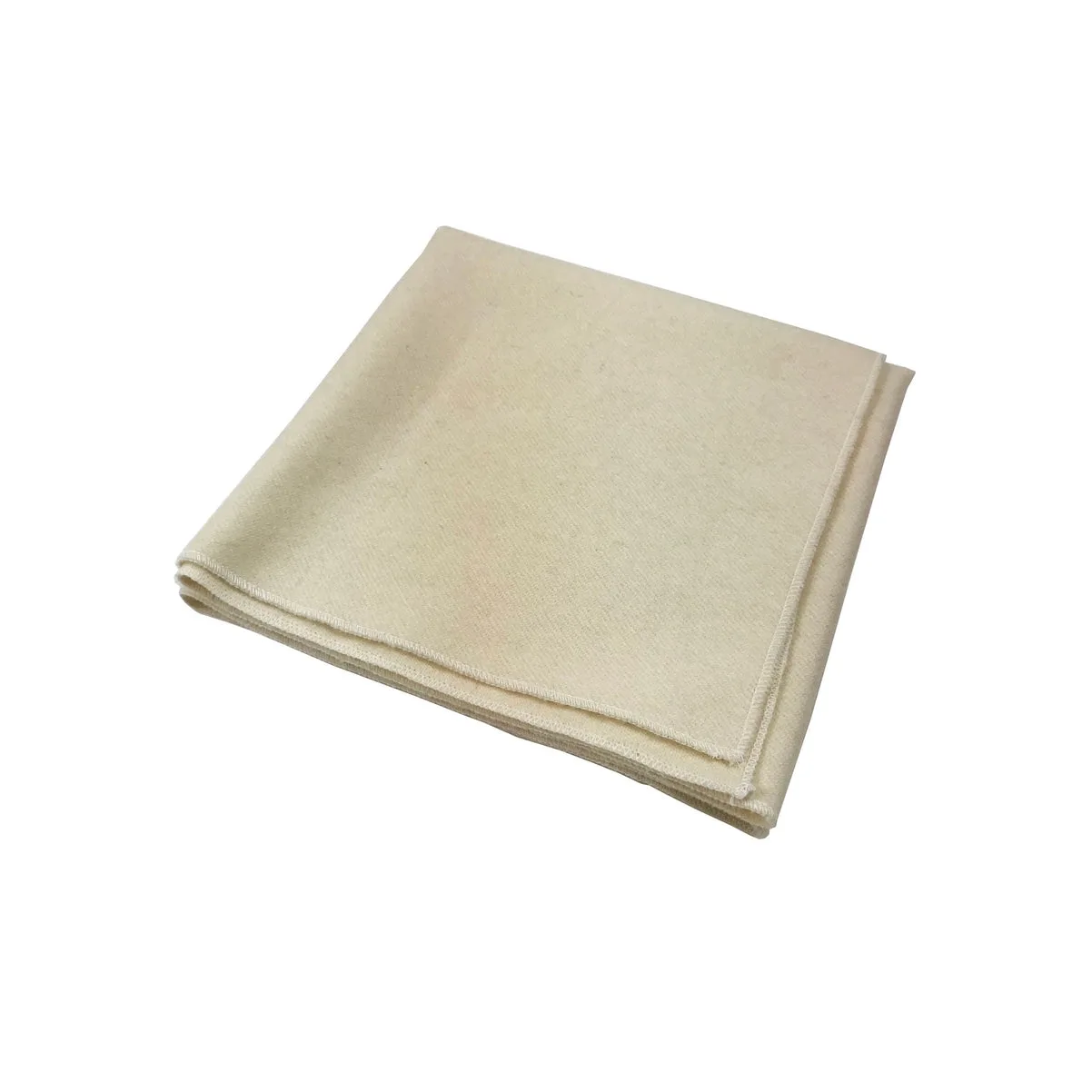
Wendy Anne Wool Moisture Protection Mattress Pad
-
Wendy Anne Wool Moisture Protection Mattress Pad: Crib size, 28" x 52". A crib-sized pad covers the sleep surface without excess to tuck or bunch.
-
Wendy Anne Wool Moisture Protection Mattress Pad: Twin size, 39" x 80". The twin size is the option for a standard twin bed; the record lists no other bed sizes.
How to layer for light wetness versus heavy wetness
- 1. Put the wool pad directly on the mattress: The pad is the moisture-resistant layer. Place it against the mattress so any liquid that passes the sheet meets wool first.
- 2. Add a cotton layer over the wool when wetness is heavy: The record recommends extra absorbency over the pad, between it and the sheet, such as a cotton blanket or a towel, if you expect a lot of heavy wetness such as bed wetting. The cotton takes up the flood and the wool keeps moisture from going through, so the wool does not have to absorb much and dries out quickly.
- 3. Keep the sheet on top as usual: The sheet over the pad keeps it nice, and the cotton you add over the wool washes up and dries easily. That is what makes the system easy to maintain.
- 4. Check for dampness rather than assuming a leak: Wet wool does not feel as wet as wet cotton does. Feel for dampness at the sheet and cotton layer first; the wool may be doing its job even when it feels slightly cool or damp.
Why the cotton layer changes the wash routine
If you add a cotton blanket or towel over the pad, that cotton is the layer that takes most of the liquid. It washes and dries easily, so you can change it often without washing the wool every time. The wool layer mainly needs airing and spot treatment.
This is the practical reason the pad is not a stand-alone waterproof sheet. It is designed to work with absorbency above it. Without that layer, heavier wetness has nowhere to go but into the wool, and the pad will need more frequent washing than the care record intends.
How to hand-wash the wool pad
- 1. Spot hand-wash if soiled: The care record says spot handwash if soiled. The sheet over the pad keeps it nice, so full washing is not the default after every change.
- 2. Use cool water and very little detergent: Hand rinse in cool water. Use very little, if any, mild detergent. Do not treat it like a cotton sheet.
- 3. Lay flat to dry: The record specifies laying the pad flat to dry. Dampness really does just air out, so give it airflow rather than heat.
- 4. Lanolize when the wool needs it: Lanolin is recommended. The record does not give a lanolin quantity or a schedule, so follow the lanolin product's own directions rather than guessing an amount.
What the care record does not tell you
The supplied information does not give a washing machine setting, a water temperature beyond cool, a detergent brand, a drying time, or a lanolin ratio. It also does not state a lifespan or a number of washes the pad will tolerate. Treat those as open questions rather than assuming a machine wash is safe.
The record also does not list a waterproof rating or a maximum liquid volume. The honest expectation is moisture resistance with absorbency, not a sealed barrier. If you need a fully waterproof layer, this pad is not described that way.
Care facts to keep in view
- Wendy Anne Wool Moisture Protection Mattress Pad: Made with untreated wool, 100% wool milled in USA. Untreated wool is why the pad resists and absorbs moisture without chemical treatments, and why cool hand washing matters.
- Wendy Anne Wool Moisture Protection Mattress Pad: No treatments, no plasticizers. There is no plastic coating to crack or outgas, but there is also no vinyl-style waterproof seal.
- Wendy Anne Wool Moisture Protection Mattress Pad: Wool is breathable and moisture-wicking. Breathability is the comfort reason to choose wool over plastic, and it is also why dampness airs out rather than staying trapped.
Checkpoints before and after each use
- Fit the pad to the surface: Use the puddle size on a changing table, the crib size on a crib mattress, and the twin size on a twin bed. The record lists these three sizes only.
- Add cotton only when wetness is heavy: A cotton blanket or towel over the wool is the record's recommendation for heavy wetness such as bed wetting. For light dampness, the wool alone may be enough.
- Air between uses: Dampness airs out. Hang or lay the pad flat where air can reach it rather than folding it away damp.
- Wash the cotton, not the wool, after a wet night: The cotton layer washes and dries easily. Save the hand wash for when the wool itself is soiled.