Quick answer
Start with a patchwork or quarter-inch foot if you quilt, a zipper foot for bags and garments, and a button-sew-on foot if you avoid hand sewing. Add specialty feet only when a project actually calls for them. The right foot is the one that matches your machine's shank system and the seam or trim you need to sew.
Presser feet are the small metal or plastic attachments that hold fabric flat as the needle moves. They look similar in photos, but each one solves a specific problem: guiding a quarter-inch seam, stitching beside a zipper coil, or holding a button while the machine zigzags it in place.
This beginner presser foot guide explains what the most common feet do, when a basic foot is enough, and how to avoid buying feet that do not fit your machine. It also covers a few BERNINA feet as concrete examples of how numbering and features work.
What a presser foot actually controls
A presser foot applies downward pressure so fabric feeds evenly and does not lift as the needle rises. The shape of the sole, the width of the opening, and any built-in guide determine what you can sew accurately. A standard zigzag foot works for most straight and zigzag stitching, but it gives you no help with a precise quarter-inch seam or a zipper edge.
That is why presser foot uses vary so much by project. Quilters care about seam allowance guides, garment sewers care about feet that get close to bulky edges, and home decor sewers often need feet that handle piping or multiple layers. Before buying anything, check your machine's shank type and whether it uses a snap-on or screw-on system.
- Your manual or the machine's accessory list tells you which feet are compatible.
- A foot that fits one brand may not fit another, even if it looks similar.
- If a foot includes a guide, the guide is only useful if it matches the seam width you actually sew.
The first three feet most beginners should own
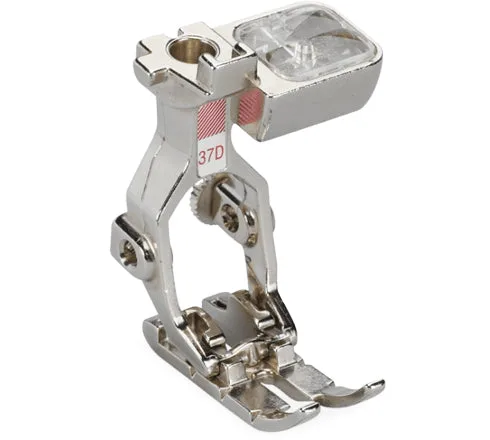
If you quilt, a patchwork foot with a built-in quarter-inch guide is the most useful upgrade. The BERNINA #37D Patchwork Foot has a built-in quarter-inch seam guide plus an adjustable guide for variable seam widths, so you can move beyond standard piecing without changing technique. Markings on the foot help with fabric placement, which reduces how often you stop to check seam width.
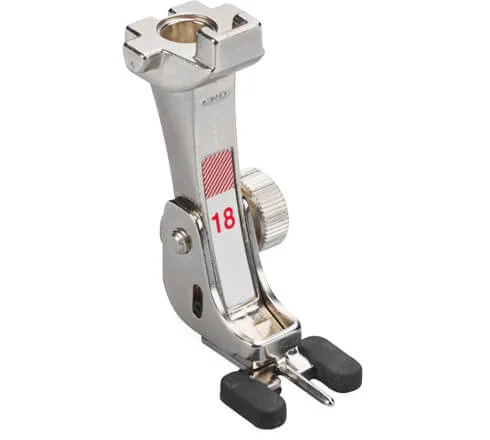
For zippers, piping, and cording, a narrow zipper foot lets the needle stitch right up to the coil or cord. The BERNINA #4 Zipper Foot can be positioned to the left or right of the needle, which matters when you need to sew along either side of a zipper without fighting the foot. A button-sew-on foot is the third practical addition if you dislike hand sewing buttons. The BERNINA #18 Button-sew-on Foot holds two-hole and four-hole buttons securely and has an adjustable shank for different button thicknesses.
- Buy the foot that matches the technique you use most, not the largest accessory set.
- A quarter-inch foot is not a replacement for accurate cutting and pressing.
- Zipper feet are also useful for piping, cording, and narrow trims.
Specialty feet: when they earn their space
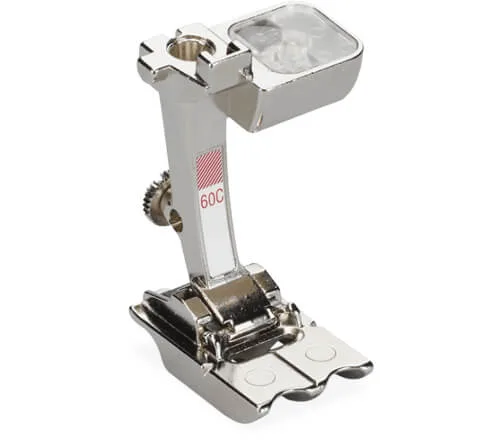
Specialty feet solve narrow problems well. A double-cord foot, for example, guides two parallel cords at once for piping or decorative cording. The BERNINA #60C Double-Cord Foot is made for cords with a diameter of 7 to 8 mm and for 9 mm machines, so it is a targeted tool rather than a general-purpose foot. If you rarely sew piping, a zipper foot can often handle a single cord instead.
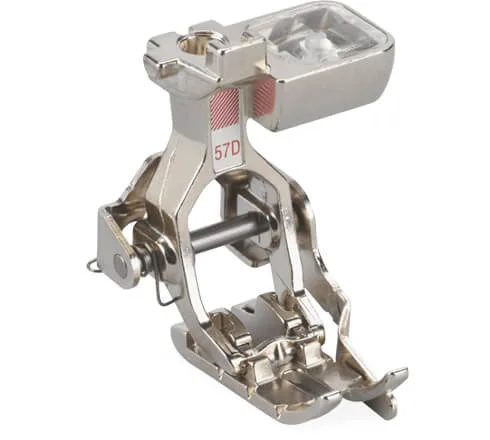
Patchwork feet with guides are another example. The BERNINA #57D Patchwork Foot with Guide is designed for 3 mm (1/8 inch) or 6 mm (1/4 inch) seam allowances and has three notches on the side for precise guidance. It also has a guide that helps sew perfectly straight lines and is made for 9 mm machines with the BERNINA Dual Feed system. That last detail is a compatibility limit, not a universal feature.
- Check cord diameter and machine width before buying a double-cord foot.
- A guided patchwork foot is most useful if you sew the same seam width repeatedly.
- Specialty feet are worth it when they replace a slow, error-prone step.
How to tell whether a foot will fit your machine
Fit is the most common reason a presser foot disappoints. Machines use different shank heights and attachment styles, and some feet are designed only for 9 mm machines or for a specific feed system. The BERNINA #57D Patchwork Foot with Guide, for instance, is listed for 9 mm machines with the BERNINA Dual Feed system. If your machine is not in that group, it is not the right foot for you even if the seam width matches your project.
The safest approach is to identify your machine's model, shank type, and maximum stitch width before shopping. Then match those details to the foot's stated compatibility. When a product listing does not state compatibility, treat that as a limitation and confirm with the seller or your machine manual rather than guessing.
- Note your machine's shank type: snap-on, screw-on, or a brand-specific system.
- Check stitch width: some feet are only for 9 mm machines.
- If compatibility is not listed, ask before buying.
What to skip until you need it
It is easy to buy a large presser foot set and use two of the feet. Feet for blind hems, rolled hems, ruffling, and free-motion quilting are genuinely useful, but only when a project calls for them. Buying them early often means storing them without learning how they behave on your machine.
A better plan is to keep a short list of techniques you want to try, then buy the one foot that unlocks each technique. That keeps your accessory drawer functional and your budget focused on fabric and thread. If you are unsure between two feet, choose the one that matches a project you can start this month.
- Skip multi-foot sets unless you already know you will use most of them.
- One well-chosen foot is more useful than five you never install.
- Revisit specialty feet when a specific pattern requires them.
Decision rules for buying presser feet
- If you quilt and sew quarter-inch seams: Choose a patchwork foot with a built-in quarter-inch guide. The #37D BERNINA Patchwork Foot adds an adjustable guide for variable seam widths, while the #57D BERNINA Patchwork Foot with Guide is limited to 3 mm or 6 mm seams and 9 mm BERNINA machines with Dual Feed. Match the foot's seam widths and machine requirements before buying.
- If you install zippers, piping, or cording: Choose a narrow zipper foot that can move to either side of the needle, such as the #4 BERNINA Zipper Foot. For two parallel cords of 7 to 8 mm on a 9 mm machine, the #60C BERNINA Double-Cord Foot is the more specialized option. A zipper foot covers more projects; a double-cord foot is for a specific cord size and machine width.
- If you want to stop hand-sewing buttons: Choose a button-sew-on foot with an adjustable shank. The #18 BERNINA Button-sew-on Foot holds 2-hole and 4-hole buttons and adjusts for different button thicknesses. Check that your machine can zigzag and that the foot fits your shank system.
- If you are unsure what to buy first: Buy the foot that matches your next project, not a full set. Confirm your machine's shank type, stitch width, and feed system first; if a listing does not state compatibility, ask before ordering. One compatible foot you will use beats a set you cannot install.
Presser foot examples and what they solve
- #37D BERNINA Patchwork Foot: Built-in 1/4 inch seam guide plus an adjustable guide for variable seam widths, with markings on the foot to help with precise fabric placement. Useful for quilters who need consistent seams beyond the standard quarter-inch without marking every seam by hand.
- #4 BERNINA Zipper Foot: Narrow design for stitching close to zipper teeth and coils, and it can be positioned to the left or right of the needle. Lets you sew both sides of a zipper cleanly and also helps with piping and cording.
- #18 BERNINA Button-sew-on Foot: Holds buttons securely in place during sewing, works with 2-hole and 4-hole buttons, and has an adjustable shank for different button thicknesses. Replaces hand sewing buttons with a machine zigzag stitch, which is faster and more consistent.
- #60C BERNINA Double-Cord Foot 7-8mm: For simultaneously sewing on two parallel cords with a diameter of 7 to 8 mm, for creating piping, and for 9 mm machines. A targeted foot for piping and cording projects, but only if your machine is a 9 mm model and your cord matches the stated diameter.
Who this beginner presser foot guide is for
Best for
- Beginners who own a sewing machine and want to know which presser feet are worth buying first
- Quilters and garment sewers who need clear guidance on matching feet to seam widths and machine compatibility
Not for
- Sewers looking for advanced free-motion or longarm quilting foot techniques
- Shoppers who already know their exact machine model and only need a compatibility chart from the manufacturer
Presser feet are simple tools with specific jobs. Start with the foot that matches the technique you use most, confirm it fits your machine's shank and stitch width, and add specialty feet only when a project demands them. That approach keeps your sewing smoother and your accessory spending honest.