Quick answer
A metro-size toiletry case comfortably holds the daily essentials for one person: a toothbrush, travel toothpaste, deodorant, a razor, skincare minis, and a few makeup items. It gets tight once you add full-size bottles, a hair tool, or shared family toiletries. If your routine needs more than about six or seven items, size up or split into two pouches.
Toiletry cases are sold by look, but they live or die by capacity. A case that photographs beautifully can still force you to choose between deodorant and face wash at 6 a.m. in a hotel bathroom.
This guide answers the questions travelers actually ask before buying: what fits, what does not, and how to pack a metro-size case so it stays useful instead of frustrating.
What actually fits in a metro-size toiletry case?
Think in layers rather than a single pile. The base layer holds the flat, heavy items: a razor, a comb, a deodorant stick, and a small bottle of cleanser. The middle layer takes your oral care and skincare minis standing upright so nothing leaks sideways. The top layer is for soft items, like a toothbrush in a sleeve, cotton pads, or a small makeup pouch.
For one person with a moderate routine, that is roughly six to eight items. Once you add full-size shampoo, a hairbrush, and a second skincare routine, the case is full and you lose the ability to see what you packed.
- Decant liquids into 30-50 ml bottles; full-size bottles eat capacity fast.
- Keep one small pouch for makeup so it can be lifted out without unpacking the rest.
- Pack the heaviest items along the hinge side so the case closes flat.
How much packing space does a small toiletry case for travel really give you?
A small toiletry case for travel is designed around a single-person, short-trip routine. It suits a weekend, a carry-on-only flight, or a gym-to-office day. It is not built for a two-week trip with full-size products, and it is not meant to hold shared family toiletries.
The practical test is simple: lay out everything you plan to bring, then try to close the case with one hand. If you have to press down or rearrange twice, you are over capacity. That is a signal to cut items or move to a larger case, not to force the zipper.
- If you regularly travel with a hair tool, plan for a separate pouch.
- If two people share one case, expect to pack two smaller cases instead.
- Leave about a finger's width of slack so the zipper is not under strain.
How should you pack a metro toiletry case for a carry-on?
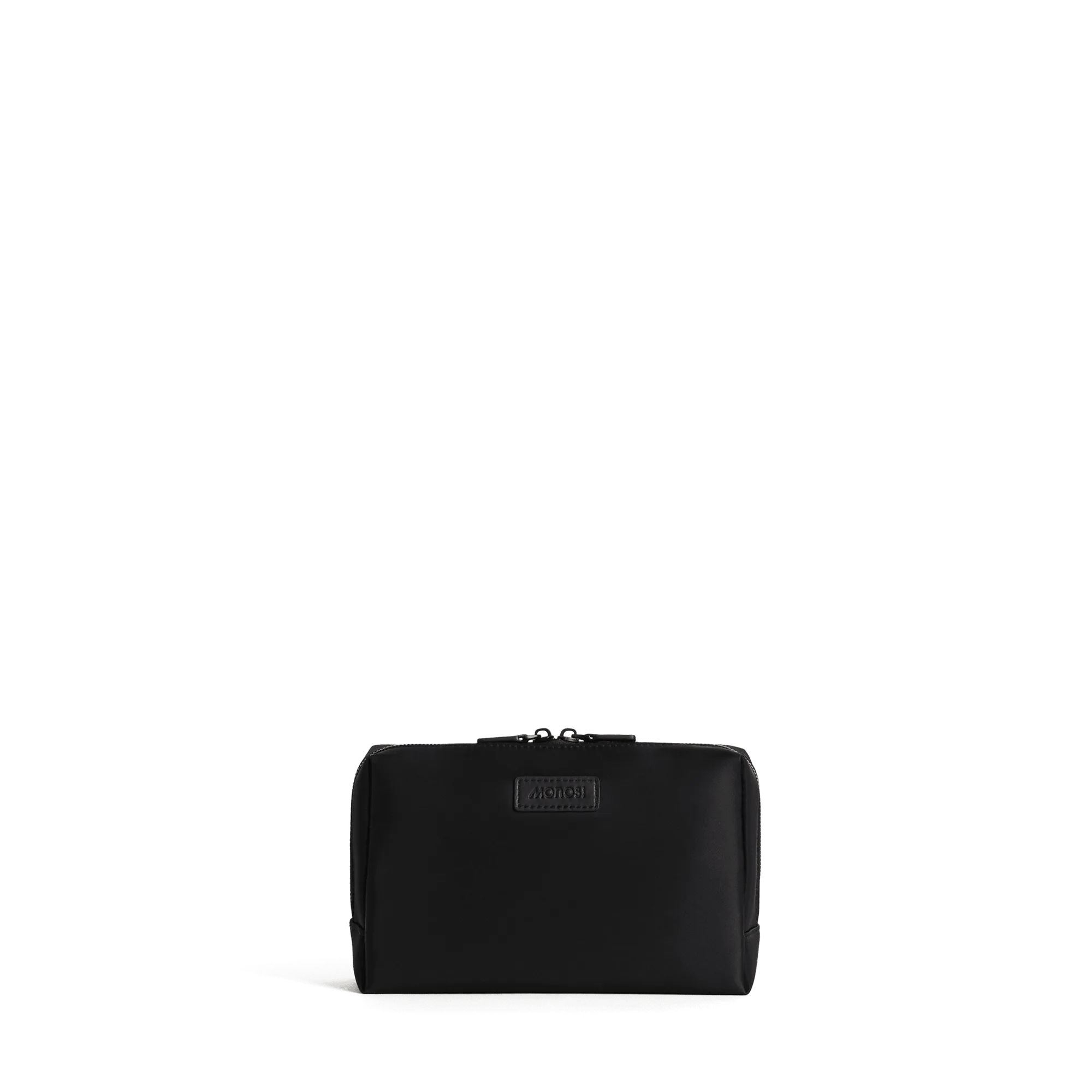
metro toiletry case
Start with the TSA liquids rule, because it shapes everything else. All liquids, gels, and aerosols must fit in a single clear quart-size bag, with each container at 3.4 ounces or less. Pack that clear bag first, then build the rest of the case around it.
Place the clear bag flat against one side of the case. Solids like a razor, comb, and toothbrush go on the opposite side so they do not press into the liquids. Keep one small exterior pocket for items you reach for most, like lip balm or hand sanitizer.
If your case has a hanging hook, use it in the bathroom so the case stays off wet counters and you can see every layer at once.
- Pack the clear liquids bag before anything else.
- Keep solids and liquids on opposite sides to reduce leaks.
- Use the hook so the case opens fully instead of sitting in a puddle.
When is a metro-size case the wrong choice?
Skip it if you need full-size haircare, if you travel with medical supplies that take up real volume, or if you are packing for more than one person. In those cases, a larger toiletry case or a two-pouch system will serve you better.
It is also the wrong choice if you like to see everything at a glance and refuse to decant. A metro case rewards minimalism; it punishes hoarding. Be honest about your routine before you buy, because capacity is the one feature you cannot upgrade later.
- Choose a larger case for full-size products or family travel.
- Choose a metro case for solo, short trips and carry-on-only packing.
- If you are unsure, start small and add a second pouch only if you need it.
Metro toiletry case capacity FAQ
Can a metro toiletry case hold full-size shampoo and conditioner?
Usually not alongside a normal routine. Full-size bottles take up most of the main compartment, leaving little room for oral care, skincare, or a razor. Decant into travel bottles or move to a larger case if full-size products are non-negotiable.
Is a metro toiletry case carry-on compliant?
The case itself is not the limiting factor; the TSA liquids rule is. All liquids must fit in one clear quart-size bag with containers at 3.4 ounces or less. Pack the clear liquids bag first, then fit the case around it.
How many items should I expect to fit comfortably?
For one person with a moderate routine, about six to eight items: toothbrush, toothpaste, deodorant, razor, cleanser, moisturizer, and a couple of makeup or skincare minis. If your list is longer, split into two pouches or size up.
What is the biggest packing mistake with a small toiletry case?
Treating it like a drawer instead of a kit. Packing loose, unrelated items fills the space without making anything easier to find. Group by routine and keep one small pouch for makeup so you can lift it out.
Related products that solve the same packing problem
- Travel Jewelry Case: A modular design with removable earring and ring panels, plus a removable small vegan leather pouch. Keeps jewelry out of your toiletry case so the main compartment stays dedicated to liquids and daily essentials.
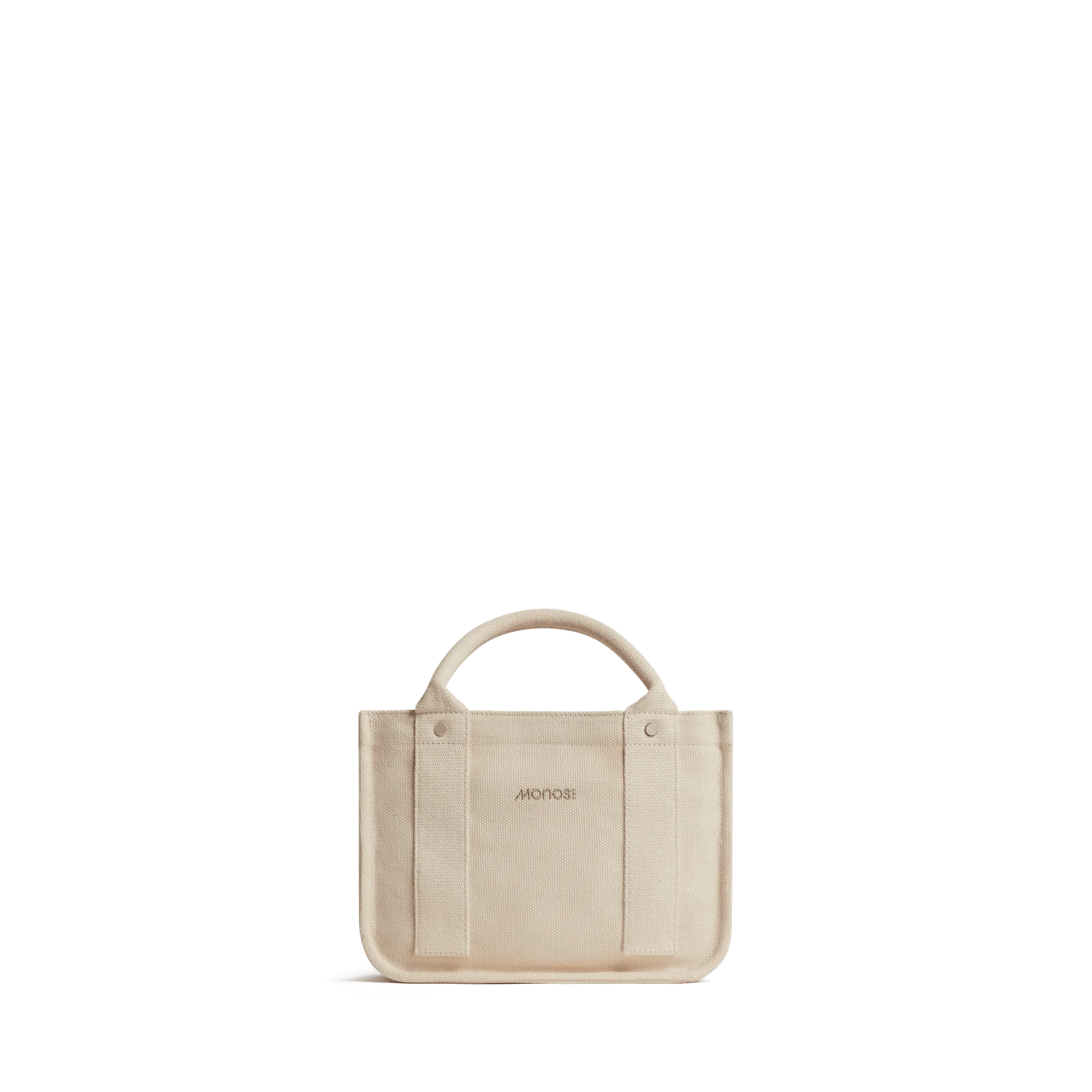
- Gesso Small Tote: A scaled-down tote with an adjustable, removable shoulder strap and a spacious, open-concept interior. Works as a secondary pouch or personal item when your toiletry case is full and you need a place for non-liquid extras.
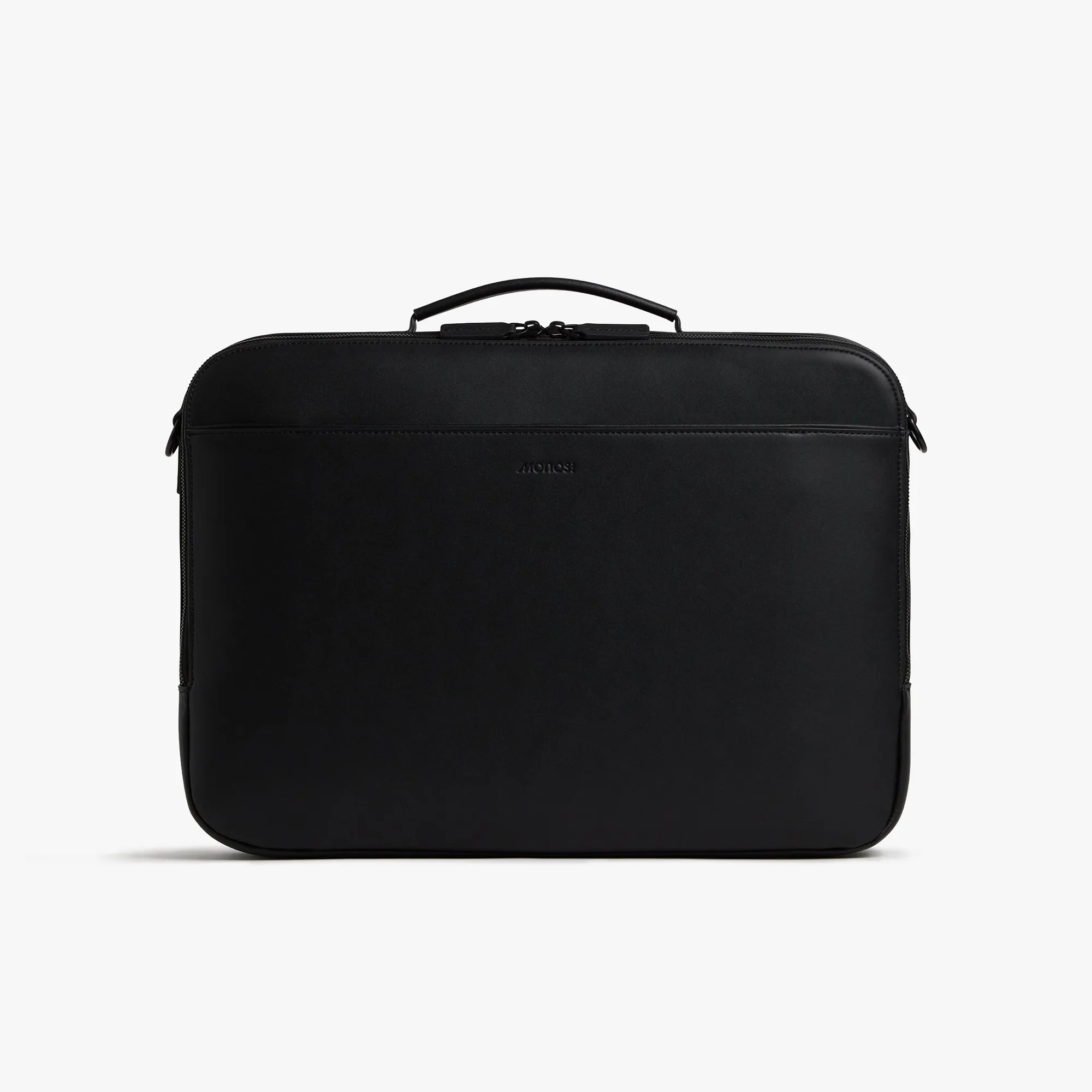
- Metro Briefcase: Crafted from water and scratch resistant ultra-microfibre vegan leather with a soft cotton twill lining. A practical carry option for business trips where your toiletry case needs to travel alongside a laptop and documents.
A metro toiletry case works best when you treat it as a focused kit, not a catch-all. Pack the clear liquids bag first, decant what you can, and keep the item count honest. If your routine outgrows it, that is not a failure of the case; it is a signal to size up or split into two pouches.