Quick answer
18 mesh needlepoint canvas has 18 threads per inch, giving you a finer surface for detailed designs than 13 mesh. Choose it when your canvas includes small motifs, facial features, lettering, or shading that needs crisp edges. Skip it if you prefer faster stitching, use thicker threads, or want a more forgiving first project.
If you have ever picked up a needlepoint canvas and wondered why some designs look crisp and detailed while others feel chunky, the mesh count is often the reason. 18 mesh needlepoint canvas is one of the two most common counts you will see, and it changes how a design stitches up, how much thread you use, and how long a project takes.
This guide explains what 18 mesh means in plain terms, how it differs from 13 mesh, and when the finer count is worth the extra time. You will also see real examples from our catalog so you can match the canvas to the project you actually want to stitch.
What 18 mesh actually means
Mesh count is simply the number of canvas threads per inch. An 18 count needlepoint canvas has 18 threads in every inch, while a 13 mesh canvas has 13. More threads per inch means each individual stitch is smaller, so the same design area can hold more stitches and therefore more detail.
That finer grid is why 18 mesh is often called a fine needlepoint canvas. It lets a painted design include smaller shapes, thinner lines, and smoother transitions between colors. The trade-off is that every stitch covers less ground, so a project of the same physical size takes more stitches and more time.
- 18 mesh = 18 threads per inch; 13 mesh = 13 threads per inch.
- Smaller stitches mean finer detail but slower coverage.
- The canvas itself is usually measured in inches, while the design size is listed separately.
18 mesh vs 13 mesh: the practical differences
The biggest difference is detail. A 13 mesh canvas is faster to stitch and easier on the eyes, which makes it a good fit for bold shapes, large color blocks, and beginner projects. An 18 mesh canvas shines when the design depends on small features, such as a face, a letter, or a delicate pattern.
Thread choice also changes. On 18 mesh, you typically use finer threads or fewer strands so the stitch does not overwhelm the canvas. On 13 mesh, thicker threads or more strands cover the surface quickly. Neither is better overall; they simply suit different designs and different stitching speeds.
- Choose 13 mesh for speed, bold shapes, and larger stitches.
- Choose 18 mesh for detail, fine lines, and smaller design elements.
- Test your thread on a corner of the canvas before committing to a full project.
When 18 mesh is the right choice
Pick 18 mesh when the design has features that would disappear on a coarser canvas. Portraits, pet faces, architectural details, small text, and intricate patterns all benefit from the finer grid. If you are stitching a design where the expression or the silhouette matters, 18 mesh gives you the resolution to capture it.
It is also a good choice for small finished pieces, such as ornaments, jewelry, or bag charms, where you want the design to read clearly in a compact space. Because each stitch is smaller, you can pack more visual information into a few inches.
- Detailed faces, lettering, and fine patterns.
- Small finished items like ornaments or charms.
- Projects where you want a smooth, painterly color transition.
When to skip 18 mesh
If you are new to needlepoint, 18 mesh can feel slow and fiddly. The stitches are small, and mistakes are harder to see and fix. A 13 mesh canvas is more forgiving and lets you build confidence with tension and stitch placement before moving to a finer count.
Skip 18 mesh if you mainly stitch for relaxation and prefer quick progress, or if your thread stash is built around thicker threads. You can still stitch a detailed design on 13 mesh, but some fine elements may need to be simplified.
- Beginners still learning tension and stitch placement.
- Stitchers who prefer fast, large-stitch projects.
- Designs with bold, simple shapes that do not need fine detail.
How to read a canvas listing before you buy
A good listing tells you the mesh count, the canvas size, and the design size. For example, a canvas listed as 12 x 10 with an 8 x 6 design size on 13 mesh means the painted area is smaller than the full canvas, leaving room for finishing or framing. Always check the mesh count first, because it determines the stitch size and the level of detail you can achieve.
If a listing does not state the mesh count, treat that as a missing specification rather than guessing. You can often infer it from the design style, but the safest approach is to ask the seller or choose a listing that clearly states the count.
- Look for mesh count, canvas size, and design size.
- Remember that canvases do not come with thread unless stated.
- Hand-painted canvases may vary slightly from the photo.
Decision rules for choosing 18 mesh
- If the design has fine details: Look for 18 mesh. Faces, lettering, and small motifs need the finer grid to stay legible. Choose 18 mesh when detail is the point.
- If you want speed and simplicity: Choose 13 mesh instead. Larger stitches cover faster and are easier to see and fix. 13 mesh is the better fit for quick, bold projects.
- If you are a beginner: Start with 13 mesh to build tension and stitch placement, then move to 18 mesh for detailed designs. Match the mesh to your experience level, not just the design.
- If the listing is missing the mesh count: Do not guess. Ask the seller or choose a listing that states the count clearly. A missing specification is a reason to pause, not assume.
Examples from our catalog
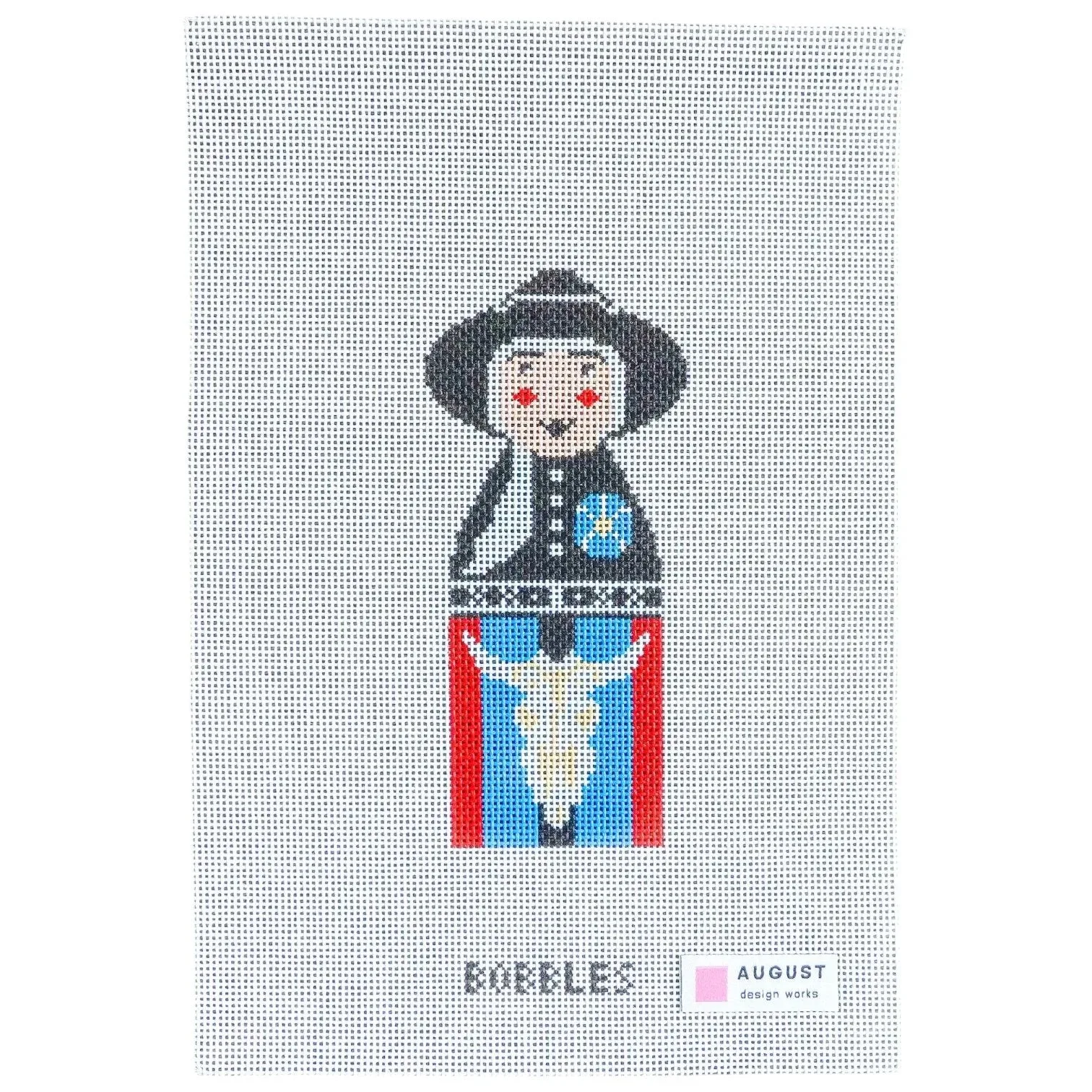
- O’Keeffe Bobble - Needlepoint Canvas: 18 mesh hand-painted canvas inspired by Georgia O’Keeffe, part of the Bobbles Series. A fine mesh canvas suits the subtle shading and floral abstraction that define O’Keeffe’s style, so the details stay crisp.
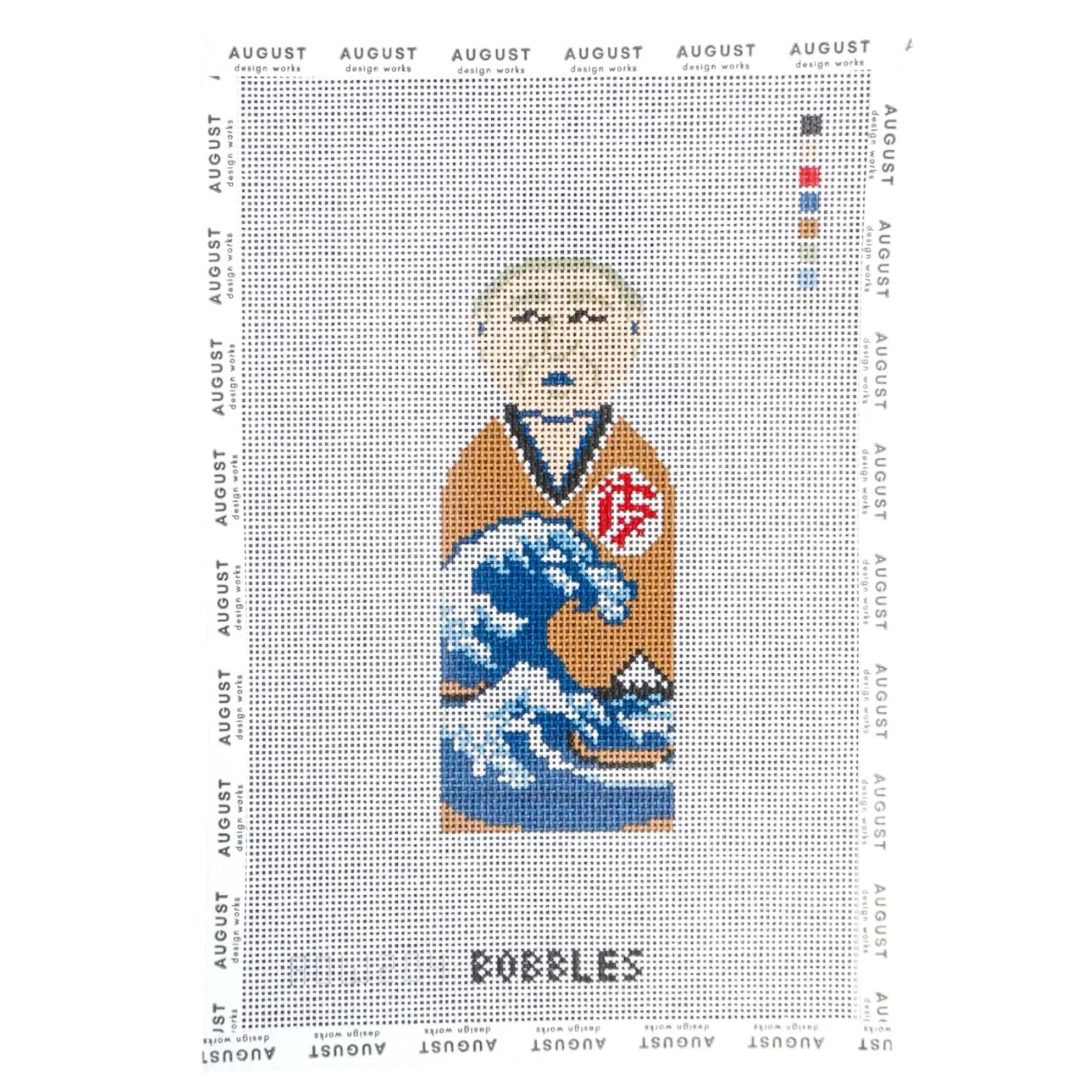
- Hokusai Bobble - Needlepoint Canvas: 18 mesh hand-painted canvas inspired by Katsushika Hokusai, part of the Bobbles Series. The finer grid helps capture the movement and linework associated with Hokusai’s art, which would be harder to render on 13 mesh.
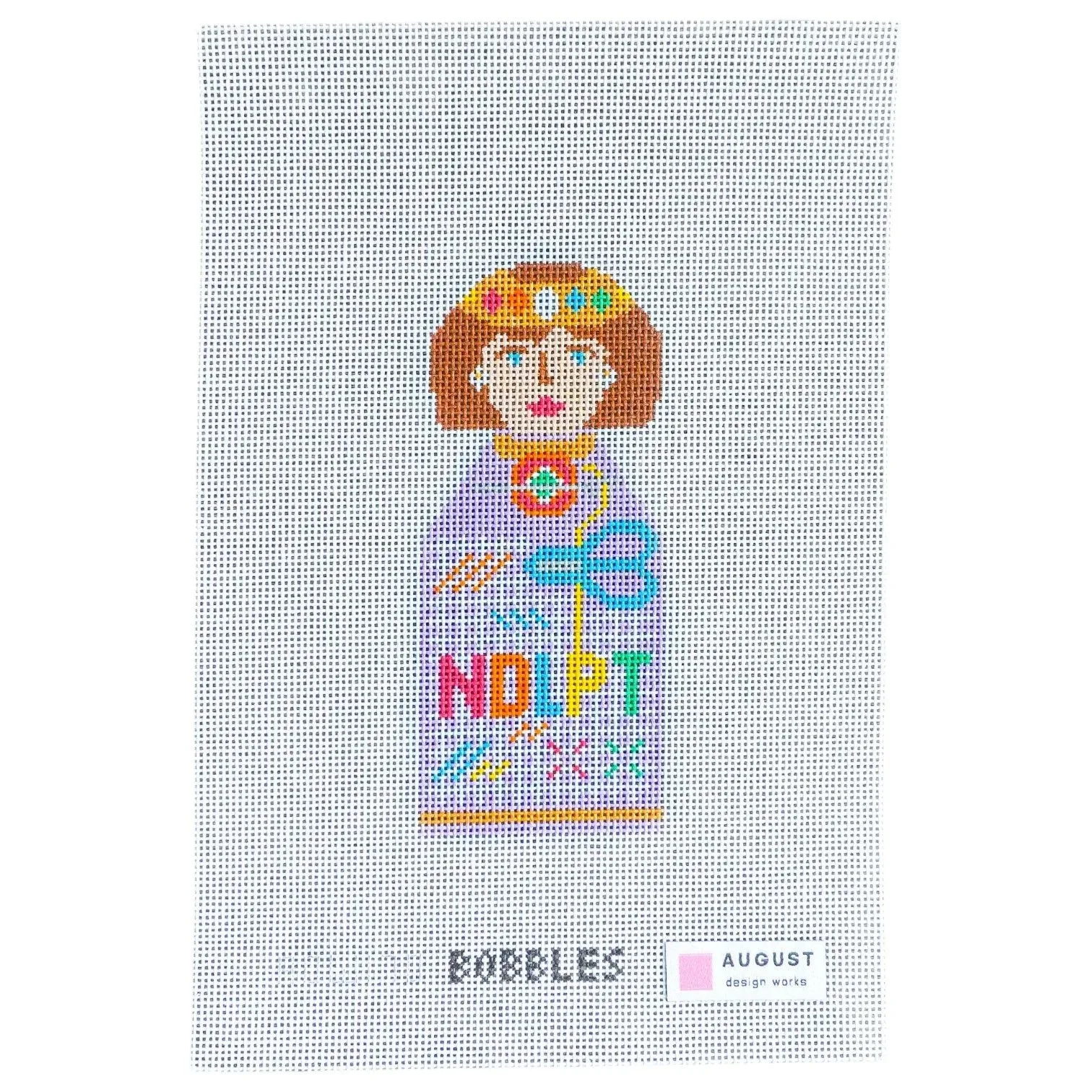
- NDLPT Queen Bobble - Needlepoint Canvas (Wholesale): 18 mesh hand-painted canvas from the Bobbles Series, designed to be stitched, displayed, and collected. If you enjoy stitching detailed figurative designs, 18 mesh gives you the resolution to make the character read clearly.
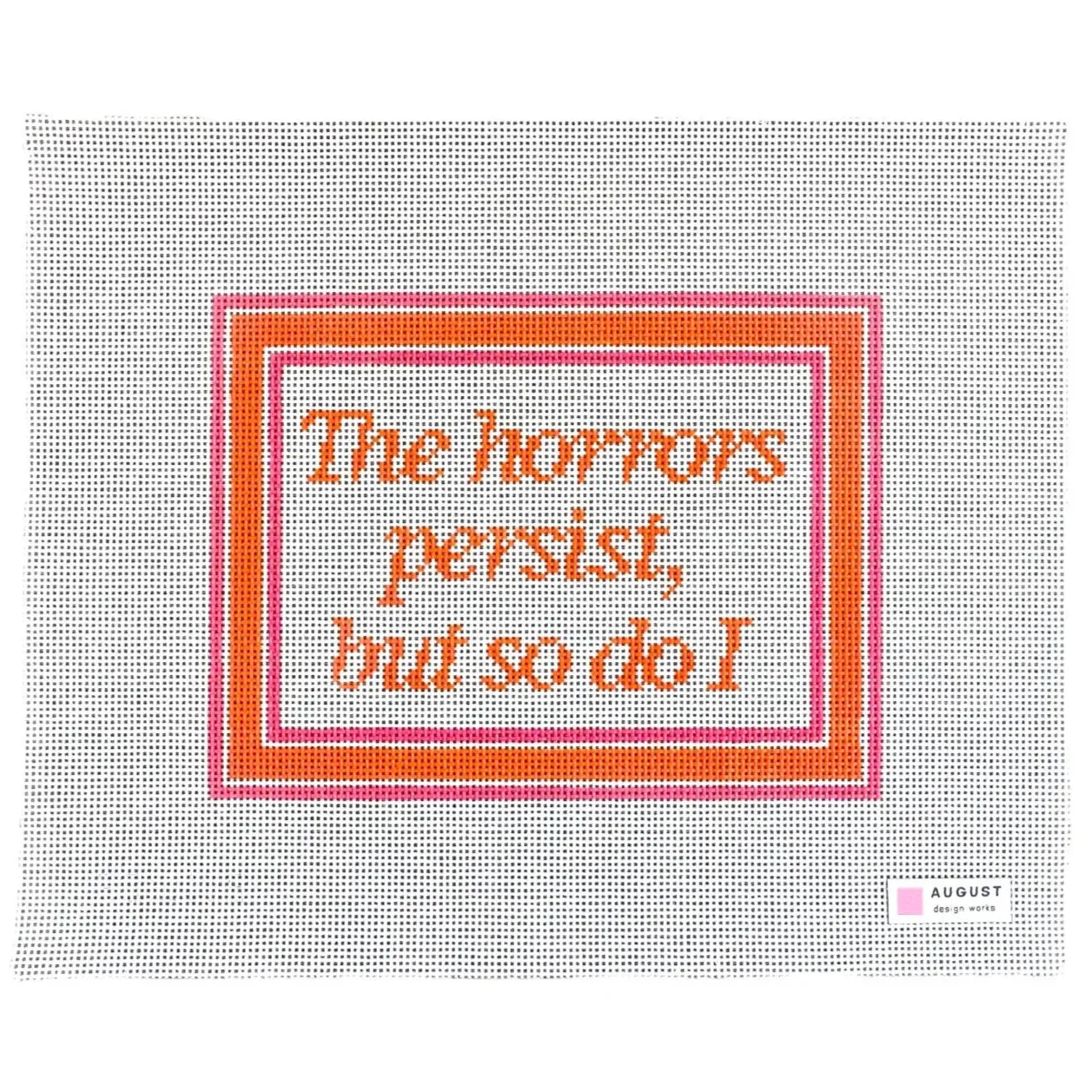
- The Horrors Persist But So Do I - Needlepoint Canvas: 13 mesh canvas with a 12 x 10 canvas size and 8 x 6 design size; hand-painted and does not come with thread. A 13 mesh canvas like this is faster to stitch and better for bold text or simple shapes, showing the contrast with 18 mesh.
Is 18 mesh right for you?
Best for
- Stitchers who want fine detail in faces, text, or patterns
- Small finished pieces like ornaments, charms, or jewelry
- Stitchers comfortable with finer threads and smaller stitches
Not for
- Beginners still learning basic tension and stitch placement
- Stitchers who prefer fast progress with large stitches
- Projects with bold, simple shapes that do not need fine detail
18 mesh needlepoint canvas is the go-to choice when a design needs fine detail, and 13 mesh is the better fit when you want speed and simplicity. Check the mesh count, canvas size, and design size before you buy, and match the count to both the project and your comfort level. If you are unsure, start with a small 18 mesh piece to see how the finer stitches feel in your hands.